
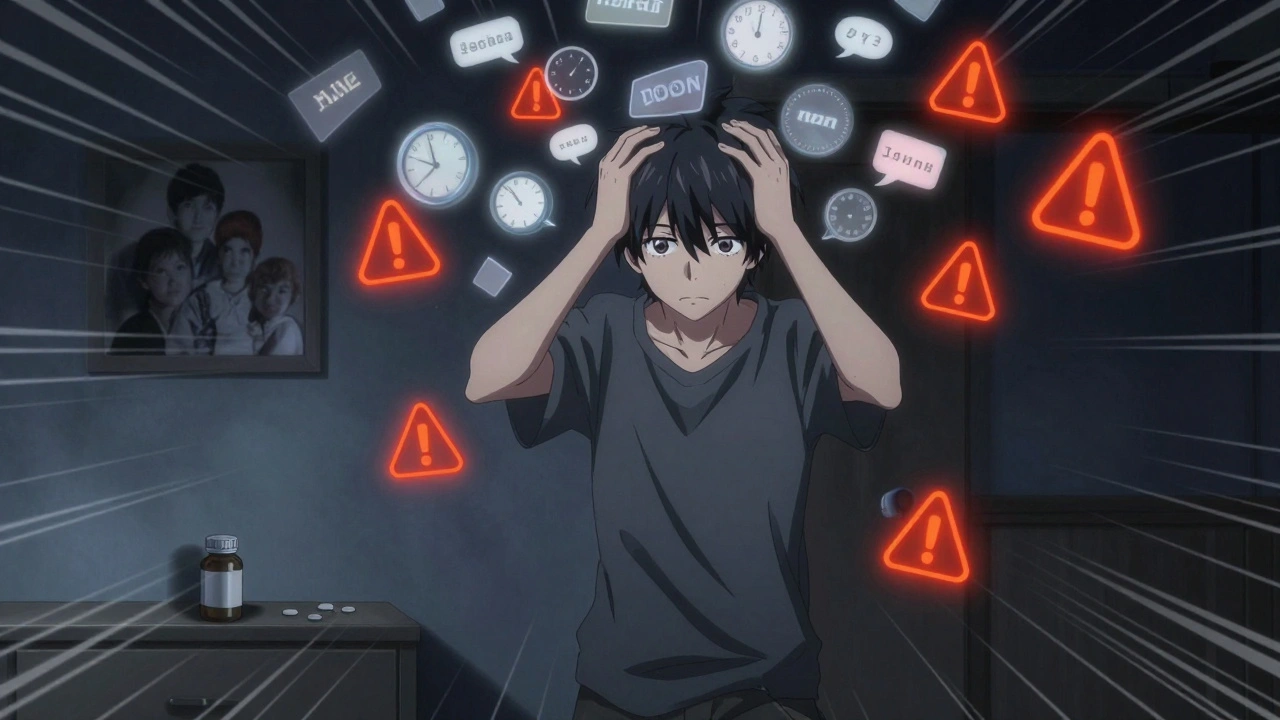
Most people don’t realize that a pill they take for anxiety or sleep might be quietly stealing their memory and balance-especially if they’ve been on it for months or years. Benzodiazepines, like diazepam, lorazepam, and alprazolam, work fast and feel effective. But the cost? It shows up in forgotten names, unsteady steps, and a brain that feels foggy even when you’re not high. This isn’t just a side effect-it’s a well-documented, long-term risk backed by decades of research.
How Benzodiazepines Attack Memory
Benzodiazepines don’t just make you sleepy. They disrupt how your brain forms new memories. This is called anterograde amnesia. You might walk into a room and forget why, or struggle to remember a conversation five minutes after it happened. It’s not just ‘getting old’-it’s the drug. Studies dating back to the 1980s show this effect is consistent across all benzodiazepines. The hippocampus, the part of your brain responsible for locking experiences into memory, gets suppressed. Even if you feel fine, your brain isn’t recording things the way it should. The worse the task, the worse the memory failure. Trying to remember a list of words? Hard. Recalling a doctor’s instructions? Even harder. And it doesn’t go away quickly. A 2023 review of 19 studies found that long-term users-people on these drugs for an average of 10 years-showed clear deficits in recent memory, processing speed, and attention. Their scores on cognitive tests were as low as people in early-stage dementia. About 21% of long-term users showed impairment across every tested area. That’s more than 1 in 5 people. Worse, even after stopping, many don’t bounce back. One study followed people for 10 months after they quit. Only 45% returned to normal cognitive function. The rest kept struggling with brain fog, forgetfulness, and slow thinking. This isn’t temporary. It’s lingering.Falls Aren’t Accidents-They’re Predictable
If you’re over 65 and taking a benzodiazepine, your risk of falling is 50% higher. That’s not a small number. It’s the difference between staying independent and ending up in the hospital with a broken hip. These drugs slow your reaction time by 25-35%. They make your balance shaky. Your body doesn’t correct itself as fast when you trip. A 2014 analysis of over a million people found that benzodiazepine users were 70% more likely to suffer a hip fracture. High-potency versions like alprazolam and lorazepam are even riskier than older ones like diazepam. In the U.S. alone, benzodiazepines contribute to about 93,000 emergency room visits each year for falls in older adults. That’s not just medical bills-it’s loss of freedom, fear of moving, and often, a permanent decline in quality of life. The American Geriatrics Society has listed benzodiazepines as inappropriate for seniors since 2012. And yet, millions are still prescribed them. Why? Because doctors often don’t know the full picture-or they think it’s safer than the alternative. It’s not.
Tapering Isn’t Optional-It’s Necessary
You can’t just stop. Quitting cold turkey can trigger seizures, panic attacks so severe they feel like heart attacks, or hallucinations. Tapering is the only safe path. The gold standard is the Ashton Protocol. Developed by Professor C. Heather Ashton in the 1980s, it’s still the most trusted method today. The rule? Reduce your dose by 5-10% every 1-2 weeks. For people on benzodiazepines for years, even slower is better-sometimes just 2-5% per month. Switching from a short-acting drug like alprazolam to diazepam is often part of the plan. Diazepam has a longer half-life, which means it leaves your system more slowly, smoothing out withdrawal symptoms. Many people report fewer brain zaps, less anxiety spikes, and better sleep stability after the switch. A 2021 trial with 312 long-term users showed that a 12-16 week taper using diazepam led to 68.5% successful discontinuation at six months. That’s more than double the success rate of people who didn’t taper. And here’s the hopeful part: cognitive improvements started within four weeks. Processing speed improved by 15%, attention by nearly 20%-just from slowly reducing the dose. But it’s not easy. About 22% of people needed to pause their taper for a few weeks because symptoms flared up. Eight percent couldn’t continue at all. That’s why support matters. Online communities like the Benzodiazepine Information Coalition and Reddit’s r/benzowithdrawal are full of people who’ve done it. Their advice? Track your progress. Use apps like BrainBaseline to log memory and focus daily. Be patient. Improvement takes months.
When Is It Okay to Keep Taking Them?
Not everyone needs to quit. Some people with severe epilepsy or treatment-resistant anxiety may need long-term use. But even then, guidelines are clear: use the lowest dose possible. The Beers Criteria recommend no more than 5 mg of diazepam daily for people over 65. For younger adults, the limit is 10 mg. If you’re on more than that, ask why. If you’ve been on it for more than four weeks for anxiety, ask if it’s still necessary. The American Psychiatric Association says benzodiazepines shouldn’t be prescribed for longer than four weeks for anxiety disorders. Routine cognitive screening is also key. Doctors should check your memory and thinking with tools like the MoCA or MMSE every six months. If your score drops by 2-3 points, it’s time to reconsider the drug.What’s Next? New Hope on the Horizon
There’s light at the end of the tunnel. Researchers are developing new drugs that target only the parts of the GABA receptor linked to anxiety-not memory or balance. Early trials of α2/α3-selective agonists show they reduce anxiety just as well as benzodiazepines-but without the brain fog. One phase II trial, published in January 2024, found these new compounds cut anxiety symptoms by 70% with no measurable memory loss. They’re not available yet, but they’re proof that we don’t have to accept these side effects. Until then, the best thing you can do is talk to your doctor. If you’ve been on benzodiazepines for more than a few months, ask about tapering. Ask about cognitive testing. Ask about alternatives like CBT for anxiety or sleep hygiene for insomnia. You don’t have to live with a foggy brain or fear of falling. The path out is slow, but it’s real. And every small reduction brings you closer to thinking clearly again.Can benzodiazepines cause permanent memory loss?
Benzodiazepines don’t cause permanent brain damage, but they can cause long-lasting cognitive impairment. Studies show that 55% of long-term users still have memory and attention problems 10 months after quitting. These aren’t structural changes-they’re functional. The brain’s ability to process and store information remains slowed. For many, full recovery takes 6-12 months, and some never fully return to baseline.
Why is diazepam used for tapering instead of other benzodiazepines?
Diazepam has a long half-life-meaning it stays in your system longer and leaves slowly. This smooths out withdrawal symptoms like anxiety spikes, insomnia, and brain zaps. Short-acting drugs like alprazolam wear off quickly, causing sharper peaks and valleys in symptoms. Switching to diazepam gives your brain more stable levels of the drug during tapering, making the process safer and more tolerable.
How long does it take to see cognitive improvement after stopping benzodiazepines?
Most people notice small improvements in focus and memory within 4-8 weeks of starting a taper. Significant gains in processing speed and attention typically appear by 3-6 months. Full recovery can take up to a year or longer, especially for those who used high doses for over a decade. Tracking progress with cognitive apps helps people stay motivated during this slow rebound.
Are there safer alternatives to benzodiazepines for anxiety and sleep?
Yes. For anxiety, cognitive behavioral therapy (CBT) is just as effective long-term and has no physical side effects. For sleep, sleep hygiene practices, melatonin, and medications like trazodone or doxepin are safer options. SSRIs and SNRIs are first-line for chronic anxiety. Benzodiazepines should only be a short-term bridge-not a lifelong solution.
Can young adults safely take benzodiazepines long-term?
Even young adults aren’t immune. While older people face higher fall and memory risks, long-term use in any age group leads to tolerance, dependence, and cognitive decline. Studies show IQ drops of 10-15 points and slowed reaction times in users of all ages. The risks outweigh the benefits beyond 4-6 weeks. If you’ve been on them longer, talk to your doctor about tapering-even if you feel fine.




Rupa DasGupta
December 6, 2025 AT 07:30Mark Ziegenbein
December 7, 2025 AT 00:29Jennifer Patrician
December 8, 2025 AT 22:45Marvin Gordon
December 10, 2025 AT 03:11And yes, I still use CBT. And yes, I still have bad days. But now I have my brain back.
Lynette Myles
December 10, 2025 AT 03:37Mark Curry
December 11, 2025 AT 13:29Mellissa Landrum
December 13, 2025 AT 06:47ashlie perry
December 14, 2025 AT 12:55