
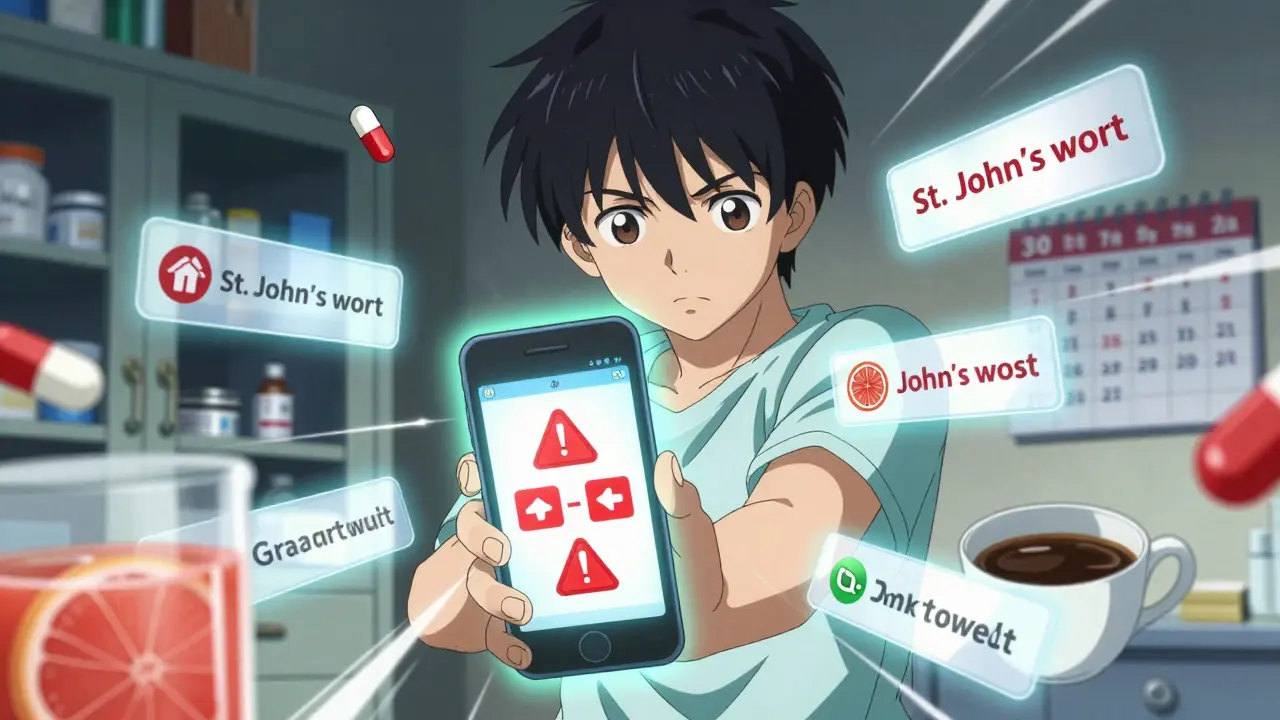
Every year, over a million people in the U.S. end up in the emergency room because of dangerous drug interactions. Many of these cases could have been avoided with a simple check at home-before the symptoms even start. If you're taking more than one medication, supplement, or even over-the-counter pain relievers, you’re at risk. And it’s not just about pills. Your morning coffee, grapefruit juice, or herbal tea could be quietly messing with your prescriptions. The good news? You don’t need to be a doctor to spot potential problems. You just need the right tools and a clear process.
Know What You’re Taking
Before you even open a drug interaction checker, you need a complete list of everything you’re using. This includes prescription drugs, over-the-counter meds like ibuprofen or antacids, vitamins, minerals, and herbal supplements like St. John’s Wort, fish oil, or garlic pills. Don’t forget topical creams, eye drops, or inhalers-they can interact too. Many people forget about supplements because they think, “It’s natural, so it’s safe.” That’s a dangerous assumption. St. John’s Wort, for example, can cut the effectiveness of birth control pills, blood thinners, and antidepressants by up to 60%.Write down the name, dose, and why you take each one. If you’re unsure what’s in a product, check the label for the active ingredient. For instance, many cold medicines contain acetaminophen. Taking two different cold meds could mean you’re doubling your dose without realizing it. A 2023 survey found that 28% of users struggled to identify active ingredients in OTC products. Keep this list updated every 30 days, or whenever you start or stop something.
Use a Trusted Drug Interaction Checker
Not all online tools are created equal. Stick to ones backed by medical institutions and updated regularly. The most reliable free options are Drugs.com Interaction Checker and WebMD Drug Interaction Checker. Both are updated daily and use databases with over 80,000 known interactions.Drugs.com has the edge in depth-it covers 24,000 prescription drugs, 4,000 OTC products, and 3,000 supplements. WebMD is easier to use for beginners, with color-coded severity levels and plain-language explanations. Medscape is powerful but designed for professionals, so skip it unless you’re comfortable with medical jargon. Avoid random apps you find in app stores. The FDA flagged 17 fraudulent interaction checkers in 2022. Only use tools from established health sites.
To use the checker:
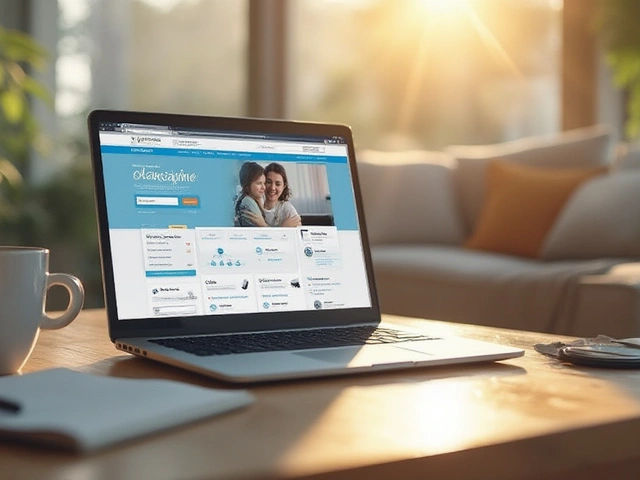
- Go to Drugs.com or WebMD on your phone or computer.
- Enter each medication one at a time. Use the generic name (like “sertraline”) instead of the brand name (like “Zoloft”) for better accuracy.
- Include all supplements and OTC drugs-even if you think they’re harmless.
- Hit “Check Interactions.” Results appear in under 5 seconds.
Understand the Severity Levels
Results will show interactions categorized as major, moderate, or minor. Don’t ignore any of them-but don’t panic either.- Major: These can cause life-threatening reactions. Examples: mixing warfarin with ibuprofen (risk of internal bleeding), or taking SSRIs with St. John’s Wort (risk of serotonin syndrome). If you see a major interaction, call your doctor or pharmacist immediately. Don’t wait.
- Moderate: These need attention but aren’t emergencies. Examples: taking statins with grapefruit juice (can raise drug levels to toxic ranges), or mixing certain antibiotics with dairy (reduces absorption). You might need to adjust timing, switch meds, or monitor symptoms.
- Minor: These usually cause mild side effects like drowsiness or upset stomach. Still worth noting, especially if you’re sensitive to medications.
Drugs.com flags 12% more moderate interactions than WebMD, which means it’s more thorough. But WebMD’s simpler explanations help avoid confusion. Use both if you’re unsure.
What the Tools Can’t Do
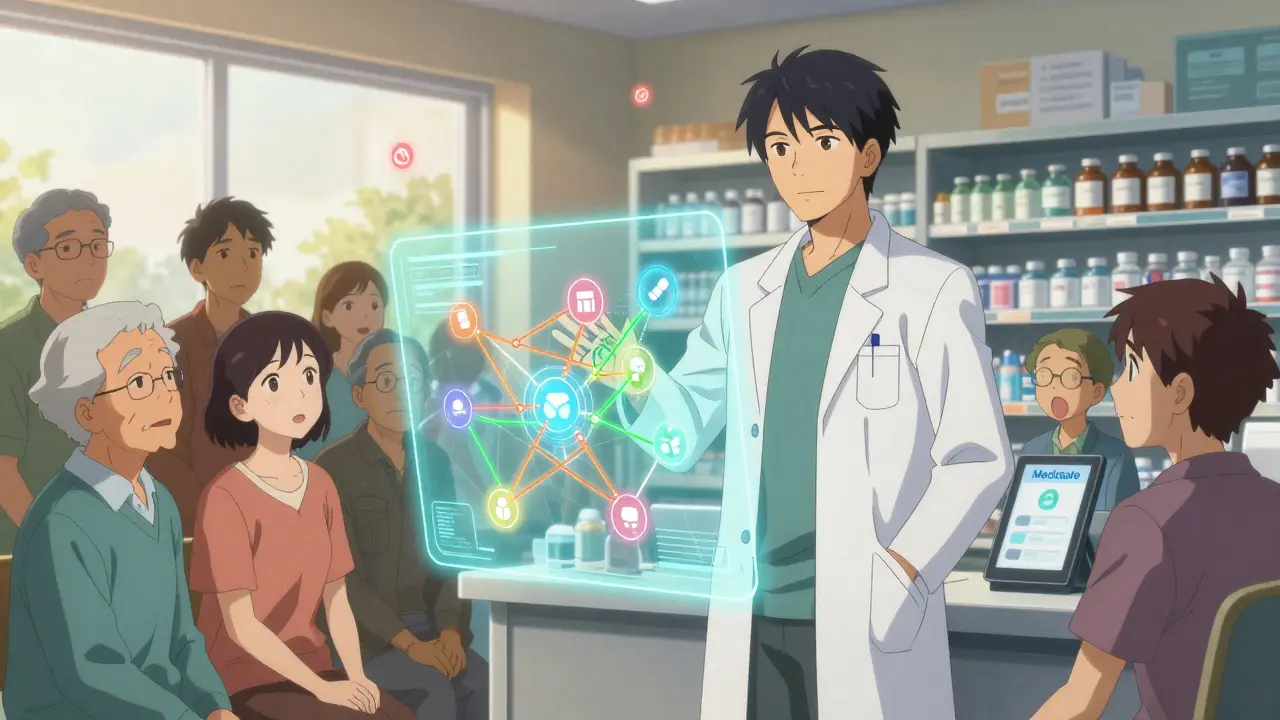
Drug interaction checkers are powerful, but they’re not magic. They can’t predict every possible reaction. About 18% of alerts are false positives-meaning the interaction isn’t actually dangerous for your body. And they miss rare or brand-new interactions. In 2023, a cancer drug interaction went undetected by all major consumer tools because it was too new to be in the database.They also don’t consider your individual health. Two people taking the same drugs might react differently based on age, liver function, kidney health, or genetics. That’s why tools like GoodRx are starting to integrate pharmacogenomic data-using DNA info to predict how your body processes drugs. This feature is expected to launch in late 2024 with 23andMe.
Most importantly, these tools don’t replace your pharmacist. A 2023 study in the Journal of the American Pharmacists Association found that combining a digital checker with a pharmacist consultation reduced hospitalizations by 42% in Medicare patients. Your pharmacist knows your full history, your other conditions, and how your body reacts to meds. They can spot things an algorithm can’t.
Real-Life Wins and Misses
People have used these tools to prevent serious harm. One Reddit user, u/MedSafetyNurse, caught a dangerous interaction between warfarin and ibuprofen that their doctor had missed. Another case in 2022 involved a 68-year-old patient taking sertraline and St. John’s Wort. The checker flagged serotonin syndrome-a potentially fatal condition. The patient stopped the supplement and avoided hospitalization.But there are failures too. Some users panic and quit essential meds after a minor alert. The FDA warns that 15% of patients stop taking critical drugs after seeing non-critical interaction warnings. That’s just as dangerous as ignoring a real risk. If you’re unsure, don’t stop anything. Call your pharmacist first.
How to Make It Stick
The biggest mistake people make is checking once and forgetting. Medication changes happen all the time. A new prescription, a seasonal cold, a supplement you try on a friend’s advice-all of these can introduce new risks.Here’s how to build a habit:
- Keep your medication list in one place-use your phone’s notes app or a printed sheet in your wallet.
- Update it every 30 days, or right after any doctor visit.
- Use a pharmacy app like Medisafe. It scans barcode labels on pill bottles and automatically tracks your meds and alerts you to interactions.
- Fill all your prescriptions at one pharmacy. They have your full record and can flag interactions before you even leave the counter.
Studies show that using a single pharmacy reduces interaction risks by 31%. That’s a simple step with big results.
When to Skip the App and Call a Pro
If you’re taking five or more medications, have kidney or liver disease, or are over 65, you’re in the high-risk group. In this case, digital checkers are a starting point-not the finish line. The CDC recommends that people with complex medication regimens always talk to a pharmacist before making any changes. Pharmacists can adjust doses, suggest safer alternatives, or even contact your doctor on your behalf.Also, if you start feeling unusual symptoms-dizziness, confusion, rapid heartbeat, nausea, or extreme fatigue-don’t assume it’s just aging or stress. It could be a drug interaction. Call your doctor or pharmacist immediately. Don’t wait for your next appointment.
The Bigger Picture
Drug interactions aren’t just a personal risk-they’re a public health crisis. In the U.S., they cost the healthcare system over $500 billion a year. But tools like interaction checkers are making a difference. Usage has jumped from 18% of adults in 2018 to 47% in 2023. The CDC expects this number to keep rising, especially as Medicare integrates these tools into patient portals by mid-2024.What’s next? Personalized alerts based on your genetics, AI that learns your reaction patterns, and real-time syncing with your EHR (electronic health record). But none of that matters if you don’t use the tools you have today. Start with your list. Check your meds. Talk to your pharmacist. It’s not complicated. But it could save your life.
Can I trust free drug interaction checkers online?
Yes, but only if they’re from trusted sources like Drugs.com, WebMD, or Medscape. Avoid random apps or websites with no medical backing. The FDA has warned about 17 fraudulent interaction checkers. Stick to sites that update their databases daily and cite clinical research.
Do herbal supplements really interact with prescription drugs?
Absolutely. St. John’s Wort can reduce the effectiveness of birth control, antidepressants, and blood thinners. Garlic and ginkgo can increase bleeding risk when taken with warfarin. Even vitamin K can interfere with blood thinners. Just because something is “natural” doesn’t mean it’s safe with your meds.
What should I do if a checker flags a major interaction?
Don’t stop your medication on your own. Call your pharmacist or doctor right away. They can help you decide whether to switch drugs, adjust the dose, or change when you take it. Some major interactions can be managed safely with timing-like taking one drug in the morning and the other at night.
Why do I keep getting false alerts?
About 18% of interaction alerts are false positives-meaning the risk is low or nonexistent for your specific situation. This happens because databases use general population data. Factors like your age, liver function, or other health conditions aren’t always considered. Always discuss alerts with a pharmacist before making changes.
Can I use these tools if I’m outside the U.S.?
Yes. Drugs.com and WebMD include many international medications, especially common ones like statins, blood pressure drugs, and antidepressants. But if you’re taking a medication only available in your country, check the generic name and verify its active ingredient. You may need to consult a local pharmacist for confirmation.
Is it safe to rely on my pharmacy’s app instead of a drug checker?
Pharmacy apps like Medisafe are excellent-they track your meds, send reminders, and often include interaction alerts. But they’re only as good as the data you enter. Make sure you add every supplement and OTC drug. If your pharmacy app doesn’t flag something, double-check with Drugs.com or WebMD for a second opinion.
Candice Hartley
January 28, 2026 AT 03:03This is so needed! I had no idea grapefruit juice could mess with my blood pressure med. 🙃 Just checked my list and found three things I need to fix. Thanks for the heads-up!
April Williams
January 29, 2026 AT 18:18People still don’t get it. You think a free website is gonna replace a doctor? I’ve seen folks panic and quit their heart meds because some app said ‘moderate interaction.’ Then they end up in the ER anyway. This isn’t a game. You’re playing with your life.
And don’t even get me started on supplements. ‘Natural’ doesn’t mean safe. St. John’s Wort is basically a chemical weapon in disguise. If you’re taking it with anything, you’re already in trouble. Stop pretending you’re in control.
Pharmacists aren’t just there to hand out pills. They’re the only ones who actually know what’s going on. Stop being lazy and call one. It’s not that hard.
Andrew Clausen
January 31, 2026 AT 03:46Incorrect terminology throughout. The article refers to ‘drug interaction checkers’ as if they’re diagnostic tools. They’re not. They’re decision support aids with variable accuracy. Also, the claim that Drugs.com flags ‘12% more moderate interactions’ than WebMD is misleading without context-sample size, population data, or clinical validation aren’t cited.
Additionally, ‘serotonin syndrome’ is not caused by SSRIs and St. John’s Wort ‘together’-it’s caused by excessive serotonergic activity. The phrasing implies causation where only correlation exists. Precision matters. This isn’t a blog post for TikTok.
And why is the FDA cited for ‘17 fraudulent apps’ but no link or study number provided? That’s sloppy sourcing.
Murphy Game
February 1, 2026 AT 05:34Let’s be real. All these ‘trusted’ sites are owned by Big Pharma. Drugs.com? Owned by a pharma conglomerate. WebMD? Sponsored by Pfizer. They don’t want you to know the truth: most interactions are exaggerated to sell you newer, pricier drugs.
My cousin took statins with grapefruit for 10 years. Never had a problem. But now they’re telling us it’s ‘toxic’? Yeah right. They just want you to switch to a brand-name alternative that costs $500 a month.
And pharmacists? They’re paid by the system to scare you into buying more pills. I’ve seen it. They’ll flag a ‘moderate’ interaction just to upsell you a $120 ‘safer’ version of your $5 generic.
Don’t trust the algorithm. Trust your body.
Paul Taylor
February 2, 2026 AT 17:21I’ve been doing this for years and let me tell you it’s the most underrated health habit out there
My mom is 72 and takes eight different meds plus turmeric gummies and melatonin and fish oil and a magnesium thing and a calcium thing and a vitamin D that’s actually a gummy bear shaped like a bear and she’s fine because she updates her list every month and uses Medisafe and fills everything at CVS
She doesn’t even know what a serotonin syndrome is but she knows if she feels weird after taking something new she calls her pharmacist and that’s it
And honestly that’s the whole point
You don’t need to be a scientist you just need to be consistent
It’s not about knowing every interaction it’s about not being lazy
And if you’re over 65 or on five meds you don’t need an app you need a human who remembers your name and your dog’s name and that you hate the color blue
That’s what saves lives not algorithms
Also I use the printed list in my wallet and I have a sticky note on my fridge that says CHECK IT MONDAYS
It’s dumb but it works
John O'Brien
February 3, 2026 AT 19:55Bro I just checked my meds and found out my ibuprofen was fighting my blood thinner like it was in a WWE match
Went straight to the pharmacy and the pharmacist was like ‘oh yeah we flagged that last week’ and she swapped me for naproxen
5 minutes saved me from a hospital trip
Why aren’t more people doing this
It’s literally free and takes less time than scrolling TikTok
Stop being scared and just check it
suhail ahmed
February 5, 2026 AT 11:31Man this is the kind of post that makes me proud to be part of this community
Back home in India we don’t have access to these tools but I’ve started translating these guides into Hindi and Tamil and sharing them with my aunties who take five pills a day and think ‘herbal tea’ means ‘no side effects’
One lady was mixing turmeric with her blood thinner and didn’t know it could cause internal bleeding
Now she checks every new supplement with her local pharmacist and even prints out the interaction report to show her kids
It’s not about tech it’s about awareness
And honestly if we can make this work in a village with no internet we can make it work anywhere
Spread this like wildfire
It’s not just health it’s dignity
Desaundrea Morton-Pusey
February 7, 2026 AT 10:37Why are we even talking about this like it’s some revolutionary idea? In America we’re drowning in pills and now we’re being told to check them like we’re playing a video game?
Meanwhile the government lets drug companies market directly to us and then acts shocked when people mix their meds with energy drinks.
Fix the system. Not the person.
Marian Gilan
February 8, 2026 AT 09:03you know what they dont tell you right
these checkers are part of the big pharma surveillance network
every time you type in your meds they log it
then they sell it to insurance companies
and then they raise your premiums because you take too many pills
or worse
they flag you as ‘high risk’ and deny you coverage
my cousin got denied life insurance because he used webmd to check his blood pressure med
they said ‘your interaction risk profile is elevated’
like what the f
so now i just write everything on paper and burn it after
trust no app
trust no pharmacist
trust no doctor
only trust your gut
and maybe a tinfoil hat
Harry Henderson
February 9, 2026 AT 22:32Stop overthinking this. You don’t need a PhD to stay alive.
Grab your meds. Open Drugs.com. Type them in. Hit check.
If it says major? Call your pharmacist.
If it says minor? Maybe adjust when you take it.
If it says nothing? Good. You’re doing better than most.
Five minutes. That’s all it takes.
Stop waiting for someone else to fix it.
Do it now.
Right now.
Go.
I’ll wait.
astrid cook
February 10, 2026 AT 15:31Of course you’re telling people to use ‘trusted’ websites. But who decides what’s trusted? The same people who profit when you take more drugs.
And why is it always the supplements that are dangerous? Never the brand-name prescriptions. Never the ones with billion-dollar ad campaigns.
St. John’s Wort is the villain. But Zoloft? Totally fine.
Same active ingredients. Same side effects. But one’s ‘natural’ so it’s evil.
Wake up. This is a marketing scam dressed up as safety.
And don’t even get me started on the ‘pharmacist consultation’ push. That’s just a sales funnel for expensive consultations.
They want you dependent. Not safe.
Kegan Powell
February 12, 2026 AT 07:59Look I used to think this was all overkill
until my dad had a near miss with his blood thinner and some random painkiller he got at the gas station
he didn’t even know it had ibuprofen in it
we found out because his neighbor had the same meds and used the checker
so now we all do it
my sister adds her vitamins every time she buys them
my mom checks before she tries a new tea
it’s not about being paranoid
it’s about being smart
you don’t need to be a doctor
you just need to care enough to check
and if you’re reading this and you haven’t checked your meds in a year
go do it
your future self will thank you
❤️