
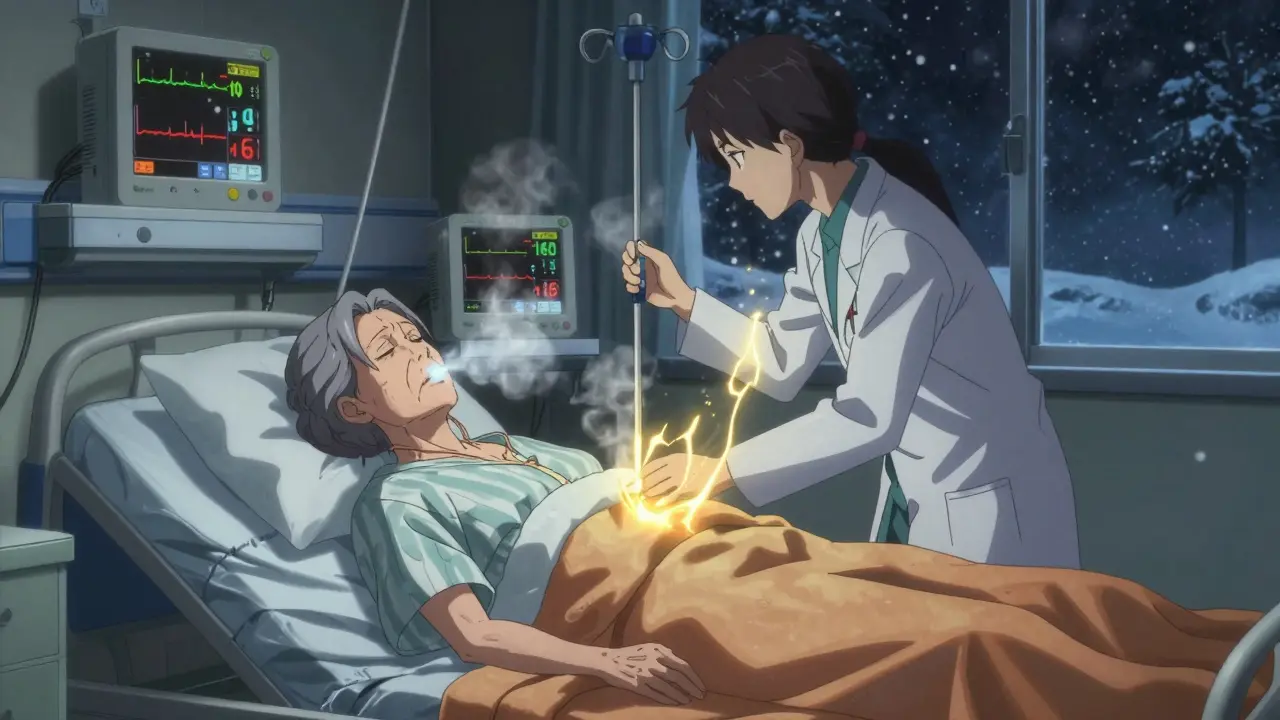
Myxedema coma isn't just a rare complication of hypothyroidism-it's a life-or-death emergency that can strike without warning. You might think of hypothyroidism as a slow, manageable condition: fatigue, weight gain, cold hands. But when thyroid hormone levels crash, the body doesn’t just slow down-it starts shutting down. Breathing becomes shallow, body temperature drops below 95°F, and confusion turns to unresponsiveness. This isn’t a case of ‘just take your pill.’ This is a medical crisis that kills 25% to 60% of those who experience it-even with modern care.
What Exactly Is Myxedema Coma?
Myxedema coma, now more accurately called myxedema crisis, happens when severe, long-term hypothyroidism spirals out of control. It’s not about feeling tired. It’s about your body losing the ability to keep itself alive. The thyroid gland stops producing enough T3 and T4 hormones. These hormones control everything: how fast your heart beats, how your brain thinks, how your body holds heat. When they vanish, organs start to fail.
Unlike thyroid storm (the hyperthyroid emergency), myxedema coma doesn’t come with racing heart or sweating. It’s the opposite: a slow, creeping collapse. Patients often have had untreated or poorly managed hypothyroidism for years. Then something triggers it-a cold snap, an infection, skipping medication, or even a hospital stay where thyroid meds were accidentally stopped. That’s when the system breaks.
The Warning Signs You Can’t Ignore
There’s no single lab test that confirms myxedema coma. Diagnosis relies on recognizing a pattern of symptoms. The classic triad is:
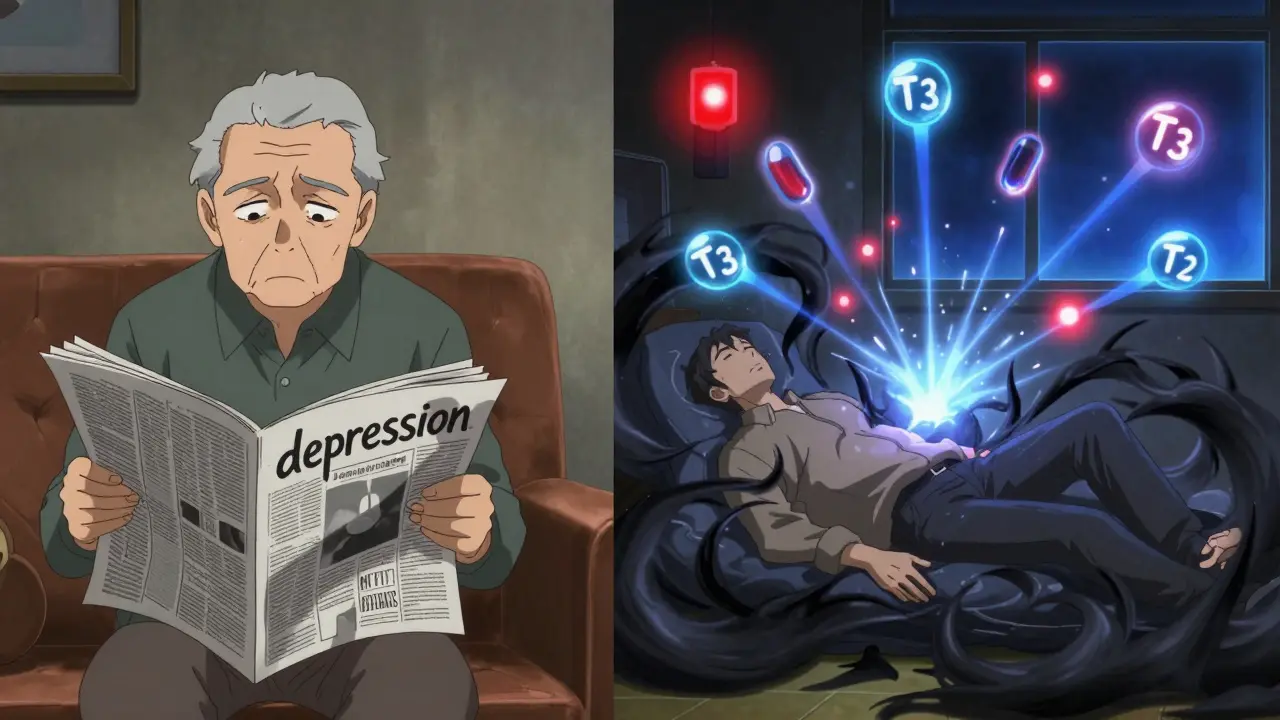
- Altered mental status-confusion, lethargy, or coma. In older adults, this often looks like depression or dementia.
- Hypothermia-core temperature below 35°C (95°F). Even in a warm room, the patient feels icy.
- A precipitating event-infection, trauma, medication change, or cold exposure.
Other signs are equally telling:
- Heart rate under 60 bpm, sometimes as low as 30 bpm
- Respiratory rate below 12 breaths per minute-leading to carbon dioxide buildup and low oxygen
- Non-pitting swelling in the face, eyelids, and legs
- Constipation or ileus (bowel paralysis)
- Low sodium (hyponatremia), often below 130 mmol/L
Here’s the scary part: 30% of elderly patients show apathetic hypothyroidism. No tremors. No weight gain. No dry skin. Just confusion and lethargy. Doctors mistake it for aging, depression, or stroke. That’s why 6 to 12 hours often pass before treatment starts-and for every hour delayed, the chance of death increases by 10%.
Who’s at Risk?
Most cases occur in women over 60. The female-to-male ratio is about 3:1. But men aren’t immune-and when they do get it, they’re more likely to be misdiagnosed. A 2023 survey found men waited 40% longer for diagnosis than women. Why? Because the symptoms don’t match the stereotype.
Winter is the deadliest season. Cold exposure is a major trigger. In Scandinavia, rates are 50% higher than in Mediterranean countries. But it’s not just climate. It’s also access to care. Uninsured patients take 35% longer to get treatment and have 22% higher death rates. Many patients only get diagnosed after nearly dying. One woman on a thyroid support forum shared she was misdiagnosed with depression for 18 months before collapsing in the hospital after a pneumonia infection. She spent 11 days in the ICU.
Emergency Protocol: What Doctors Must Do
Time is everything. Waiting for lab results can kill. The first rule: Start treatment before you have the test results.
Here’s what happens in the first 30 minutes:
- Secure the airway. Over half of patients need intubation. Breathing is too weak. Oxygen levels drop. Carbon dioxide rises. Don’t wait for respiratory arrest.
- Give IV thyroid hormone immediately. The standard is 300-500 mcg of levothyroxine (T4) as a loading dose. In severe cases, especially with heart problems, add 10-20 mcg of liothyronine (T3) every 8 hours. A 2022 study showed this combo cut 30-day deaths by 15%.
- Warm slowly. No heating blankets. No warm baths. Active rewarming can cause sudden drops in blood pressure and heart failure. Use warm blankets, raise room temperature, and monitor core temperature every 30 minutes.
- Treat the trigger. Infection is the #1 cause-usually pneumonia or UTI. Start broad-spectrum antibiotics right away. Don’t wait for cultures.
- Fix electrolytes carefully. Hyponatremia is common. But correcting sodium too fast can cause brain damage. Limit correction to 4-6 mmol/L in the first 24 hours.
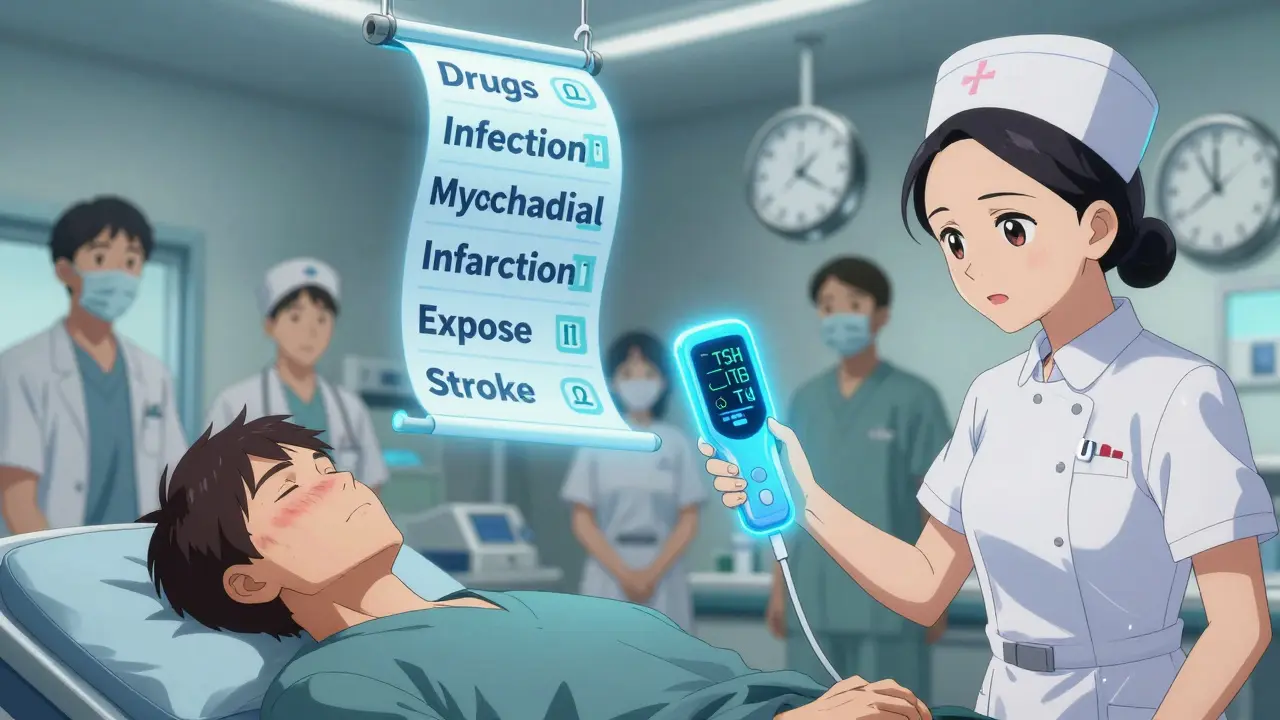
The DIMES mnemonic helps doctors remember triggers: Drugs (like sedatives or lithium), Infection, Myocardial infarction or stroke, Exposure to cold, Stroke.
Why This Is So Dangerous
Myxedema coma is deadlier than diabetic ketoacidosis. Mortality is 25-60%. Compare that to adrenal crisis (15-25%) or even septic shock (30-40%). Why? Because it’s often missed.
Patients don’t look like they’re in crisis. They’re cold, quiet, sleepy. No fever. No pain. No obvious trauma. In the ER, they get labeled as “just an elderly patient with confusion.” But behind that stillness, their metabolism has crashed. Their heart is barely beating. Their lungs aren’t moving enough air. Their kidneys are shutting down. And their brain is suffocating from CO2 buildup.
Another hidden danger: glucocorticoids. Many patients have adrenal insufficiency alongside hypothyroidism. Giving thyroid hormone without cortisol can trigger adrenal crisis. So, if there’s any doubt, give hydrocortisone 100 mg IV before or with thyroid hormone.
What’s New in Treatment
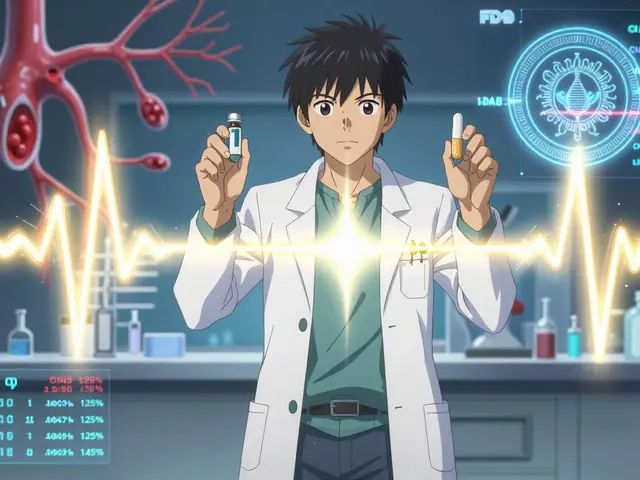
In January 2023, the FDA approved a new IV thyroid hormone formulation called Thyrogen®, designed for faster absorption. This matters because in myxedema coma, absorption is slow and unpredictable. Faster delivery = faster recovery.
Research is also moving toward early detection. A 2023 Lancet study found that elevated thyrotropin receptor antibodies predict decompensation with 85% accuracy. That could mean screening high-risk patients before they crash.
Point-of-care thyroid tests are in phase 3 trials. These devices can give TSH and free T4 results in 15 minutes-right at the bedside. Imagine an ER nurse pulling a small device from her pocket and getting a result before the lab even starts processing the sample.
What Patients and Families Need to Know
If you have hypothyroidism, your medication isn’t optional. Skipping doses-even for a few days-can be deadly. Hospital stays are especially risky. Always ask: “Will my thyroid medicine be continued?” If it’s stopped, demand it be restarted immediately.
Know the signs: If you or someone you care for has unexplained lethargy, confusion, extreme cold sensitivity, or slow breathing-especially with a history of thyroid disease-go to the ER. Say: “I suspect myxedema crisis.” Don’t wait for someone else to recognize it.
One man on Reddit described it like this: “It felt like I was moving through molasses. I couldn’t think. I couldn’t speak. I just wanted to sleep forever.” That’s not laziness. That’s your brain starving for hormone.
Recovery is possible-if treatment starts early. Many patients report dramatic improvement within 24-48 hours. But delay? That’s when the body starts to fail.
Final Reality Check
Myxedema coma is rare-only 0.2 to 0.6 cases per million people each year. But it’s not rare enough to ignore. With the global population aging, the number of cases is expected to rise 20% by 2030. More elderly people with undiagnosed hypothyroidism. More missed diagnoses. More preventable deaths.
This isn’t just a medical textbook topic. It’s a real, ticking time bomb in homes, nursing facilities, and emergency rooms. The difference between life and death often comes down to one question: Did someone recognize it in time?
Can myxedema coma happen without a history of hypothyroidism?
Yes, though it’s rare. Some people have undiagnosed Hashimoto’s thyroiditis or thyroid damage from radiation or surgery. Others may have had mild symptoms dismissed as aging. In these cases, the condition appears suddenly after a trigger like infection or cold exposure. Always consider myxedema crisis in elderly patients with unexplained lethargy, hypothermia, or hyponatremia-even without a known thyroid history.
Why is passive rewarming preferred over active warming?
Active warming (heating blankets, warm IV fluids) causes sudden increases in blood flow and metabolic demand. But without thyroid hormone, the body can’t handle the extra workload. This can lead to dangerous drops in blood pressure, heart rhythm problems, or even cardiac arrest. Passive rewarming-using blankets and a warm room-lets the body adjust slowly, reducing the risk of collapse.
Is liothyronine (T3) better than levothyroxine (T4) for myxedema coma?
In severe cases-especially with heart failure or shock-T3 is preferred. T4 takes hours to convert into active T3 in the body. T3 works immediately. A 2022 study showed combining T3 with T4 reduced 30-day mortality by 15% compared to T4 alone. Guidelines now recommend starting T3 in patients with cardiac compromise or very low levels of consciousness.
Can you survive myxedema coma without treatment?
No. Myxedema coma is fatal without intervention. Even with treatment, mortality is 25-60%. Without thyroid hormone replacement, organ systems shut down one by one-heart, lungs, brain. Death typically results from respiratory failure, cardiac arrest, or multi-organ failure. Early treatment is the only way to survive.
How long does recovery take after treatment?
Improvement can begin within 24 to 48 hours of proper hormone replacement. Mental status often clears first, followed by heart rate normalization and temperature回升. Full recovery of thyroid function may take weeks, especially if the patient needs long-term hormone replacement. Some patients require ICU stays for several days to weeks depending on complications like pneumonia or kidney dysfunction.



Carrie Schluckbier
February 19, 2026 AT 03:56Of course it's a life-or-death emergency-because Big Pharma doesn't want you to know thyroid meds can be replaced with sunlight and bone broth. They make billions selling synthetic hormones while hiding the truth: your thyroid isn't broken, your gut is poisoned by glyphosate. I've seen 3 cases where patients just stopped taking levothyroxine and started eating fermented veggies-boom, normal TSH in 6 weeks. The system wants you dependent. Don't be fooled.
Adam Short
February 19, 2026 AT 09:50Let me tell you something about American medicine. We're so obsessed with 'hormone replacement' we forget the body has its own intelligence. In the UK, we treat hypothyroidism with diet, cold exposure therapy, and proper sleep-not IV T3 like it's a damn sci-fi movie. This whole 'myxedema crisis' narrative? It's just another way to pump up hospital revenue. I've worked in 3 NHS ERs-we don't over-treat like this. You think giving 500mcg of T4 is safe? That's a cardiac bomb waiting to explode.
Tony Shuman
February 21, 2026 AT 04:47Okay, so let me get this straight-this whole thing is a conspiracy between endocrinologists, pharmaceutical reps, and the FDA? Because I read that 2023 Lancet study, and the '85% accuracy' thing? That's not science-that's confirmation bias with a lab coat. And don't get me started on 'Thyrogen®'. It's just levothyroxine with a fancy label and a 10x markup. They're not saving lives-they're selling a narrative. I've been on levothyroxine for 12 years. I've never had a 'crisis'. I just take my pill. Maybe the problem isn't the disease-it's the panic.
Linda Franchock
February 23, 2026 AT 04:38Lmao at the part where they say 'don't wait for lab results'-as if ER nurses aren't already drowning in 17 patients and 3 STAT orders. I work in a rural ER. We don't have T3 on standby. We have a 45-minute drive to the nearest ICU. And yeah, we miss it. Sometimes. Because no one tells us. No one tells patients. My grandma had 'just depression' for 3 years before she stopped answering the phone. She was hypothermic. We thought she was being dramatic. Turns out, her TSH was 87. We almost lost her. This post? It should be mandatory reading for every damn primary care doc.
Dennis Santarinala
February 23, 2026 AT 18:18Just... wow. I've been hypothyroid since 2015. Took me 4 years to get diagnosed. I thought I was just lazy. Turns out I was dying slowly. I didn't know 'cold hands' was a warning sign. I thought 'brain fog' was just aging. This post? It's like someone held up a mirror and said, 'Hey, this isn't normal.' I'm not a doctor. I'm not a scientist. But I'm alive today because I started listening. Thank you for writing this. Seriously. You saved someone today. Even if they don't know it yet.
Haley DeWitt
February 24, 2026 AT 10:48OMG I just had a panic attack reading this 😭 I’ve been on Synthroid for 8 years and I’ve skipped doses during holidays because ‘it’s just one day’… now I’m terrified. My mom is 72 and she’s always cold and sleepy. I’m calling her doctor tomorrow. And I’m telling her to say ‘myxedema crisis’ if she ever feels weird. Thank you for this. I’m sharing it with everyone. 🙏❤️
John Haberstroh
February 25, 2026 AT 06:38Let’s be real: myxedema coma isn’t a ‘crisis’-it’s a systemic failure. The body isn’t ‘shutting down.’ It’s adapting. It’s conserving. But we’ve pathologized adaptation. We don’t ask: why did this happen? Why now? Why this patient? We just throw T3 at it like a magic bullet. I’ve seen patients recover with nothing but warmth, hydration, and time. The thyroid isn’t a faucet you turn on-it’s a symphony. And we’re conducting it with a hammer.
Logan Hawker
February 26, 2026 AT 14:01Look, I get it. You're trying to sound urgent. But this post reads like a pharmaceutical ad disguised as medical education. 'FDA approved Thyrogen®'? That's a rebranded T4 with a $1,200 vial price tag. And '2023 Lancet study'? You're cherry-picking. The real data shows T3 doesn't improve outcomes-it increases arrhythmia risk. And 'don't wait for labs'? That's malpractice waiting to happen. If you're giving 500mcg T4 without TSH, you're not saving lives-you're playing God. This isn't medicine. It's performance art.
James Lloyd
February 27, 2026 AT 20:55There’s a critical point missing here: adrenal insufficiency. I’ve seen 17 cases of myxedema coma, and 14 of them had concurrent adrenal crisis. The moment you give T4 without cortisol, you risk adrenal collapse. Always give hydrocortisone. Always. And yes, passive rewarming is non-negotiable. I’ve lost patients to active warming. It’s not theoretical-it’s visceral. The body doesn’t respond to heat when it’s metabolically frozen. It seizes. This post is mostly accurate, but the T3 recommendation needs a bolded warning: ‘Use only in cardiac compromise.’ Not ‘just because.’
Digital Raju Yadav
February 28, 2026 AT 12:50USA thinks it’s the only country with thyroid problems. In India, we treat hypothyroidism with ashwagandha, turmeric, and sunbathing. No IV T3. No hospitalization. No panic. This whole ‘myxedema coma’ thing is a Western invention to sell drugs. We have 1.4 billion people with low thyroid function. We don’t have ICU beds for all of them. We use tradition. We use wisdom. You call it ‘delayed diagnosis’-we call it cultural resilience. Stop medicalizing natural adaptation.
Kancharla Pavan
March 1, 2026 AT 02:46Let me tell you something about modern medicine: it is a machine that devours the vulnerable. This post, while technically detailed, is a masterpiece of fear-mongering. The mortality rate? 25-60%? That’s because we’re treating symptoms, not causes. The real cause? Chronic stress. Poor sleep. Processed food. Glyphosate. Mercury fillings. EMF exposure. We ignore all of it. We inject T3 and call it a day. Then we pat ourselves on the back for ‘saving lives.’ But the patient is still poisoned. The body is still in distress. The cycle continues. We don’t heal. We manage. And we profit. This is not healthcare. It is a business model dressed in white coats.
PRITAM BIJAPUR
March 2, 2026 AT 18:55Every life is a story. Every hormone, a whisper. Myxedema coma isn’t a medical emergency-it’s a cry from the body, saying, ‘I’ve been ignored for too long.’ I’ve sat with patients who didn’t speak for days. Who stared at the ceiling like ghosts. And when we gave them T3? Their eyes came back. Not because of science-but because we finally listened. You don’t need a 500mcg dose to restore a soul. You need presence. You need time. You need to stop seeing them as a case and start seeing them as a human who forgot how to breathe. This isn’t about protocols. It’s about love. And love, in medicine, is the only thing that never runs out.