
FDA Safety Communication Search Simulator
Simulate FDA Safety Communication Search
Enter a year and drug name to see what type of FDA safety information you might find.
Search Results
Enter a year and drug name to see results.
The U.S. Food and Drug Administration (FDA) doesn’t just issue warnings about dangerous drugs and devices - it keeps a detailed, public record of every one. If you’re trying to find out what the FDA said about a medication or medical device five, ten, or even twenty years ago, you’re not stuck guessing. The FDA Safety Communications Archive is a free, searchable treasure trove of official risk alerts, labeling changes, and public advisories - all organized by year and product type.
What’s in the FDA Safety Communications Archive?
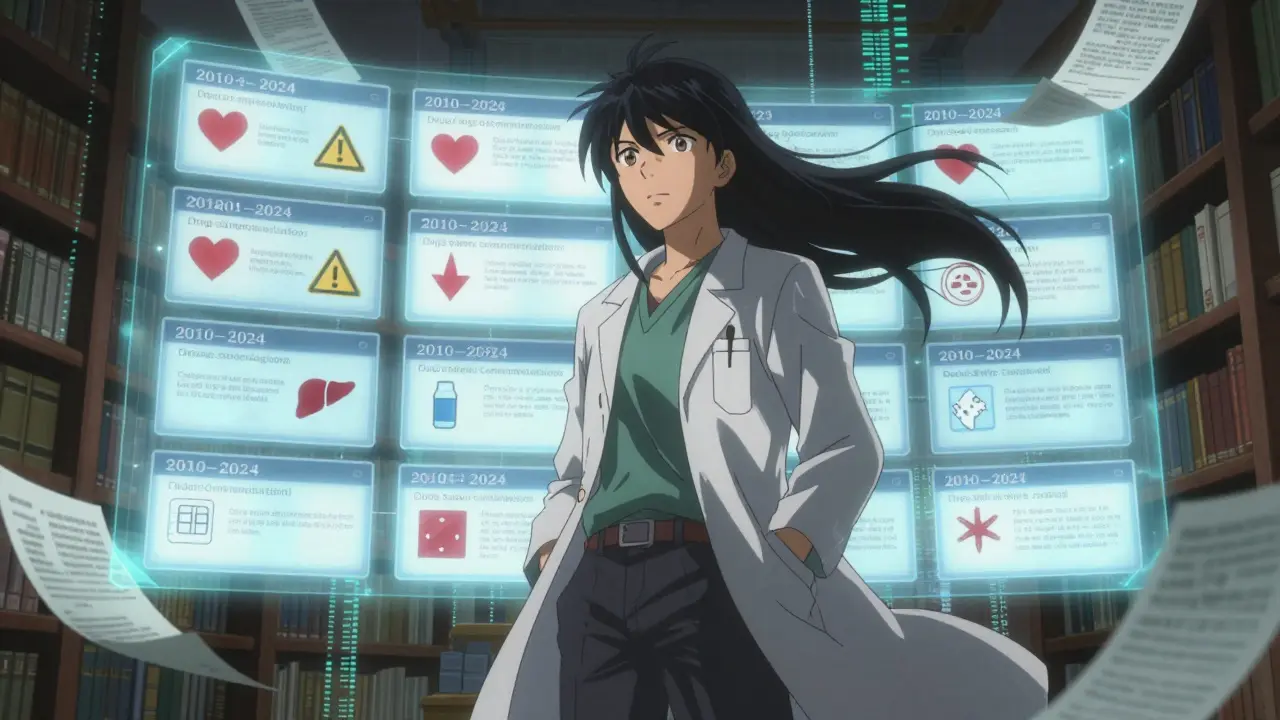
The archive isn’t one single list. It’s made up of three main systems that work together but serve different purposes. First, there are the Drug Safety Communications (DSCs). These are public notices issued by the FDA when new safety concerns arise after a drug hits the market. They cover everything from rare liver damage linked to a diabetes drug to heart rhythm risks tied to an antibiotic. These communications started being formally archived in 2010, and you can find every one from 2010 through 2024 on the FDA website.Then there’s the Drug Safety-related Labeling Changes (SrLC) Database. This one’s more technical. It tracks exact changes made to the official prescribing information - the tiny print in the drug’s package insert. If the FDA forced a manufacturer to add a new warning about birth defects in the “Use in Specific Populations” section, or added a black box warning about suicide risk, it’s here. This database only goes back to January 2016, so if you’re researching changes before that, you’ll need to dig deeper.
For medical devices, there’s the Medical Device Safety Communications system. These alerts cover everything from faulty pacemakers to contaminated surgical tools. In September 2025, the FDA announced it was expanding its “Early Alerts” program to cover all medical devices - not just high-risk ones. That means you can now find warnings about even common items like glucose monitors or catheters if a safety issue emerges.
Why Does This Archive Matter?
Imagine you’re a doctor reviewing a patient’s history. They took a medication in 2012 that was later pulled from the market. You need to know what the FDA warned about it - not what a blog or forum says. Or maybe you’re a researcher studying how often drug labels change after approval. Or a patient who had a bad reaction and wants to see if others reported the same thing. The archive gives you the official truth - not rumors, not marketing, not outdated social media posts.The system didn’t always exist like this. Before the 2007 FDA Amendments Act (FDAAA), the agency had limited power to act on post-market safety data. That law changed everything. It forced the FDA to actively monitor drugs after they were sold and to communicate those findings clearly. The archive is the result - a direct outcome of that legal shift. Before 2010, safety info was scattered, inconsistent, and often buried in internal memos. Now, it’s public, searchable, and dated.
How to Find What You Need
Start at the FDA’s Drug Safety and Availability page. From there, you’ll see clear links to the three archives. For DSCs from 2010 to 2024, click “Drug Safety Communications” and pick the year. Each entry includes the date, the drug or class affected, the nature of the risk, and what the FDA recommended - whether it was a label update, a restricted use, or a market withdrawal.For labeling changes since 2016, go to the SrLC Database. You can search by drug name, active ingredient, or even by the specific section of the label that changed - like “Contraindications” or “Adverse Reactions.” The database shows you exactly what was added, removed, or modified. It even tells you whether the change was requested by the company or required by the FDA under Section 505(o)(4) of the Federal Food, Drug, and Cosmetic Act.
For medical device alerts, visit the “Medical Device Safety Communications” section. Look for “Early Alerts” - these are the most urgent, often signaling a potential recall. The FDA now includes all device types in this system, so even low-risk items like hearing aids or contact lenses can appear here if a safety issue is confirmed.
What About Pre-2010 Information?
If you’re looking for warnings from the 1990s or earlier, the digital archive won’t help. But you’re not out of luck. The FDA’s own website offers a tool called the FDA.gov Archive, which lets you view old versions of web pages that have since been updated or removed. You can search for specific drug names or alert titles from the early 2000s.For anything older than 2000, you’ll need to go to the National Archives. They hold physical and digitized records from the FDA’s early years - including correspondence, inspection reports, and internal memos from 1906 to 1978. These aren’t formatted like modern alerts, but they contain the raw history: letters from manufacturers, complaints from doctors, and internal debates about whether a drug was too dangerous to stay on the market. The records are stored in Philadelphia, but many have been digitized and are accessible online through the National Archives website.
What’s Missing - And What’s Coming
There’s a gap. The SrLC Database only starts in 2016. That means if you’re studying how the FDA handled labeling changes for, say, antidepressants in the early 2000s, you’re stuck piecing together old DSCs and trying to guess what label updates might have accompanied them. The FDA knows this. In October 2023, they announced a new initiative to help researchers collect and organize historical drug approval data - a step toward filling that gap.Another issue? Not all warnings have the same impact. Research from 2012 showed that while some FDA alerts led to immediate drops in prescriptions or hospital visits, others had little to no effect. Why? Because how the message is delivered matters just as much as what it says. A letter to doctors might be ignored. A public alert on social media might be misunderstood. The FDA is still learning how to make these warnings stick.
How This Compares to Other Countries
The European Medicines Agency (EMA) also issues safety alerts, but their historical archive isn’t as cleanly organized. Before 2015, their records are patchy - scattered across different websites and formats. Health Canada has a single “Recalls and Safety Alerts” page, but it doesn’t separate drugs from devices or label changes from recalls. The FDA’s system, while complex, is more detailed and better structured for research.One unique advantage? The FDA links its safety communications directly to its Drugs@FDA database. That means you can click from a safety alert to the exact drug’s approval history, labeling documents, and even the original application submitted by the manufacturer. No other country offers that level of integration.
Real-World Use Cases
- A pharmacist notices a patient is taking an old generic drug with a known interaction. They check the FDA archive and find a 2018 DSC that warned about the risk - now they can explain it clearly to the patient. - A university student writing a thesis on opioid safety uses the SrLC Database to track how black box warnings evolved from 2016 to 2023. - A family member of someone who had a rare reaction to a blood thinner searches the archive and finds a 2015 alert that was buried in a newsletter - giving them clarity after years of confusion. - A lawyer representing a client injured by a medical device finds an Early Alert from 2021 that the manufacturer claims they never saw - the FDA’s public record proves otherwise.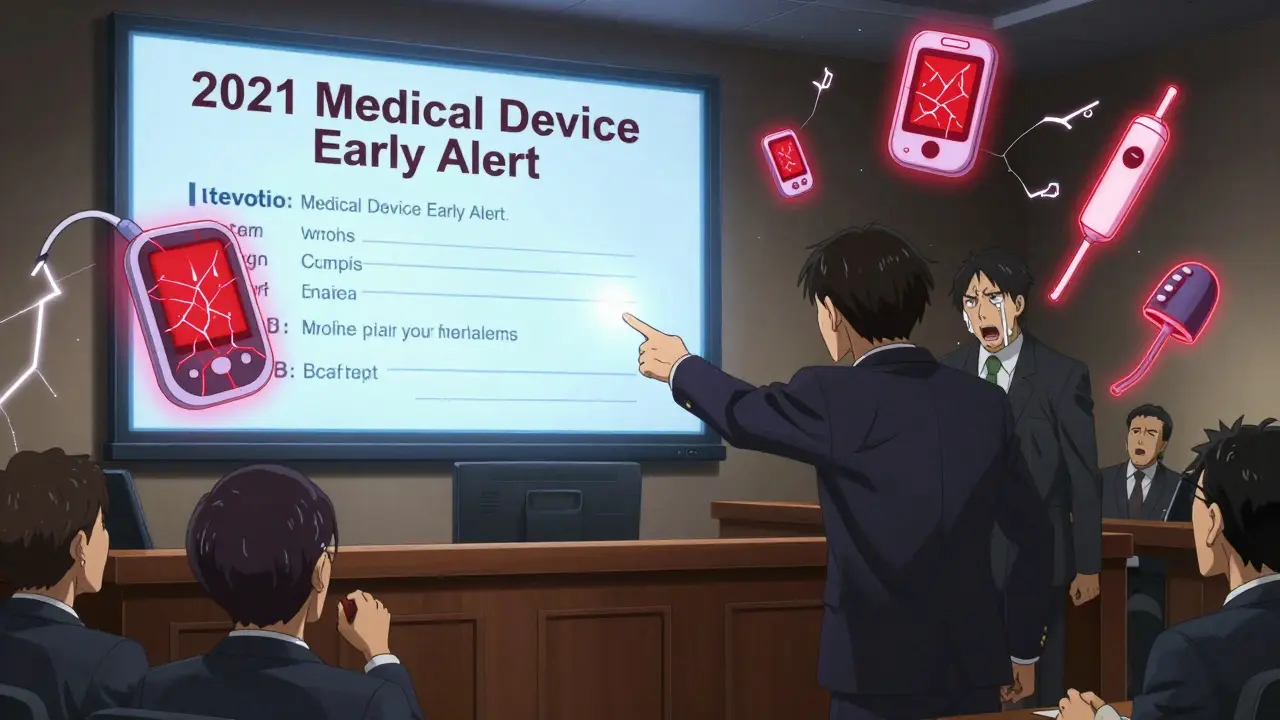
How to Use This Archive Effectively
1. Start with the year - If you know when the concern arose, go straight to that year’s DSCs. 2. Use exact drug names - Generic names work better than brand names in searches. 3. Check both drug and device sections - Some products, like insulin pumps or implantable glucose sensors, blur the line. 4. Don’t skip the SrLC Database - Even if you found a DSC, the labeling change might be more detailed. 5. Use the FDA Archive for pre-2010 info - It’s clunky, but it’s the only way to see old web pages as they were. 6. Contact the Division of Drug Information if you’re stuck - Call (855) 543-3784 or email [email protected]. They help researchers daily.What This Means for You
Whether you’re a patient, provider, researcher, or advocate, the FDA Safety Communications Archive gives you power. It turns guesswork into facts. It replaces hearsay with official records. It shows you not just what happened, but when - and how the agency responded. You don’t need special access. You don’t need to pay. You just need to know where to look.The system isn’t perfect. Gaps remain. Some alerts fall flat. But it’s the most complete, transparent, and legally grounded safety record of any health agency in the world. And it’s growing - every month, another alert is added, another label change is recorded, another patient is protected because someone looked it up.
Can I find old FDA drug safety alerts from before 2010?
Yes, but not in the modern archive. For alerts from before 2010, use the FDA.gov Archive tool to view older versions of FDA web pages. For records older than 2000, the National Archives holds physical and digitized documents from the FDA’s early years, including correspondence and inspection reports from 1906 to 1978.
What’s the difference between a Drug Safety Communication and a labeling change?
A Drug Safety Communication (DSC) is a public notice - meant for patients, doctors, and the media - explaining a safety concern and what to do about it. A labeling change, tracked in the SrLC Database, is the actual update made to the official prescribing information inside the drug’s packaging. The DSC might warn about liver damage; the labeling change adds that warning to the “Warnings and Precautions” section of the drug’s insert.
Is the SrLC Database free to use?
Yes. The SrLC Database is a free, publicly accessible tool provided by the FDA. You don’t need an account or special permission to search or download data. It’s designed for researchers, clinicians, and the public.
Why does the SrLC Database only go back to 2016?
The database was created to meet requirements from Section 505(o)(4) of the Federal Food, Drug, and Cosmetic Act, which was implemented in 2016. While the FDA issued safety communications before then, the formal, structured tracking of labeling changes in this database began in January 2016. Historical labeling changes prior to that must be reconstructed from older DSCs or archived documents.
Can I get help finding a specific warning?
Yes. The FDA’s Division of Drug Information (CDER) offers free assistance. Call (855) 543-3784 or (301) 796-3400, or email [email protected]. They help researchers, healthcare providers, and the public navigate the archive and locate specific communications or labeling changes.
Are medical device alerts as detailed as drug alerts?
Yes. Since September 2025, the FDA expanded its Early Alerts program to cover all medical devices, not just high-risk ones. Each alert includes the device type, the nature of the risk, clinical recommendations, and regulatory actions - similar in structure to drug safety communications. The level of detail is comparable, though device alerts often focus on performance failures rather than biological side effects.



Kathryn Weymouth
December 21, 2025 AT 14:54The FDA archive is a godsend for clinical researchers. I’ve used it to trace labeling changes for SSRIs back to 2017 when the black box warnings were updated-exactly what I needed for my meta-analysis. No guesswork, no blog rumors, just the official text. It’s rare to have this level of transparency in public health data.
Pro tip: Use the SrLC Database with the exact active ingredient, not the brand name. I once wasted two days searching for ‘Prozac’ until I tried ‘fluoxetine’ and found 14 related changes in under five minutes.
Vikrant Sura
December 22, 2025 AT 23:18Meh. All this effort just to find warnings that probably didn’t change anything anyway. I bet most doctors don’t even check this stuff.
Candy Cotton
December 24, 2025 AT 11:36It is beyond reproach that the United States of America maintains the most rigorous, transparent, and scientifically impeccable pharmacovigilance system on the planet. No other nation-not the EU, not Canada, not even the UK-can match the structural integrity of the FDA’s archival infrastructure. This is American excellence in regulatory science, fully realized. To suggest otherwise is not merely incorrect-it is an affront to public health integrity.
Jeremy Hendriks
December 25, 2025 AT 09:01Think about it: the archive isn’t just data-it’s a mirror of institutional memory. Every warning, every label change, every ‘black box’ is a scar on the body of medical progress. We don’t just track drugs-we track how society’s trust in science evolves. The fact that we can now pull up a 2012 alert about a diabetes drug’s liver toxicity and compare it to a 2023 update on the same compound? That’s not bureaucracy. That’s historical accountability.
And yet, we still treat these alerts like noise. We scroll past them. We assume ‘if it was dangerous, they’d pull it.’ But safety isn’t binary. It’s layered. It’s cumulative. And this archive? It’s the only place where that layering is preserved.
Ajay Brahmandam
December 26, 2025 AT 16:27Just wanted to say this is super useful. I’m a med student in India and I’ve been using this to check drug safety for my rotations. The SrLC Database is a lifesaver-found a 2020 change for metformin that wasn’t in our local guidelines. Also, the FDA’s phone line actually answers. Called them last week about a device alert, and they emailed me the full PDF in 20 minutes. No BS.
Pro tip: Use Ctrl+F on the DSC pages for ‘contraindication’ or ‘withdrawn’-saves so much time.
jenny guachamboza
December 28, 2025 AT 09:56THIS IS ALL A LIE 😡 THE FDA IS WORKING WITH PHARMA TO HIDE THE TRUTH!! THEY ONLY POST WARNINGS AFTER THE DRUG MAKES BILLIONS!! I FOUND A 2008 EMAIL LEAK ON THE WAYBACK MACHINE THAT SHOWS THEY KNEW ABOUT THE HEART RHYTHM RISK IN 2005 BUT WAITED TO PUBLISH UNTIL AFTER THE IPO!! 🤫💣 #FDAFRAUD #DARKPHARMA
Art Van Gelder
December 28, 2025 AT 14:41Let me tell you something about the FDA archive that no one talks about-it’s not just a database. It’s a time machine.
Imagine you’re a doctor in 2015, prescribing a drug that got a safety alert in 2018. You had no idea. But now? You can go back, find that alert, and see the exact language the FDA used. You can read the internal memos that led to the change. You can see how the manufacturer responded. You can trace the chain of accountability.
This archive turns abstract risk into concrete history. It lets us see how medical knowledge isn’t static-it’s a living, breathing conversation between regulators, manufacturers, clinicians, and patients. And the fact that it’s free? That’s radical. In a world where health data is locked behind paywalls and NDAs, this is the exception that proves the rule.
And don’t get me started on the device alerts. I once tracked a faulty glucose monitor back to a 2021 Early Alert. The manufacturer claimed they never saw it. The FDA archive proved otherwise. That’s justice.
This isn’t just a tool. It’s a quiet revolution in transparency. And we’re lucky to live in the only country that built it.
Herman Rousseau
December 29, 2025 AT 20:44Big shoutout to the FDA’s Drug Info team-they saved my sanity last month. I was trying to track down a labeling change for a generic anticoagulant and kept hitting dead ends. Called them, explained my research, and within 48 hours they sent me a PDF with the exact amendment, the regulatory section it fell under, and even a link to the original manufacturer’s submission.
This system isn’t perfect, but the people behind it are. If you’re digging into this stuff, don’t hesitate to reach out. They’re not bureaucrats. They’re guardians of patient safety.
Aliyu Sani
December 31, 2025 AT 15:26Dis this archive dey dey for real? I mean, the way dem track labeling changes? It like dem dey build a digital graveyard for every drug that ever made someone sick. But we still use dem. Why? Because we don’t have choice. The system dey work, but it dey work too slow. Like, why wait till 2016 to start tracking SrLC? The damage was already done. The FDA dey archive, but who dey act?
Gabriella da Silva Mendes
January 1, 2026 AT 04:22Okay but let’s be real-this whole archive is just a PR stunt to make Americans feel safe while Big Pharma keeps raking in cash. 😒 The FDA only releases warnings after a drug has been on the market for 5+ years and made $2 billion. And don’t even get me started on how they bury the worst ones in the ‘Early Alerts’ section where no one looks. 🤡💉 #FDAisACorporateShill #IveSeenTheDocuments
Kiranjit Kaur
January 2, 2026 AT 19:16Just wanted to say thank you for sharing this. I’m a nurse in rural India and we don’t always have access to up-to-date drug info. This archive helped me confirm a drug interaction my patient had-something our local pharmacy missed. I printed the alert and showed it to the doctor. We changed the script. Saved her from a bad reaction. 🙏
It’s not glamorous, but this stuff matters. Keep pushing for transparency. We need more systems like this worldwide.