
Drug Safety Risk Estimator: Passive vs. Active
Scenario Input
Analysis Results
Imagine a world where the FDA doesn't have to wait for a doctor or patient to mail in a report to find out a drug is causing unexpected side effects. For decades, drug safety relied on "passive" reporting-basically waiting for someone to notice a problem and speak up. The problem? People forget, doctors are busy, and many side effects go unrecorded. This is where the FDA Sentinel Initiative is a national electronic safety monitoring system that uses big data to actively track the safety of FDA-regulated medical products comes in. It flips the script from waiting for reports to actively searching for signals in massive datasets.
What exactly is the Sentinel System?
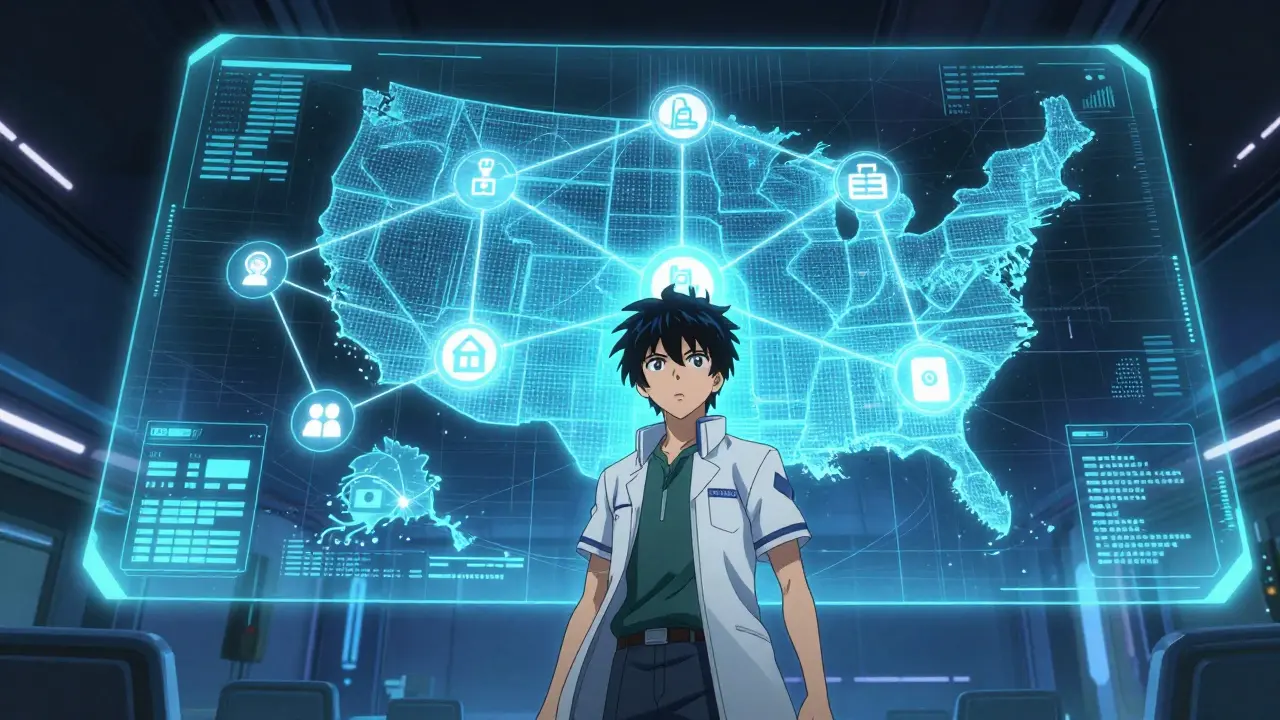
Launched in 2008 following the FDA Amendments Act of 2007, the Sentinel System isn't just one big database. In fact, it's the opposite. It's a distributed network. Instead of the FDA grabbing all the medical records from every hospital and insurance company in the country-which would be a privacy nightmare-the data stays where it is. Data Partners, which include giant insurance companies and healthcare systems, keep their own records. When the FDA needs to check something, they send a standardized query out to the network. The partners run the analysis locally and send back only the aggregated results.
This setup allows the FDA to look at millions of patients in near real-time. If a new vaccine is released or a long-term drug starts showing a weird trend in heart issues, the FDA can ask the system, "How many people taking Drug X developed Symptom Y in the last six months?" and get an answer in weeks, rather than years of manual study.
Active vs. Passive: Why the shift matters
To understand why Sentinel is a big deal, you have to look at the old way: the FDA Adverse Event Reporting System (or FAERS). FAERS is a passive system. It's like a suggestion box; it only works if someone puts a note in it. While FAERS gets about 2 million reports a year, it's plagued by underreporting. More importantly, FAERS doesn't have a "denominator." If 100 people report a rash, you don't know if that's scary because only 200 people took the drug, or irrelevant because 20 million people took it.
Sentinel solves this by using Real-World Evidence (RWE). Because it taps into insurance claims and health records, the FDA knows exactly how many people are using the product. This gives them a clear mathematical picture of risk. We're talking about a shift from "some people said this happened" to "we can see that 0.01% of the population experienced this event."
| Feature | Passive (FAERS) | Active (Sentinel) |
|---|---|---|
| Data Source | Voluntary reports | Insurance claims & EHRs |
| Speed | Depends on reporting | Near real-time queries |
| Patient Volume | Limited to reporters | Millions of active records |
| Denominator Data | Missing (Unknown total users) | Available (Known total users) |
| Privacy Model | Centralized reports | Distributed network |

The Engine Under the Hood: From Claims to AI
For a long time, Sentinel relied mostly on medical billing data. This is great for seeing that a patient was prescribed a drug and then later visited the ER for a specific condition. But billing codes are blunt instruments; they don't tell you the "why" or the nuance of a patient's symptoms.
That's why the FDA is now leaning heavily into Electronic Health Records (or EHRs). EHRs contain clinical notes, lab results, and detailed doctor observations. The challenge? Most of that data is "unstructured"-meaning it's just text written by a doctor. To fix this, the Sentinel Innovation Center is using Natural Language Processing (NLP) and machine learning. These AI tools can scan thousands of doctor's notes to find safety signals that a billing code would completely miss.
The system is currently split into three specialized hubs to keep things moving:
- Sentinel Operations Center (SOC): Handles the day-to-day queries and safety analyses.
- Innovation Center (IC): The R&D wing focusing on AI, causal inference, and new data science.
- Community Building and Outreach Center: Works with the public, academics, and industry to make the system more transparent.
Real-World Impact and Challenges
Is this actually working? Since 2016, the full system has completed hundreds of safety analyses. These aren't just academic exercises; they directly influence whether the FDA adds a "Black Box Warning" to a drug label or requests a new study from a manufacturer. For example, specialized tools like the Postmarket Rapid Immunization Safety Monitoring (PRISM) system allow for hyper-fast checks on vaccine safety, which is critical during public health crises.
However, it's not perfect. Big data has big problems. If a doctor in Ohio codes a condition differently than a doctor in Florida, the query might miss something. There are also gaps in the data-Sentinel only knows what happens inside the healthcare system. If a patient has a mild side effect but doesn't go to the doctor, that data point doesn't exist. Furthermore, very rare side effects (those hitting 1 in 100,000 people) still might require a traditional, deep-dive clinical trial because even a dataset of millions might not have enough cases to be statistically certain.
The Future of Global Health Surveillance
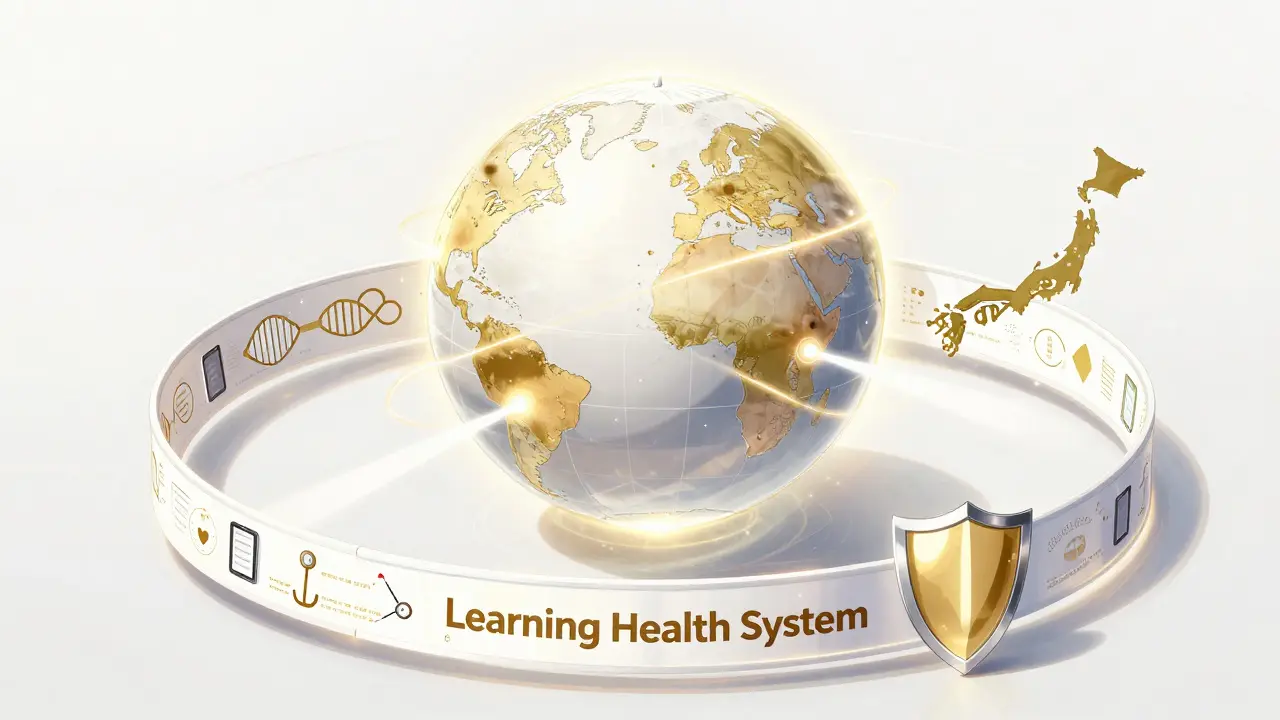
The goal now is to move toward a "Learning Health System." This means the process of treating patients, collecting data, and refining safety guidelines happens in a continuous loop. The FDA is looking to export this model globally. Imagine a worldwide network where the US, EU, and Japan share query results (not raw patient data) to spot a dangerous drug interaction in days rather than years.
With investments like the "Sentinel 3.0" evolution and a growing market for real-world evidence (projected to reach nearly $9.4 billion by 2030), the focus is shifting toward better "feature engineering." This basically means finding better ways to define a "safety event" in the data so the AI can find it more accurately. As more hospitals adopt certified EHR technology, the resolution of the FDA's "safety map" gets sharper and sharper.
Does the FDA have access to my private medical records through Sentinel?
No. Sentinel uses a distributed model. Your data stays with your healthcare provider or insurance company. The FDA sends a question (a query), and the partner returns a summary of the numbers. They do not send individual patient files or identifying names to the FDA.
How is Sentinel different from the VAERS system for vaccines?
VAERS is a passive reporting system where anyone can report a suspected side effect. Sentinel is an active system that queries huge databases of actual medical records to see if a problem is actually happening across a whole population, providing a much more accurate statistical view.
Can Sentinel detect every single drug side effect?
Not everything. It struggles with extremely rare events that require massive sample sizes beyond what's available, and it can't detect side effects that patients don't seek medical help for. It is a powerful tool, but it's meant to work alongside other safety systems, not replace them.
Who are the "Data Partners" in the Sentinel network?
Data partners are large organizations that hold significant amounts of health data, such as major health insurance companies, large hospital networks, and integrated delivery systems that maintain electronic health records.
How long does it take for Sentinel to find a safety issue?
While traditional epidemiological studies can take years, Sentinel queries can often be completed in weeks or months, allowing the FDA to react much faster to emerging safety signals.



Billy Wood
April 13, 2026 AT 17:51Absolute game changer!!! Love seeing this progress!!!
Mary Johnson
April 14, 2026 AT 15:33Distributed network or not, they are still harvesting our data and playing with it!!! They just want a way to track us more efficiently without us knowing who is actually pulling the strings behind these
Brooke Mowat
April 15, 2026 AT 20:34Such a wild ride into the future of healhcare... just imagine the kaleidoscopic possibilities of this data flowing like a river to save lives! it's kind of a vibe shift for the whole medcal world, right? truly out of this world stuff happening here
Clint Humphreys
April 16, 2026 AT 04:14It is honestly quite charming how they try to frame this as a safety win, but if you actually analyze the structural incentives of the pharmaceutical industrial complex, you start to see that a "distributed network" is just a convenient way to avoid centralized liability while still maintaining total surveillance over the population's biological responses to their profit-driven chemicals.
Princess Busaco
April 18, 2026 AT 00:56I find it absolutely laughable that anyone would be impressed by the FDA finally figuring out how to use a database in the 21st century, especially when you consider that the gaps in the data-like the ones mentioned where people just don't go to the doctor-are actually massive holes that render the entire statistical "denominator" argument pretty much moot because the people most affected are often the ones most marginalized from the healthcare system to begin with, making this whole initiative a bit of a performance in efficiency that ignores the actual human element of suffering.
Milo Tolley
April 18, 2026 AT 18:28The interoperability of the EHRs is the real bottleneck here!!! If the semantic normalization isn't perfect, the whole query is just noise!!! Total chaos!!!
Tabatha Pugh
April 18, 2026 AT 20:13Actually, the Sentinel Innovation Center already handles those normalization issues through a very specific set of common data models that most of the partners have to adhere to before they even get in the network.
john chiong
April 19, 2026 AT 22:15imagine thinking the gov actually cares about your heart while they pump you full of synthetic sludge just to keep the gears grinding this is some real top tier irony right here
Catherine Mailum
April 20, 2026 AT 14:06oh wow i am just so shocked that the fda finally decided to stop using a literal suggestion box for medical safety... truly a miracle of modern science lol
melissa mac
April 22, 2026 AT 13:38It's a complex transition for sure, but it's great that we're moving toward a system that prioritizes patient safety through evidence. I think we can all agree that faster detection of side effects is a win for everyone involved.
Jasmin Stowers
April 23, 2026 AT 06:35agree completely sounds like a step forward