

When your liver is full of fat-not from drinking alcohol, but from how you eat and live-it’s not just a warning. It’s a signal that your body is struggling. Non-Alcoholic Fatty Liver Disease, now called MASH (Metabolic Dysfunction-Associated Steatohepatitis), affects nearly 15 million adults in the U.S. alone. And the good news? You can reverse it. Not with magic pills or extreme diets, but with real, sustainable changes to how you eat, move, and take care of yourself.
Why Losing Weight Matters More Than You Think
Most people think fatty liver is just a side effect of being overweight. But it’s the other way around. Fat in the liver drives inflammation, scarring, and even liver failure over time. The key isn’t just losing weight-it’s losing the right amount. Studies show that losing just 5% of your body weight cuts liver fat in half. Lose 10% or more, and you can actually reverse scarring. That’s not a guess. That’s from liver biopsies in clinical trials.
Here’s the catch: most people can’t do it alone. A three-year study found fewer than one-third of people with MASH lost even 5% of their weight. And of those who did, only a quarter kept it off. That’s not because they lack willpower. It’s because the body fights back. Hunger hormones spike. Metabolism slows. Old habits creep back in.
Diet: What to Eat (and What to Avoid)
Forget low-fat, low-carb, or keto wars. The best diet for MASH isn’t a trend-it’s the Mediterranean diet. It’s not about counting calories every day. It’s about eating real food: olive oil, leafy greens, nuts, fish, beans, and whole grains. A meta-analysis showed people on this diet had lower liver enzymes, less fat in the liver, and softer liver tissue after just a few months.
What to cut:
- Sugary drinks-soda, juice, sweetened coffee. These flood your liver with fructose, which turns straight into fat.
- Refined carbs-white bread, pastries, crackers. They spike blood sugar and insulin, pushing fat into the liver.
- Saturated fats-fried foods, fatty cuts of meat, butter. They worsen inflammation.
What to add:
- Vegetables-especially broccoli, spinach, and Brussels sprouts. They contain compounds that help your liver detox.
- Fatty fish-salmon, mackerel, sardines. Omega-3s reduce liver fat and inflammation.
- Coffee-yes, coffee. Drinking 2-3 cups a day is linked to lower liver enzyme levels and less scarring.
You don’t need to be perfect. Start by swapping one sugary drink for water. Swap white rice for brown. Add one extra serving of veggies to dinner. Small steps build lasting change.
Exercise: Move More, Not Just Harder
You don’t need to run a marathon. You don’t even need to go to the gym. The goal is 150 minutes a week of moderate activity-that’s 30 minutes, five days a week. Brisk walking, cycling, swimming, even gardening counts.
Here’s what the science says: aerobic exercise reduces liver fat even without weight loss. Strength training helps too, because muscle burns more calories at rest. Combine both, and you get the best results.
Start slow. If you’re not active now, aim for 10 minutes a day. Build up. Use a step tracker. Set a goal of 7,000 steps a day. When you hit it, celebrate. Movement isn’t punishment. It’s medicine.
Medication: The New Option Everyone’s Talking About
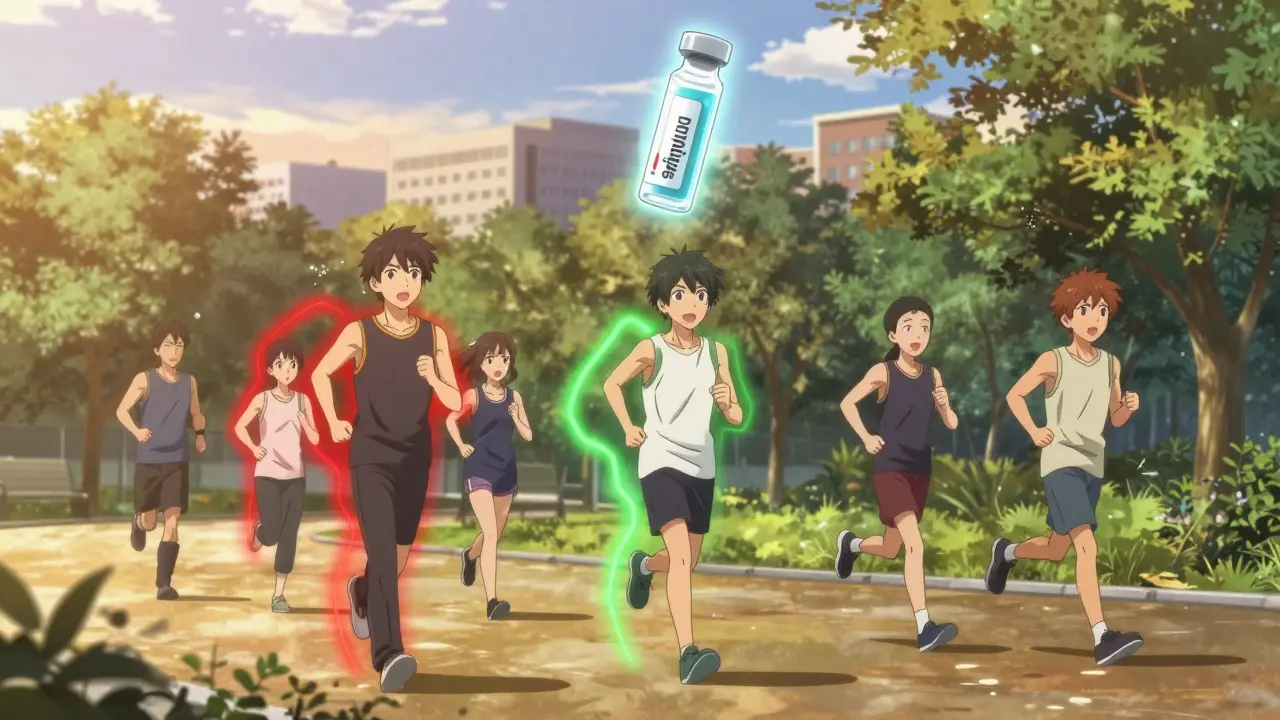
In August 2025, the FDA approved semaglutide (Wegovy) for MASH with moderate-to-advanced liver scarring. This is huge. It’s the first drug approved specifically to treat liver damage from metabolic disease, not just weight loss.
Semaglutide works by mimicking a hormone that tells your brain you’re full. It slows digestion, lowers blood sugar, and reduces appetite. In trials, nearly 90% of people stayed on it for over a year. Two-thirds saw less liver inflammation. More than one-third saw actual improvement in scarring.
But it’s not a magic bullet. Side effects like nausea, diarrhea, and vomiting are common-especially at first. Most people get used to them. The bigger issue? Cost. Without insurance, Wegovy runs about $1,350 a month. That’s more than most people can afford. Generic metformin, used for diabetes, costs $4-$40 a month, but studies show it only helps a little with liver fat. It doesn’t reverse scarring like semaglutide does.
Here’s the truth: semaglutide works best when paired with diet and exercise. It’s not a replacement. It’s a tool. If you’ve tried losing weight and kept gaining it back, talk to your doctor. This might be the missing piece.
What Doesn’t Work (And Why)
There are a lot of claims out there. Detox teas. Liver cleanses. Supplements like milk thistle or vitamin E. Some sound promising. But here’s what the data says:
- Milk thistle: No strong evidence it improves liver scarring or fat levels.
- Vitamin E: May help in some cases, but only for non-diabetic patients. Long-term use carries risks.
- Orlistat: A weight-loss drug that blocks fat absorption. Some small studies show minor liver benefits, but no proof it stops scarring.
- SGLT2 inhibitors (like empagliflozin): Used for diabetes, they show early promise for liver fat reduction, but more research is needed.
Don’t waste money or time on unproven fixes. Focus on what works: food, movement, and-if needed-medication backed by real science.

How to Make It Stick
Weight loss isn’t a sprint. It’s a marathon with lots of detours. Plateaus happen. Cravings hit. Life gets busy. Here’s how to keep going:
- Track your progress-not just weight. Measure waist size, energy levels, how your clothes fit.
- Get support. Join a group, work with a dietitian, or talk to your doctor regularly.
- Plan ahead. Cook meals on Sundays. Keep healthy snacks on hand. Don’t wait until you’re starving to make a good choice.
- Be kind to yourself. One bad meal doesn’t ruin your progress. One week of consistency builds momentum.
The biggest mistake? Trying to do it all at once. Pick one thing. Master it. Then add another. Maybe this week, you swap soda for sparkling water. Next week, you walk 20 minutes after dinner. Month two, you add two servings of veggies to lunch. Slow and steady wins the race.
When to See a Specialist
If you’ve been diagnosed with MASH, especially with fibrosis (scarring), you need more than general advice. See a liver specialist or a metabolic health clinic. They can order tests like FibroScan to check liver stiffness, monitor your progress, and help you decide if medication like semaglutide is right for you.
Don’t wait until you feel sick. MASH is silent until it’s not. By then, it’s harder to fix. Early action saves lives.
What’s Next?
The future of MASH treatment is looking brighter. New drugs are in trials-some combining GLP-1 agonists with other agents to boost liver repair. Longer-acting injections could mean fewer shots. Insurance coverage is slowly improving, but it’s still patchy.
For now, the best treatment is still the same: lose weight, move more, eat real food. And if that’s too hard? Medication can help you get there. You’re not broken. You’re just dealing with a system that makes healthy choices harder than they should be. But you can still win.


Margaret Khaemba
January 22, 2026 AT 15:57I started swapping soda for sparkling water last month and my liver enzymes dropped like crazy. No magic, just consistency. I didn’t even realize how much sugar I was drinking until I cut it out.
Also, coffee. I drink it black now. Weirdly, it’s the one thing I didn’t miss.
Feels good to be doing something that actually helps.
Malik Ronquillo
January 24, 2026 AT 08:42So let me get this straight-you’re telling me the answer to fatty liver is… not eating junk? Wow. Groundbreaking. I thought it was gonna be some lab-made miracle pill. Guess I’ll go back to my 3am pizza and Netflix routine then.
At least I’m not lying to myself about it.
Brenda King
January 25, 2026 AT 07:44Just wanted to say thank you for writing this without shaming people
So many articles make you feel like your liver is a moral failure
But this? This felt like a friend giving you a map, not a lecture
I’ve been trying to eat better since my diagnosis and honestly? The Mediterranean stuff doesn’t feel like a diet
It just feels like food I actually like
Also coffee. Always coffee
And walking after dinner. It’s not exercise, it’s therapy
Keith Helm
January 25, 2026 AT 12:37Based on the clinical trial data referenced, the 5% weight loss threshold is statistically significant (p<0.01) in reducing hepatic steatosis.
However, adherence rates remain suboptimal due to neuroendocrine counterregulatory mechanisms.
Therefore, pharmacological intervention is not adjunctive-it is necessary for sustained remission in metabolic dysfunction.
Alec Amiri
January 27, 2026 AT 02:30Bro. You think you’re special because you drank coffee and lost 5%? I lost 20% and my liver still looks like a greasy frying pan.
And now they want to give me a $1,350 shot? That’s not medicine. That’s a scam.
They’re just selling hope. And I’m tired of buying it.
Lana Kabulova
January 27, 2026 AT 20:36Okay but what about the people who can’t afford the Mediterranean diet? Organic veggies, wild salmon, olive oil? That’s not food, that’s a luxury subscription
I live in a food desert where the only thing cheaper than soda is a bag of chips
And you’re telling me to eat broccoli? Like I have time to cook
And the gym? I work two jobs
So yeah, I get the science
But the system is rigged and you’re just preaching to the choir
Rob Sims
January 28, 2026 AT 17:03Wow. Semaglutide approved for MASH? So now we’re just going to drug our way out of a lifestyle problem?
Great. Next they’ll inject us with willpower.
Meanwhile, I’m over here eating a donut and wondering why my liver hates me
But hey, at least the drug works-unlike my motivation
Which is currently on vacation in Cancun
Patrick Roth
January 28, 2026 AT 18:54Actually, the Mediterranean diet isn’t even the best for NAFLD. I read a 2023 paper from the University of Dublin that showed a low-carb, high-fat keto diet reversed fibrosis faster in 80% of subjects.
And you’re telling me to eat more carbs? Whole grains? That’s like telling a diabetic to eat more cake.
Also, coffee? That’s just caffeine. It’s a stimulant, not medicine.
Real science is being ignored here.
Kenji Gaerlan
January 29, 2026 AT 03:34fr fr i tried the walkin thing but i just got bored and ate a whole bag of cheetos
also i thought liver fat meant i drank too much
so i was confused why i was told to stop drinking soda
my bad
but now i know
so i guess i’ll try not eating sugar tomorrow
maybe
Oren Prettyman
January 30, 2026 AT 22:23While the article presents a compelling narrative regarding lifestyle modification and pharmacological intervention, it fails to adequately address the systemic socioeconomic determinants of metabolic dysfunction.
It assumes a level of access to nutritious food, leisure time, healthcare literacy, and financial stability that is not representative of the broader population.
Furthermore, the endorsement of semaglutide without sufficient critique of pharmaceutical influence on clinical guidelines constitutes a form of medical neoliberalism.
One cannot prescribe behavioral change to individuals who are systematically denied the conditions necessary to enact it.
Thus, while the biological mechanisms are valid, the proposed solution remains culturally and economically myopic.