
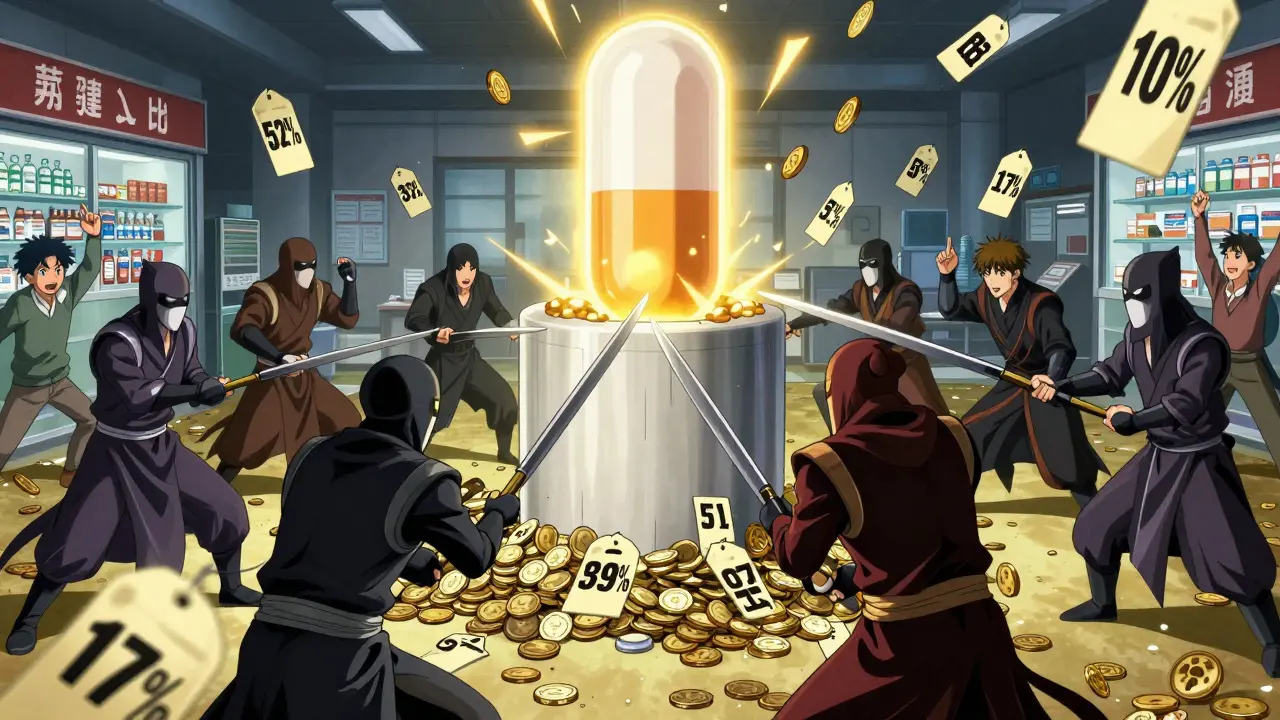
When you walk into a pharmacy to pick up a prescription, you might not realize that the price you pay isn’t just set by the drug company-it’s shaped by how many other companies are making the exact same medicine. That’s the power of generic drug competition. When multiple manufacturers start producing the same generic version of a brand-name drug, prices don’t just dip-they plunge. And it’s not magic. It’s basic economics, playing out in real time across millions of prescriptions every year.
Why more manufacturers mean lower prices
Think of it like this: if only one company makes a generic version of a drug, they can set the price however they want. No one’s competing. But when a second company enters the market, they need to undercut the first to win business. The third company? They drop the price even lower. By the time you hit four or more manufacturers, the price can fall by more than 70% compared to the original brand-name drug. A 2021 study published in JAMA Network Open looked at 50 brand-name drugs and tracked what happened when generics entered the market. The numbers were clear:- First generic competitor: 17% price drop
- Two competitors: 39.5% drop
- Three competitors: 52.5% drop
- Four or more competitors: 70.2% drop
How competition plays out in different drug types
Not all generic drugs are the same. The level of competition-and how much prices fall-depends heavily on the type of medicine. Oral pills, like metformin for diabetes or lisinopril for high blood pressure, are easy to make. Any qualified manufacturer can produce them. That’s why you’ll often see eight or more companies making the same generic pill. In these cases, prices stabilize at just a few dollars for a 90-day supply. GoodRx users report metformin costing under $10 because so many makers are fighting for market share. But injectable or infused drugs? Those are trickier. They require special equipment, sterile environments, and tighter quality controls. Fewer companies can make them. So when only one or two manufacturers produce a generic injectable, prices don’t drop nearly as much. Sometimes they barely budge. Biologics-like insulin or rheumatoid arthritis drugs-are even harder to copy. Even when biosimilars (their generic-like versions) enter the market, they don’t always trigger the same price crashes. A 2021 study found that if biosimilars were treated like regular generics under Medicare, spending on these drugs would’ve dropped nearly 27% over four years. But right now, they’re not. That means patients still pay far more than they should.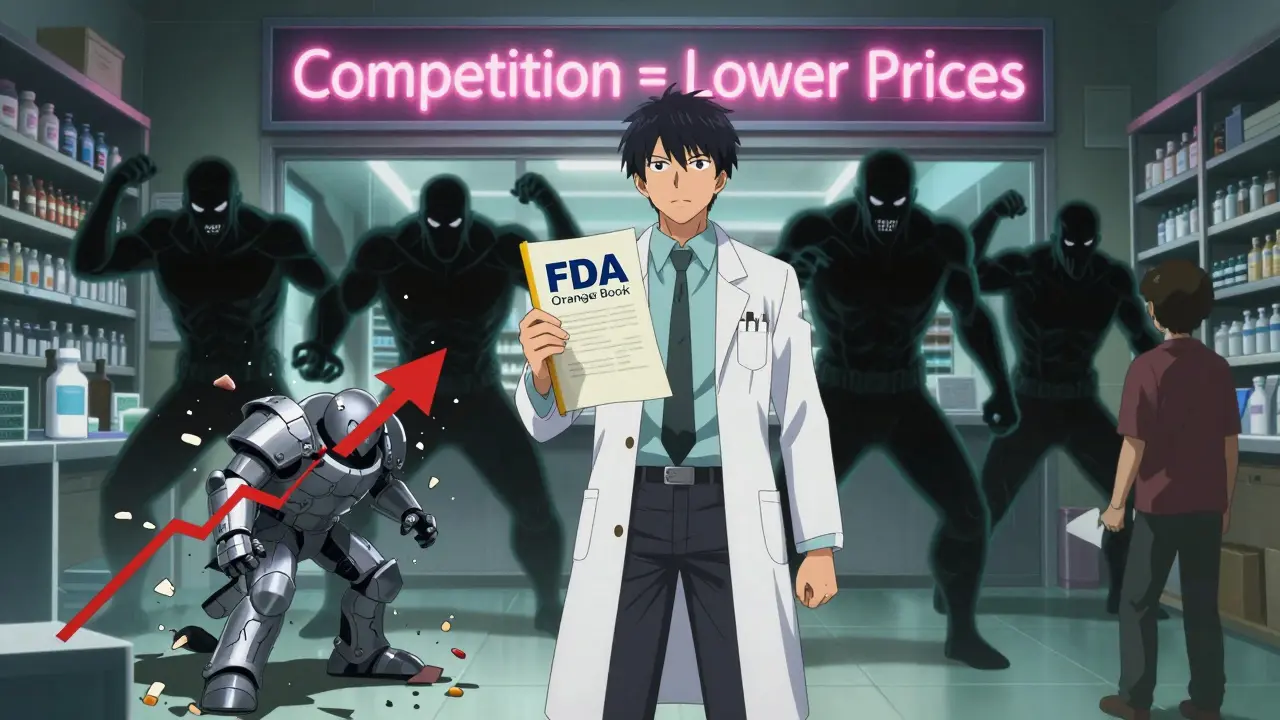
The dark side: when competition disappears
Here’s the scary part: competition isn’t always growing. It’s shrinking. A 2017 study by researchers from MIT, the University of Chicago, and the University of Maryland found that over half of all generic drugs had only one or two manufacturers. That’s up from just 30% in the early 2000s. Why? Because small generic companies keep getting bought out. One big player buys three smaller ones, and suddenly, instead of four competitors, you’ve got one. When that happens, prices spike. Patients in Indiana and Florida have reported 300-500% price jumps on generic drugs after one manufacturer left the market. One Reddit user described how the epilepsy drug levetiracetam jumped from $25 to $180 per month after five makers dropped out and only two remained. Some patients had to switch medications because they couldn’t afford the new price. Even worse, when there’s only one maker, there’s no backup. If that company has a production issue-say, a factory shutdown or quality control failure-there’s no one else to step in. That’s when drug shortages happen. And when shortages hit, prices don’t just go up-they go wild.Who benefits? Who gets left behind?
The winners? Patients. Medicare. Medicaid. Insurance companies. The FDA estimates that generic drugs saved the U.S. healthcare system $1.7 trillion between 2010 and 2019. That’s billions of dollars that didn’t go to drug companies, but stayed in patients’ pockets and in public health budgets. But the system is fragile. Pharmacy Benefit Managers (PBMs)-the middlemen who negotiate drug prices for insurers-have become incredibly powerful. They often push for the cheapest option, regardless of who makes it. That’s great when there are five manufacturers. But when there’s only one? They’re stuck paying whatever price that one company sets. And patients? They’re often unaware of the numbers behind their prescription. They don’t know that their $40 pill could be $8 if another manufacturer entered the market. They don’t know that their doctor’s prescription doesn’t have to be brand-specific. Pharmacists are legally allowed to substitute generics-but only if the drug is rated “AB” in the FDA’s Orange Book. Most aren’t told this.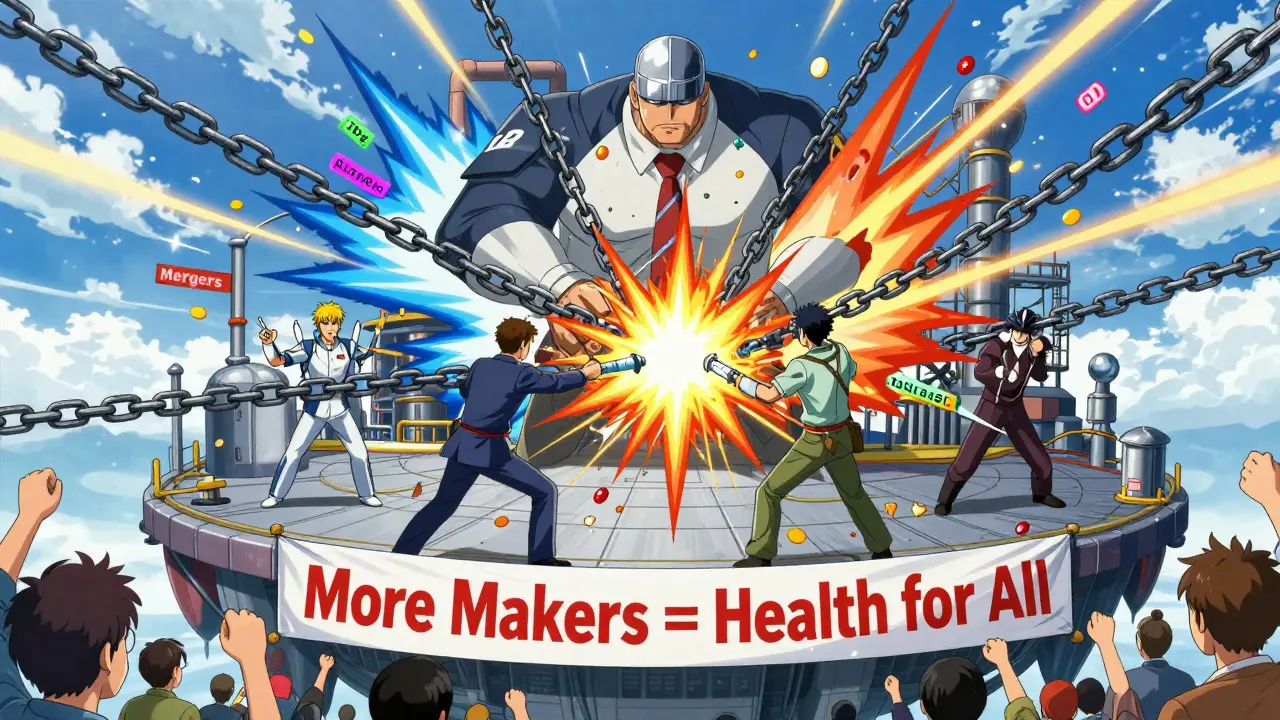
What you can do about it
You don’t need to be an economist to take advantage of generic competition. Here’s how:- Ask if your prescription has multiple generic makers. Use GoodRx or SingleCare to compare prices across pharmacies. If one store charges $15 and another charges $5, it’s not a mistake-it’s competition at work.
- Don’t assume your doctor’s brand name is the only option. Ask: “Is there a generic version? And how many companies make it?”
- Check the FDA’s Orange Book. It lists which generics are therapeutically equivalent to brand-name drugs. Look for the “AB” rating. That means you can safely switch.
- Speak up if prices spike. If your generic suddenly costs three times more, talk to your pharmacist. It might be a supply issue-or a sign that competition has vanished.
The bottom line
More generic manufacturers = lower prices. It’s that simple. But when consolidation kills competition, patients pay the price. Right now, nearly half of all generic drugs in the U.S. have only one or two makers. That’s not a market. That’s a risk. The FDA, FTC, and Congress are starting to pay attention. New rules like the CREATES Act are trying to stop big companies from blocking generic entry. But real change starts with you-knowing your options, asking questions, and refusing to accept that your medicine has to cost too much.Generic drugs saved $14.5 billion in 2022 alone. But that’s only if enough companies are still in the game. The more makers, the lower the price. And the lower the price, the more people can actually afford to stay healthy.
Why do some generic drugs cost more than others?
It’s all about competition. If five companies make the same generic drug, they’ll fight to offer the lowest price-sometimes under $5 for a 30-day supply. But if only one or two companies make it, they can charge much more. Drugs that are harder to produce, like injections or complex formulations, also tend to have fewer competitors, which keeps prices higher.
Can I ask my pharmacist to switch to a cheaper generic?
Yes, in most cases. Pharmacists can legally substitute a generic drug if it’s rated “AB” by the FDA, meaning it’s therapeutically equivalent to the brand. But some prescriptions are marked “Dispense as Written” (DAW), which blocks substitution. Always ask your pharmacist if a cheaper generic is available and if they can switch it for you.
Why aren’t biosimilars cheaper like regular generics?
Biosimilars are harder and more expensive to develop than traditional generics. They’re made from living cells, not chemicals, so the manufacturing process is complex. Fewer companies can make them, and the FDA approval process is longer. As a result, competition is limited, and prices stay high-often 80-90% of the brand-name cost, instead of 80-90% lower.
How do I know if my generic drug has multiple manufacturers?
Check the FDA’s Orange Book online or use price comparison tools like GoodRx. If your drug shows up with several different brand names under the generic label (like “Metformin HCl” made by Teva, Mylan, and others), that means competition is active. If you see only one name, it’s likely a monopoly situation.
What’s being done to stop drug makers from reducing competition?
The FTC has increased scrutiny of mergers between generic drug companies since 2021. The CREATES Act of 2019 was designed to stop brand-name manufacturers from blocking generic entry by hoarding samples or delaying approval. The FDA’s Drug Competition Action Plan also aims to speed up generic reviews and identify markets at risk of consolidation. But enforcement is still inconsistent, and many small mergers fly under the radar.

Jonathan Ruth
February 17, 2026 AT 03:04Let me get this straight - we’re celebrating generic drug competition like it’s some kind of miracle? Bro. The FDA approves generics with less scrutiny than a Walmart greeter checks your ID. And yet somehow we’re shocked when prices drop? That’s not competition - that’s regulatory capture with a side of capitalism. The real scandal? The same corporations that own the brand-name drugs own 70% of the generics too. You think Teva and Mylan are fighting each other? Nah. They’re just dividing the pie. And you? You’re the crumbs.
Philip Blankenship
February 18, 2026 AT 21:36Man, this whole post made me realize how little I know about my own prescriptions. I’ve been taking lisinopril for years and never thought to ask how many companies make it. I just assumed the pharmacy picked the cheapest one - turns out, they probably did, but I had no idea why. Now I’m gonna start checking GoodRx before I pick up my meds. Who knew my $8 pill could’ve been $2? Honestly? This is the kind of info that should be on every prescription bottle. Like a little ‘competition level’ meter. 🤔
PRITAM BIJAPUR
February 20, 2026 AT 13:53It’s fascinating how economics, in its purest form, becomes a silent savior in healthcare. When multiple manufacturers enter the arena, they don’t just compete - they collaborate in their opposition to monopoly. It’s a beautiful paradox: capitalism, when unshackled from consolidation, becomes a tool for collective well-being. We forget that the human cost of a $180 levetiracetam pill isn’t just financial - it’s neurological, emotional, existential. More makers mean more lives. Not just savings - survival.
Dennis Santarinala
February 21, 2026 AT 11:39This is so important!! I had no idea that the FDA’s Orange Book even existed 😳 I just assumed my pharmacist was doing everything they could to save me money… but now I’m gonna ask EVERY TIME if there’s a cheaper generic available!! And I’m gonna check the AB rating!! And I’m gonna tell all my friends!! And I’m gonna write a letter to my rep!! And I’m gonna… oh wait, I’m getting carried away… but seriously, this changes everything!!
Tony Shuman
February 23, 2026 AT 06:02Oh great. Another ‘let’s trust the market’ fairy tale. You think the government cares about your $5 insulin? Nah. They’re too busy giving tax breaks to Big Pharma CEOs who own private jets. And don’t even get me started on how the FTC ‘investigates’ mergers - they’re like cops who show up after the bank’s already been robbed. Meanwhile, your grandma’s blood pressure meds just doubled in price and no one’s even blinking. This isn’t capitalism - it’s a rigged game with your health as the ante.
Haley DeWitt
February 23, 2026 AT 15:53This is so eye-opening!! 💖 I just called my pharmacist and asked if my metformin had multiple makers - turns out it does! And one store had it for $4!! I had no idea!! I’m gonna start doing this for all my meds!! Thank you for sharing this!! 🙏 I’m telling my mom, my sister, my book club - everyone needs to know!!
John Haberstroh
February 24, 2026 AT 21:42I’ve been a pharmacy tech for 12 years. Let me tell you - the most dangerous thing in this system isn’t the price hikes. It’s the silence. Patients don’t know they can ask. Pharmacists don’t always push because they’re overworked. Doctors don’t mention it because they’re rushed. And the whole thing? It’s built on the assumption that you’re too tired, too confused, too broken to fight back. But you’re not. You’ve got a right to know. You’ve got a right to compare. And you’ve got a right to be pissed. So go ask. Go check. Go demand. Because no one else is gonna do it for you.
James Lloyd
February 26, 2026 AT 07:42One thing missing from this analysis is the role of supply chain consolidation. Even when multiple manufacturers exist on paper, many rely on the same raw material suppliers - often in China or India. A single factory disruption can collapse the entire supply chain for a generic drug, even if five companies ‘make’ it. That’s why shortages happen even with ‘competition.’ Real competition requires independent supply chains - not just separate labels on the bottle.
Liam Earney
February 26, 2026 AT 13:31Oh my god… I just realized… I’ve been paying $80 for my generic lisinopril… for YEARS… and I didn’t even know… I mean… I just accepted it… like it was fate… or karma… or something… I’m so angry right now… and also… so embarrassed… I didn’t even think to ask… I just assumed… I’m sorry… I’m so sorry… I feel like I failed myself… and my family… and my future…
Adam Short
February 27, 2026 AT 16:37Generic drugs? Please. The whole system is a British-style farce. You think America’s the only one with this mess? We’ve got the same nonsense over here - and our NHS is supposed to be ‘better.’ But guess what? The same companies that sell you $180 levetiracetam in the States? They’re the ones selling it at £150 in the UK. And the government? They’re too busy signing trade deals with Big Pharma to care. You want change? Stop trusting politicians. Start trusting your wallet. And your pharmacist.