
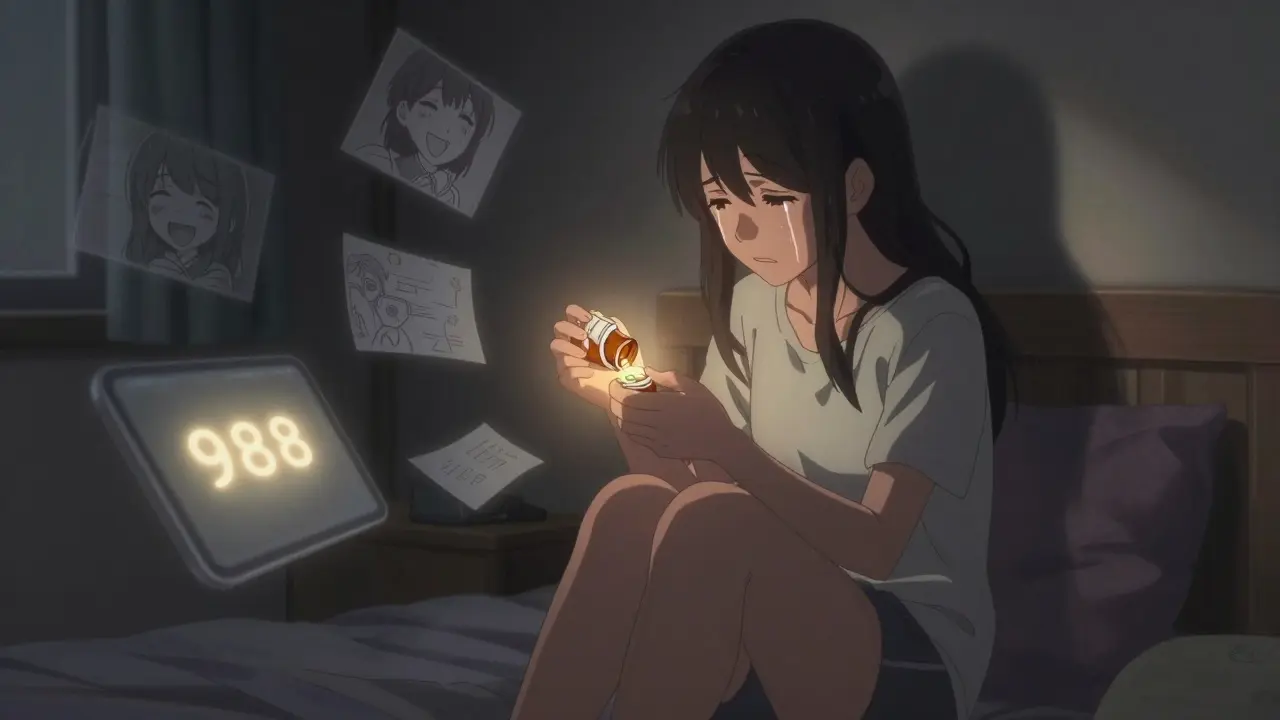
When someone takes too many pills on purpose, it’s not just a medical emergency-it’s a cry for help. Intentional overdose is one of the most common ways people try to end their lives, and it’s happening more often than most people realize. In 2024, nearly 14 million U.S. adults said they’d thought seriously about suicide in the past year. Many of them chose overdose because it felt accessible, quiet, and controllable. But here’s what no one tells you: most people who attempt suicide by overdose don’t actually want to die. They just want the pain to stop.
Why Overdose? The Hidden Reasons Behind the Choice
Prescription painkillers, sleeping pills, antidepressants, even common pain relievers like acetaminophen-these are the substances most often used in intentional overdoses. Why? Because they’re in medicine cabinets across America. A teenager can grab a bottle of Xanax from their parent’s drawer. An adult struggling with chronic pain might have leftover opioids. No gun. No rope. Just a bottle and a decision.
It’s not about being weak. It’s about being trapped. People who attempt suicide by overdose often feel like they have no other way out. They’re not looking for attention. They’re not being dramatic. They’re exhausted. The CDC reports that overdose accounts for 15-20% of all suicide deaths in the U.S., making it one of the top three methods. It’s less lethal than a firearm, but far more accessible. That’s why it’s so common.
And the people at highest risk? Middle-aged adults between 45 and 64. Rural communities. People without insurance. Those who’ve tried therapy before but couldn’t get another appointment. One in four adults with a mental illness says they couldn’t get the help they needed last year. That’s not a statistic-it’s someone you know.
The 988 Lifeline: What It Actually Does
Since it launched in July 2022, the 988 Suicide & Crisis Lifeline has answered over 4.7 million calls, texts, and chats in 2024 alone. That’s a 32% jump from the year before. More people are reaching out. But here’s the hard truth: 42% of people who called for same-day crisis help couldn’t get through.
When you call 988, you’re connected to a local crisis center. Not a robot. Not a script. A real person trained to listen, not fix. One caller, who texted after taking 30 pills, said: “The counselor stayed on the line for 18 minutes until EMS arrived. That’s the only reason I’m here.”
But funding is falling. Staff turnover at SAMHSA-funded centers rose 37% in 2024. Wait times jumped from 2.4 minutes in 2022 to 5.7 minutes in 2024. For someone in crisis, five minutes can feel like an hour. And if they hang up? They might not call again.
What Happens After the Call?
Calling 988 doesn’t mean you’ll be locked in a hospital. Most of the time, the counselor helps you stay safe where you are. They’ll talk you through breathing, remind you that the feeling won’t last forever, and help you connect with local services. In many cases, they’ll even coordinate with local EMS to check on you-without forcing you to go to the ER.
But here’s the gap: after the crisis passes, most people get dropped. No follow-up. No therapy appointment. No medication review. The system is built to respond, not to heal. That’s why 68% of people who attempted overdose via pills had called a crisis line in the last 30 days. They’re stuck in a loop because the next step doesn’t exist.
Digital Lifelines: Text, Chat, and Apps
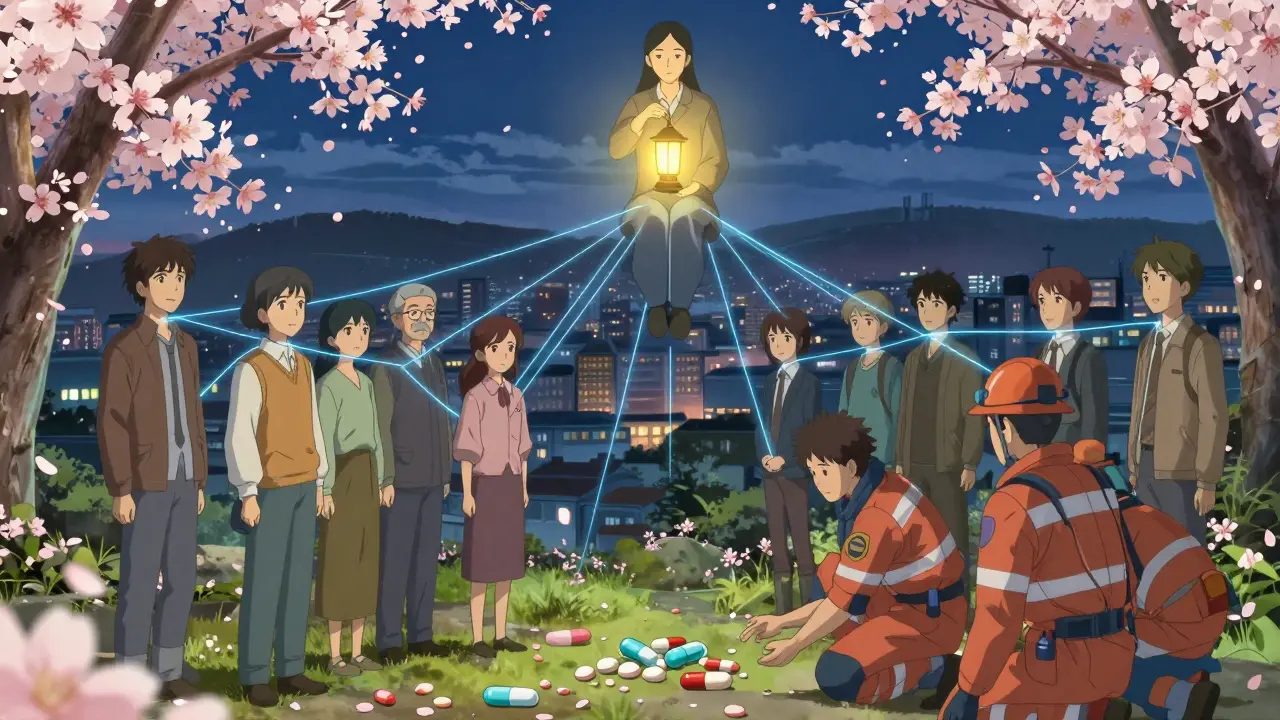
Not everyone can talk on the phone. Some people are scared. Others are in a public space. That’s where the Crisis Text Line comes in. Text HOME to 741741. You’ll get a response in under 40 seconds. In 2024, they handled 3.2 million conversations. That’s more than the entire U.S. mental health workforce could handle in person.
Apps like Talkspace and BetterHelp offer therapy, but they’re expensive. And they don’t work in a crisis. What you need is immediate, free, anonymous support. That’s what 988 and Crisis Text Line provide. No credit card. No insurance. No waiting.
Who’s Left Behind?
Black and American Indian/Alaska Native communities have the highest rates of fatal overdose deaths. But they’re also the least likely to have access to mental health care. Rural areas have 40% fewer crisis resources than cities. Teens under 18 often can’t access services without parental consent-even if they’re in danger.
And then there’s the budget cuts. The proposed $1.07 billion reduction to SAMHSA’s 2026 funding could erase years of progress. The CDC says overdose deaths dropped by 27% in 2024. That’s over 27,000 lives saved. But if funding disappears, experts warn suicide rates could rise 8-12% by 2027.
What You Can Do Right Now
If you’re thinking about overdose:
- Call or text 988. It’s free. It’s confidential. You don’t have to say you’re suicidal. Just say you’re hurting.
- Text HOME to 741741. It’s 24/7. No judgment.
- Keep a list of emergency contacts in your phone: a friend, a therapist, a crisis line. Save it under “Help” so you can find it fast.
- Don’t store pills where you can easily reach them. Lock them up. Give them to someone you trust.
If someone you know is struggling:
- Ask directly: “Have you thought about hurting yourself?” Don’t be afraid. Asking doesn’t plant the idea-it opens the door.
- Stay with them. Don’t leave them alone.
- Help them call 988. Offer to go with them.
- Don’t promise secrecy. If they’re in danger, you need to get help.
The Bigger Picture: This Isn’t Just About Pills
Reducing intentional overdose isn’t just about better crisis lines. It’s about fixing the system. We need more therapists. We need insurance to cover mental health like it covers a broken arm. We need schools to teach emotional resilience. We need workplaces to stop treating mental health like a weakness.
But right now, we have what we have. And what we have works-if we protect it. The drop in overdose deaths over the last year proves that when we invest in care, people live. When we cut funding, they die.
You don’t need to be a policymaker to make a difference. You just need to know where to turn. And you need to tell others.
Is intentional overdose the same as a drug overdose?
No. A drug overdose can be accidental-like taking too much painkiller or mixing alcohol with medication. Intentional overdose is when someone takes a substance on purpose to end their life. The CDC tracks them separately using different codes: X40-X44 for accidental, X60-X64 for intentional. But in real life, the line can blur. Someone with untreated depression might accidentally take too much of their medication. That’s why mental health care is key to preventing both.
Can you survive an intentional overdose?
Yes-many do. But survival doesn’t mean recovery. Acetaminophen overdose can cause permanent liver damage. Opioids can leave you with brain damage from lack of oxygen. Some people survive but live with chronic pain, organ failure, or cognitive issues. And the emotional toll of a failed attempt can make future attempts more likely. That’s why follow-up care is critical. Survival is just the first step.
What if I’m not suicidal but I’m thinking about taking pills to feel better?
That’s still a crisis. You don’t have to be planning suicide to need help. If you’re using pills to numb emotional pain, you’re self-medicating-and that’s a sign you’re struggling. The same resources that help people in suicidal crisis can help you find healthier ways to cope. Call 988. Text 741741. Talk to someone. You don’t have to be at rock bottom to deserve support.
Is the 988 lifeline available 24/7?
Yes. The 988 Suicide & Crisis Lifeline operates 24 hours a day, 7 days a week, 365 days a year. You can call, text, or chat. All services are free and confidential. You don’t need insurance. You don’t need to give your name. You just need to be in pain-and that’s enough.
How can I help someone who might be at risk?
Start by asking: “Are you thinking about hurting yourself?” Don’t worry about saying the wrong thing. Just be there. Listen. Don’t offer solutions. Don’t minimize their pain. Offer to help them call 988. Stay with them until they’re connected. And if they’re in immediate danger, call 911. Your presence matters more than you know.
Are there resources for teens who can’t get help without parental consent?
Yes. In most states, minors can access crisis services without parental consent. The 988 Lifeline and Crisis Text Line are confidential for all ages. Some clinics offer free, anonymous counseling for teens. If you’re under 18 and scared to tell your parents, call 988. Say you’re a teen and need help. They’ll connect you to services that respect your privacy. You’re not alone.
Patrick Jarillon
February 10, 2026 AT 11:51Let me guess - 988 is just a government psyop to track people who say they’re suicidal. You think they’re not recording your voice? Not logging your IP? Not sharing it with insurance companies so they can raise your rates? I called 988 once. Two days later, my health insurer sent me a letter saying ‘we noticed you expressed distress’ and asked if I wanted to upgrade to ‘premium mental wellness coverage.’ That’s not help - that’s a data harvest. They want you hooked on crisis so they can monetize it. The CDC stats? Fabricated. The ‘drop’ in deaths? They reclassified everything as ‘accidental’ to make the numbers look better. Wake up.
Kathryn Lenn
February 12, 2026 AT 07:49Oh sweet Jesus, another ‘call 988’ PSA. You know what’s more accessible than a crisis line? A .22 rifle. Or a bridge. Or a bottle of bleach. But nooo, we gotta turn this into a feel-good story about ‘listening counselors.’ Meanwhile, my cousin took 40 Advil last year - survived, got a $12,000 hospital bill, and now has liver damage. No one followed up. No one even asked if she had a therapist. This whole system is a Band-Aid on a hemorrhage. And don’t even get me started on how ‘Crisis Text Line’ is basically just AI with a human filter. You think someone who’s ready to die gives a damn about ‘under 40 seconds’? They want silence. Not a chatbot pretending to care.
John Watts
February 13, 2026 AT 12:15Look - I’ve been there. Not the overdose part, but the ‘I can’t take another day of this’ part. And let me tell you - 988 saved my life. Not because they fixed me. Not because they had answers. But because they didn’t hang up. They didn’t judge. They just sat with me in the dark. And that’s the magic. You don’t need a solution when you’re drowning. You need someone to throw you a rope - even if they don’t know how to swim. There are real people on the other end of that line. Real. Human. Tired. But still showing up. And yeah, funding’s a mess. Yeah, wait times are too long. But if we stop talking about it, if we stop pushing for more, then we’re the ones who let people slip through. Don’t give up on the system. Fix it. Together. We’ve got to do better - not because it’s easy, but because someone’s life depends on it.
Randy Harkins
February 14, 2026 AT 07:34Thank you for writing this. 💙 I’ve had friends who’ve tried overdose. One of them texted 741741 at 3 a.m. and got a reply in 22 seconds. That’s the kind of moment that changes everything. I didn’t know how to help back then - I was scared I’d say the wrong thing. But now? I keep 988 saved as ‘HELP’ in my phone. I tell every new friend I make to do the same. You don’t need to be a therapist. You just need to be someone who remembers. And if you’re reading this and you’re hurting - you’re not alone. You matter. You’re worth the next breath. I’m rooting for you. Always. 🌱
Tori Thenazi
February 14, 2026 AT 14:19Wait - wait - WAIT. So let me get this straight: the government says ‘call 988’… but then cuts funding by over a billion? And you think that’s not a trap? It’s like telling a starving person ‘here’s a menu’ while you’re burning down the kitchen. And don’t even get me on the ‘text 741741’ thing - I heard a guy on Reddit say he texted ‘I’m dying’ and got back ‘I’m here for you, how’s your day going?’ - like, what?! They’re using interns! I bet half those ‘counselors’ are 19-year-olds with no training. And don’t get me started on how they’re probably recording everything for AI training. I’m telling you - this whole thing is a data-mining operation disguised as compassion. They want your pain. They want your trauma. They want your silence. And they’re selling it. I’ve seen the leaks. Trust me - this isn’t help. It’s a honeypot.
Elan Ricarte
February 14, 2026 AT 15:08Oh, so we’re pretending this is about ‘mental health’? Nah. This is about capitalism’s last gasp. People aren’t overdosing because they’re ‘trapped’ - they’re overdosing because they’re broke, lonely, and told to ‘just be happy’ while their rent doubles and their job vanishes. The system didn’t fail them - it designed this. They built a world where therapy costs $200/hour, prescriptions are rationed, and the only ‘solution’ is a hotline that’s understaffed because no one wants to pay for it. And now you wanna pat yourselves on the back for texting ‘HOME’? Cute. You think a 17-year-old in rural Kansas gives a shit about a ‘lifeline’ when her mom’s working two jobs and her dad’s in prison? This isn’t about pills. It’s about a society that treats human suffering like a customer service ticket. And until we burn it all down - we’re just rearranging deck chairs on the Titanic.
Angie Datuin
February 15, 2026 AT 00:56I’m not sure what to say. I just wanted to say I read this. And I’m here.
Monica Warnick
February 16, 2026 AT 19:32Okay, but… what if… the reason people don’t call 988 is because they’ve already called before? And nothing changed? Like - I know someone who called 988 three times last year. Each time, they got a different counselor. Each time, they were told ‘you’re not in immediate danger.’ But then the fourth time? They didn’t call. They just… stopped. And now? They’re gone. The system doesn’t remember. It doesn’t connect. It doesn’t care. It just… recycles. And that’s worse than silence. It’s betrayal.
Ashlyn Ellison
February 17, 2026 AT 16:06My sister took 60 Tylenol in 2021. She survived. But the hospital didn’t follow up. No therapist. No support group. Just a pamphlet and a ‘you’re lucky to be alive.’ Two years later, she’s still on disability. Still can’t sleep. Still doesn’t trust anyone. And the weirdest part? She still has the bottle. Just… locked in the back of her closet. She says it’s a reminder. Not of death. But of how alone she felt. I wish someone had told her - before it happened - that it’s okay to be tired. Not just ‘call 988.’ Just… be okay with being broken. That’s all she needed.