
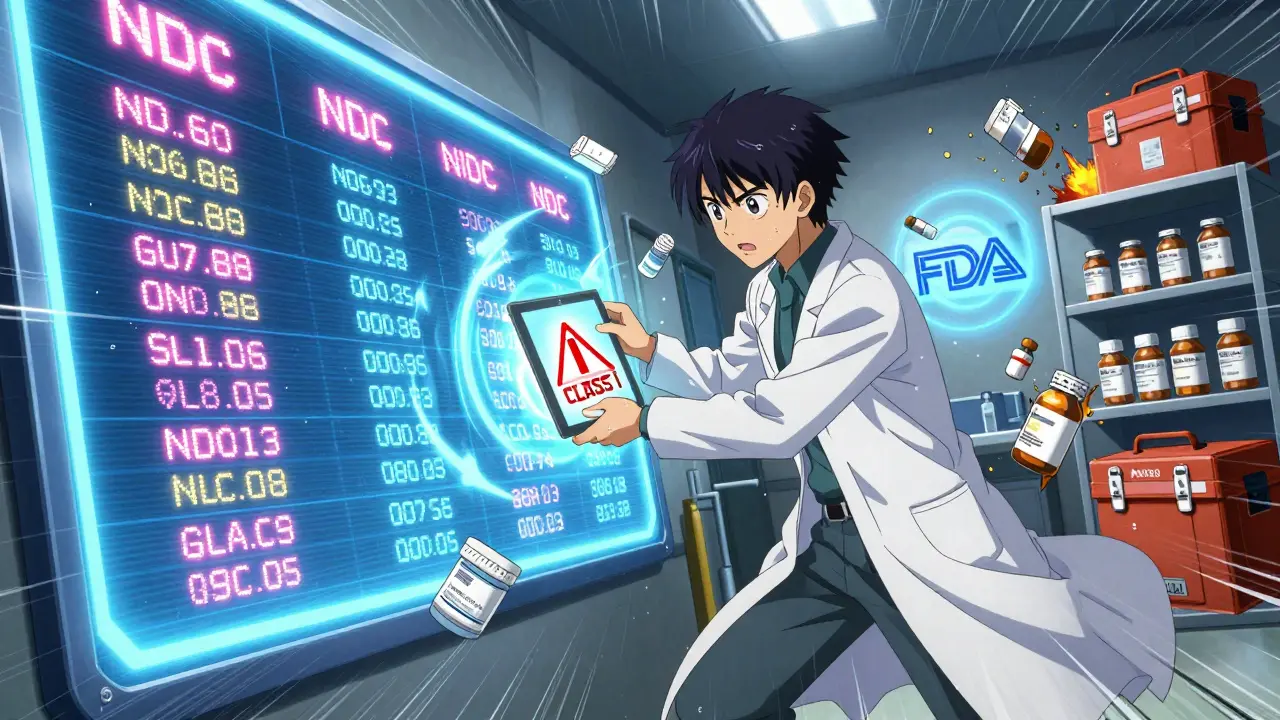
When a drug recall happens, time isn’t just money-it’s patient safety. A single mislabeled lot of blood pressure medication could end up in the hands of someone who doesn’t need it, or worse, one that’s contaminated. The system to catch these errors isn’t perfect, but it’s built on clear steps. If you work in a pharmacy, hospital, or even manage medications at home, knowing how to verify recall notices and affected lots isn’t optional. It’s your first line of defense.
Understand the Recall Classes
Not all recalls are the same. The FDA classifies them into three levels based on risk. Class I is the most serious: these are products that could cause serious injury or death. Think contaminated IV solutions or pills with the wrong active ingredient. Class II means the product might cause temporary health problems or pose a low risk of serious harm. Class III is the least urgent-usually a labeling error or minor defect that won’t hurt you but doesn’t meet regulatory standards.
Knowing the class tells you how fast you need to act. For Class I, every hour counts. The FDA now requires affected lots to be verified and removed within 48 hours. That’s not a suggestion-it’s a rule under updated 21 CFR 7.50. If you’re slow, you’re putting lives at risk and opening your facility to fines. The average penalty for failing to verify a Class I recall? Over $84,000.
Where Do Recall Notices Come From?
Don’t wait for a letter in the mail. Relying on the USPS is one of the biggest mistakes pharmacies make. In 2022, the FDA found that 37% of recalls were missed because facilities only checked postal notifications. Recall notices come through multiple channels: email alerts from manufacturers, automated systems like First Databank or Grayson’s RecallTrac, FDA’s MedWatch portal, and even direct phone calls from distributors.
Hospitals in California and other states with strict rules must receive notice within 24 hours. That means you need at least two active sources. Many facilities use a combination: one automated system that pushes alerts to phones, and a secondary manual check of the FDA website daily. If you’re a small clinic with limited tech, set up a daily 8 a.m. routine to check the FDA’s Drug Recalls page. Don’t skip it.
Check the Exact Product Identifiers
You can’t just look at the drug name. A recall notice might say “Lisinopril 10 mg tablets,” but your pharmacy might have it in 30-count bottles, 90-count bottles, or even blister packs. The only way to know if you’re affected is by matching four exact details:
- National Drug Code (NDC) - a unique 10- or 11-digit number on the packaging
- Lot number - usually a mix of letters and numbers, often near the expiration date
- Expiration date - some recalls only affect specific batches with early expiration
- Packaging size - 100-count vs. 500-count can mean different lots
One common error? Misfiled inventory. Dr. Jane Axelrad from the FDA pointed out that 23% of recalled drugs aren’t where the database says they are. A bottle might be in the emergency supply closet, the back storage room, or even the nurse’s station. You have to physically check every location where the drug could be stored.
Use Your Inventory System Correctly
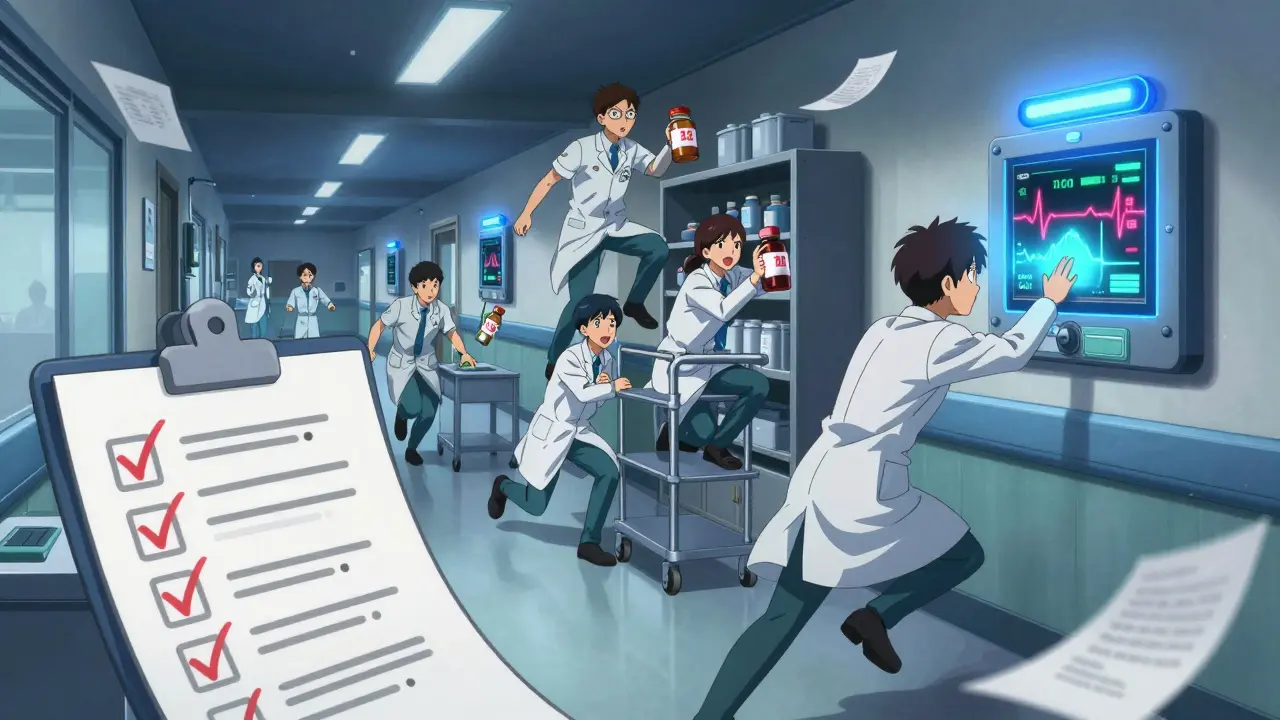
If your pharmacy uses an automated system like TruMed’s AccuSite or Navitus’ Recall Management Platform, it should flag recalled items during dispensing. These systems cross-reference incoming recall data with your inventory in real time. The accuracy rate? 99.8% according to TruMed’s white paper.
But here’s the catch: these tools only work if your inventory data is clean. If you have outdated lot numbers, mismatched NDCs, or unscanned stock, the system will give you false positives-or worse, miss a recall entirely. A 2022 survey by Pharmacy Times found that 63% of pharmacists dealt with false alerts, wasting an average of 2.7 hours per incident. That’s why audits are critical. Every quarter, run a full inventory reconciliation. Match every physical bottle with what your system says is there.
Act Fast: Remove and Quarantine
Once you confirm a match, remove the product from all patient care areas within 24 hours. That includes shelves, automated dispensers, formularies, and emergency kits. Don’t wait until tomorrow. Don’t assume someone else will handle it. Assign one person the responsibility-this isn’t a group task.
Quarantine the affected lots in a locked, labeled area. Write the lot number, date removed, and who did it. If the recall is Class I, you also need to identify any patients who received the medication. This isn’t always easy. If the drug was dispensed more than 30 days ago, tracking might be impossible. But you still need to document your attempt. Call the pharmacy’s records, check e-prescription logs, and notify patients if you can.
Replace and Document
Find a safe alternative. Don’t just swap in another brand without checking for interactions. If the recalled drug was a generic, make sure the replacement is bioequivalent. Some patients react differently to different manufacturers-even if the active ingredient is the same.
Then, document everything. The Joint Commission requires records to include:
- Date and time recall notice was received
- Exact lot numbers and NDCs affected
- Quantity removed from each location
- Staff who verified and removed the product
- Patients contacted (if applicable)
- Method of return to distributor
Keep these records for at least five years. If the FDA audits your facility, they’ll ask for them. And if you can’t produce them? You’re already in violation.
Automated Systems vs. Manual Checks
Here’s the reality: manual verification is slow and error-prone. ASHP’s 2022 study found that staff spending hours checking faxed lists made mistakes 18.3% of the time. That’s nearly one in five recalls mismanaged. Automated systems cut that to 2.1% and reduce response time from nearly five hours to under two.
But automation isn’t for everyone. Small independent pharmacies with 10 or fewer staff often can’t justify the $3,000 annual cost of Grayson’s RecallTrac. For them, a well-structured manual process still works. The key? Consistency. Use a printed checklist. Assign roles. Train everyone on the same steps.
Large hospitals? Automation is mandatory. With thousands of SKUs and hundreds of daily prescriptions, manual checks simply don’t scale. The University Medical Center case study showed a drop from 4.5 hours to 22 minutes per recall after switching systems. That’s not efficiency-it’s risk reduction.
Common Pitfalls and How to Avoid Them
Here’s what goes wrong-and how to fix it:
- Not checking emergency kits - 41% of FDA deficiencies came from unopened emergency supplies. Keep a checklist of all emergency drug locations and audit them monthly.
- Confusing similar-looking lot numbers - Some manufacturers use formats like L23A04 vs. L23-04. Create a reference sheet with common formats you see.
- Missing recalls after hours - 68% of recalls are announced outside business hours. Have a rotating on-call staff member who gets alerts via text.
- Not training new staff - The Joint Commission requires 2 hours of recall training per year. Don’t assume new hires know how to read an NDC.
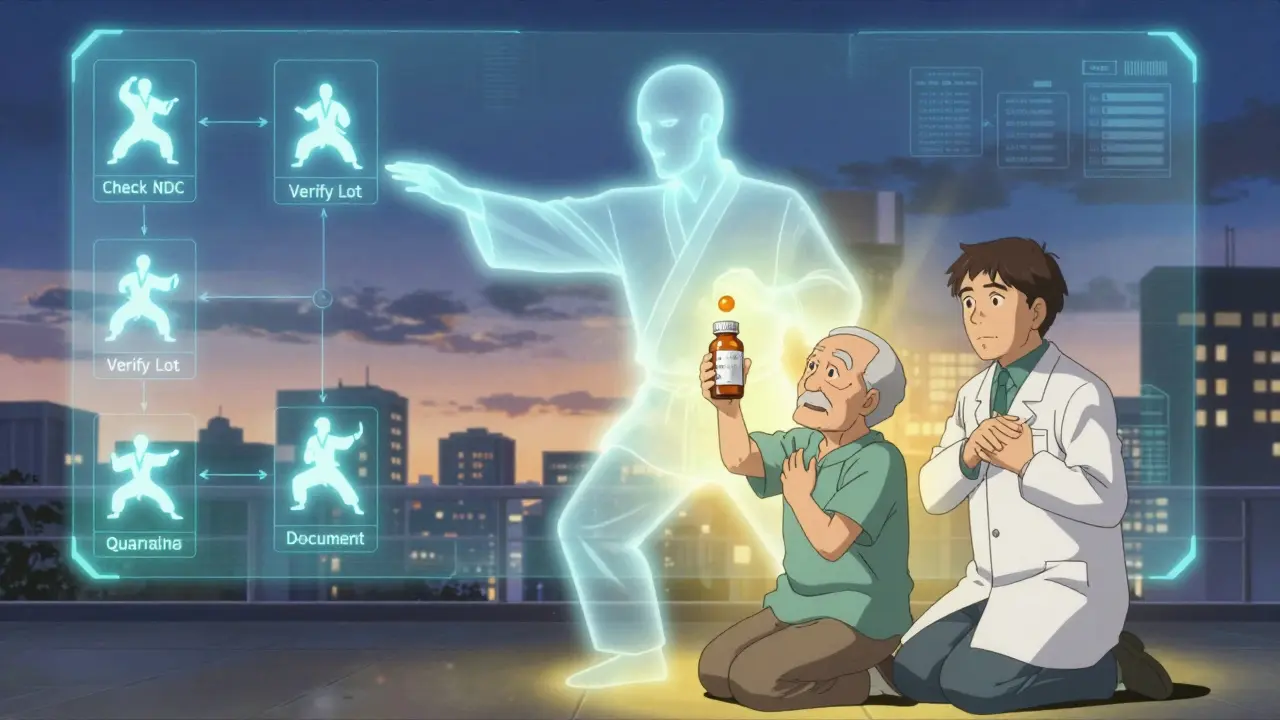
The best-performing facilities all have one thing in common: a written “recall playbook.” It’s a one-page flowchart that says who does what, when, and how. 86% of top-rated pharmacies use one. You can build yours in under an hour using free templates from ASHP or ISMP.
What’s Coming Next
The future of recall verification is automated and integrated. By 2026, 85% of verification will happen through supply chain platforms that sync with manufacturers’ systems in real time. Pfizer and Walgreens are already testing blockchain-based tracking, cutting verification time to 17 minutes. The FDA’s 2024 plan targets a 95% reduction in errors by 2028 using AI to match lot numbers automatically.
But for now, the system still depends on you. Whether you’re in a hospital in Melbourne, a rural clinic in Iowa, or managing meds at home, your actions matter. Verify the lot. Check the NDC. Remove the product. Document it. That’s how you protect someone’s life.
How do I know if a recall notice is legitimate?
Always cross-check the notice with the FDA’s official Drug Recalls page. Legitimate notices include the manufacturer’s name, the exact NDC, lot number, and expiration date. Never act on a recall that only comes via email without a reference number or official logo. If in doubt, call the manufacturer’s customer service line listed on the product packaging.
Can I return recalled medication to the pharmacy where I bought it?
Yes, most pharmacies and hospitals accept returns of recalled drugs. Bring the medication in its original packaging with the lot number visible. Do not flush or throw it away-returning it ensures proper disposal and helps track the recall’s scope. Some manufacturers cover return shipping costs; check their website for instructions.
What if I can’t find the lot number on the packaging?
Lot numbers are usually printed near the expiration date, sometimes on the bottom or side of the bottle. If it’s faded, check the box or outer packaging. If you still can’t find it, contact the pharmacy or manufacturer with the drug name, strength, and your purchase date. They can often look up the lot based on your prescription history.
Do I need to notify patients if I dispense a recalled drug?
For Class I recalls, yes-especially if the drug was dispensed within the last 30 days. Contact patients directly by phone or mail. For Class II or III, notify them if there’s a known risk, such as contamination or incorrect dosage. Document all attempts to contact patients, even if you can’t reach them.
How often should I train staff on recall procedures?
At least once a year, as required by the Joint Commission. But best practices suggest quarterly refreshers, especially after major recalls. Use real examples from recent FDA alerts to make training practical. Include new hires within their first week on the job.
Drug recall verification isn’t a one-time task. It’s a routine, just like checking expiration dates or washing hands before handling medication. The tools are there. The rules are clear. What’s left is action.



Manish Singh
March 17, 2026 AT 13:12Alexander Pitt
March 18, 2026 AT 04:11Shameer Ahammad
March 18, 2026 AT 14:43becca roberts
March 19, 2026 AT 14:02Suchi G.
March 21, 2026 AT 06:41Nilesh Khedekar
March 22, 2026 AT 15:07jared baker
March 23, 2026 AT 04:40gemeika hernandez
March 23, 2026 AT 11:26Kathy Underhill
March 25, 2026 AT 01:49Nicole Blain
March 26, 2026 AT 20:56Michelle Jackson
March 26, 2026 AT 22:53MALYN RICABLANCA
March 28, 2026 AT 12:00Prathamesh Ghodke
March 28, 2026 AT 23:10Srividhya Srinivasan
March 29, 2026 AT 00:43Robin Hall
March 29, 2026 AT 13:27