
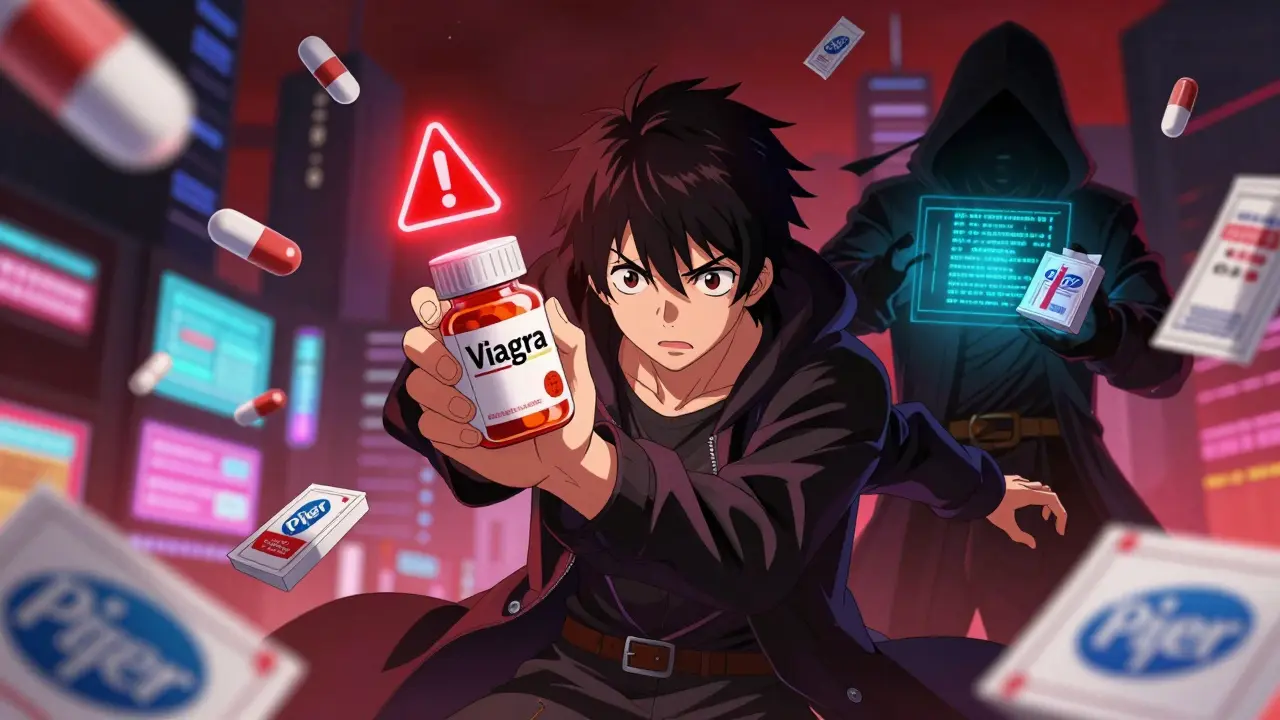
When you’re struggling with high drug prices at home, it’s tempting to search for cheaper options online - especially when a website looks professional, has glowing reviews, and offers pills for half the cost. But what you think is a smart financial move could be putting your life at risk. Every year, millions of people order medications from overseas pharmacies, unaware they’re buying counterfeit drugs that could contain toxic chemicals, no active ingredient at all, or dangerously high doses. This isn’t a rare occurrence. It’s a global crisis.
What Exactly Are Counterfeit Drugs?
Counterfeit drugs aren’t just "fake" versions of real medicine. They’re dangerous products designed to look real but often contain the wrong ingredients, the wrong dose, or nothing at all. The World Health Organization defines two main types: falsified (deliberately mislabeled) and substandard (poor quality due to manufacturing errors). Both are equally deadly.
Imagine buying a pill labeled as 50mg of sildenafil for erectile dysfunction - only to find out it contains 198mg. That’s more than three times the safe dose. Or worse, you get a pill with no sildenafil at all - just chalk, talcum powder, or even rat poison. These aren’t hypotheticals. In 2025, INTERPOL seized over 50 million doses of counterfeit drugs during a single global operation. One of the most common fakes? Erectile dysfunction meds, cancer drugs, and antibiotics.
Where Do These Fake Pills Come From?
Most counterfeit drugs are manufactured in unregulated facilities, often in Southeast Asia, India, or China. These aren’t underground labs - they’re factories with fake certifications, fake logos, and fake packaging that copies real brands like Pfizer, Novartis, or Johnson & Johnson. The packaging looks flawless. The blister packs match the originals. Even the fonts and colors are copied perfectly.
From there, the pills are shipped through complex global networks, often hidden in legitimate cargo or mailed as "personal imports." Criminal organizations use encrypted apps, cryptocurrency payments, and fake websites to avoid detection. In May 2025 alone, INTERPOL shut down 13,000 websites and social media pages selling illegal drugs. Many of these sites appear at the top of Google searches because they’ve paid for ads and used SEO tricks to mimic real pharmacies.
The Real Risks: More Than Just Wasted Money
Buying counterfeit drugs doesn’t just cost you money - it can kill you.
- Treatment failure: If your cancer drug contains only 14% of the active ingredient, your tumor keeps growing. If your antibiotics are fake, your infection spreads unchecked.
- Toxic reactions: Fake pills have been found to contain lead, arsenic, antifreeze, and industrial dyes. In 2024, a man in the UK ended up in intensive care after taking counterfeit Viagra that contained a banned chemical linked to liver failure.
- Antibiotic resistance: Substandard antibiotics don’t fully kill bacteria - they make them stronger. The WHO estimates that counterfeit anti-malarial and antibiotic drugs contribute to over 100,000 child deaths annually from pneumonia and other infections.
- Long-term damage: Even if you don’t get sick right away, repeated exposure to contaminants can cause organ damage, neurological issues, or cancer.
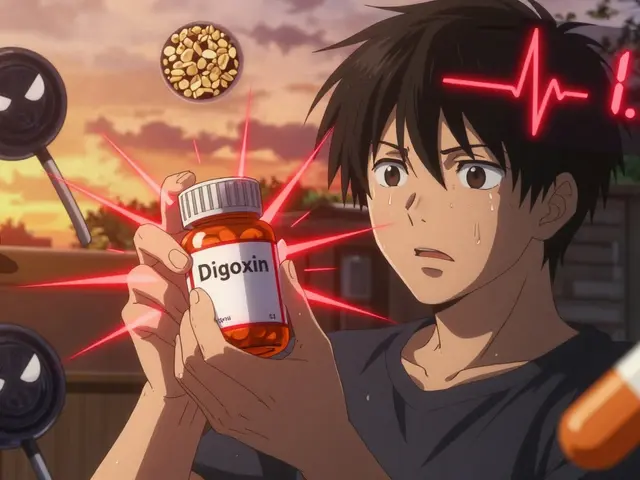
One Reddit user shared how they ordered modafinil from a "Canadian pharmacy" and ended up with severe heart palpitations. After testing the pills, they found they contained a stimulant not approved for human use - something used in veterinary medicine. Another user ordered diabetes medication and lost vision in one eye because the pills had 198% of the labeled dose.
Why Do People Keep Buying Them?
The answer is simple: price. A 30-day supply of insulin that costs $450 in the U.S. might be listed for $45 on a website based in India. A branded cancer drug that costs $10,000 in America might be sold for $800 overseas. For many, especially those without insurance, the savings seem worth the risk.
But here’s the catch: 72% of Americans who order drugs from abroad never check if the pharmacy is legitimate. They trust the website design, the "FDA-approved" seal (which is fake), or the testimonials. A 2024 survey found that 68% of people who ordered from non-certified pharmacies received products with mismatched packaging, misspelled names, or pills that looked different from what they were used to. Most ignored the warning signs.
How to Spot a Fake Online Pharmacy
Legitimate pharmacies don’t sell prescription drugs without a valid prescription. They don’t offer "no prescription needed" deals. They don’t send unsolicited emails or pop-up ads. Here’s how to tell if a site is real:
- Check for a physical address and phone number. Legitimate pharmacies list a real location - not a PO box or a generic contact form.
- Look for a licensed pharmacist on staff. They should be available for consultation via phone or chat.
- Verify certification. In the U.S., look for the VIPPS seal from the National Association of Boards of Pharmacy. In Canada, check for the Canadian International Pharmacy Association (CIPA) logo.
- Search the pharmacy name. Type the name into Google with the word "scam" or "complaint." If dozens of people report never receiving their order or getting sick after taking the pills, walk away.
- Don’t trust "FDA-approved" claims. Only the U.S. FDA approves drugs sold in the U.S. If a foreign pharmacy says their drugs are "FDA-approved," they’re lying. The FDA doesn’t approve foreign pharmacies.
Even the best-looking sites can be fake. In 2025, a website that looked identical to CVS Pharmacy’s site was selling counterfeit cancer drugs. It had real-looking logos, SSL encryption, and customer reviews - all fabricated.
What’s Being Done to Stop This?
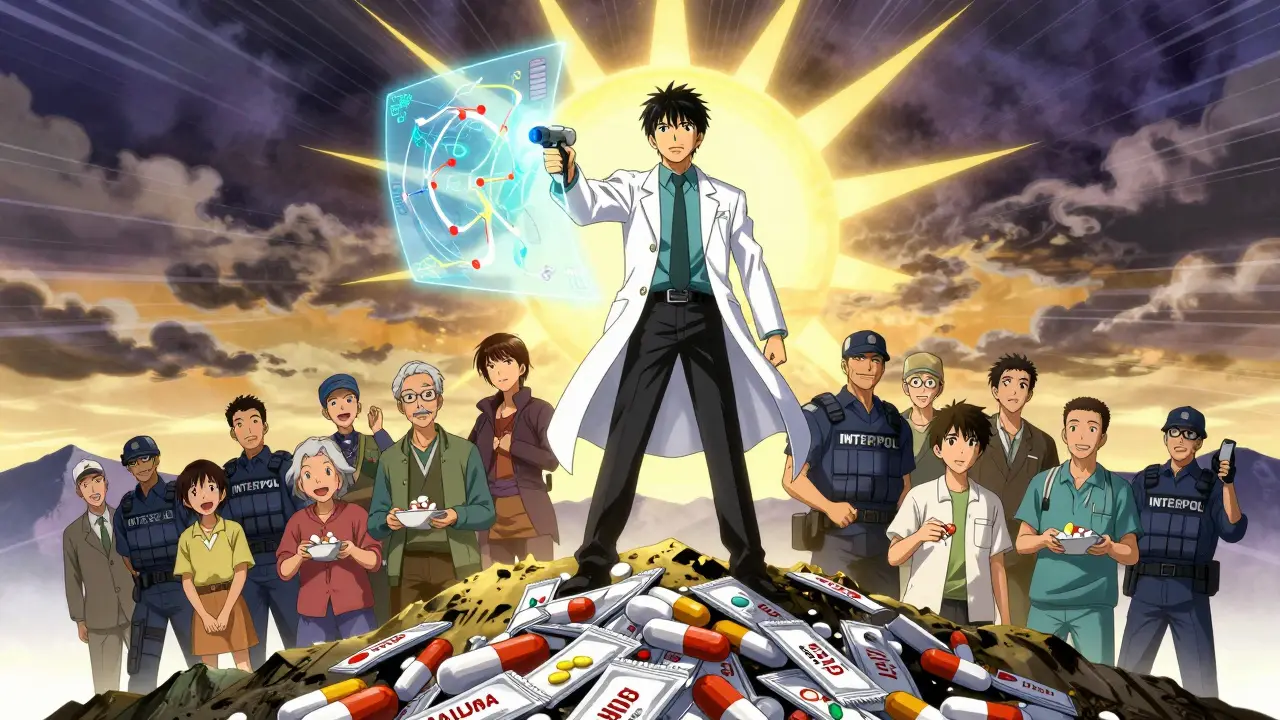
Law enforcement is fighting back. INTERPOL’s Operation Pangea XVI in May 2025 was the largest global crackdown ever, with 769 arrests across 90 countries and seizures of over 50 million fake pills. The U.S. FDA, Health Canada, the UK’s MHRA, and Australia’s TGA have all increased inspections of international mail.
Some countries are using new technology. The EU requires a unique code on every prescription medicine package that can be scanned to verify authenticity. Pfizer and other major drugmakers have spent over $1 billion on anti-counterfeiting efforts since 2004, preventing over 302 million fake doses from reaching patients.
But the problem is growing. The OECD estimates the global trade in counterfeit goods hit $467 billion in 2021, with pharmaceuticals one of the fastest-growing sectors. Criminals are now using AI to generate fake websites and deepfake videos of pharmacists giving "consultations." The gap between enforcement and innovation is widening.
What Should You Do Instead?
If you need cheaper medication, there are safer ways:
- Use mail-order pharmacies licensed in your country. Many U.S. insurers partner with verified U.S.-based mail-order pharmacies that offer discounts.
- Ask your doctor about generic alternatives. Generics are just as effective and often cost 80% less.
- Check patient assistance programs. Drug manufacturers like Pfizer, Merck, and Novo Nordisk offer free or low-cost medications to eligible patients.
- Use international pharmacy verification tools. LegitScript and the WHO’s "Be Medicinewise" checklist can help you identify safe options.
Never assume that because a drug is cheaper overseas, it’s safer. The profit margin on fake pills can be up to 9,000%. That’s why criminals are willing to risk lives.
Final Warning
You wouldn’t eat food from a street vendor with no hygiene license. Why risk your health with medicine from a website with no oversight? The people selling counterfeit drugs don’t care if you live or die. Their only goal is profit.
Every year, tens of thousands die from fake medicines. You don’t have to be one of them. Take five minutes to verify a pharmacy. Ask your doctor. Call your insurer. Use a legitimate service. Your life isn’t worth the savings.
How can I tell if a pharmacy is legitimate when ordering online?
A legitimate online pharmacy will require a valid prescription, have a licensed pharmacist available for consultation, display a physical address and phone number, and be certified by a recognized authority like the U.S. VIPPS program or Canada’s CIPA. Avoid sites that sell drugs without a prescription, offer "miracle cures," or have no contact information. Use LegitScript or the WHO’s "Be Medicinewise" checklist to verify.
Are generic drugs from other countries safe?
Generic drugs made in countries with strong regulatory systems - like Canada, the UK, or Australia - can be safe and effective. But if you’re ordering them from a website based in a country with weak oversight, there’s no guarantee they’re authentic. Always verify the pharmacy’s credentials, not just the drug’s name. Many counterfeiters sell fake generics with the same packaging as real ones.
Can counterfeit drugs cause long-term health problems even if I don’t get sick right away?
Yes. Many counterfeit drugs contain heavy metals, industrial solvents, or toxic fillers that build up in your body over time. Chronic exposure can lead to liver damage, kidney failure, neurological issues, or cancer. Even if you feel fine now, the damage may not show up for years. There’s no safe level of exposure to these contaminants.
Why are cancer drugs and biologics common targets for counterfeiting?
Cancer drugs and biologics are extremely expensive - often costing tens of thousands of dollars per treatment. This makes them high-value targets for criminals. Counterfeit versions may contain no active ingredient, or a toxic substitute. Because these drugs have a narrow therapeutic window, even small variations in dosage can be fatal. A fake version of a cancer drug could mean the difference between remission and death.
Is it legal to import prescription drugs from other countries?
Technically, importing prescription drugs into the U.S. from other countries is illegal under federal law, unless it’s for personal use and meets strict conditions (like a 90-day supply, no commercial intent, and no FDA-banned drugs). But enforcement is rare. The bigger issue isn’t legality - it’s safety. Even if you’re not prosecuted, you’re still risking your health by buying from unregulated sources.
What should I do if I think I’ve taken a counterfeit drug?
Stop taking the medication immediately. Contact your doctor or go to an emergency room if you experience unusual symptoms like dizziness, nausea, vision changes, or heart palpitations. Report the incident to your country’s health authority - in the U.S., that’s the FDA’s MedWatch program. Keep the packaging and pills as evidence. Many counterfeit operations are caught because consumers report suspicious products.

peter vencken
March 25, 2026 AT 00:43so i ordered some metformin from a site that looked legit-like, seriously, it had a .pharmacy domain and everything. got the pills, took 'em, felt fine. then i found out the batch number didn't match the manufacturer’s database. turns out it was a fake, but somehow worked? wild. now i just use GoodRx and get generics from my local CVS. no stress, no risk.
Caroline Bonner
March 26, 2026 AT 02:14I just want to say-this post hit me in the soul. I’m a nurse in Toronto, and last year, a patient came in with acute liver failure. Turned out she’d been buying insulin from a "Canadian" website because she couldn’t afford it here. The pills? They were just powdered sugar and a trace of something called "phenylalanine analog"-a chemical used in industrial adhesives. She’s lucky to be alive. We need systemic change, not just "be careful" advice. Insurance companies are profiting off this crisis. And don’t get me started on how pharma patents keep prices sky-high while the same drugs cost $3 in India. We’re punishing people for being poor. It’s not just about counterfeit drugs-it’s about broken healthcare.
I’ve started a petition to pressure the government to allow legal, regulated importation of medications from countries with strict quality controls. If you’re reading this and you’ve ever skipped a dose because of cost-please sign. We’re not asking for free stuff. We’re asking for dignity.
Also: if you’re using a VPN to access "foreign pharmacies," you’re not being clever-you’re being manipulated. Those sites are designed by AI to look real. They use real photos of pharmacists, real testimonials from bots, even fake SSL certificates. It’s psychological warfare. And we’re losing.
Rama Rish
March 26, 2026 AT 13:28from india here. we make 40% of the world’s generic drugs. but most fakes? they come from shady labs in bangladesh and vietnam. not us. pls don’t lump us all together. we’re not the problem.
Kevin Siewe
March 27, 2026 AT 10:00just wanted to add-if you’re thinking of ordering from abroad, check the pharmacy’s license with LegitScript. it’s free. took me 3 minutes. saved me from buying fake heart meds last year. your life is worth that tiny bit of effort.
Chris Farley
March 27, 2026 AT 16:50oh wow, another liberal scare piece. you think people are dumb for buying cheap meds? nah, they’re smart. the real criminals are the FDA and Big Pharma colluding to keep prices high. i’ve bought 12 different meds from overseas-every single one worked better than the overpriced US versions. if you’re scared, stay home. the rest of us are living.
Darlene Gomez
March 29, 2026 AT 17:00to the person above-i hear you. but let’s not pretend this is just about government overreach. imagine your kid needs chemo. you find a site that sells it for $500. you order it. the pills look perfect. you give them to your child. three weeks later, the tumor grows. why? because the active ingredient was 2% instead of 100%. that’s not a political issue. that’s a horror story. and it happens every day. we can fix drug pricing without sacrificing safety. let’s not choose between dignity and death.
Katie Putbrese
March 30, 2026 AT 22:40people who buy from foreign sites are just asking for trouble. you think you’re being smart? you’re being reckless. if you can’t afford medicine, go on disability. get help. don’t gamble with your life because you’re too lazy to fill out paperwork. this isn’t a right-it’s a privilege earned through systems. and you’re breaking them.
Jacob Hessler
March 31, 2026 AT 20:25fake meds = bad. but the real problem? the usa is the only country that lets drug companies charge 10x more than everywhere else. fix that. then no one will need to buy overseas. simple.
Amber Gray
April 1, 2026 AT 06:26my uncle died from fake viagra 💀💀💀 don't be him
Linda Foster
April 2, 2026 AT 14:09Thank you for publishing this thorough and meticulously researched article. The data presented, particularly the INTERPOL statistics and the WHO’s findings on antimicrobial resistance, are both alarming and indispensable for public awareness. I would respectfully suggest that future iterations include citations from peer-reviewed journals such as The Lancet Global Health or the New England Journal of Medicine to further bolster credibility. The ethical and public health implications are profound, and your clarity on this matter is commendable.