
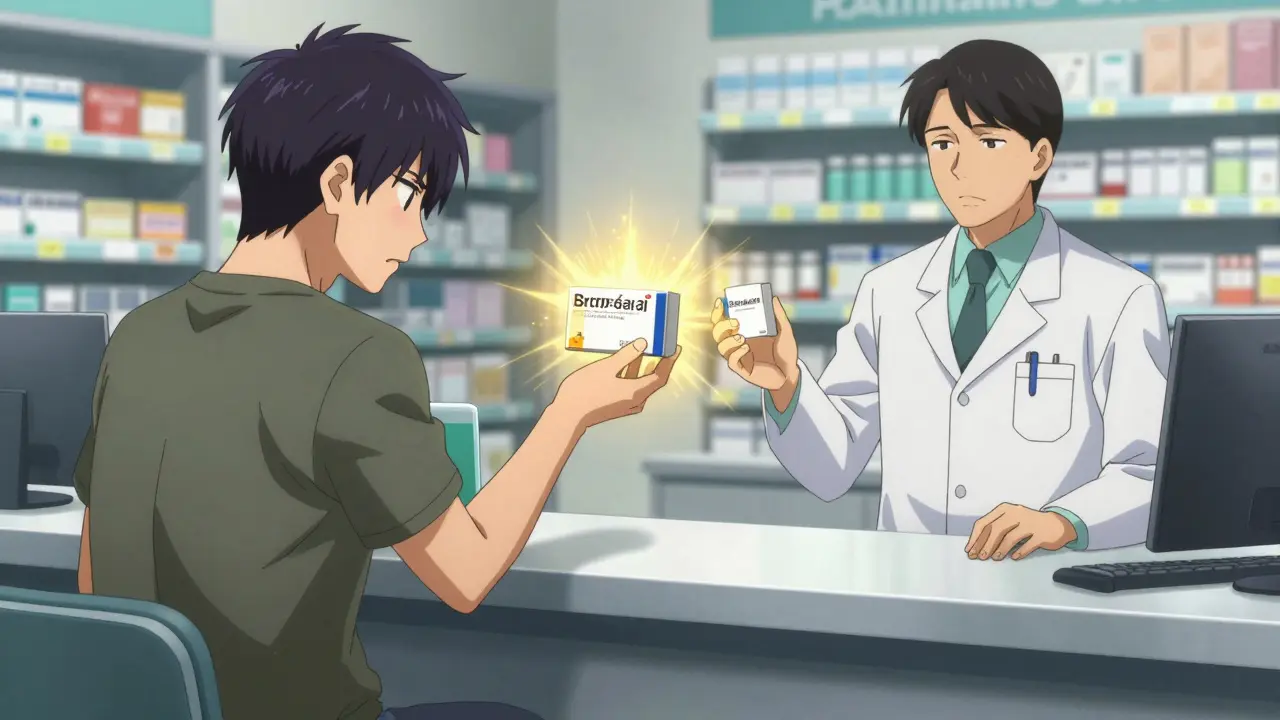
Imagine walking into a clinic after a workplace injury. The doctor prescribes a painkiller. You leave the pharmacy. Do you get the expensive brand bottle, or the cheaper generic box? In the world of workers' compensation, that choice isn't up to luck. It is often dictated by strict protocols designed to balance quality care with financial sustainability. For years, there has been a tug-of-war between controlling skyrocketing healthcare costs and ensuring injured workers receive the best possible treatment.
The answer lies in generic substitution, defined as the systematic replacement of brand-name pharmaceuticals with FDA-approved equivalent generic medications for treating work-related injuries. This practice has evolved from a simple cost-saving measure into a cornerstone of modern occupational health management. With drug prices soaring, replacing brand names with generics where medically appropriate has become one of the most effective ways to reduce expenses without sacrificing patient outcomes.
The Legal Framework Behind Substitution
To understand why generics dominate workers' compensation prescriptions, we have to look back at the legislative foundations. The modern framework for generic drug approval was established by the Hatch-Waxman Act of 1984, formally known as the Drug Price Competition and Patent Term Restoration Act. This legislation created a pathway for generic manufacturers to enter the market once patent protections expired. It balanced innovation incentives for brand creators with access benefits for consumers.
In many jurisdictions, particularly across the United States, this federal groundwork translates into state-level mandates. Currently, 44 states and the District of Columbia have laws permitting or requiring generic substitution in workers' compensation cases where medically appropriate. For instance, the Tennessee Workers' Compensation Medical Fee Schedule explicitly states that an injured employee should receive only generic drugs unless the authorized treating physician documents medical necessity for the brand-name product. This isn't just a suggestion; it is a compliance requirement that shapes how doctors prescribe and how pharmacies dispense.
However, laws vary significantly. While some states enforce strict formularies, others allow broader discretion. Virginia, for example, maintains language allowing treatment for occupational disease under unusual evidentiary standards. Understanding these local nuances is critical for providers navigating the reimbursement process.
Understanding Bioequivalence Standards
A common concern among patients is whether a generic drug actually works the same way as the branded version. From a regulatory standpoint, the answer is backed by rigorous science. The Food and Drug Administration (FDA) requires that generic medications demonstrate identical active ingredients, strength, dosage form, route of administration, and pharmacokinetic properties compared to brand-name drugs. This concept is known as bioequivalence.
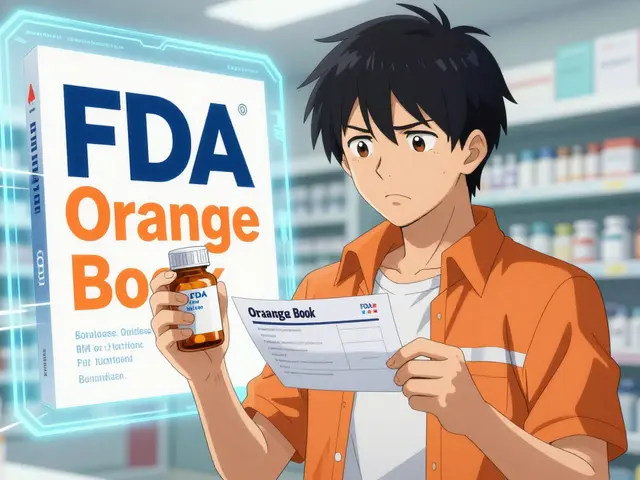
This means the medication must perform the same way in the body as the original. According to data published in the Journal of the American Medical Association (JAMA), this standard ensures that despite differences in appearance or inactive ingredients (like fillers or dyes), the therapeutic effect remains consistent. The FDA Orange Book, titled Approved Drug Products with Therapeutic Equivalence Evaluations, serves as the go-to resource for determining which generics meet these criteria.
Despite this scientific backing, misconceptions persist. A 2019 survey revealed that 68% of injured workers initially expressed skepticism about generic medications, believing brand-name drugs were inherently superior. Yet, follow-up reporting showed 82% noted equivalent therapeutic effects after usage. The gap lies in perception versus pharmacological reality. Educating patients that "generic" means chemically nearly identical is essential to building trust in the system.

The Financial Case for Generics
Why does the industry push so hard for substitution? The economics are undeniable. Branded pharmaceutical products saw a 159% increase in list price over a ten-year period according to JAMA analysis. Meanwhile, the cost of living for common goods rose much slower. This inflation puts immense pressure on workers' compensation carriers and employers to find efficiencies.
| Metric | Brand-Name Drugs | Generic Medications |
|---|---|---|
| Price Trend (5-Year) | +65.5% Inflation | -35.0% Decline |
| Relative Cost | Baseline ($100) | ~$20 (Approximately 20% of Brand Price) |
| Utilization (2016 Managed Prescriptions) | 14.3% | 85.7% |
Data from myMatrixx highlights the magnitude of this disparity. Their analysis indicates that generic versions typically cost approximately 20% of the price of their brand-name counterparts. If a brand-name drug lists at $100, the generic equivalent might run about $20. Over thousands of claims, these savings accumulate to millions of dollars within the system. In 2016, managed prescriptions-which included retail, mail order, and extended-network options-represented 74.3% of total prescriptions, with generic utilization in that segment hitting 85.7%.
By shifting demand toward generics, payers can reallocate funds toward other aspects of care, such as rehabilitation services or physical therapy, which are crucial for returning injured workers to productivity.
Implementation Protocols and PBMs
The machinery behind this shift involves Pharmacy Benefit Managers (PBMs). Major players like OptumRx, Express Scripts, and Prime Therapeutics control approximately 65% of the workers' compensation pharmacy market. These organizations implement formularies and prior authorization requirements that mandate generic substitution where available.
For a provider prescribing medication, knowing the PBM rules is vital. If a doctor writes a prescription for a brand-name drug when a generic exists, the claim may be rejected or require special documentation. The learning curve for providers typically spans three to six months to become proficient with state drug lists and substitution protocols. In states with strong formulary management, like Tennessee, processes are streamlined. In states with looser regulations, providers face greater administrative burdens when justifying brand-name medications.
Prior authorization is the gatekeeping mechanism. It requires the doctor to prove medical necessity. Reasons for brand-name approval might include documented allergies to inactive ingredients in the generic or a history of therapeutic failure with the substitute. Without solid clinical justification, the request is often denied to protect the integrity of the cost-containment strategy.

Challenges and Limitations
While the data supports generics, it isn't a magic bullet for every situation. There are legitimate limitations to consider. One major hurdle involves drugs with a narrow therapeutic index. These are medications where small differences in dose can lead to significant changes in health outcomes, including toxicity or lack of efficacy. While rare (representing less than 2% of cases), therapeutic failures can occur in sensitive populations.
Another challenge is the market dynamic itself. Generic competition is supposed to drive prices down, but anti-competitive behavior among manufacturers can sometimes inhibit this. Analysis from Enlyte in 2022 noted that alleged anti-competitive tactics designed to reduce competition and drive up generic prices can create unexpected pricing challenges even in the generic segment.
Additionally, patient experience matters. Nurse practitioners frequently encounter friction when explaining to workers that generics contain the same active ingredients. Managing expectations is reported as a significant issue by 73% of occupational health providers. When a worker feels their recovery is threatened by a "cheaper" pill, compliance drops. Effective communication strategies that explain FDA bioequivalence standards help bridge this gap.
The Future of Substitution
Looking ahead, the landscape is evolving beyond traditional tablets. As patent protections expire for complex biologic drugs, the concept extends into biosimilars. Texas became one of the first jurisdictions to implement biosimilar substitution protocols in 2022. Colorado recently updated regulations requiring 95% generic utilization for drugs on the state formulary, effective January 1, 2024.
We are also seeing a move toward precision medicine. The trend suggests future integration of pharmacogenomic testing to determine individualized medication efficacy. This could reduce the one-size-fits-all approach to generic substitution. Instead of blind switching, clinicians might test genetic markers to see if a specific formulation works better for a specific patient's metabolism.
Forecasts predict generic utilization will reach 93.5% by 2025, driven by continued brand-name inflation. However, specialty drugs-medications used for complex conditions-currently represent 12.7% of pharmacy costs but have only a 4.3% generic substitution potential. As the industry matures, managing these non-substitutable high-cost drugs will become the next frontier for cost containment.
Are generic drugs truly as safe as brand-name drugs?
Yes. Under FDA regulations, generic drugs must demonstrate bioequivalence, meaning they have the same active ingredients, strength, and safety profile as the brand-name version. They undergo rigorous evaluation to ensure they work the same way in the body.
Can a doctor override generic substitution rules?
Doctors can prescribe brand-name drugs if they document medical necessity. This usually requires proof that the generic failed or that the patient has an allergy to inactive ingredients. This decision must align with state fee schedules and PBM formularies.
What percentage of workers' comp prescriptions are generic?
Recent data indicates generic utilization hovers around 85% to 89% for managed prescriptions. Forecasts suggest this number will grow to roughly 93.5% by 2025 as cost containment measures intensify.
Do all states require generic substitution?
Most do, but laws vary. Approximately 44 states and D.C. have laws permitting or requiring substitution. Some states have stricter mandates with detailed formularies, while others offer more flexibility to the treating provider.
Why do some patients prefer brand-name drugs?
Often, it comes down to perception rather than efficacy. Surveys show many patients believe brand-name drugs are higher quality due to packaging or marketing. Education on bioequivalence helps correct this misconception.

Rocky Pabillore
April 2, 2026 AT 16:43It is quite amusing how people still cling to brand-name superiority despite the regulatory oversight existing for decades. You would think the financial incentives alone would shut down these debates by now.
Russel Sarong
April 2, 2026 AT 21:43I completely agree!!! The evidence is overwhelming!!!! We need to stop wasting money on marketing fluff instead of medical necessities!!!!
Cara Duncan
April 3, 2026 AT 00:45This is actually really reassuring to read. 💊 It helps me feel less worried about my own work injury claim. Knowing the law protects me feels nice 😊
James DeZego
April 4, 2026 AT 02:43From a clinical perspective, the bioequivalence standards are rigorous. 🧪 Most failures are due to placebo effects rather than chemical differences. Education bridges this gap.
Molly O'Donnell
April 5, 2026 AT 10:00The science is settled regarding bioequivalence, so stop questioning the efficacy of the generics.
Eleanor Black
April 6, 2026 AT 09:44It is indeed a profoundly complex issue requiring thoughtful consideration. Many individuals frequently express deep concern regarding medication safety. However, the established regulations exist for a very specific reason. We must place our absolute trust in the existing processes. The Food and Drug Administration does a tremendous job here. There are multiple checks and balances in the system currently. The available statistics strongly support the systemic change. Financial cost remains a major factor in healthcare delivery. Patients certainly deserve significantly better care options overall. Insurance companies primarily want reasonable savings. But physical health always comes first above profit margins. We should prioritize educating injured workers effectively. Persistent misunderstandings unfortunately lead to unnecessary fear. Fear often prevents necessary and timely recovery steps. Trust ultimately builds stronger patient outcomes in the end. The aggregated data clearly proves the scientific point today. We simply need to move forward with confidence.
Jonathan Sanders
April 6, 2026 AT 13:00Sure, keep telling yourselves that while your deductible eats you alive. Typical corporate optimism right there.
Julian Soro
April 8, 2026 AT 00:48We can all work together to improve these systems! It takes awareness and proactive communication. Everyone deserves quality care without the stress. Let's stay positive about the progress!
Brian Yap
April 9, 2026 AT 07:44Fair dinkum, this stuff is tricky down under too. We reckon the cost cuts matter heaps for the insurance folks.
Ruth Wambui
April 10, 2026 AT 14:04The giants are clearly rigging the game to squeeze out small players. It is a coordinated strategy to hide supply chain manipulation.
Rocky Pabillore
April 11, 2026 AT 00:33Typical paranoid drivel masking a complete lack of understanding about market forces and basic economics.