
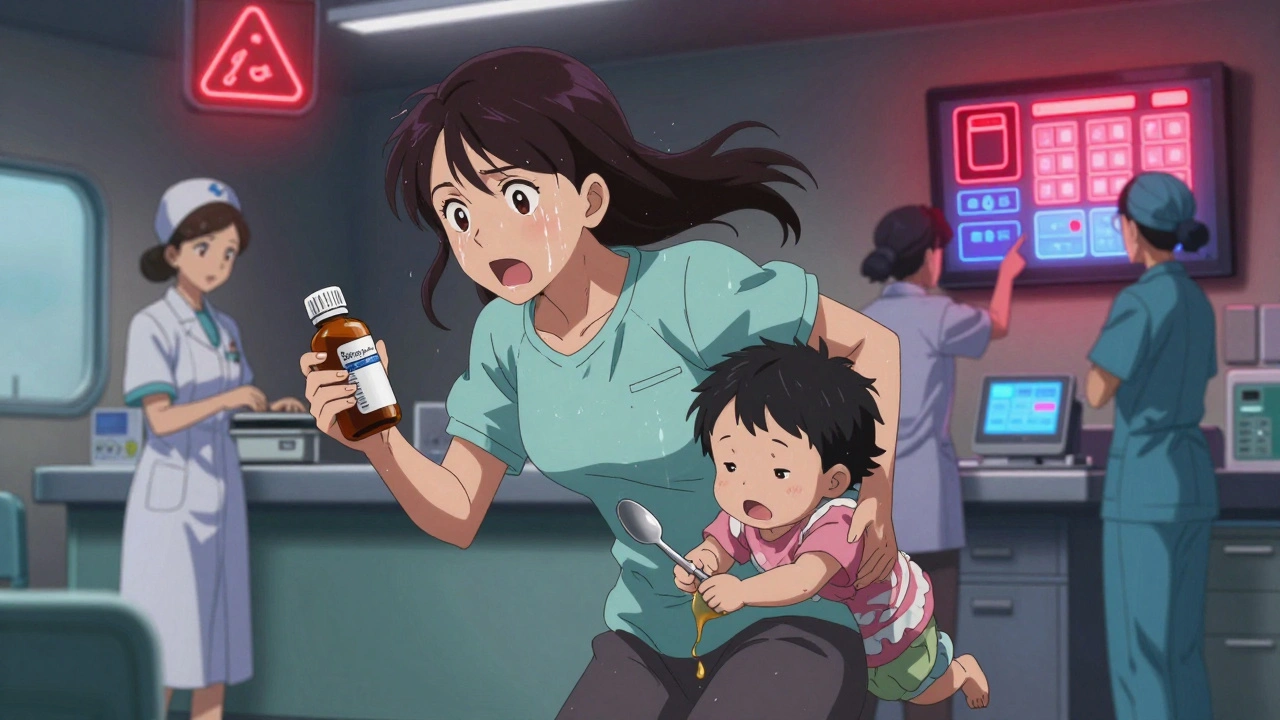
Every year, thousands of children end up in emergency rooms because of a simple mistake: the wrong dose of medicine. Not because parents are careless, but because the system is set up to fail. In pediatric emergencies, medication errors happen more than twice as often as in adults. One in three kids gets hit with a dosing mistake - and many of these aren’t caught until it’s too late.
Why Kids Are So Vulnerable
Adults get pills. Kids get liquids. And that’s where things go wrong. Pediatric dosing isn’t just a smaller version of adult dosing. It’s calculated by weight - milligrams per kilogram. A 10kg toddler needs a completely different amount than a 30kg child, even if they both have a fever. One wrong decimal point, one misread label, one confused syringe, and you’re giving 10 times the right dose. Liquid medications are the biggest culprit. Studies show 60-80% of dosing errors at home involve liquids like acetaminophen or ibuprofen. Parents often don’t realize that children’s Tylenol and infant Tylenol have different concentrations. One mom in a 2024 Reddit thread said she gave her 2-year-old 5mL of children’s Tylenol thinking it was the same as infant formula. The pediatrician called her back 45 minutes later: she’d overdosed. Weight measurement errors are another silent killer. In 10-31% of pediatric medication errors, the child’s weight is recorded wrong. Maybe the scale wasn’t calibrated. Maybe the parent guessed. Maybe the nurse wrote down 15kg instead of 10kg. That’s a 50% overdose right there.The Numbers Don’t Lie
Data from the US Pharmacopeia shows pediatric medication errors occur at a rate of 31% in emergency settings - compared to just 13% for adults. In one 2019 study of pediatric ERs, nearly 8 out of 10 errors were near misses - meaning they were caught before harm happened. But 13% did cause real injury. That’s 1 in 8 kids who got hurt because of a mistake that could have been prevented. The most common errors? Wrong dose (13%), wrong medication (4%), wrong time or rate (3%). And here’s the kicker: only 10-30% of these errors ever get reported. Most are buried in chart notes or dismissed as “human error.” A 2024 JAMA Network Open study found that 64.7% of families given discharge instructions for liquid meds made at least one dosing mistake. That’s more than two out of three. And it’s not because they’re bad parents. It’s because the instructions are confusing, the tools are inconsistent, and the pressure is high.Real Cases That Shouldn’t Happen
Case 1: A 7-month-old with a fever is brought in. Mom says the baby weighs 8kg. The nurse writes down 10kg. The child gets 15mg/kg of acetaminophen instead of 12mg/kg. That’s a 25% overdose. The child gets drowsy. Blood tests show liver stress. They’re admitted for observation. Case 2: A 5-year-old with asthma gets a nebulizer treatment with albuterol. The nurse grabs the wrong vial - it’s epinephrine. The child’s heart races to 220 bpm. They’re rushed to ICU. The error was caught because the nurse double-checked the label… after giving it. Case 3: A mother gives her 12kg child 5mL of liquid amoxicillin from a kitchen spoon because she lost the dosing cup. The spoon holds 7mL. She repeats it 4 hours later. The child vomits, gets diarrhea, and ends up back in the ER with dehydration. These aren’t rare. They’re routine.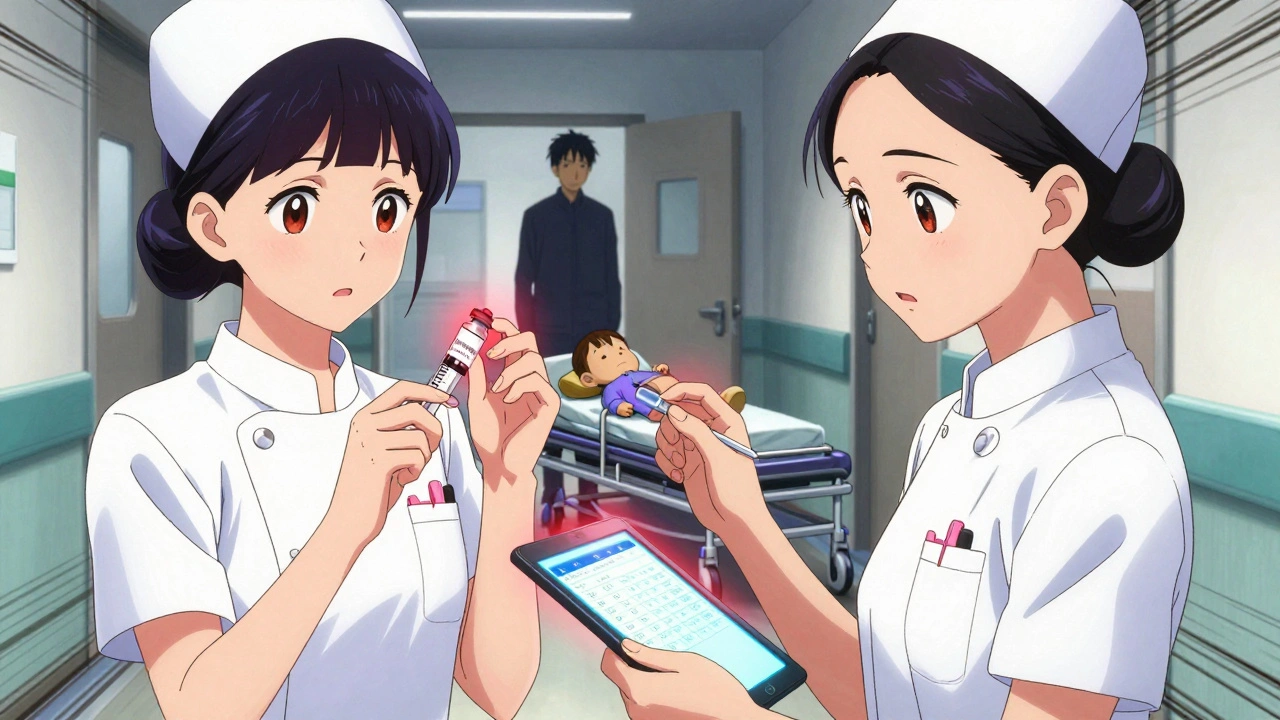
Who’s at Highest Risk?
It’s not random. Certain families face much higher risks: - Parents with low health literacy: 68% make dosing errors vs. 29% for those with higher literacy. - Families with limited English: 45% error rate vs. 28% for English speakers. - Medicaid-enrolled children: 27% higher error rate than those with private insurance. - Kids with chronic conditions like epilepsy or cancer: 40% experience ambulatory dosing errors at home. One study found that parents of children with leukemia made dosing mistakes 1 in 10 times when giving oral chemotherapy. That’s not negligence. That’s a system that doesn’t support them.What Works: Real Solutions
The good news? We know how to fix this. At Nationwide Children’s Hospital, they cut harmful medication events by 85% using three simple moves:- Standardized weight-based dosing protocols - no more guessing.
- Double-checks for high-alert meds like epinephrine or insulin - two people verify before giving.
- Real-time pharmacy verification - every pediatric order gets reviewed by a pharmacist before it’s dispensed.
What’s Still Broken
Here’s the problem: these fixes aren’t everywhere. Most community emergency departments - the ones that see 80% of pediatric cases - don’t have pediatric-specific EMRs. No built-in dosing calculators. No pharmacist checks. No pictogram sheets. Just a computer that treats a 5-year-old like a small adult. And while children’s hospitals have made progress, the rest of the system is lagging. A 2023 study found only 68% of children’s hospitals use pediatric EMR calculators. That number drops to under 30% in general ERs. Language barriers still aren’t solved. Spanish-speaking families face 32% higher error rates. Translation apps aren’t enough. You need trained medical interpreters - not a family member, not a phone call.What Parents Can Do Right Now
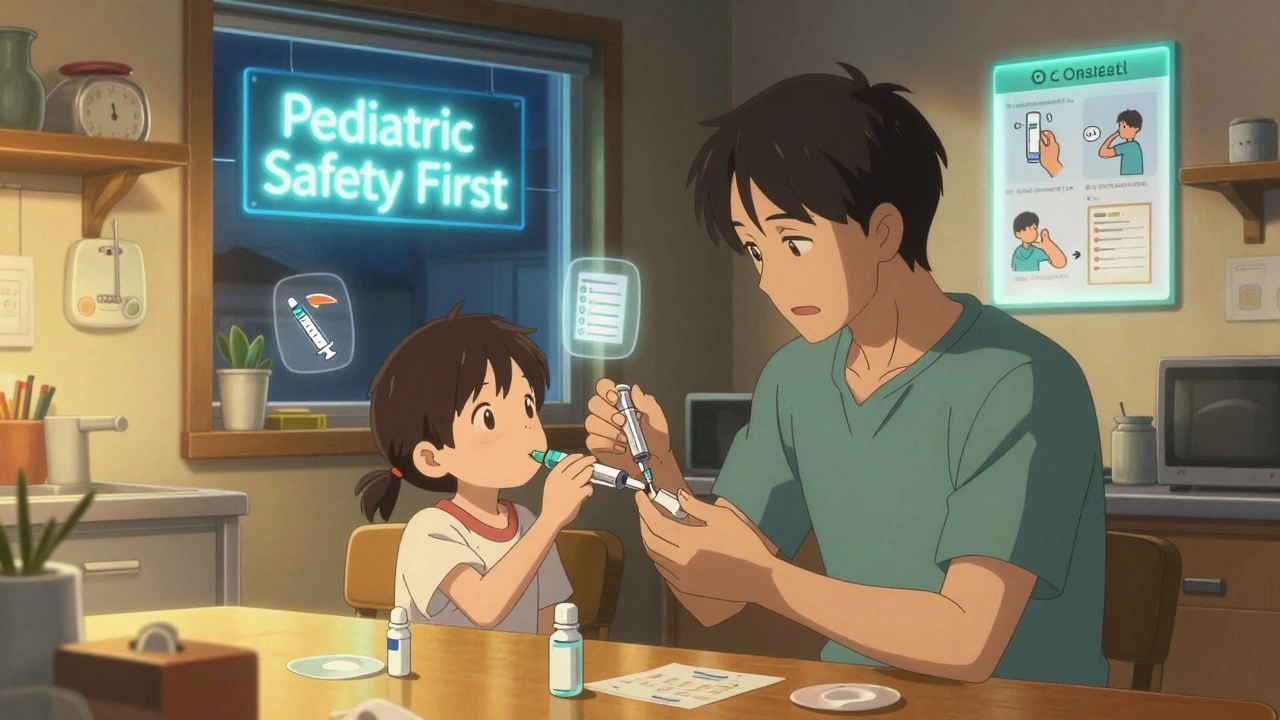
You don’t have to wait for the system to fix itself. Here’s how to protect your child:- Always use the dosing device that comes with the medicine - never a spoon or shot glass.
- Ask: “Is this in mg or mL?” and “What’s the concentration?” (e.g., 160mg/5mL vs. 80mg/5mL).
- Write down the dose, time, and reason on your phone before leaving the ER.
- Use the teach-back method: “Can you show me how you’ll give this?”
- Keep a list of all medications your child takes - including vitamins and supplements - and bring it to every visit.
The Bigger Picture
Medication errors in kids aren’t about bad parents or lazy nurses. They’re about broken systems. We treat children like small adults - but their bodies don’t work the same. Their doses aren’t scaled. Their instructions aren’t clear. Their safety nets are thin. The American Academy of Pediatrics says medication safety is one of their top five priorities. They’re pushing for standardized metrics to track outpatient errors by 2025. That’s progress. But until every ER - from Boston to Brisbane - has pediatric-specific tools, training, and checks, kids will keep getting hurt by simple mistakes. The fix isn’t expensive. It’s not high-tech. It’s basic: weigh accurately. Verify twice. Use the right tool. Explain clearly. Follow up. And if you’re a parent? Trust your gut. If something feels off - ask again. Show them the syringe. Say, “I’m not sure.” You’re not being difficult. You’re saving a life.What’s the most common medication mistake in pediatric emergencies?
The most common mistake is giving the wrong dose - usually because of incorrect weight measurement or confusion between milligrams (mg) and milliliters (mL). Liquid medications like acetaminophen and ibuprofen are involved in 60-80% of these errors, especially when parents use kitchen spoons instead of proper dosing devices.
Why are pediatric medication errors more common than adult ones?
Pediatric doses are based on weight (mg/kg), not fixed amounts. Adults often get standard doses, but kids need precise calculations that vary by size, age, and condition. This adds complexity. Plus, most kids get liquid meds, which are harder to measure accurately than pills. Time pressure in emergencies makes errors more likely.
Can a parent accidentally overdose their child at home?
Yes. A 2024 study found 64.7% of parents made at least one dosing error when giving liquid meds at home. Common causes include using kitchen spoons, confusing different concentrations of the same drug (like children’s vs. infant Tylenol), or repeating doses too soon. One mom gave her 10kg child 5mL of acetaminophen thinking it was the right amount - but it was 10 times the correct dose.
How can hospitals reduce these errors?
Hospitals that reduce errors use four key strategies: standardized weight-based dosing protocols, double-checks for high-alert medications, real-time pharmacy review of all pediatric orders, and simplified discharge instructions with pictograms and teach-back. Nationwide Children’s Hospital cut harmful errors by 85% using these methods.
What should I do if I think I gave my child the wrong dose?
Call your pediatrician or poison control immediately - don’t wait for symptoms. Have the medicine bottle ready so you can tell them the name, concentration, amount given, and your child’s weight. If your child is drowsy, vomiting, or having trouble breathing, go to the ER. It’s better to be safe than sorry. Most errors are fixable if caught early.
Are there tools to help me give the right dose?
Yes. Always use the dosing syringe or cup that comes with the medicine. Never use a kitchen spoon. Many pharmacies now offer free dosing syringes if you ask. You can also download apps like Medisafe or MyTherapy that remind you of doses and let you log what you gave. Some hospitals provide pictogram sheets showing exactly how much to give - ask for one at discharge.

Webster Bull
December 12, 2025 AT 18:45They treat kids like tiny adults and wonder why things go south. It’s not about being lazy-it’s about systems designed for efficiency, not safety. We need to stop pretending a 10kg kid is just a 30kg kid with shorter legs.
Bruno Janssen
December 13, 2025 AT 22:26I’ve seen this happen. My cousin’s kid got the wrong dose. They were lucky. Most aren’t.
Scott Butler
December 15, 2025 AT 12:52Why are we even giving liquid meds to kids? Just make pills. Everyone else manages. This is what happens when you coddle parents instead of holding them accountable.
Emma Sbarge
December 17, 2025 AT 12:52My sister works in a rural ER. They don’t even have dosing calculators. One nurse told me they just eyeball it sometimes. It’s terrifying. And no one talks about it because ‘it’s not that bad.’
Donna Hammond
December 18, 2025 AT 22:19Every single parent reading this should write down the exact concentration of any liquid medication their child takes-mg per mL-and keep it in their phone notes. That one habit alone prevents 70% of home errors. Also, never trust a kitchen spoon. Ever. Use the syringe that came with the bottle. If you lost it, call the pharmacy-they’ll send you a new one for free. And if you’re unsure, call your pediatrician. No shame in asking. Your kid’s liver will thank you.
Richard Ayres
December 19, 2025 AT 00:57The real tragedy isn’t the errors-it’s that we accept them as inevitable. We fix car seats, we mandate smoke detectors, we track lead paint. But when it comes to something as basic as a child’s medicine, we shrug and say, ‘Oops, human error.’ We need to treat pediatric dosing like air traffic control-no exceptions, no shortcuts.
Sheldon Bird
December 20, 2025 AT 15:20Biggest game-changer? Teach-back. Just ask the parent to show you how they’ll give the medicine. If they reach for a spoon, hand them the syringe. If they say ‘a teaspoon,’ ask what that means in mL. It takes 30 seconds. Saves lives. I’ve seen it work. And yeah, I use emojis sometimes because this stuff is emotional AF 🙏
Michael Gardner
December 20, 2025 AT 22:09So now we’re blaming the system again? What about personal responsibility? My kid’s on 5 meds and I’ve never messed up a dose. Maybe if parents actually read the label instead of assuming it’s ‘close enough,’ we wouldn’t need all these fancy protocols.
Willie Onst
December 22, 2025 AT 17:43My abuela gave me medicine with a spoon too. We survived. But times changed. Now we know better. It’s not about blame-it’s about making sure no one else has to learn the hard way. The fact that 64% of parents mess up dosing? That’s a system failure, not a parenting failure. We can fix this. We just have to care enough to try.
Shelby Ume
December 22, 2025 AT 20:10Standardized protocols, pharmacist verification, and pictographic discharge instructions are not luxuries-they are minimum viable safeguards. The fact that these are not universally implemented in U.S. emergency departments is a moral failure. We have the tools. We have the data. We have the expertise. What we lack is the political will to prioritize pediatric safety with the same urgency as adult care. Until that changes, children will continue to be collateral damage in a broken system.