

Imagine standing perfectly still, but the room suddenly spins violently around you. Your ears ring with a low roar, and your hearing feels muffled, like you’re underwater. For people living with Meniere’s disease, a chronic inner ear disorder characterized by pathological fluid buildup, this isn’t just a bad day-it’s a recurring reality. First described in 1861, this condition remains one of the most frustrating disorders to manage because it attacks the very systems that keep you balanced and aware of your surroundings.
The core issue isn’t just ‘dizziness.’ It’s a mechanical failure inside your head. Specifically, it involves endolymphatic hydrops, an abnormal accumulation of potassium-rich fluid that disrupts vestibular and auditory function. When this fluid pressure spikes, it distorts the delicate membranes of your inner ear, sending false signals to your brain. Understanding why this happens-and how to stop it-is the key to taking back control of your life.
Why Does Fluid Buildup Happen?
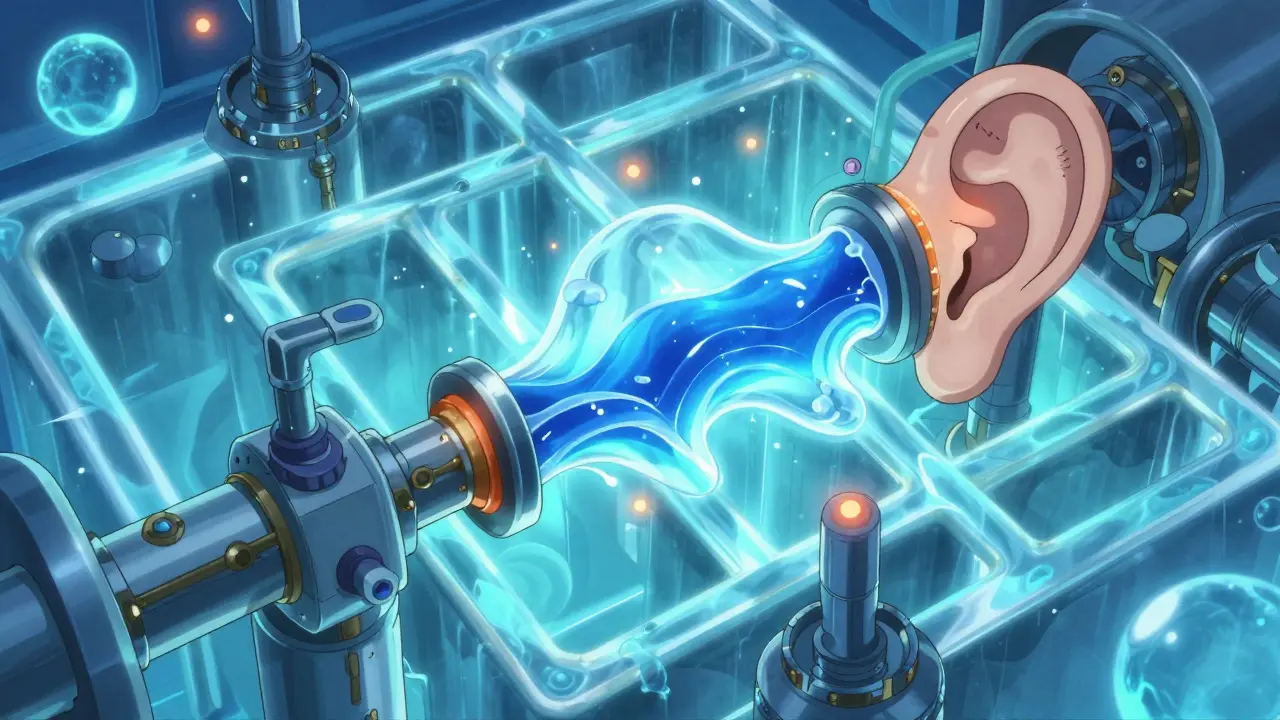
To understand Meniere’s, you have to look at the plumbing of your inner ear. The labyrinth contains two distinct fluids. There is perilymph, which is sodium-rich and sits outside the membranous structures. Then there is endolymph, which is potassium-rich and fills the inside of the cochlear duct, saccule, and semicircular canals. In a healthy ear, these fluids are produced and drained in perfect balance.
In Meniere’s disease, this balance breaks. Research from Stanford University’s Ear Institute (2023) shows that endolymph production is regulated similarly to kidney function. The stria vascularis, a tissue in the cochlea, produces this fluid. Normally, excess fluid drains through the endolymphatic sac. However, Northwestern Medicine (2023) found that 78% of severe cases involve anatomical abnormalities in this drainage system. Often, the endolymphatic duct narrows to less than 0.3mm-far below the normal 0.5-0.8mm width. This bottleneck causes pressure to build up, much like a clogged sink overflow.
Recent 3D imaging studies by Büki et al. (2022) revealed another critical factor: membrane thickness. The utricle’s wall is naturally thicker (12.5μm) than the saccule’s (8.2μm). This explains why the saccule dilates first in 97% of cases, while the utricle only swells in 32% of advanced cases. When the pressure exceeds 60 cmH2O, Reissner’s membrane bulges, rupturing tiny barriers and mixing the two fluids. This chemical chaos triggers the violent symptoms associated with the disease.
The Immune System Connection
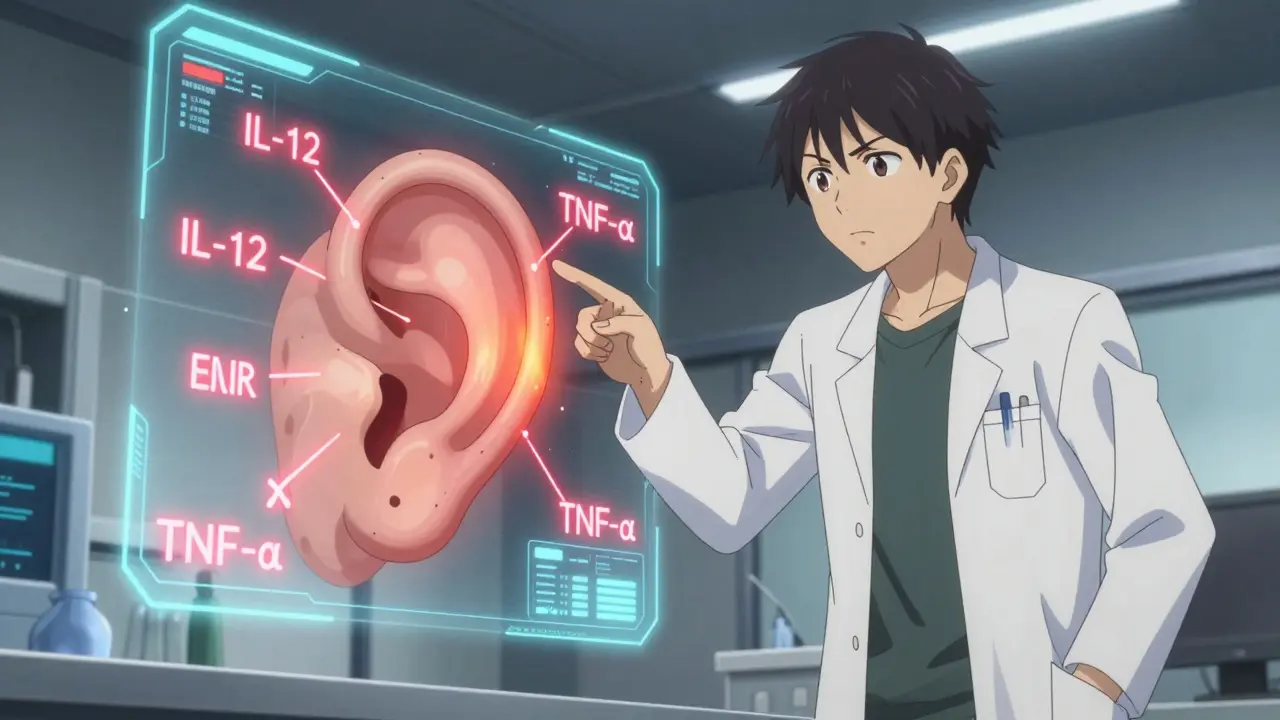
For decades, doctors focused solely on fluid mechanics. But new research suggests inflammation plays a huge role. A 2025 study in Frontiers in Immunology highlights that Meniere’s involves complex immune dysregulation. Dendritic cells in the inner ear of patients produce significantly higher levels of inflammatory markers: IL-12 (4.2-fold increase), TNF-α (5.1-fold increase), and IL-6 (4.7-fold increase).
This inflammation disrupts the blood-labyrinth barrier, allowing T-cells to infiltrate the inner ear. These cells drive chronic inflammation that leads to fibrotic remodeling in 68% of advanced cases. Essentially, the immune system scarring over the drainage pathways makes the fluid problem worse. This is why some patients don’t respond well to diet changes alone; their underlying issue is partly autoimmune. Recognizing this helps explain why treatments targeting inflammation, such as corticosteroids, can be so effective.
First-Line Management: Diet and Diuretics
Before considering injections or surgery, most clinicians start with conservative management. The goal is to reduce the volume of endolymph being produced. Since the stria vascularis acts like renal tissue, reducing salt intake directly impacts fluid production.
- Sodium Restriction: Aim for 1,500-2,000 mg per day. This simple change reduces endolymph production by 23-37% in responsive patients.
- Diuretics: Medications like hydrochlorothiazide help flush out excess fluid. According to Dr. David Hornig at Stanford, these drugs can reduce endolymph volume by 22-35%. However, only 55-60% of patients see significant relief, often due to individual variations in their endolymphatic sac function.
- Avoid Triggers: Caffeine, alcohol, and nicotine can constrict blood vessels or alter fluid dynamics, potentially triggering an attack.
If you’re struggling with adherence, remember that consistency matters more than perfection. Missing one high-salt meal won’t cause an attack, but a chronic high-sodium diet will keep the pressure high.
When Conservative Care Fails: Injections and Surgery
If diet and diuretics don’t control your vertigo, medical intervention becomes necessary. The choice depends on whether you prioritize saving hearing or stopping the spinning.
| Treatment | Efficacy for Vertigo | Risk to Hearing | Mechanism |
|---|---|---|---|
| Intratympanic Corticosteroids | 68-75% | Low | Reduces inflammation and modulates ion channels |
| Intratympanic Gentamicin | 85-92% | High (12-18% risk of deterioration) | Toxic to vestibular hair cells, disabling balance function |
| Endolymphatic Sac Decompression | 60-70% | Low-Moderate | Surgical shunting to improve fluid drainage |
Corticosteroid injections are often the next step. Injecting 40mg/mL methylprednisolone into the middle ear allows the drug to penetrate the round window and reach the inner ear. This reduces inflammation and improves fluid homeostasis, shrinking hydrops by 31-44% in responsive patients. It’s a safer option for hearing preservation.
Gentamicin is a stronger nuclear option. By chemically ablating the vestibular nerve, it stops the vertigo signals entirely. While highly effective for stopping spins, it carries a real risk of further hearing loss. It’s typically reserved for patients who have already lost significant hearing or those who cannot tolerate other treatments.
Surgery, such as endolymphatic sac decompression, aims to fix the drainage bottleneck physically. It has a 60-70% success rate for vertigo but only improves hearing in 25-35% of cases. It’s invasive and requires recovery time, so it’s usually considered when less invasive options fail.
New Horizons: Immunotherapy and Early Detection
The future of Meniere’s treatment looks promising. Researchers are moving beyond generic fluid reduction to targeted therapies. A phase II trial reported in 2025 showed that anti-IL-17 monoclonal antibodies reduced vertigo frequency by 63% and slowed hearing deterioration by 41%. This suggests that treating the immune component could protect hearing long-term.
Early detection is also improving. The 3D volumetric techniques pioneered by Semmelweis University can detect pre-symptomatic hydrops with 89% sensitivity. This means we might soon identify the disease before permanent damage occurs. Genetic testing is also helping; mutations in the SLC26A4 gene are present in 12% of familial cases, offering clues for personalized care.
Remember, Meniere’s is a spectrum. Some patients experience 'vestibular Meniere’s' (vertigo without hearing loss), which may respond better to targeted vestibular therapies. Working with a specialist who understands both the fluid dynamics and the immune aspects of your specific case is crucial.
Living with Meniere’s: Practical Tips
Managing Meniere’s is a marathon, not a sprint. Here are practical steps to integrate into your daily routine:
- Keep a Symptom Diary: Track episodes, potential triggers (stress, specific foods, lack of sleep), and medication times. Patterns often emerge that aren’t obvious day-to-day.
- Fall Prevention: During acute attacks, sit or lie down immediately. Keep walking paths clear of clutter. Use nightlights if nighttime dizziness is common.
- Hearing Aids: If you have unilateral hearing loss, a contralateral routing device (CROS) can help route sound from the bad ear to the good one, reducing listening fatigue.
- Vestibular Rehabilitation Therapy (VRT): Physical therapy exercises can help your brain compensate for the faulty balance signals, reducing chronic unsteadiness between attacks.
As the disease progresses, some patients find that acute attacks diminish after 10+ years because the inner ear becomes completely filled with fluid, stabilizing the pressure. However, this comes at the cost of permanent hearing loss and chronic unsteadiness. Early intervention is your best defense against this outcome.
Is Meniere’s disease curable?
Currently, there is no cure for Meniere’s disease. It is a chronic condition that requires ongoing management. However, many patients achieve significant symptom control through a combination of dietary changes, medications, and sometimes injections or surgery. The goal is to prevent attacks and preserve hearing for as long as possible.
What foods should I avoid with Meniere’s?
The primary focus is reducing sodium intake to 1,500-2,000 mg per day. Avoid processed foods, canned soups, fast food, and salty snacks. Additionally, many patients find that caffeine, alcohol, and chocolate can trigger attacks, so it’s wise to monitor your personal tolerance to these substances.
How do diuretics help with Meniere’s?
Diuretics help your kidneys remove excess fluid from your body. Since the inner ear’s fluid production is linked to renal-like processes, reducing overall body fluid volume can decrease the pressure of endolymph in the inner ear. This can reduce the frequency and severity of vertigo attacks in about 55-60% of patients.
Can stress make Meniere’s symptoms worse?
Yes, stress is a well-known trigger for Meniere’s attacks. Stress hormones can affect blood flow and fluid balance in the inner ear. Managing stress through relaxation techniques, adequate sleep, and possibly counseling can be an important part of your overall treatment plan.
What is intratympanic gentamicin?
Intratympanic gentamicin is an antibiotic injected through the eardrum into the middle ear. In Meniere’s treatment, it is used for its toxic effect on vestibular hair cells. By damaging the balance sensors, it stops the vertigo signals. It is highly effective for controlling vertigo but carries a risk of further hearing loss, so it is used cautiously.
Does Meniere’s affect both ears?
Initially, Meniere’s usually affects only one ear. However, over time, approximately 30-50% of patients develop symptoms in the second ear. After 15 years, 93% of patients experience some degree of bilateral hearing impairment, even if vertigo remains unilateral.
What is endolymphatic hydrops?
Endolymphatic hydrops is the buildup of excessive endolymph fluid within the inner ear. This increased pressure causes the membranes of the inner ear to stretch and potentially rupture, leading to the classic symptoms of Meniere’s: vertigo, hearing loss, tinnitus, and a feeling of fullness in the ear.