
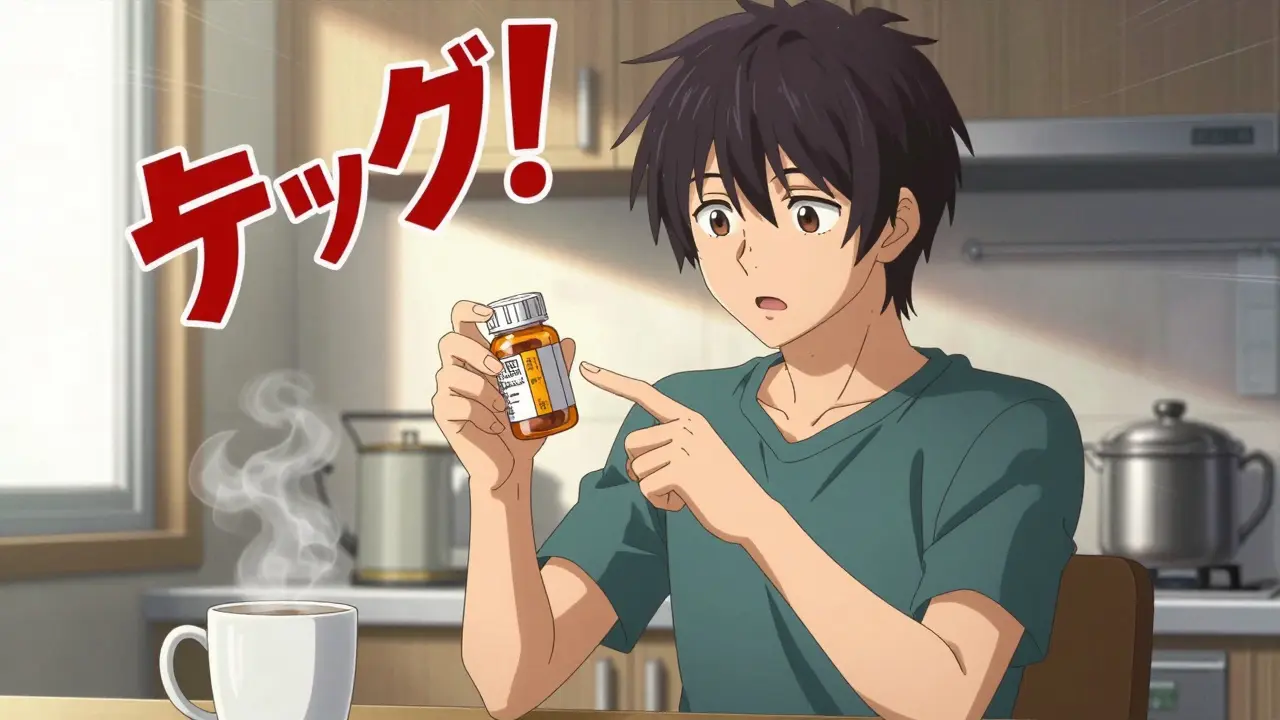
Every year, thousands of people in the U.S. end up in the hospital or worse because they took the wrong pill. Not because they were careless, but because they didn’t stop to check. You grab your meds in the morning, rush through breakfast, and swallow something without looking. It’s easy. It’s automatic. And it’s dangerous.
Here’s the hard truth: checking your medication label before every dose is the single most effective thing you can do to avoid a deadly mistake. Studies show it cuts your risk of a medication error by up to 76%. That’s more than double the protection you get from pill organizers or phone alarms alone. And yet, most people never do it. Why? Because they think they remember. They don’t. Memory fails. Labels change. Pills look alike. And when you’re tired, stressed, or juggling five different medications, your brain skips the step.
Why Checking Labels Isn’t Optional
The FDA says medication errors cause 7,000 to 9,000 deaths each year in the U.S. That’s more than car accidents. Most of these aren’t pharmacy mistakes. They’re patient mistakes. Someone grabs the bottle labeled "Insulin" when it’s actually saline. They take a 10mg pill thinking it’s 5mg. They miss a warning about grapefruit juice because the text is too small. These aren’t rare. They happen daily.
Since January 1, 2025, all prescription labels in the U.S. must meet new standards. Font size is bigger. Warnings are in bold. Colors contrast sharply. The goal? To make it impossible to miss critical info. But none of that matters if you don’t look.
Think of it like this: Your label is your safety net. It’s not just a reminder - it’s your last line of defense. The pharmacy can get the prescription right. The doctor can write it clearly. But if you don’t verify it yourself, you’re still at risk.
What to Look For: The 10 Must-Check Elements
You don’t need to be a pharmacist. You just need to check 10 things every single time. Don’t guess. Don’t skim. Read them out loud if you can. Here’s what to verify:
- Your full name - Does it match your ID? Even a typo like "John" instead of "Jonathan" is a red flag.
- Drug name - Both brand and generic. If it says "Lisinopril" but you thought it was "Zestril," they’re the same. But if it says "Lisinopril 20mg" and you expected 10mg, stop.
- Prescriber’s name - Is it your doctor? If it’s someone else, ask why.
- Dosage and strength - Is it 5mg, 10mg, 50mg? Never assume. Units matter. A 10mg pill isn’t half of a 20mg pill - it’s a different drug.
- Quantity and refills - Did you get 30 pills? Or 60? Are there 2 refills left? If not, you might be out of supply sooner than expected.
- Warnings - "Avoid alcohol," "Take on empty stomach," "May cause dizziness." These aren’t suggestions. They’re safety rules.
- Date filled - Is it within the last 30 days? Most meds lose effectiveness or become unsafe after that.
- Expiration date - Never take expired medicine. Even if it looks fine.
- Pharmacy name and phone - You need to know who filled it in case something’s wrong.
- Directions - "Take one by mouth daily"? Or "Take one by mouth twice daily"? Tiny changes = big risks.
That’s it. Ten things. Takes 3 to 5 seconds. If you’re doing this every time, you’re already safer than 90% of people.
How to Make It Stick: The Three-Touch Method
Changing a habit isn’t about willpower. It’s about design. You need to make checking the label the easiest thing to do - not the hardest.
The American Society of Health-System Pharmacists recommends the Three-Touch Method. Here’s how it works:
- Touch the label - With your finger, trace the patient name.
- Touch the dosage - Point to the number and say it out loud.
- Touch the directions - Tap the instructions and repeat them: "Take one tablet by mouth once daily."
Do this every time. Even if you’ve taken the same pill for years. Even if you’re alone. Even if you’re in a hurry.
Why does this work? Because you’re engaging three senses: sight, touch, and sound. Studies show this boosts retention by 57% compared to just looking. People who use this method stick with it 92% of the time after 30 days. Those who just glance? Only 64%.
Where to Place Your Meds for Maximum Safety
Where you keep your pills matters more than you think. If your meds are tucked in a drawer, buried under mail, or left on the counter where you forget them - you won’t check them.
Place your daily meds right where you do your routine. If you drink coffee every morning, put your bottle next to the coffee maker. If you brush your teeth before breakfast, put it next to your toothbrush. If you sit down to check email, put it on your desk.
Why? Because habits form when they’re tied to existing behaviors. You don’t think about brushing your teeth - you just do it. Make label checking part of that same automatic loop. Research shows this reduces missed checks by 53%.
Tools That Help: Magnifiers, Color-Coding, and Checklists
Not everyone sees well. Not everyone reads easily. That’s okay. There are tools.
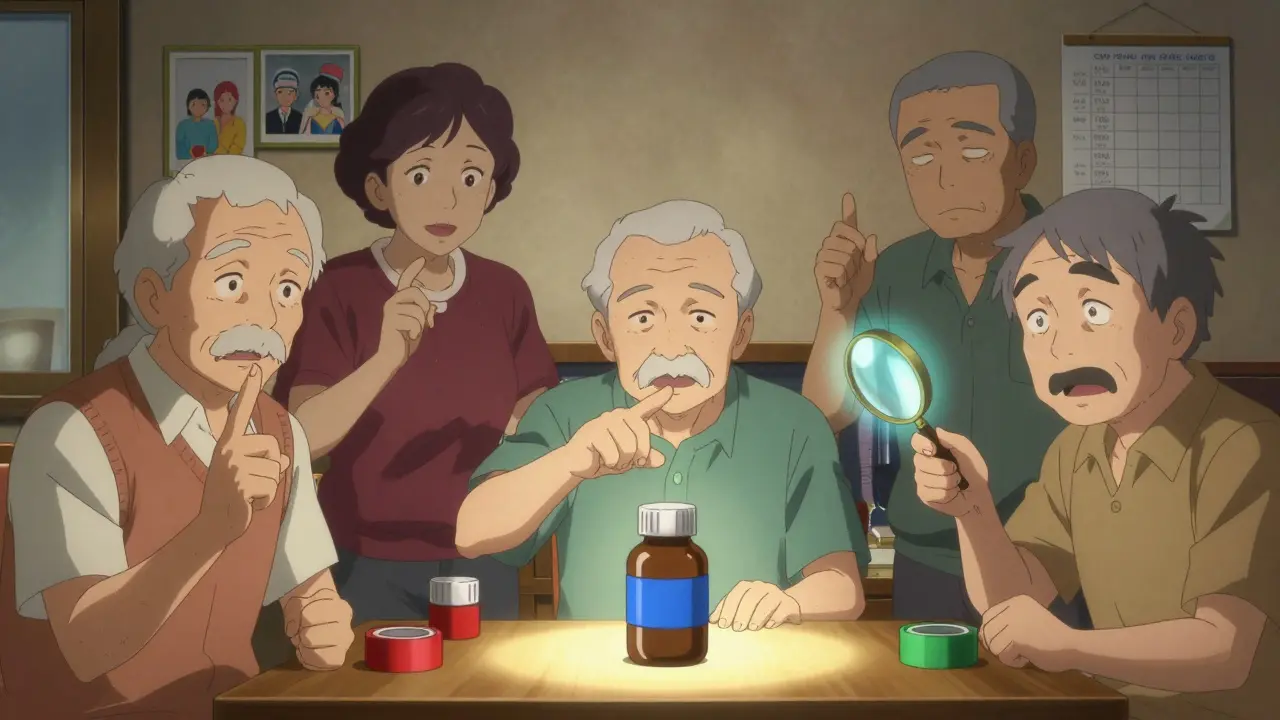
- Magnifying labels - Stick one over your bottle. Reduces errors by 38% for people with vision issues.
- Color-coded systems - Use colored tape or stickers. Red for blood pressure. Blue for diabetes. Green for thyroid. Pharmacists recommend this to 82% of patients.
- Printed checklist - Tape a small list of the 10 items to your medicine cabinet. Check them off as you go.
- Teach-back method - Explain the label to someone else. "This is for my blood pressure, 10mg, once a day." It sticks better than reading alone.
Amazon reviews show apps with mandatory label verification before logging a dose have 63% higher retention than basic reminder apps. If you use an app, make sure it forces you to confirm the label - don’t just tap "Take Pill."
Who Needs This Most - And Who’s at Highest Risk
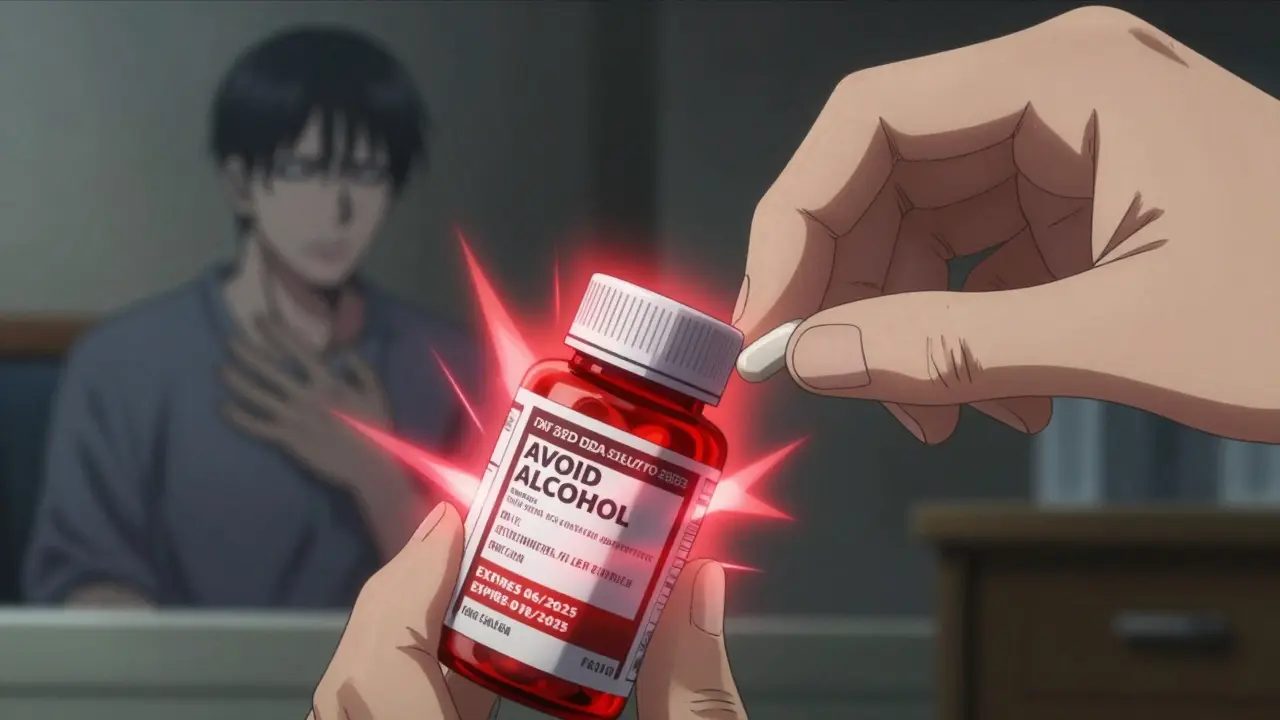
You don’t have to be old to be at risk. But if you’re over 65, managing five or more medications, or have diabetes, heart disease, or kidney issues - you’re in the top 3% of people who need this habit the most.
Seniors account for 67% of serious medication errors. Why? More pills. Slower metabolism. Vision changes. Memory lapses. But here’s the good news: even people with dementia or low literacy can learn this - if they’re taught slowly, with repetition, and with physical cues.
One Reddit user, "MedSafetyMom," said her family went from 3 errors a month to zero after 21 days of doing the Three-Touch Method together. Her kids now remind her. That’s the power of turning safety into a ritual.
What to Do When It Doesn’t Stick
Some people forget. Some get frustrated. Some think, "I’ve taken this for 10 years - I know what it is." That’s exactly when you’re most likely to make a mistake.
Dr. Angela Smith from Carolinas HealthCare System says, "Over-reliance on memory fails 83% of patients within two weeks." So if you’ve tried and failed, don’t blame yourself. Change your system.
- Set a daily alarm: "Check label before pill."
- Ask a family member to randomly check your meds once a week.
- Call your pharmacy if something looks off - even if it’s just a different color.
- Use a pill box with compartments labeled by day and time. But still check the bottle before you fill it.
There’s no shame in needing help. The goal isn’t perfection. It’s consistency. Even if you check 6 out of 7 days a week, you’re cutting your risk dramatically.
The Future Is Watching - And It’s Already Here
Pharmacies are starting to build this into their systems. CVS and Walgreens now have smart pill dispensers that require you to scan the label before opening. Some apps use your phone’s camera to confirm the label before logging a dose. These aren’t gimmicks - they’re safety features.
The FDA’s "Check Before You Take" campaign launched in January 2024. It’s not asking you to do anything fancy. Just stop. Look. Read. Verify.
One expert predicts this habit will become as routine as handwashing. And honestly? That’s not too far off. Because every time you check your label, you’re not just protecting yourself. You’re protecting your family, your doctors, your pharmacy - everyone who cares about you.
What if I have trouble reading the label?
Many pharmacies offer large-print labels or audio labels on request. Ask your pharmacist. You can also use a free magnifying app on your phone, or buy a simple handheld magnifier. The 2025 labeling standards require minimum 6-point font and high contrast - but if it’s still hard to read, you’re entitled to help. Don’t guess. Call the pharmacy.
Can I rely on my pill organizer instead of checking the bottle?
No. Pill organizers are helpful, but they’re not a substitute. You still need to check the original bottle before refilling the organizer. Pills can look similar - one is metformin, another is glipizide. One is 5mg, another is 10mg. The bottle is your source of truth.
What if I’m taking the same medication every day - do I still need to check?
Yes. Even more so. The FDA found that 25% of errors happen because someone assumed they knew what the pill was. Your doctor might change your dose. The pharmacy might switch manufacturers. The pill might look different. Always check.
How long does it take to build this habit?
Most people need 18 to 22 repetitions to make it automatic. That’s about 3 to 4 weeks. Use the Three-Touch Method every single time. Don’t skip a day. After a month, you’ll do it without thinking.
Are there apps that help with label checking?
Yes. Look for apps that require you to photograph or scan your label before logging a dose. These apps have 63% higher user retention because they force verification. Avoid apps that just remind you to take a pill - they don’t prevent errors. The best ones combine reminders with label confirmation.


Gretchen Rivas
March 3, 2026 AT 14:33Renee Jackson
March 4, 2026 AT 10:31Darren Torpey
March 4, 2026 AT 19:31Tobias Mösl
March 5, 2026 AT 03:37Ethan Zeeb
March 5, 2026 AT 06:41Mariah Carle
March 5, 2026 AT 12:22Divya Mallick
March 7, 2026 AT 07:15Jessica Chaloux
March 8, 2026 AT 05:53Lebogang kekana
March 8, 2026 AT 15:50Megan Nayak
March 9, 2026 AT 15:44Pankaj Gupta
March 11, 2026 AT 10:03Alex Brad
March 12, 2026 AT 20:47