
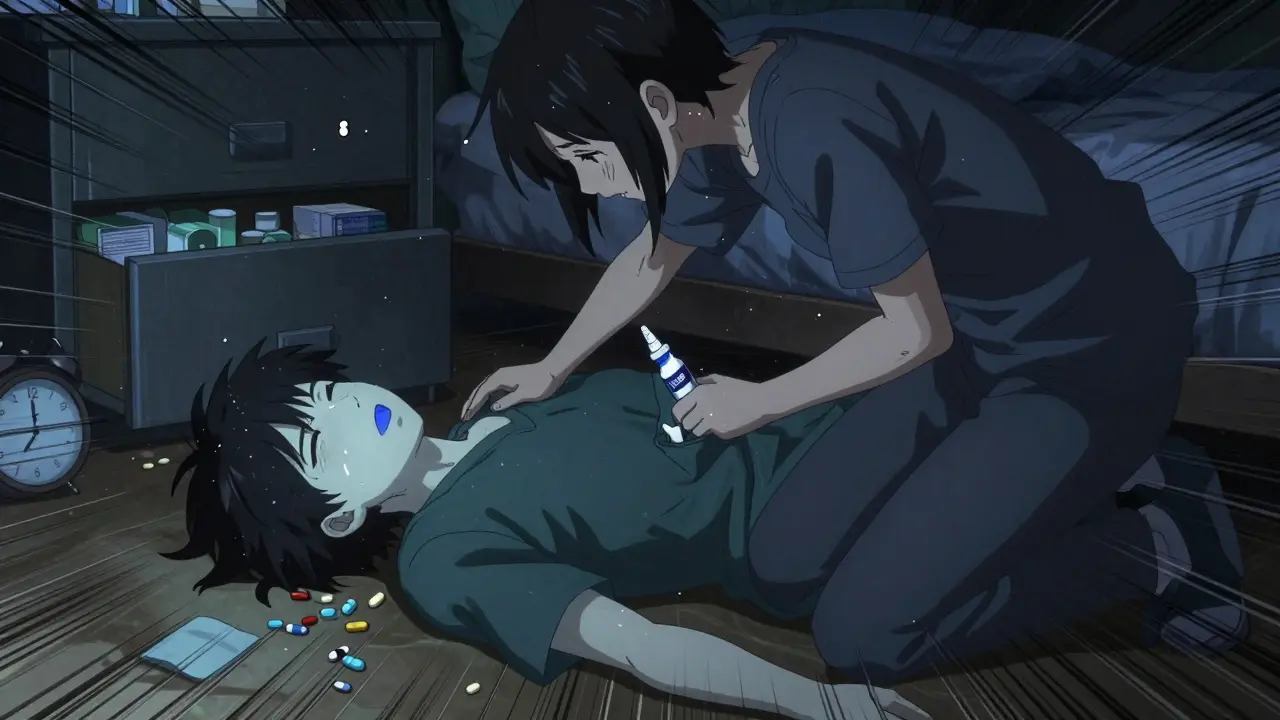
Every year, thousands of people die from medication overdoses - not just from illegal drugs, but from pills they were prescribed, bought online, or even took by accident. You might think it only happens to someone else, but the truth is, it can happen to anyone. A person taking their usual painkiller after a long break from it. A teenager swallowing a pill they found in a drawer. An older adult mixing medications without realizing the danger. The signs are often subtle at first, but they escalate fast. Knowing what to look for could save a life - maybe even your own.
What Happens When You Take Too Much?
A medication overdose isn’t just about taking too many pills. It’s when your body can’t process the drug anymore. Your brain, heart, and lungs start to shut down. With opioids like fentanyl or oxycodone, breathing slows until it stops. With stimulants like cocaine or meth, your heart races so hard it can go into cardiac arrest. Alcohol and benzodiazepines can make you vomit while unconscious, leading to choking. And when multiple drugs are mixed - which happens in over half of overdose deaths - the effects become unpredictable and deadly.The most dangerous part? Many overdoses happen slowly. Someone gets drowsy, falls asleep, and their family thinks they’re just tired. But if breathing drops below 10 breaths per minute, brain damage starts within minutes. Death follows soon after. That’s why recognizing the early signs isn’t optional - it’s urgent.
Common Signs Across All Overdoses
No matter the drug, some symptoms show up again and again. If you see even one of these, act immediately:- Unresponsiveness - shaking them, shouting their name, rubbing their sternum - they don’t react. This isn’t deep sleep. It’s a medical emergency.
- Shallow or irregular breathing - pauses longer than 10 seconds between breaths, gasping, or gurgling sounds like they’re drowning in their own saliva.
- Blue or gray lips and fingernails - this means oxygen levels are critically low. Cyanosis is a late sign, but it’s a clear red flag.
- Pale, clammy skin - cold to the touch, sweaty, with no color. Their body is shutting down.
- Nausea and vomiting - especially if they’re unconscious. Vomiting while passed out is one of the top causes of death in alcohol and opioid overdoses.
- Seizures - sudden, uncontrolled muscle spasms. This can happen with stimulants, alcohol withdrawal, or mixed drug use.
These aren’t vague symptoms. They’re measurable. Studies show 78% of non-fatal overdoses involve vomiting. 63% of ER visits for prescription drug misuse involve confusion or agitation. And 42% of opioid overdoses include that telltale gurgling noise. If you hear it, don’t wait. Call for help now.
Opioid Overdose: The Silent Killer
Opioids - including heroin, oxycodone, hydrocodone, and especially fentanyl - are behind 80% of overdose deaths in the U.S. The classic signs are called the “opioid triad”:- Pinpoint pupils - pupils shrink to the size of a pinhead, even in dim light. This is a hallmark sign you won’t see with other drugs.
- Unconsciousness - they can’t be woken up. Not by noise, not by pain.
- Slow or stopped breathing - fewer than 12 breaths per minute. Some stop breathing entirely.
Fentanyl is 50 to 100 times stronger than morphine. A single grain of sand-sized amount can kill. And it’s hiding in counterfeit pills sold as oxycodone or Xanax. In 2022, 67% of fake pills tested in California contained fentanyl. People think they’re taking a painkiller - they’re taking a death sentence.
Another dangerous myth? “They’ve taken this before, so they’re fine.” Tolerance drops fast. After just 3 to 7 days without using, a person’s body forgets how to handle the same dose. That’s why so many overdoses happen after rehab, jail, or a break from use.
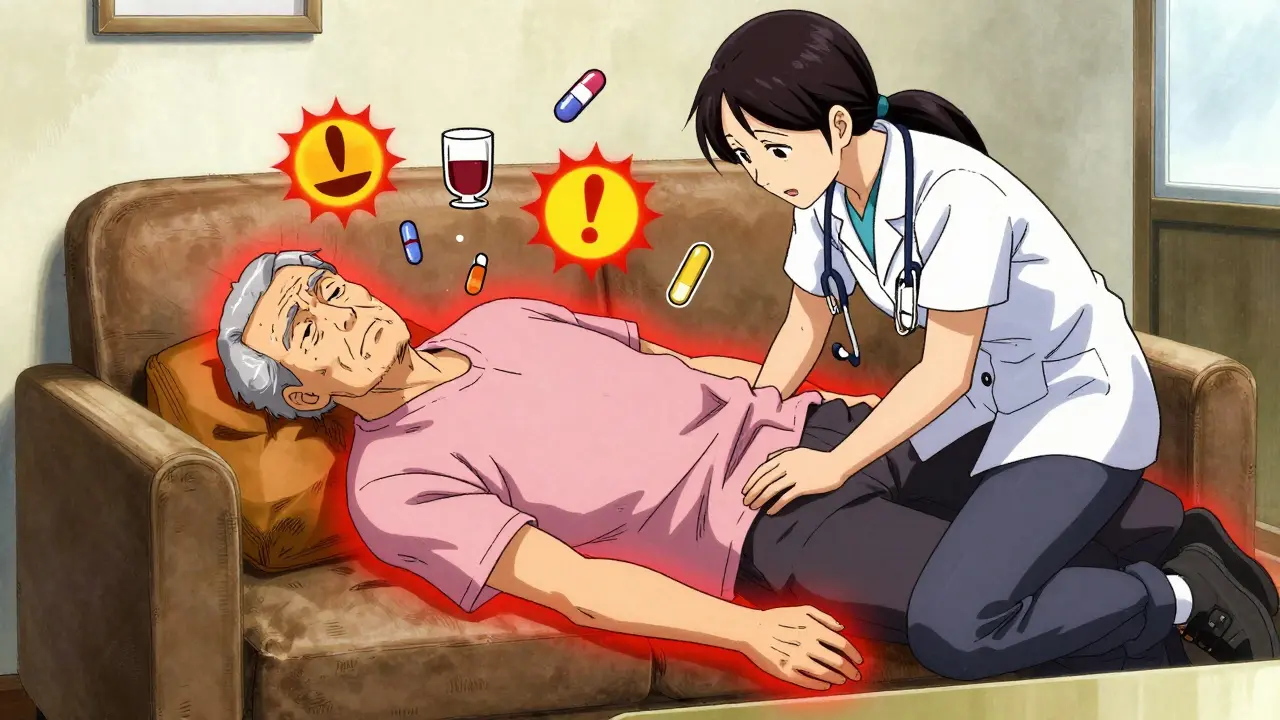
Stimulant Overdose: The Heart Attack in Disguise
Cocaine, methamphetamine, Adderall, Ritalin - these drugs flood your system with adrenaline. The body can’t handle it. Signs include:- Extreme agitation or paranoia - yelling, hallucinating, thinking people are out to get them.
- High body temperature - over 104°F (40°C). Skin is hot and dry. This isn’t fever - it’s organ failure.
- Severe chest pain - like a heart attack. Their heart is pounding at 150+ beats per minute.
- High blood pressure - systolic above 180 mmHg. This can rupture blood vessels in the brain.
- Seizures - occur in nearly 4 out of 10 cocaine overdoses.
People often mistake stimulant overdoses for a panic attack or drug-induced psychosis. But the body is literally cooking itself. Without treatment, organ damage is permanent - or fatal.
Depressant Overdose: Alcohol and Benzodiazepines
Alcohol, Valium, Xanax, barbiturates - these slow everything down. The danger? They’re legal, common, and often taken with other drugs.- Slurred speech - like they’re drunk, but worse. They can’t form words.
- Loss of coordination - stumbling, falling, can’t stand.
- Vomiting while unconscious - this is the #1 killer in alcohol overdoses. They choke on their own vomit.
- Slow breathing - fewer than 8 breaths per minute.
- Low body temperature - skin is cold and bluish. Hypothermia sets in fast.
Alcohol poisoning kills more people under 25 than car crashes in some regions. And mixing alcohol with benzodiazepines? That combination is one of the most common causes of accidental overdose in older adults.
What to Do If You Suspect an Overdose
There’s no time to wait. Don’t call a friend. Don’t try to make them walk it off. Don’t put them in a cold shower. These are myths that cost lives.Here’s what actually works:
- Call emergency services immediately - in Australia, dial 000. In the U.S., dial 911. Say, “I think someone is overdosing.” That’s enough. Paramedics are trained for this.
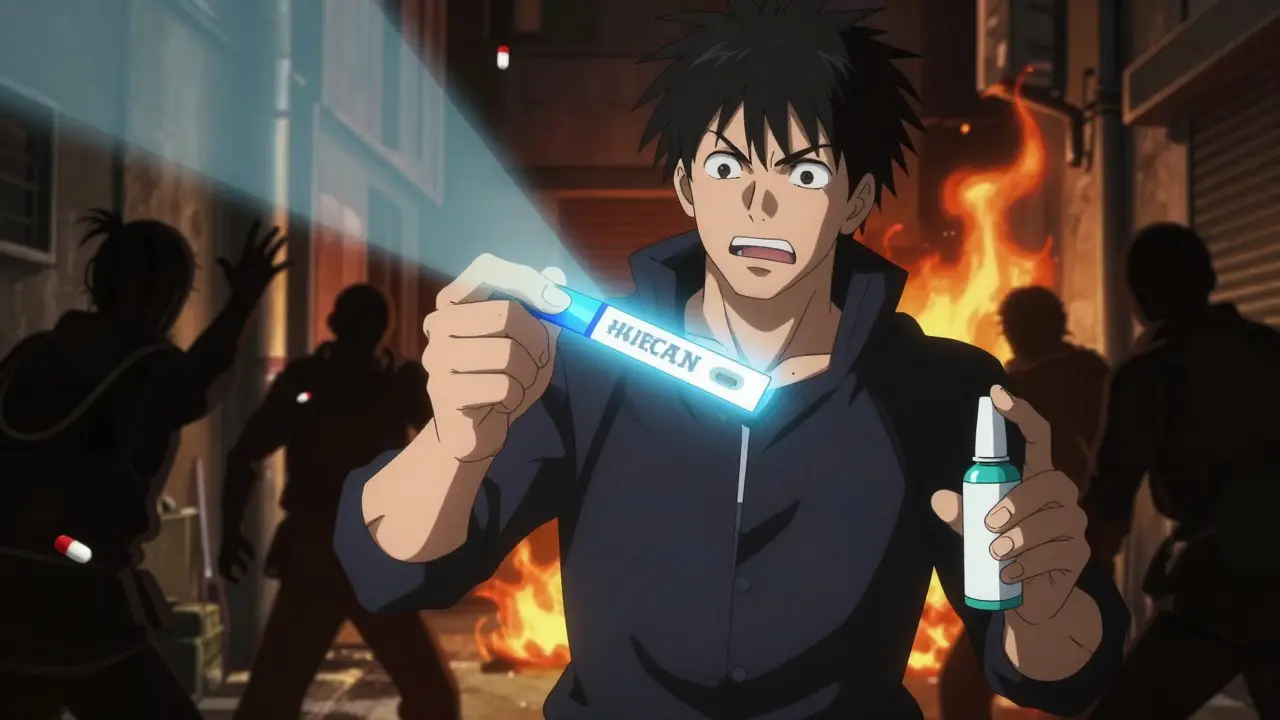
- Give naloxone if you have it - NARCAN nasal spray is now available over the counter. One spray in each nostril. It takes 2 to 5 minutes to work. If they don’t wake up, give another dose after 3 minutes. Fentanyl often needs more than one.
- Put them on their side - the recovery position. This stops them from choking if they vomit. Don’t let them lie on their back.
- Stay with them - even if they wake up. The effects of some drugs come back after naloxone wears off. They need medical care.
- Don’t leave them alone - and don’t let them “sleep it off.” 29% of fatal overdoses happened because someone waited too long.
Good news? In states with “Good Samaritan” laws - which protect people who call for help - 911 calls for overdoses rose by 27%. You won’t get in trouble for saving a life.
How to Prevent Overdose Before It Happens
Prevention isn’t just about avoiding drugs. It’s about reducing risk if someone uses.- Use fentanyl test strips - they cost less than a dollar. Dip a small piece of the pill or powder in water. If it turns blue, it has fentanyl. Don’t use it. Or use with someone else present, and keep naloxone handy.
- Never use alone - overdoses are far more likely to be fatal when you’re by yourself. Someone else can call for help.
- Start low, go slow - especially if you haven’t used in a while. Even a tiny amount of fentanyl can kill.
- Keep naloxone in your home - if you or someone you know takes opioids, keep NARCAN nearby. It’s safe. It only works if there are opioids in the system. It won’t hurt someone who doesn’t need it.
- Know your meds - check labels. Don’t mix alcohol with painkillers, sleeping pills, or anxiety meds. The interaction can be deadly.
More than 31,000 community organizations in the U.S. now give out naloxone for free. You don’t need a prescription. You don’t need to be a doctor. You just need to care enough to act.
Final Thought: You Don’t Need to Be an Expert to Save a Life
You don’t need to know every drug, every symptom, every statistic. You just need to know this: if someone is unresponsive, breathing poorly, or turning blue - call for help. Give naloxone if you can. Put them on their side. Stay with them.That’s it. That’s all it takes. Overdose doesn’t always look like a movie. It’s quiet. It’s slow. It happens in living rooms, bedrooms, and bathrooms. But you can stop it - if you know what to look for.
Linda Caldwell
December 16, 2025 AT 13:42Just read this and kept thinking about my cousin who passed last year. I didn’t know what to look for until it was too late. This post is a lifeline. Please share it with everyone you know.
Jonathan Morris
December 17, 2025 AT 08:50Let’s be real - the government doesn’t want you to know how easy it is to test for fentanyl. They profit off the fear. Test strips? Free naloxone? That’s not compassion - it’s damage control while they let Big Pharma keep poisoning neighborhoods. And don’t get me started on the CDC’s data manipulation. They’re hiding the real death toll.
They say ‘call 911’ like it’s a solution. But cops show up, arrest the survivor, confiscate the pills, and call it a day. Meanwhile, the real problem - pharmaceutical deregulation - stays untouched. Wake up.
Anna Giakoumakatou
December 18, 2025 AT 00:16How quaint. A 12-step pamphlet masquerading as medical journalism. You’ve reduced the existential collapse of late-stage capitalism into a bullet-pointed checklist. ‘Put them on their side’ - how poetic. The real tragedy isn’t the overdose, it’s that we’ve outsourced human dignity to emergency protocols and over-the-counter nasal sprays.
At least the opioid crisis gave us something beautiful: the spectacle of middle-class grief dressed as public service. Bravo. I’ll have my martini now, thank you.
Erik J
December 19, 2025 AT 21:43I’m curious about the 78% vomiting statistic - was that from a specific study or meta-analysis? I’ve seen conflicting numbers depending on the drug class. Also, the ‘gurgling’ sound description is accurate, but I wonder if there’s a clinical term for it - like ‘agonal breathing’ or ‘death rattle’?
Not trying to nitpick, just want to understand the source better. This info could help me educate others.
BETH VON KAUFFMANN
December 21, 2025 AT 18:05Let’s not pretend this is a public health issue - it’s a behavioral economics failure. The absence of harm reduction infrastructure creates negative externalities that manifest as ER visits and funeral costs. Naloxone distribution is a Band-Aid on a systemic arterial bleed.
The real intervention? Decriminalization paired with supervised consumption sites and pharmaceutical-grade supply. We’re treating symptoms while ignoring the structural pathology. Also, ‘start low, go slow’ is not a policy - it’s a plea for personal responsibility in a system designed to fail.
Raven C
December 22, 2025 AT 03:27Oh, how dreadfully tragic. And how profoundly, heartbreakingly, *unbearably* human.
But let us not forget - the true horror lies not in the overdose, but in the fact that we’ve allowed ourselves to become so desensitized that we now treat death as a checklist item. ‘Blue lips? Call 911.’ ‘Unresponsive? Administer naloxone.’
Where is the mourning? Where is the collective shame? Where is the outrage that this is normal? We’ve turned grief into a public service announcement.
I weep - not for them - but for us. For the civilization that has forgotten how to hold space for suffering.
Donna Packard
December 23, 2025 AT 04:57This is so important. I kept this on my phone after my brother survived his overdose last year. I showed it to my whole family. You never know who needs to see this. Thank you for writing it.
Patrick A. Ck. Trip
December 23, 2025 AT 13:41thank you for this post. it means a lot. i’ve been trying to tell my sister to keep naloxone at home but she thinks it’s only for ‘drug addicts.’ i’m gonna send her this. maybe it’ll help. i hope so. god bless you all.