Statin Symptom Checker: Myopathy vs. Neuropathy
Select Your Symptoms
Click on the symptoms that best describe what you are experiencing.
Analysis Result
Select symptoms and click "Analyze Symptoms" to see potential indicators.
You take your pill every morning to protect your heart. It’s a small white tablet that has saved millions of lives by lowering cholesterol. But then, something feels wrong. Your calves tighten up at night. Your thighs feel heavy when you climb stairs. You tell yourself it’s just aging or maybe you walked too much yesterday. But the pain persists. This is the classic dilemma for patients on statins, which are HMG-CoA reductase inhibitors prescribed for hypercholesterolemia and cardiovascular risk reduction. Are these symptoms a sign of statin-associated myopathy, a condition where muscle tissue is directly damaged by the medication, causing weakness and pain, or could it be peripheral neuropathy, a disorder where nerves outside the brain and spinal cord are damaged, leading to numbness and tingling,? The difference matters because the treatments are completely different.
The Reality of Statin Side Effects
It is easy to assume that if you have muscle pain while taking a statin, the drug is the culprit. However, the data tells a more nuanced story. According to the European Atherosclerosis Society (EAS) Consensus Panel from 2015, statin-associated muscle symptoms (SAMS) affect between 7% and 29% of patients in observational studies. That sounds like a lot. But here is the catch: true statin-associated myopathy with significant enzyme elevation occurs in only 1 per 1,000 to 1 per 10,000 patients on standard doses. Most people who complain of pain do not have actual muscle damage; they have discomfort that may stem from other causes entirely.
This distinction is critical. If you stop your medication because of unverified symptoms, you lose the cardiovascular protection it provides. On the other hand, ignoring genuine myopathy can lead to rare but severe complications like rhabdomyolysis. Understanding the specific signs of each condition helps you advocate for yourself during your next doctor's visit.
Signs of Statin-Associated Myopathy
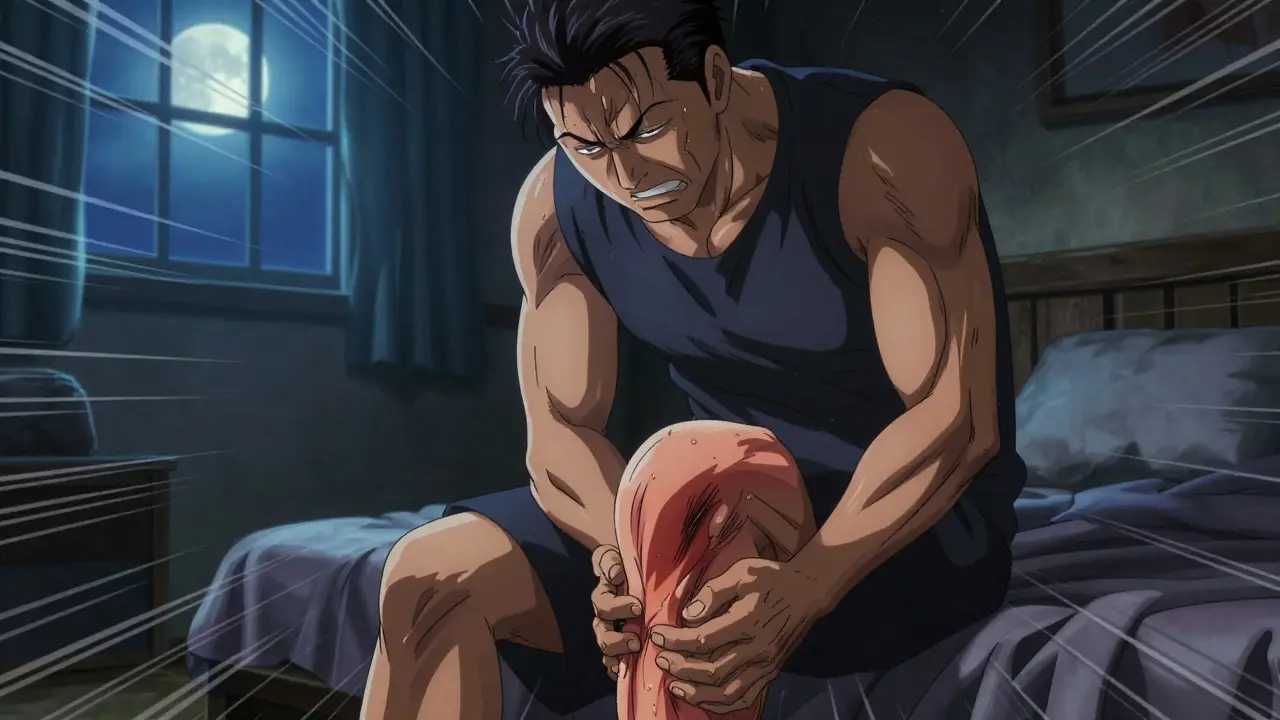
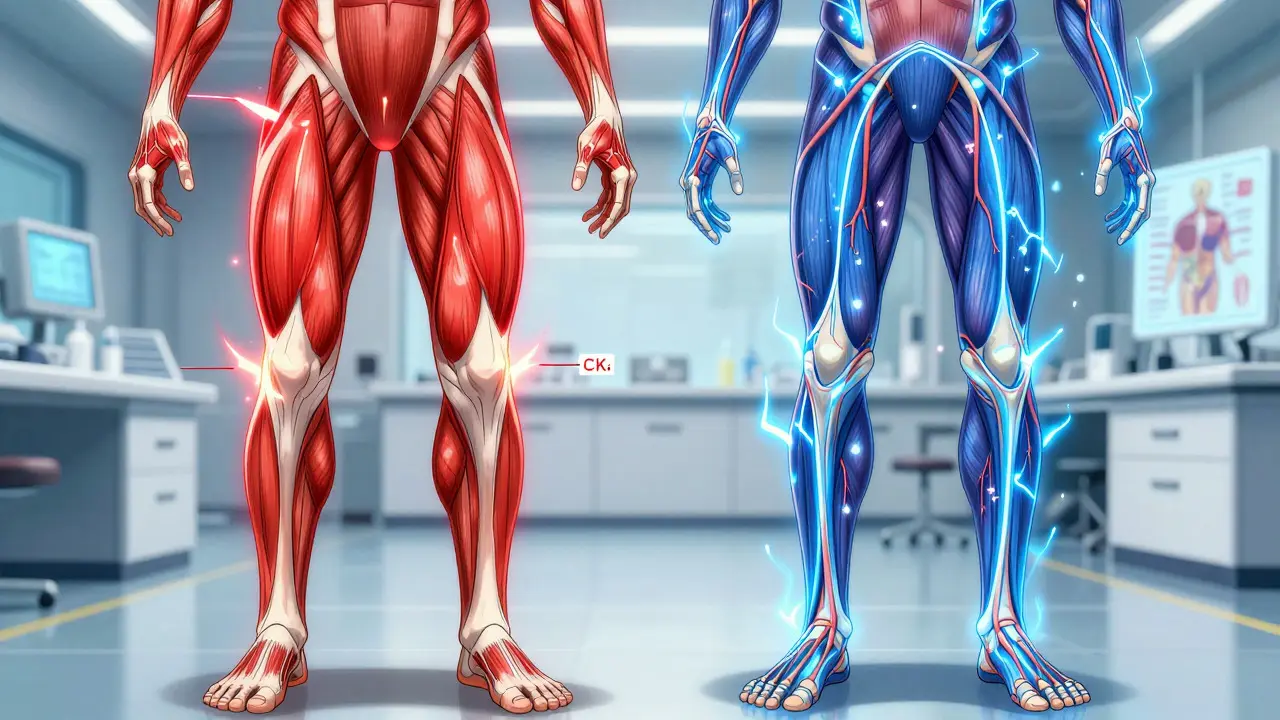
When statins cause muscle issues, they tend to follow a predictable pattern. The primary symptom is bilateral proximal muscle weakness. "Proximal" means close to the center of your body. Think about the muscles in your hips, thighs, shoulders, and upper arms. Do you find it harder to get out of a low chair? Is it difficult to lift your arms to comb your hair? These are hallmark signs of myopathy.
Pain is also common, often described as a deep ache rather than a sharp sting. Unlike an injury from exercise, this pain usually does not come with visible inflammation or swelling. To confirm myopathy, doctors look at creatine kinase (CK) levels. CK is an enzyme found in your heart, brain, and skeletal muscle. When muscle cells break down, they release CK into the bloodstream. The EAS defines true statin myopathy as muscle symptoms accompanied by CK levels greater than four times the upper limit of normal. In most cases of simple myalgia (muscle pain), CK levels remain normal or only slightly elevated.
Another key indicator is timing. Symptoms typically start within weeks or months of starting the medication or increasing the dose. If you stop the statin, the symptoms should resolve. If you restart it, they often return. This temporal association is one of the strongest pieces of evidence linking the drug to the problem.
Understanding Peripheral Neuropathy
Peripheral neuropathy presents very differently. Instead of weakness in your large muscles, you experience sensory changes in your extremities. Patients often describe a "stocking-glove" distribution, meaning symptoms start in the toes and feet, moving up like a sock, and later affecting the fingers and hands like gloves. Common sensations include burning, tingling (paresthesias), numbness, or extreme sensitivity to touch.
The link between statins and neuropathy is controversial. While some systematic reviews suggest a possible connection due to long-term use, other studies show conflicting results. For instance, a 2019 case-control study by Warendorf involving 616 patients actually found that statin use decreased the odds of developing polyneuropathy. Because the evidence is mixed, diagnosing statin-induced neuropathy requires ruling out other common causes first. Diabetes, vitamin B12 deficiency, alcohol use, and thyroid disorders are far more frequent culprits for nerve damage than cholesterol medications.
If neuropathy is suspected, electrodiagnostic testing is essential. Nerve conduction studies can reveal reduced sensory nerve action potentials, confirming axonal neuropathy. Without these tests, it is nearly impossible to distinguish nerve pain from muscle pain based on symptoms alone.
| Feature | Statin Myopathy | Peripheral Neuropathy |
|---|---|---|
| Primary Symptom | Muscle weakness and aching | Numbness, tingling, burning |
| Affected Area | Proximal muscles (hips, thighs, shoulders) | Distal extremities (toes, feet, fingers) |
| CK Levels | Elevated (>4x normal in true myopathy) | Normal |
| Diagnostic Test | Blood test for CK, clinical exam | Nerve conduction studies |
| Causality Evidence | Strong and well-documented | Contradictory and debated |
Risk Factors and Mechanisms
Why do some people develop these side effects while others do not? Several factors increase your risk. Age plays a role, with individuals over 65 being more susceptible. Women are also at higher risk, with clinical reports showing a female-to-male ratio of 2:1 for myopathy. Genetics matter too. The HLA-DRB1*11:01 haplotype is strongly associated with immune-mediated necrotizing myopathy, a severe form of muscle damage. Additionally, the SLCO1B1 gene variant increases the risk of simvastatin-induced myopathy by 4.5-fold at higher doses.
Drug interactions are another major concern. Taking fibrates alongside statins significantly increases the risk of rhabdomyolysis, jumping from 0.45 to 6.0 per 10,000 patient-years. Other medications, kidney disease, and hypothyroidism can also mimic or exacerbate statin side effects. The Cleveland Clinic Journal of Medicine recommends checking for hypothyroidism or excess alcohol consumption before blaming the statin, as these conditions can produce identical symptoms.
Biologically, statins work by inhibiting HMG-CoA reductase, an enzyme involved in cholesterol production. Skeletal muscle is 40 times more sensitive to this inhibition than liver cells. This leads to mitochondrial dysfunction and a drop in coenzyme Q10 (ubiquinone) production by up to 40% within 30 days. Coenzyme Q10 is vital for energy production in cells. When muscle cells lack energy, they become weak and painful. For neuropathy, the proposed mechanisms involve disruption of cell membrane integrity and vitamin E deficiency, since LDL cholesterol transports vitamin E through the body.

Diagnosis and Management Strategies
If you suspect your symptoms are related to your medication, do not simply stop taking it. Instead, follow a structured approach. First, your doctor will likely order blood tests to check your CK levels and thyroid function. If CK is normal and you have distal numbness, they may refer you for nerve conduction studies. If CK is elevated and you have proximal weakness, myopathy is the likely diagnosis.
For confirmed statin myopathy, the goal is not necessarily to quit lipid-lowering therapy forever. The EAS Consensus Panel recommends using the maximally tolerated statin dose combined with non-statin therapies like ezetimibe or PCSK9 inhibitors. Many patients can tolerate hydrophilic statins such as pravastatin or rosuvastatin, even if they reacted to lipophilic ones like simvastatin. Rechallenge with a different statin succeeds in approximately 60% of patients with prior myopathy.
If neuropathy is suspected, discontinuation should be considered only after ruling out diabetes, vitamin deficiencies, and other causes. Given the conflicting evidence on statins causing nerve damage, stopping the drug might not resolve the issue if the root cause is elsewhere. Patient education is crucial here. Some patients have been restarted on statins by primary care physicians without consulting neurologists, leading to unnecessary symptom recurrence.
Next Steps for Patients
Talking to your doctor about these symptoms can be intimidating. You might worry they will dismiss your concerns as "just aging." Come prepared. Keep a symptom diary noting when the pain or numbness occurs, what makes it better or worse, and exactly where you feel it. Mention any new medications or supplements you have started. Ask specifically about CK testing if you have muscle weakness, or nerve studies if you have tingling in your feet.
Remember, the benefits of statins in preventing heart attacks and strokes are well-established. The Cholesterol Treatment Trialists' meta-analysis showed a 25% relative risk reduction in major vascular events for every 1.0 mmol/L reduction in LDL cholesterol. The goal is to find a regimen that protects your heart without compromising your quality of life. With careful monitoring and alternative options available, most patients can achieve both.
How quickly do statin muscle symptoms appear?
Symptoms typically begin within weeks or months of starting the medication or increasing the dose. However, some patients may develop symptoms after years of stable use, especially if other risk factors like new medications or illness emerge.
Can CoQ10 supplements help with statin side effects?
While theoretically sound since statins lower CoQ10 levels, clinical evidence is mixed. A 2015 JAMA study of 44 statin-intolerant patients found no significant benefit of CoQ10 supplementation over placebo. Discuss this option with your doctor, but do not rely on it as a guaranteed fix.
Is it safe to switch from one statin to another?
Yes, switching is a common strategy. Hydrophilic statins like pravastatin and rosuvastatin are less likely to enter muscle cells compared to lipophilic statins like atorvastatin and simvastatin. About 60% of patients who fail one statin can tolerate a different one.
What are the red flags for serious muscle damage?
Seek immediate medical attention if you experience severe muscle pain, weakness, or dark brown urine (a sign of rhabdomyolysis). These symptoms indicate significant muscle breakdown that can damage your kidneys if left untreated.
Do all statins cause the same side effects?
No. Statins vary in potency and solubility. High-intensity statins like rosuvastatin and atorvastatin are more potent but may have higher side effect profiles in sensitive individuals. Low-intensity statins like pravastatin are gentler but may require higher doses or combination therapy to reach cholesterol goals.