
Most people assume that if a product is "natural," it must be safe. This belief keeps about 23% of U.S. adults taking herbal supplements alongside prescription medications without telling their doctors. The result? A silent safety crisis where common herbs like St. John's Wort is a potent inducer of CYP3A4 enzymes that can reduce the effectiveness of dozens of drugs by up to 70%. You might think taking a vitamin or an herb for sleep is harmless, but your liver doesn't know the difference between a synthetic pill and a plant extract. It processes both using the same chemical machinery. When you mix them, one can speed up or slow down how your body handles the other, leading to treatment failure or dangerous side effects.
This isn't just theoretical. The American College of Clinical Pharmacology recognized these interactions as serious health concerns back in 2015. Yet, nearly half of all patients using conventional treatments also use herbal remedies. If you are on blood thinners, antidepressants, or heart medication, this guide will help you understand exactly how those green bottles on your shelf might be working against your prescriptions.
Why "Natural" Doesn't Mean Safe
The biggest barrier to safety is the word "natural." A 2023 survey found that 77% of supplement users believe natural products are inherently safer than prescription drugs. This mindset leads to non-disclosure. In a study of Israeli inpatients, 25% were consuming herbal supplements, but hospital teams didn't know about it in 72% of cases. Why does this happen? Because patients don't see herbs as "drugs." They see them as food or wellness aids. But pharmacologically, they are active compounds that bind to receptors and alter enzyme activity.
Consider the regulatory landscape. Under the 1994 Dietary Supplement Health and Education Act (DSHEA), companies don't need to prove safety before selling their products. They only have to report adverse events after they occur. This means there is no pre-market testing for interactions. Unlike pharmaceuticals, which undergo rigorous trials to see how they affect other medications, herbal products often hit the shelves with little data on how they behave when mixed with standard care. This gap leaves the burden of safety entirely on the consumer and the provider who may not even know the patient is taking the herb.
The Mechanics: How Herbs Mess With Your Meds
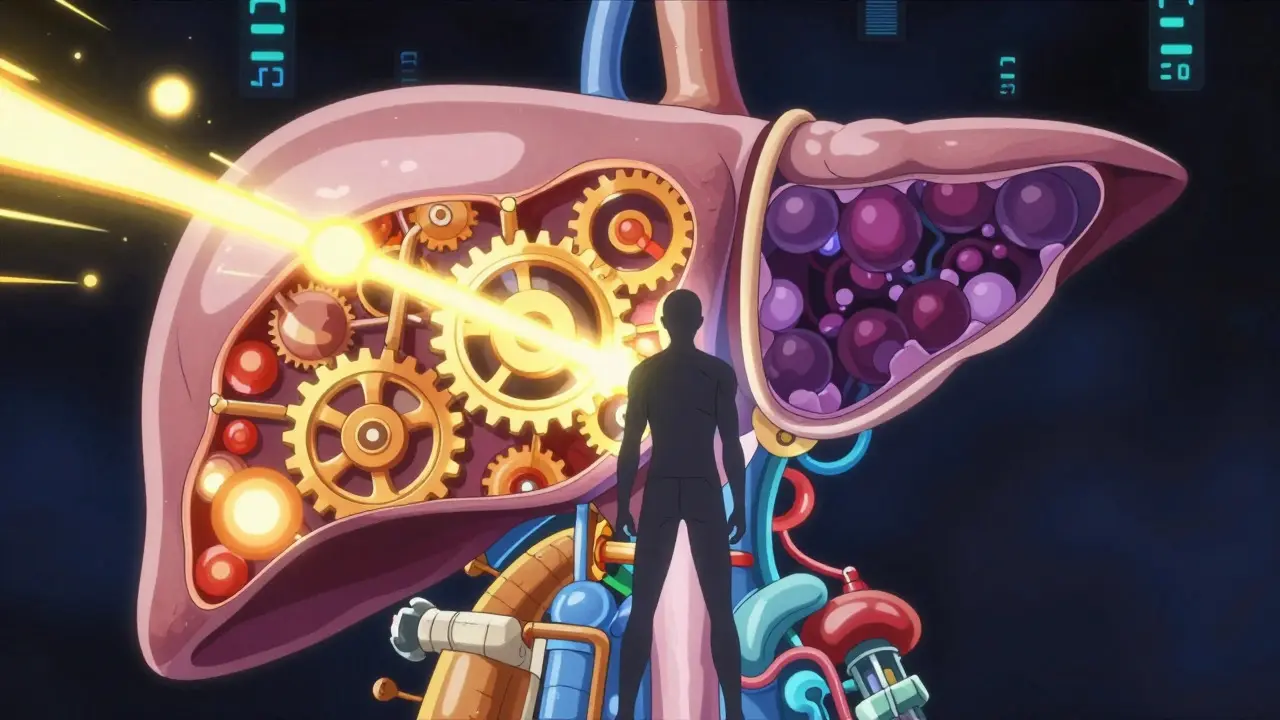
To understand the risk, you need to look at what happens inside your liver. Most drugs are metabolized by a family of enzymes called cytochrome P450 (CYP). The most important one is CYP3A4, which handles about 50% of all prescribed medications. Herbal compounds can either inhibit (slow down) or induce (speed up) these enzymes.
- Induction: The herb makes the enzyme work faster. Your body clears the prescription drug too quickly, lowering its concentration in your blood. The drug stops working effectively. This is what happens with St. John's Wort and oral contraceptives or HIV protease inhibitors.
- Inhibition: The herb slows the enzyme down. The prescription drug builds up in your system because it isn't being cleared. This increases the risk of toxicity and severe side effects. This is common with goldenseal and certain blood pressure meds.
Beyond enzymes, there are transporters like P-glycoprotein (P-gp) that move drugs in and out of cells. Some herbs block these transporters, keeping more drug inside the body than intended. For example, hawthorn can increase the toxicity of digoxin by potentiating its effects on the heart muscle. These mechanisms are invisible to the user, making the interaction feel sudden and unexplained until a professional connects the dots.
High-Risk Herbs: The Dangerous Combinations
Not all herbs carry the same weight. Some are relatively benign, while others are notorious for causing chaos in your bloodstream. Here are the ones you need to watch out for, based on clinical evidence and expert reviews.
| Herb | Mechanism of Action | Common Drug Conflicts | Potential Consequence |
|---|---|---|---|
| St. John's Wort | Induces CYP3A4 and P-gp | Oral contraceptives, HIV meds, Warfarin, Digoxin | Treatment failure, unexpected pregnancy, organ rejection |
| Ginkgo Biloba | Inhibits platelet aggregation; mild CYP inhibition | Warfarin, Aspirin, NSAIDs | Increased bleeding risk (30% higher) |
| Goldenseal | Inhibits CYP3A4 and CYP2D6 | Metoprolol, Dextromethorphan, Statins | Drug toxicity, excessive sedation, low blood pressure |
| Danshen | Inhibits platelet aggregation | Anticoagulants, Antiplatelets | Severe bleeding, irregular heartbeat |
| Hawthorn | Potentiates cardiac effects | Digoxin, Beta-blockers, ACE inhibitors | Excessive drop in blood pressure, heart rhythm issues |
St. John's Wort is often called the "king of drug interactions." Dr. Paul Offit, a prominent infectious disease specialist, noted that it can render dozens of medications ineffective. One striking example involves transplant patients. A study showed that St. John's Wort decreased cyclosporine levels by 57%, putting organs at risk of rejection. For women on birth control, the risk is equally real, with 10-15 documented cases of breakthrough pregnancies linked to the herb's ability to lower hormone levels rapidly.
Real-World Scenarios: What Happens When You Don't Tell
These aren't just lab results; they are stories from emergency rooms and clinics. Consider a patient on warfarin, a common blood thinner. They start taking Ginkgo Biloba for memory support, thinking it's harmless. Two weeks later, they experience unusual bruising. Their INR (International Normalized Ratio) fluctuates wildly. A hematologist later notes that ginkgo-warfarin interactions caused at least three bleeding incidents in their practice within a single year. The patient had never mentioned the herb because it wasn't on their prescription list.
Another common scenario involves cardiovascular health. A patient takes hawthorn for heart palpitations while also taking beta-blockers for high blood pressure. Both lower blood pressure. When combined, the effect is additive. In one reported case, a patient's systolic pressure dropped to 85 mmHg, requiring emergency care for dizziness and near-fainting. The doctor initially blamed the dosage of the beta-blocker, missing the herbal contribution entirely.
These gaps exist because of communication breakdowns. A Consumer Reports survey found that 68% of supplement users don't discuss their herbal intake with doctors. Meanwhile, only 3% of primary care providers routinely screen for high-risk combinations. It’s a two-way street of silence that leaves patients vulnerable to avoidable harm.
How to Protect Yourself: A Practical Checklist
You don't need to stop taking supplements, but you do need to manage the risk. Here is how to approach this safely.
- List Everything: Create a complete list of all pills, teas, tinctures, and topical creams you use. Include brands and dosages. Don't guess; check the labels.
- Ask Specific Questions: Instead of asking "Is this safe?", ask "Does this interact with my current medications via CYP enzymes or blood thinning?" This prompts a deeper clinical review.
- Use Visual Aids: Bring the actual bottles to your appointment. Studies show that visual aids increase patient disclosure by 47%. Doctors can spot specific ingredients that trigger known interactions.
- Check Reliable Databases: Use resources like the Mayo Clinic or the National Center for Complementary and Integrative Health (NCCIH) to cross-reference your specific combination before starting a new herb.
- Monitor for Changes: If you start a new herb, pay close attention to how you feel. Unusual fatigue, bruising, or changes in mood could signal an interaction. Report these to your provider immediately.
For healthcare providers, the protocol is shifting. The Society of Hospital Medicine recommends explicitly asking about "teas, herbs, or natural products" during intake. This simple change identifies 35% more supplement users than general questions. Pharmacists are now spending an average of 12 minutes counseling patients on high-risk combos, with St. John's Wort discussions taking the longest due to the sheer number of affected drugs.
The Future of Safety: Regulation and Technology
The landscape is changing, albeit slowly. The FDA issued a draft guidance in 2023 recommending mandatory interaction testing for new botanical drugs. The European Medicines Agency followed suit in 2024, requiring comprehensive studies for herbal medicinal products. These moves aim to close the regulatory gap left by DSHEA.
Technology is also stepping in. The University of California released an AI-powered Herb-Drug Interaction Prediction Engine in March 2024. It analyzes over 3,000 known interactions to predict new risks with 87% accuracy. Tools like this could eventually be integrated into electronic health records, flagging potential conflicts automatically when a patient checks in. However, until these tools become widespread, the responsibility remains largely on you and your care team to stay vigilant.
The global market for herbal supplements reached $104.8 billion in 2023, growing steadily. As usage increases, so does the potential for hidden conflicts. By understanding the mechanics and staying proactive, you can enjoy the benefits of natural products without compromising your medical treatment.
Are all herbal supplements dangerous?
No, not all. Many herbs like black cohosh, cranberry, and milk thistle have low interaction potential according to the American Academy of Family Physicians. However, high-risk herbs like St. John's Wort and Goldenseal require careful management. The key is knowing which specific herb you are taking and matching it against your current medication profile.
How long does it take for an herb to interact with a drug?
It varies. Inducers like St. John's Wort typically take 1-2 weeks to fully activate liver enzymes, meaning the interaction becomes significant after consistent use. Inhibitors like Goldenseal can show effects faster, sometimes within days. Always assume a risk period when starting or stopping a new supplement.
Should I stop taking my prescription if I start an herb?
Never stop a prescription without consulting your doctor. Abruptly stopping medications can cause withdrawal or rebound effects. Instead, discuss the addition of the herb first. Your provider may adjust your medication dose or recommend a different, safer alternative to prevent interaction.
Do OTC painkillers count as drugs for interactions?
Yes. Over-the-counter (OTC) medications like aspirin, ibuprofen, and acetaminophen are still pharmacologically active. Herbs that affect bleeding, like Ginkgo or Danshen, can significantly increase the risk of gastrointestinal bleeding when combined with NSAIDs or aspirin. Include OTC items in your disclosure list.
Where can I find reliable information on specific herb-drug pairs?
The National Center for Complementary and Integrative Health (NCCIH) and the Mayo Clinic offer updated databases and clinical guidelines. Additionally, asking your pharmacist is the most direct method, as they specialize in pharmacokinetics and have access to detailed interaction software.