
MAOI Tyramine Calculator
Tyramine Safety Calculator
This tool helps you calculate the tyramine content of food items to avoid dangerous hypertensive crises while taking MAOI medications. The safe limit is generally 6-25 mg of tyramine per day.
Result
Enter your food choice and serving size to see results.
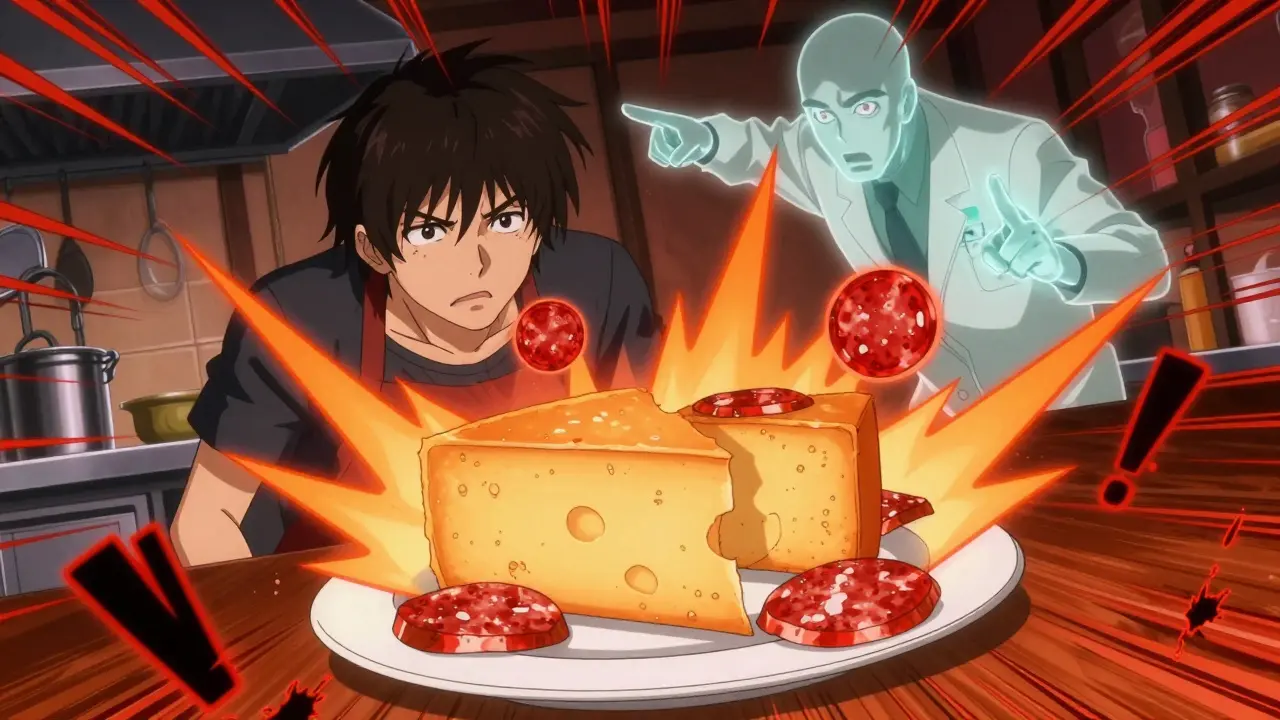
When you're on an MAOI antidepressant like Nardil or Parnate, your favorite plate of aged cheddar and pepperoni isn't just a snack-it could be a medical emergency. This isn't scare tactics. It's science. And it’s something nearly 1.4 million Americans on these medications need to understand every single day.
Why Aged Cheese and Processed Meats Are Dangerous with MAOIs
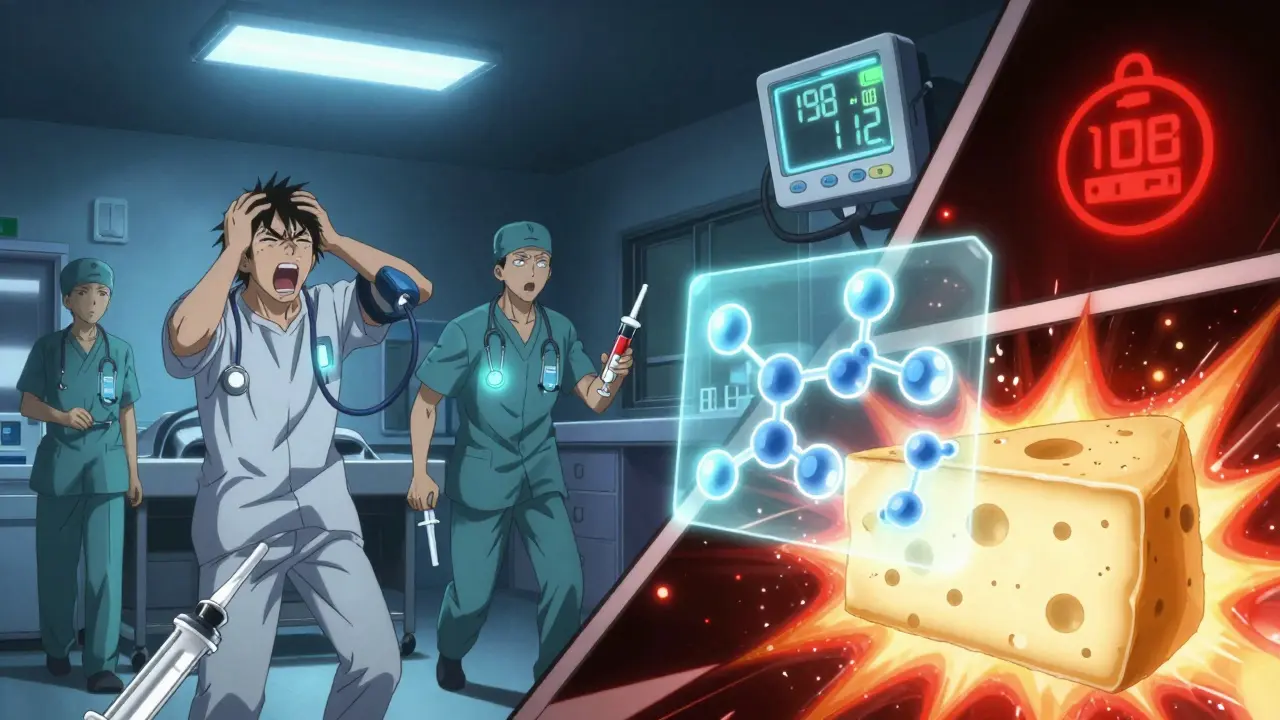
The problem isn't the cheese or the meat itself. It's tyramine, a natural compound that builds up as food ages or ferments. In healthy people, tyramine is broken down quickly by an enzyme called monoamine oxidase. But when you take an MAOI-short for monoamine oxidase inhibitor-that enzyme is blocked. Tyramine doesn't get cleared. Instead, it floods your system and forces your nerves to dump a massive surge of norepinephrine. That spike can rocket your blood pressure to 180/120 mmHg or higher in under 30 minutes. This isn't theoretical. In 1965, researchers first linked cheese consumption to sudden, life-threatening high blood pressure in MAOI users. Since then, hospitals have seen dozens of cases every year. Emergency rooms still get patients with splitting headaches, pounding hearts, and blurred vision-all because they ate a slice of Parmesan or a sandwich with salami.Which Cheeses Are Safe? Which Are Not?
Not all cheeses are created equal. The difference between safe and dangerous comes down to aging and processing.- High-risk cheeses (avoid completely): Aged cheddar (72-953 mcg/g), Parmesan (610-1,400 mcg/g), blue cheeses like Stilton and Gorgonzola (1,000-3,500 mcg/g), Swiss (400-1,200 mcg/g), and feta preserved in brine (350-800 mcg/g). A single 30g serving of aged cheddar can contain more than 25 mg of tyramine-enough to trigger a crisis in sensitive people.
- Moderate-risk cheeses (use extreme caution): Camembert, Brie (200-600 mcg/g), Gruyère, Edam (150-500 mcg/g). These aren’t safe for everyone. Some people react to even small amounts.
- Low-risk cheeses (generally safe): Fresh mozzarella (under 25 mcg/g), ricotta (under 40 mcg/g), cottage cheese (under 30 mcg/g), cream cheese (under 20 mcg/g), and American cheese (under 50 mcg/g). These are made from pasteurized milk and haven’t aged long enough to build up tyramine.
Here’s the catch: labels don’t always say “aged.” If it’s hard, crumbly, or has a strong smell, it’s probably risky. Stick to fresh, soft, refrigerated cheeses-and always check the expiration date. Older fresh cheeses can start to develop tyramine too.
Processed Meats: The Hidden Danger
Processed meats are just as dangerous as aged cheese. They’re cured, smoked, or fermented-perfect conditions for tyramine to form.- High-risk meats: Dry-cured sausages like pepperoni (200-600 mcg/g), salami (150-500 mcg/g), and summer sausage (300-900 mcg/g). These are often stored at room temperature and aged for weeks.
- Moderate-risk meats: Bacon (75-250 mcg/g), corned beef (60-180 mcg/g), bologna (50-200 mcg/g). These are safer than dry sausages but still risky if eaten in large amounts or if they’ve been sitting for days.
- Safe options: Freshly cooked chicken, turkey, beef, or pork. If you buy meat from the deli counter and it’s sliced fresh off the bone, it’s usually fine. Avoid anything labeled “cured,” “smoked,” “dry-aged,” or “fermented.”
Even a single slice of pepperoni on pizza can be enough. One user on Reddit reported a hypertensive crisis after eating a slice of pepperoni pizza-something they’d done for years before starting MAOIs. The difference? Their body could no longer handle the tyramine.
Other Surprising Tyramine Sources
Cheese and meat aren’t the only culprits. Many everyday foods contain hidden tyramine:- Soy sauce: 1,000-2,500 mcg/g. Even a tablespoon can push you over the limit.
- Miso paste: 800-2,000 mcg/g. Common in soups and marinades.
- Fish sauce: 1,200-3,000 mcg/g. Used in Thai and Vietnamese cooking.
- Tap beer and red wine: Can contain tyramine, especially if unpasteurized or aged.
- Fermented tofu and tempeh: Often overlooked, but risky.
Good news? Many foods are safe. Bananas, chocolate, peanuts, and properly stored smoked fish are generally fine. The myth that bananas are dangerous is outdated-modern testing shows they contain less than 10 mcg/g of tyramine.
What Happens During a Hypertensive Crisis?
If tyramine hits your system while you’re on an MAOI, symptoms come fast:- Severe headache, often at the back of the head (occipital)
- Palpitations or racing heart
- Profuse sweating
- Nausea or vomiting
- Blurred vision or sensitivity to light
- Confusion or chest pain
These symptoms usually appear within 15 to 30 minutes. Blood pressure can rise by 50 to 100 mmHg in minutes. In extreme cases, this can lead to stroke, heart attack, or death.
One user on Drugs.com described it as “a migraine mixed with a panic attack, but worse.” They ended up in the ER with a blood pressure of 198/112 after eating a Parmesan salad. That’s not rare. Emergency departments see 3-5 cases per year directly tied to cheese and MAOIs.
How Long Do You Need to Stay on the Diet?
This isn’t a diet you stop when you feel better. MAOIs stay in your system for days, and your body needs time to rebuild the enzyme that breaks down tyramine.You must avoid high-tyramine foods for two to three weeks after stopping your MAOI. Even if you feel fine, your body isn’t ready. A single bite of blue cheese during this window can still trigger a crisis.
How to Manage This Diet in Real Life
Sticking to this diet is hard. Restaurants don’t label tyramine. Family dinners are full of risky foods. Grocery stores don’t tell you if cheese is aged.Here’s how to make it work:
- Read labels-look for words like “aged,” “cured,” “fermented,” “smoked.”
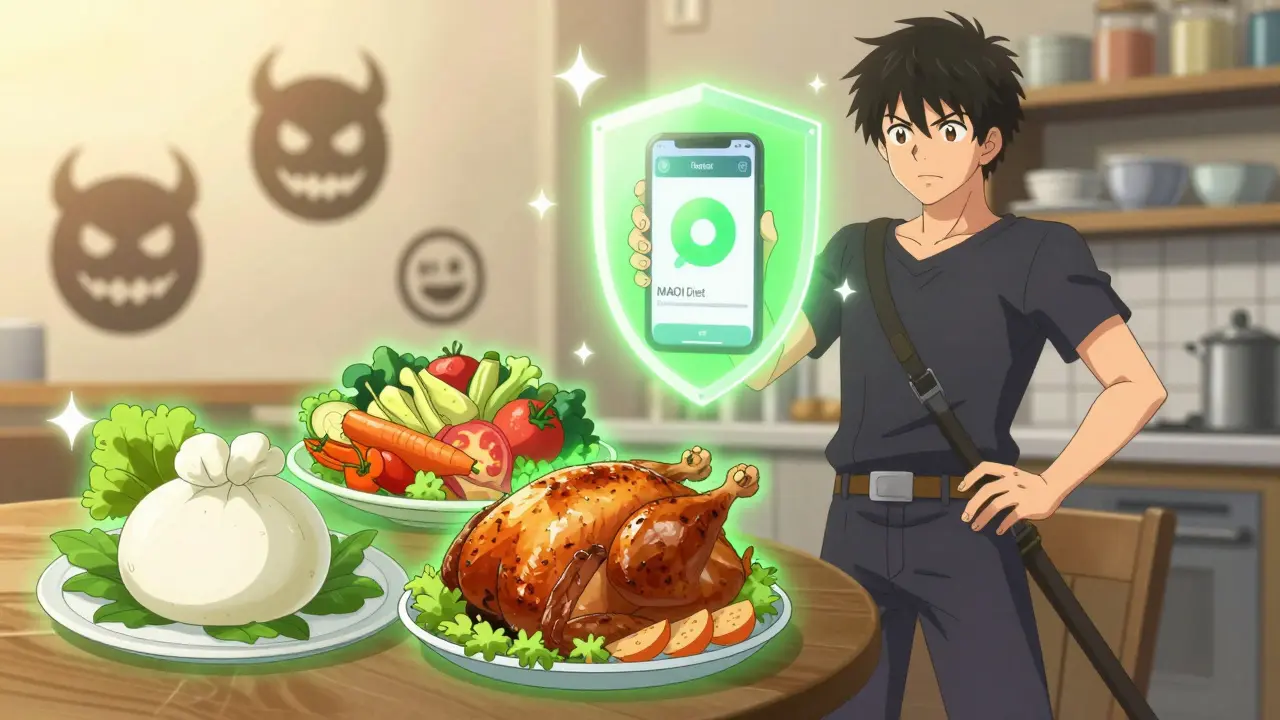
- Use fresh substitutes-swap Parmesan for fresh mozzarella, salami for roasted turkey breast.
- Keep a food diary-track what you eat and your blood pressure. Some people can tolerate 10 mg of tyramine; others react to 6 mg. Know your limit.
- Carry an emergency card-print one from the NSW Agency for Clinical Innovation’s website. It explains your condition to paramedics if you collapse.
- Use the MAOI Diet Tracker app-launched by Mayo Clinic in early 2023, it scans barcodes and flags high-tyramine products with 89% accuracy.
Many people find that after 2-3 weeks of working with a dietitian, they become confident identifying safe foods. Without help, it can take 4-6 weeks-and mistakes are dangerous.
What’s Changing in the Future?
The food and drug industries are starting to respond. In 2022, Sargento launched a line of “MAOI-safe” fresh mozzarella cups with tyramine levels under 20 mcg/g. Sales hit $14.7 million. In the EU, aged cheeses now must list tyramine content on labels. The FDA requires MAOI packaging to include clear dietary warnings.Research is moving fast. A clinical trial (NCT05214387) is testing an enzyme supplement that could break down tyramine before it enters your bloodstream. If it works, it could eliminate this dietary restriction entirely. By 2025, the American Pharmacists Association plans to push for standardized tyramine labeling on food products.
Some scientists even predict genetically modified cheeses with low tyramine levels by 2030. But until then, the rules haven’t changed.
Why This Matters More Than Ever
MAOIs aren’t first-line antidepressants. They’re used when other treatments fail-for treatment-resistant depression or Parkinson’s. That means the people taking them are often the most vulnerable. And yet, the CDC says 61% of MAOI-related ER visits happen because patients didn’t follow the diet.This isn’t about being perfect. It’s about being informed. One mistake can kill. But with knowledge, planning, and the right tools, you can live well while on MAOIs.
You don’t have to give up food. You just have to know what’s safe. Fresh cheese. Fresh meat. Fresh vegetables. Simple. Safe. Life-saving.
Can I eat blue cheese if I only have a tiny bit?
No. Blue cheeses like Stilton and Gorgonzola contain 1,000-3,500 mcg/g of tyramine. Even a 10g serving can deliver 10-35 mg of tyramine-well above the dangerous threshold of 6-25 mg. There’s no safe amount for MAOI users.
Is aged cheddar worse than other cheeses?
Yes. Aged cheddar can contain up to 953 mcg/g of tyramine, and a 30g serving can hit 28.59 mg. That’s more than four times the dangerous threshold. It’s one of the most common triggers of hypertensive crises in MAOI users.
What if I accidentally eat something risky?
Monitor your symptoms. If you develop a severe headache, rapid heartbeat, sweating, or blurred vision, check your blood pressure immediately. If it’s above 160/100, call emergency services. Don’t wait. This is a medical emergency.
Can I drink wine or beer on MAOIs?
Avoid red wine, tap beer, and aged or unpasteurized beers. They can contain tyramine. Bottled, pasteurized beer in moderation may be okay for some, but it’s safer to avoid alcohol entirely. Alcohol can also worsen the blood pressure spike.
Do I need to avoid this diet forever?
No. You only need to avoid high-tyramine foods while taking MAOIs and for two to three weeks after stopping them. Once your body rebuilds monoamine oxidase enzyme activity, the risk disappears. But never restart the medication without clearing it with your doctor first.
Are there any safe processed meats?
Yes-freshly cooked meats like roast chicken, turkey breast, or grilled steak. Avoid anything labeled cured, smoked, fermented, or dry-aged. Deli meats from the counter are only safe if they’re sliced fresh and eaten immediately. Pre-packaged meats are almost always risky.



steve rumsford
January 6, 2026 AT 21:55just ate a slice of pepperoni pizza last night and felt like my head was gonna explode. thought it was a migraine. turns out it was tyramine. never again.
Paul Mason
January 8, 2026 AT 12:26yo i used to think this was all hype until my buddy ended up in the er after snacking on blue cheese with his whiskey. dude had a bp of 200/110. no joke. if you're on maol you gotta treat this like a life-or-death diet. no exceptions. no "just a little". it's not a suggestion, it's a survival rule.
Christine Joy Chicano
January 10, 2026 AT 00:32the fact that we’re still relying on 1960s-era dietary restrictions for a class of meds developed in the 50s is wild. imagine if we had tyramine-labeled packaging like allergen warnings-"contains 892 mcg/g tyramine: may cause hypertensive crisis if taken with MAOIs." why is this not standard? why does the burden fall entirely on the patient to become a food scientist just to stay alive?
and don’t get me started on how soy sauce is a silent killer. one tablespoon of regular soy = 10x the tyramine threshold. yet no one talks about it. it’s in everything. stir-fries, marinades, even some salad dressings. we need better labeling. better education. better systems.
also, the mayo clinic app is a game-changer. i’ve used it to scan 47 items in one grocery trip. only three passed. three. i cried.
Emma Addison Thomas
January 11, 2026 AT 23:00as someone who grew up in the uk eating mature cheddar and smoked salmon every day, this hit hard. i started maol six months ago and had to completely relearn how to eat. my mum still sends me a block of stilton for christmas. i keep it in the freezer. never touch it. but i do miss it. maybe one day we’ll have safe aged cheeses. until then, fresh mozzarella and hummus are my new best friends.
Mina Murray
January 12, 2026 AT 23:43you know who’s not telling you the whole truth? the food industry. they know tyramine is deadly. they know people die. but they won’t label it because then people won’t buy their "artisanal" $18 cheeses. they’d rather you die quietly than lose a profit margin. this is capitalism killing people under the guise of "flavor."
and don’t even get me started on wine. red wine is basically liquid tyramine with a label that says "enjoy responsibly." responsible? how? you’re literally poisoning yourself. the fda is complicit. they’re letting corporations profit off medical emergencies.
if you’re on maol and still drinking wine or eating salami, you’re not just careless-you’re participating in a system that doesn’t care if you live or die.
Adam Gainski
January 13, 2026 AT 11:11just wanted to add that if you're new to maol and feeling overwhelmed, you're not alone. i started six months ago and thought i'd never eat again. but with a dietitian and the mayo app, i've found a rhythm. fresh meats, eggs, veggies, rice, pasta, and fresh cheeses are my new normal. i even made a list of safe restaurants near me. it’s doable. it’s hard, but it’s doable.
also, the emergency card is a must. i carry one in my wallet. my sister says it looks like a medical alert bracelet but for your food. i told her it’s my lifeline.
Poppy Newman
January 14, 2026 AT 05:14so i just found out my favorite "artisanal" cheese from the farmers market is actually aged for 18 months 😱 i’ve been eating it for months… thank god i’m still alive. 🙏
Katrina Morris
January 14, 2026 AT 19:09my mom used to say "everything in moderation" but this? this isn't moderation. this is "don't touch it at all." i used to love brie with crackers. now i eat cottage cheese with honey and call it a treat. it's not the same but it keeps me alive. and honestly? i feel better now. no headaches. no anxiety spikes. maybe the diet saved me more than the med did.
Anastasia Novak
January 16, 2026 AT 08:31you people are so dramatic. i’ve been on parnate for 12 years. i eat parmesan. i drink red wine. i’ve never had a crisis. your fear is making this harder for the rest of us. not everyone reacts the same. stop scaring new patients with horror stories. it’s not helpful. it’s performative.
LALITA KUDIYA
January 16, 2026 AT 14:36in india we have paneer and fresh curd. no tyramine. no problem. i miss cheese but i eat more dal and vegetables now. my skin is better. my mood is better. maybe this diet is not punishment. maybe it is gift.
Adam Gainski
January 17, 2026 AT 22:18anastasia, i hear you. some people tolerate more than others. but the data doesn't lie-there are documented deaths from even small amounts. and if you're lucky enough to be one of the ones who doesn't react, that doesn't mean it's safe for everyone. we're not here to scare people. we're here to make sure no one has to learn the hard way like my cousin did-collapsed at a family dinner. no one knew why. no one knew about tyramine. she didn't make it.
your experience doesn't invalidate ours. and the fact that you're still doing it? that's your choice. but please don't downplay the risk for people who aren't as lucky.