

People living with HIV are living longer than ever. But with that longevity comes a new challenge: managing a growing list of medications for heart disease, diabetes, depression, and more-all while taking antiretroviral therapy (ART). The problem? Many of those everyday drugs can dangerously interact with HIV meds, leading to treatment failure, severe side effects, or even death.
Why ART Interactions Are Different From Other Drug Interactions
Not all drug interactions are created equal. ART drugs don’t just bump into other meds-they actively interfere with how your body processes them. Most antiretrovirals are metabolized by enzymes in your liver, especially CYP3A4. Some ART drugs block this enzyme, causing other medications to build up to toxic levels. Others speed it up, making your meds ineffective. This isn’t theoretical. In 2022, a study in Medicina e Pharmacia Romania found that antiretrovirals were involved in 37% of the most common dangerous drug interactions among people with HIV. That’s more than statins, painkillers, or blood pressure meds. The real danger? Many of these interactions fly under the radar because patients don’t tell their doctors about their OTC meds, supplements, or even recreational drugs.The Big Three: PIs, NNRTIs, and INSTIs-Which Are Riskiest?
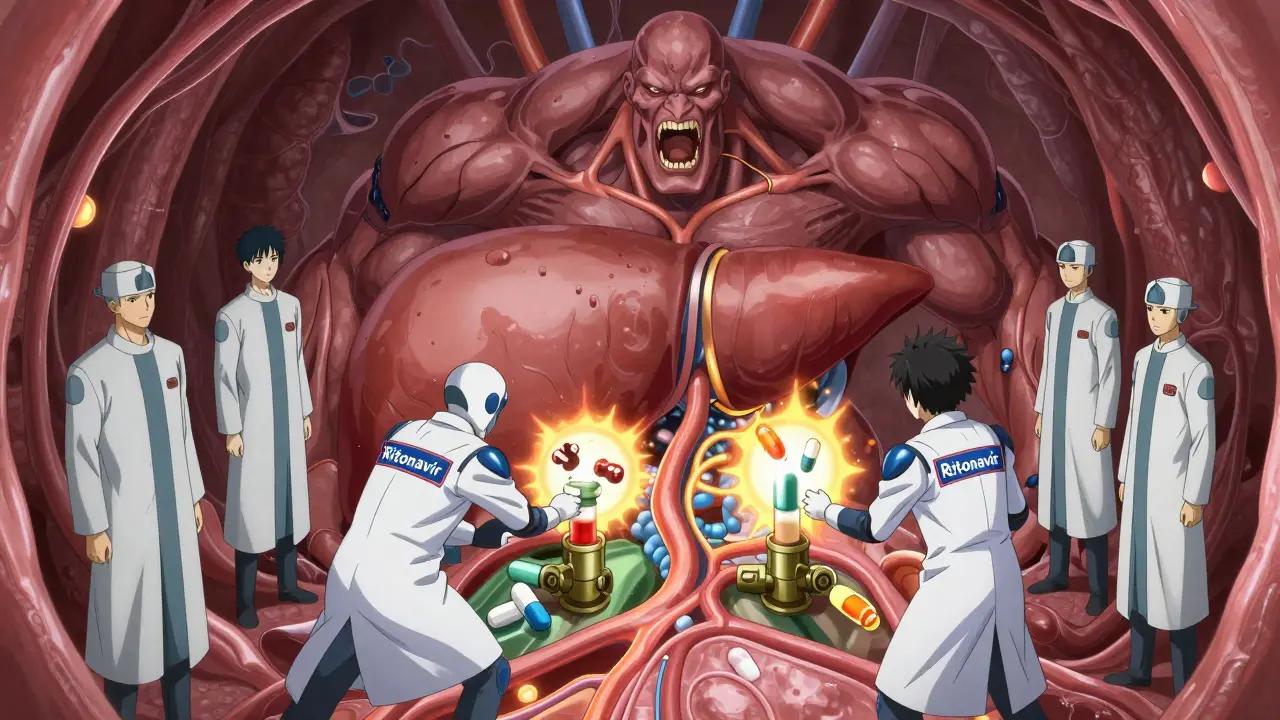
Not all ART regimens are the same when it comes to interactions. There are three main classes, and their interaction profiles vary wildly. Protease inhibitors (PIs), especially when boosted with ritonavir or cobicistat, are the most dangerous. Ritonavir alone has over 200 documented interactions. It shuts down CYP3A4 like a circuit breaker. That means drugs like simvastatin and lovastatin can spike to 20-30 times their normal levels, triggering rhabdomyolysis-a condition where muscle tissue breaks down and can destroy your kidneys. The HHS Guidelines say this combo is absolutely contraindicated. No exceptions. Non-nucleoside reverse transcriptase inhibitors (NNRTIs) like efavirenz do the opposite. They turn on CYP3A4, burning through other drugs too fast. If you’re on efavirenz and take a birth control pill, the pill may not work. If you’re on it and take St. John’s Wort, your HIV meds could drop by 60%, risking resistance. Etravirine and rilpivirine are safer, with far fewer interactions. Integrase strand transfer inhibitors (INSTIs) like dolutegravir and bictegravir are the new gold standard. They barely touch CYP3A4. Bictegravir has only seven major interactions. Dolutegravir? Just eight. That’s why most new HIV patients start on INSTI-based regimens. But don’t assume they’re completely safe. Dolutegravir lowers metformin levels by 33%, which can wreck blood sugar control. And bictegravir crashes by 71% if you take rifampin-common for tuberculosis treatment.High-Risk Interactions That Can Kill
Some interactions aren’t just inconvenient-they’re deadly. Here are the ones clinicians watch for most closely.- Statins: Simvastatin and lovastatin? Never with boosted PIs. Pitavastatin and fluvastatin are your only safe choices.
- Steroids: Inhaled fluticasone or nasal budesonide? With ritonavir, they can cause Cushing’s syndrome or adrenal crisis. One study found 17% of patients on boosted PIs who used these steroids ended up hospitalized.
- Erectile dysfunction drugs: Avanafil is banned with ritonavir or cobicistat. Sildenafil (Viagra) is allowed-but only at 25mg every 48 hours, not the usual 50-100mg.
- Calcium channel blockers: Amlodipine levels rise 1.6-fold with ritonavir. That can drop your blood pressure dangerously low.
- SSRIs: Fluoxetine with ritonavir? Risk of serotonin syndrome-agitation, high fever, seizures. Some patients need to cut their fluoxetine dose in half.
- Immunosuppressants: Tacrolimus, cyclosporine, sirolimus-these need major dose reductions when switching off ritonavir. Go from boosted PI to dolutegravir? Tacrolimus dose drops by 75%.
The Hidden Culprits: Supplements, OTCs, and Recreational Drugs
Most people don’t think of St. John’s Wort as a drug. But it’s one of the most common causes of ART failure. It’s an inducer-speeds up metabolism. If you’re on efavirenz or nevirapine and take St. John’s Wort, your HIV meds can plummet by half. That’s how resistance starts. Over-the-counter painkillers? Mostly safe. But NSAIDs like ibuprofen can raise kidney risk when paired with tenofovir. Acetaminophen is fine, but don’t go over 3,000mg/day-liver stress is real. And recreational drugs? Ketamine, MDMA, cocaine-all processed by CYP3A4. With ritonavir, they stick around longer. One case report described a man who took ketamine and ended up in the ER for 18 hours because ritonavir slowed its breakdown. He didn’t even know the interaction existed.Who’s Most at Risk?
It’s not just about what you take-it’s about how much you take. The average person with HIV over 50 is on six or more medications. The Department of Veterans Affairs found veterans over 65 with HIV take an average of 9.2 pills daily. That’s a recipe for disaster. And it’s getting worse. In 2005, only 12% of people with HIV were over 50. Today, it’s 52%. More heart disease. More diabetes. More depression. More arthritis. More meds. Each additional drug increases your interaction risk by 18%. Each year since your HIV diagnosis? Another 7%. People with metabolic syndrome are especially vulnerable. PI-based regimens plus antipsychotics like olanzapine triple your risk of developing metabolic syndrome. That’s not just weight gain-it’s insulin resistance, high cholesterol, and heart disease.
What You Should Do Right Now
If you’re on ART, here’s your action plan:- Make a full list. Write down every pill, patch, inhaler, supplement, and herbal product you take-including what you use once a month or only when you’re sick.
- Use the Liverpool HIV Drug Interactions Checker. It’s free, updated monthly, and has over 1,200 non-HIV drugs mapped to 347 antiretrovirals. Type in your meds. See what’s risky.
- Bring it to every appointment. Don’t assume your doctor knows what you’re taking. Bring the list. Read it aloud.
- Ask: Is this interaction documented? Is there a safer alternative? If your statin is simvastatin, ask for pitavastatin. If you’re on fluticasone, ask about beclomethasone or ciclesonide.
- Never stop or change a dose without talking to your HIV provider. Even if you feel fine, a hidden interaction could be quietly failing your treatment.
The Future Is Cleaner
The good news? The next generation of HIV drugs is designed to avoid these problems. Lenacapavir, injected twice a year, barely touches liver enzymes. New INSTIs are being developed with even fewer interactions. The NIH just allocated $12.7 million in 2024 to build “interaction-proof” ART. By 2030, experts predict new regimens will have 80% fewer dangerous interactions than today’s boosted PIs. But that’s the future. Today, you’re still managing a minefield.Final Thought: Your Meds Are a Team
Your HIV meds aren’t working alone. They’re part of a team with your blood pressure pills, your antidepressants, your knee cream, your turmeric supplement. If one player goes rogue, the whole team fails. Don’t wait for a crisis. Don’t assume your doctor knows everything. Don’t think, “It’s just a cold pill.” One interaction can undo years of treatment. Stay informed. Stay vigilant. And never, ever skip the conversation about your meds.Can I take ibuprofen with my HIV meds?
Yes, ibuprofen is generally safe with most antiretrovirals. But if you’re on tenofovir, long-term or high-dose NSAIDs like ibuprofen can increase kidney stress. Stick to the lowest effective dose for the shortest time. Acetaminophen (paracetamol) is often a safer choice for pain relief in people with HIV.
Is it safe to take St. John’s Wort with ART?
No. St. John’s Wort is a strong inducer of CYP3A4 and can reduce levels of efavirenz, nevirapine, and some PIs by 50-60%. This dramatically increases the risk of HIV resistance and treatment failure. Avoid it completely. If you’re using it for depression, talk to your provider about safer alternatives like sertraline or citalopram.
What’s the safest statin to take with HIV meds?
Pitavastatin and fluvastatin are the safest options with protease inhibitors. Simvastatin and lovastatin are absolutely contraindicated-they can cause life-threatening muscle damage. Rosuvastatin is usually okay but needs monitoring. Always check the Liverpool Drug Interactions Checker before starting any statin.
Can I use Viagra if I’m on a boosted PI?
Yes, but only at 25mg every 48 hours. That’s half the usual dose and far less than the maximum 100mg. Never take it more frequently. Avanafil, tadalafil, and vardenafil are either contraindicated or require extreme caution. Always confirm with your pharmacist or HIV provider before using any ED medication.
Why does switching from ritonavir to dolutegravir require dose changes?
Ritonavir blocks enzymes that break down other drugs. When you stop it, those enzymes spring back to life-and suddenly your other meds get cleared too fast. For example, tacrolimus (used after transplants) can drop by 75% after switching off ritonavir, risking organ rejection. Always work with your provider to adjust doses gradually when changing ART regimens.
Are long-acting injectables like cabotegravir safer for drug interactions?
Cabotegravir and rilpivirine injections have fewer interactions than boosted PIs, but they’re not risk-free. Because they stay in your body for months (up to a year), any interaction that does occur can last far longer than with daily pills. You can’t just stop the injection if a problem arises. Always review all your meds before starting long-acting therapy.
How often should I check for drug interactions?
Every time your medication list changes-new prescription, OTC drug, supplement, or even a change in dosage. Don’t wait for your next HIV appointment. Use the Liverpool HIV Drug Interactions Checker immediately after any change. Many interactions happen within days, not months.
What if my doctor doesn’t know about HIV drug interactions?
Many general practitioners aren’t trained in HIV-specific interactions. Bring the Liverpool HIV Drug Interactions Checker link or printout to your appointment. Ask your HIV specialist to communicate directly with your other doctors. You’re the only one who knows your full medication list. Be your own advocate.


Nancy Kou
December 19, 2025 AT 17:53This is the kind of post that saves lives. I work in pharmacy and see people on ART mixing statins with boosted PIs all the time. They think if it's on the shelf, it's safe. It's not. The Liverpool tool is non-negotiable. Print it. Tape it to your fridge.
Hussien SLeiman
December 20, 2025 AT 10:52Look, I get that the article is trying to be helpful, but let’s be real-most people with HIV aren’t taking 9 pills a day because they’re lazy. They’re taking them because their doctors keep adding new meds without ever stepping back and asking, ‘What’s the actual goal here?’ You don’t fix aging by stacking more drugs. You fix it by addressing root causes. But no, we’d rather just tweak another enzyme and call it progress. Meanwhile, the real issue-poor nutrition, chronic stress, lack of movement-is ignored because it doesn’t come in a pill bottle with a fancy label.
And don’t get me started on ‘safe’ statins. Pitavastatin? Great in theory. But what if you’re on Medicaid and it’s $400 a month? Meanwhile, simvastatin costs $4. So yeah, the guidelines are perfect. The system? Not so much.
Also, St. John’s Wort? Yeah, it’s risky. But so is fluoxetine. And so is Zoloft. And so is every damn SSRI out there. Why are we acting like herbal stuff is the villain here? Because Big Pharma doesn’t own it. That’s the real interaction we’re ignoring.
Edington Renwick
December 22, 2025 AT 02:40Did you know that in 2023, a guy in Ohio died from rhabdomyolysis because his PCP prescribed simvastatin and his HIV doc didn’t know he was on darunavir/ritonavir? The death certificate said ‘cardiac arrest.’ But the toxicology report? Full of statin metabolites. That’s not an accident. That’s a systemic failure. And now we’re supposed to trust doctors who don’t even know what CYP3A4 stands for?
Also, ‘avoid St. John’s Wort’-sure. But tell that to the 72-year-old veteran who’s been using it for 15 years because SSRIs made him feel like a zombie. Now what? He’s supposed to just… stop? And switch to something that might make him suicidal? That’s not healthcare. That’s coercion with a prescription pad.
Sarah McQuillan
December 23, 2025 AT 07:04As an American who’s had to navigate this mess for over a decade, I’m tired of hearing ‘just use the Liverpool checker.’ It’s great, but what if you’re in rural Kansas and your only internet is dial-up? Or what if you’re 80 and your grandson is the only one who can help you navigate a website? This isn’t just a medical issue-it’s a digital divide issue. And nobody’s talking about it.
Also, ‘don’t take ibuprofen with tenofovir’-fine. But what if you have severe arthritis and your knees are screaming? Acetaminophen doesn’t touch the pain. So you suffer. Or you take the ibuprofen and hope. That’s not a choice. That’s survival.
And why is everyone acting like INSTIs are magic? Dolutegravir lowered my metformin levels so much I went into ketoacidosis. I had to be hospitalized. So don’t tell me ‘it’s safer.’ It’s different. And different doesn’t mean better for everyone.
Alana Koerts
December 25, 2025 AT 05:56Kathryn Featherstone
December 25, 2025 AT 19:48I’ve been on ART for 18 years. I’ve been on PIs, NNRTIs, INSTIs. I’ve had the scary ER visits. I’ve had the ‘oh, I thought that was just a normal side effect’ moments. This post? It’s the one I wish I’d read 10 years ago.
Don’t wait for a crisis. Don’t assume your doctor knows. Don’t feel guilty for asking. Bring your list. Even if it’s scribbled on a napkin. Even if you’re embarrassed. Even if you’ve been taking St. John’s Wort for ‘anxiety’ and you’re scared to say it. Say it anyway.
You’re not a burden. You’re not a statistic. You’re someone who’s already survived more than most. Keep going. But do it smart. Use the checker. Talk to your pharmacist. And if your doctor brushes you off? Find a new one. Your life isn’t negotiable.
Alisa Silvia Bila
December 26, 2025 AT 00:43Chris porto
December 28, 2025 AT 00:04It’s funny how we treat meds like they’re all the same. Like a pill is just a pill. But the body isn’t a machine you can swap parts in and out. It’s a network. A living, messy, evolving system. ART isn’t just fighting HIV-it’s negotiating with every other drug in your system. And we’re treating it like a math problem.
The real answer isn’t just ‘use the checker.’ It’s learning to listen-to your body, to your meds, to your history. Maybe we need fewer drugs. Maybe we need more time. Maybe we need to stop thinking of health as a checklist and start thinking of it as a conversation.
I’m not saying ditch the science. I’m saying don’t let it replace your intuition. You know your body better than any algorithm. Trust it. But verify. Always verify.