
Supplement & Medication Interaction Checker
Check Your Interactions
Results
More than 7 in 10 American adults take dietary supplements. Vitamins, fish oil, turmeric, St. John’s wort, ginseng, glucosamine - you name it. Many people believe these are harmless because they’re "natural." But here’s the truth: supplements aren’t harmless. And if you don’t tell your doctor about them, you could be putting your health at serious risk.
Why Your Doctor Needs to Know What You’re Taking
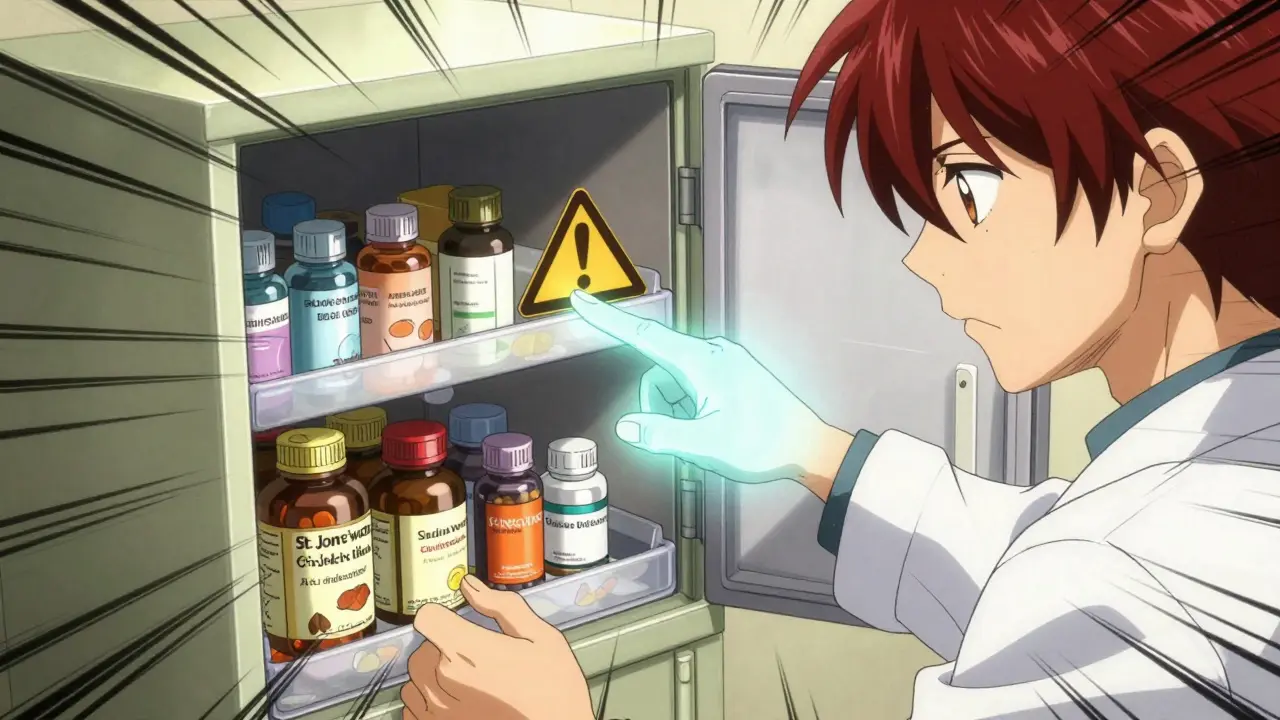
You might think, "I’m just taking a multivitamin. It’s nothing serious." But what if that multivitamin has extra vitamin K, and you’re on blood thinners? Or what if you’re taking St. John’s wort for low mood, and it’s making your birth control useless? These aren’t rare cases. They happen every day. The problem isn’t the supplements themselves. It’s the silence around them. Only about one-third of people who use herbal or dietary supplements tell their doctor. That’s according to a 2019 study in the Journal of Family Medicine and Disease Prevention. And it’s even worse for people with chronic conditions like diabetes or high blood pressure - only about half of them disclose what they’re taking. Why? Many patients fear their doctor will dismiss them. Others think, "It’s natural, so it can’t hurt." But natural doesn’t mean safe. St. John’s wort can reduce the effectiveness of over 50 common medications, including antidepressants, heart drugs, and even chemotherapy. Garlic supplements can thin your blood - dangerous if you’re scheduled for surgery. Ginkgo biloba can cause bleeding when mixed with warfarin. And none of these are drugs. They’re just labels on bottles in your medicine cabinet.How Supplements Are Regulated (And Why That’s a Problem)
In the U.S., supplements are treated like food, not medicine. That means the FDA doesn’t check them for safety or effectiveness before they hit store shelves. Under the Dietary Supplement Health and Education Act (DSHEA) from 1994, manufacturers only need to prove a product isn’t contaminated or falsely labeled after it’s already sold. That’s a huge gap. There are more than 85,000 supplement products available in the U.S. today. The FDA inspects less than 1% of the facilities that make them. And while the label must say, "This product is not intended to diagnose, treat, cure, or prevent any disease," many ads and websites still imply otherwise. Even worse, the ingredients listed on the bottle aren’t always what’s inside. A 2022 FDA report found that nearly 1 in 5 supplements contained hidden pharmaceuticals - like erectile dysfunction drugs or weight-loss chemicals - not listed anywhere. That’s not a mistake. That’s fraud. And if you don’t know what you’re really taking, your doctor can’t protect you.Supplements That Are Most Likely to Cause Dangerous Interactions
Some supplements are riskier than others. Here are the top ones that cause real problems - and why people rarely tell their doctors:- St. John’s wort: Used for depression, but cuts the effectiveness of birth control, antidepressants, HIV meds, and transplant drugs. Disclosure rate: just 8.4%
- Ginkgo biloba: Taken for memory, but increases bleeding risk with aspirin, warfarin, or NSAIDs. Disclosure rate: 12.7%
- Garlic supplements: Can lower blood pressure and thin blood. Dangerous before surgery or with blood thinners. Disclosure rate: 10.9%
- Glucosamine/chondroitin: Popular for joint pain, but can raise blood sugar in diabetics. Disclosure rate: 22.3%
- Echinacea: Used for colds, but can interfere with immune-suppressing drugs. Disclosure rate: 18.9%
- Green tea extract: High doses linked to liver damage. Often taken with weight-loss pills - a dangerous combo.
How to Talk to Your Doctor Without Feeling Judged
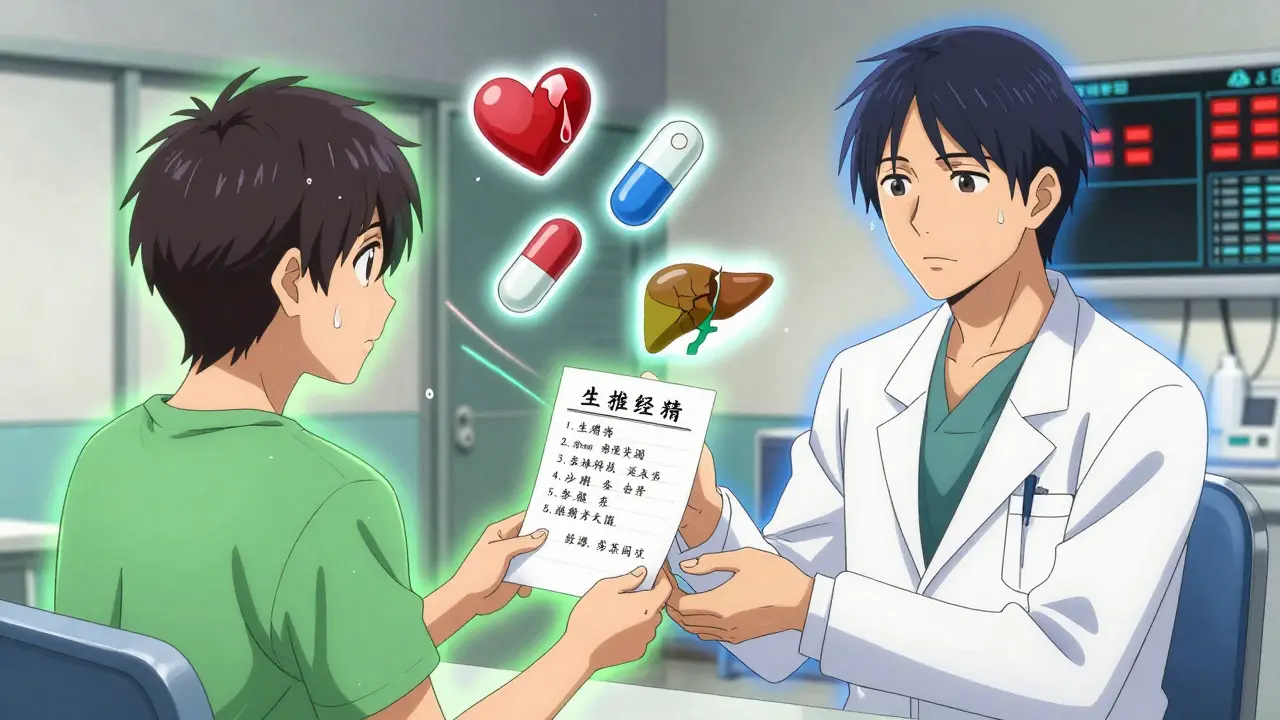
The biggest barrier isn’t the science. It’s the stigma. Many patients feel like their doctor will roll their eyes or say, "That’s just a placebo." But here’s what works: ask the right way. Instead of saying, "I take some herbs," try this:- "I’ve been taking fish oil and turmeric for my knees. I’m not sure if they’re safe with my blood pressure meds. Can we check?"
- "I started taking melatonin for sleep. Is that okay with my antidepressant?"
- "I’m using a supplement for anxiety. I don’t know if it’s helping, but I want to make sure it’s not hurting me."
- The exact name (e.g., "Panax ginseng," not just "ginseng")
- The dosage (e.g., "500 mg twice daily")
- How long you’ve been taking it
- Why you started (pain, sleep, energy, etc.)
What Your Care Team Should Be Doing
Doctors aren’t trained for this. A 2023 study found medical students get only 2.7 hours of education on nutrition and supplements during their entire four-year program. That’s not enough. But change is happening. Hospitals like Mayo Clinic now require all patients to list supplements during intake - just like medications. The American Hospital Association now requires screening for supplements in 87% of member hospitals. Electronic health records like Epic are rolling out new tools that flag dangerous interactions between supplements and prescriptions. And it’s working. At Mayo, disclosure rates jumped from 28% to 67% in just three years - simply by making it part of the routine check-in. You don’t have to wait for your doctor to catch up. Be the one who starts the conversation. Your safety doesn’t depend on their training - it depends on your honesty.
What to Do Right Now
You don’t need to wait for your next appointment. Here’s what to do today:- Look in your medicine cabinet, purse, or nightstand. Find every supplement bottle - even the ones you haven’t taken in months.
- Write down the name, dose, and frequency of each one.
- Check if any of them are on the list above - especially if you’re on blood thinners, antidepressants, diabetes meds, or birth control.
- Next time you see your doctor, nurse, or pharmacist, say: "I want to make sure everything I’m taking is safe with my other meds. Here’s what I’m using."
Real Stories, Real Risks
One patient in a 2022 AMA Journal of Ethics case study took ginkgo biloba for memory and didn’t tell her doctor. She ended up with internal bleeding after surgery. She said, "I didn’t think my doctor needed to know about natural stuff." Another patient on TikTok shared how St. John’s wort made her birth control fail - she got pregnant unexpectedly. Her video got over 2 million views. Why? Because so many people relate. These aren’t outliers. They’re symptoms of a broken system. And the fix is simple: talk.Final Thought: You’re the Key
Your care team can’t protect you if they don’t know what you’re taking. Supplements aren’t the enemy. Silence is. The FDA calls this "the silent epidemic." Dr. Pieter Cohen at Harvard says it’s "one of the most significant yet underrecognized patient safety issues in modern medicine." You don’t need to be an expert. You don’t need to justify your choices. You just need to speak up. Your health is worth it.Do I need to tell my doctor about vitamins and multivitamins?
Yes. Even common multivitamins can contain high doses of vitamin K, iron, or calcium that interfere with blood thinners, thyroid meds, or antibiotics. What seems harmless can have hidden effects. Always list them - even if you think they’re "just a daily vitamin."
What if my doctor says supplements are a waste of money?
You don’t need their approval to take them - but you do need their awareness. Say, "I understand you may not recommend them, but I’m taking them and want to make sure they’re safe with my other treatments." That keeps the door open for safety, not judgment.
Are natural supplements safer than prescription drugs?
No. "Natural" doesn’t mean safe. Many prescription drugs come from plants - like aspirin from willow bark or morphine from poppies. The difference is, prescription drugs are tested for safety and dosage. Supplements are not. That’s why interactions are so common.
Can supplements cause liver damage?
Yes. Green tea extract, weight-loss supplements, and high-dose niacin have all been linked to liver injury. The FDA’s adverse event database shows over 16,000 reports of supplement-related liver problems since 2019. Most people don’t realize it’s the supplement until it’s too late.
What if I’m seeing a naturopath or holistic provider?
Still tell your primary doctor. Naturopaths and conventional doctors often use different systems. A supplement that’s safe in one context might interact dangerously with a drug your primary care provider prescribed. Full disclosure means sharing with everyone involved in your care.
Is it safe to take supplements while pregnant?
Many are not. High doses of vitamin A, black cohosh, and certain herbal teas can cause birth defects or early labor. Even prenatal vitamins can have too much or too little of key nutrients. Always check with your OB-GYN before taking anything - even if it’s labeled "for pregnancy."
How do I know if a supplement is legit?
Look for third-party seals like USP, NSF, or ConsumerLab. These organizations test for purity and accurate labeling. But even those don’t guarantee safety with your medications. The only way to be sure is to tell your doctor what you’re taking - no matter the brand.
What if I forgot to tell my doctor and now I’m having side effects?
Stop taking the supplement immediately and call your doctor or pharmacist. Bring the bottle with you. Don’t wait. Many side effects - like dizziness, unusual bleeding, or rapid heartbeat - can be reversed if caught early. Your doctor won’t blame you. They’ll be glad you told them.




Aayush Khandelwal
December 31, 2025 AT 00:14Look, I get it - we’re all chasing biohacks and herbal panaceas like they’re the latest iPhone update. But the real issue isn’t the supplements, it’s the cultural delusion that ‘natural’ = ‘safe.’ It’s like saying a rattlesnake is harmless because it’s organic. The FDA doesn’t regulate these because they’re treated as food - not medicine - and that’s a regulatory loophole that’s literally killing people. We need to treat supplements like pharmaceuticals. Period.
srishti Jain
December 31, 2025 AT 12:14my aunt took ginkgo before surgery and bled out. no one asked. no one cared.
Shae Chapman
January 1, 2026 AT 22:51THIS. I literally brought my whole supplement drawer to my PCP last month 😭 she looked at it like I’d brought a live raccoon into the office. But then she said, ‘Wow, I had no idea you were taking all this.’ We caught a dangerous interaction with my thyroid med. You’re not crazy for taking supplements - you’re smart for asking. 💙
Hayley Ash
January 2, 2026 AT 00:21Oh please. You’re telling me a multivitamin is more dangerous than a prescription cocktail of antidepressants, statins, and opioids? Let’s be real - the real epidemic is overmedication and pharmaceutical greed. Supplements are the poor man’s safety net. If your doctor can’t handle a little turmeric, maybe they need to upgrade their education
Nadia Spira
January 3, 2026 AT 01:03It’s not about disclosure - it’s about accountability. The supplement industry is a $150 billion pyramid scheme built on placebo psychology and corporate loopholes. People don’t ‘forget’ to tell their doctors - they’re ashamed because they know they’ve been scammed. And now we’re supposed to normalize this? Wake up. The only thing natural about these products is the exploitation.
Kelly Gerrard
January 3, 2026 AT 01:49It is imperative that all individuals engaged in the consumption of dietary adjuncts disclose such practices to their primary care providers. The absence of such communication constitutes a critical gap in clinical risk assessment. Safety is not a matter of opinion - it is a clinical imperative. Please ensure full transparency.
Joseph Corry
January 3, 2026 AT 19:04How quaint. We’ve reduced complex pharmacological interactions to a checklist for the clinically naive. The real problem is that patients are being treated like children who need to be told not to touch the stove - when the stove was built by regulators who don’t understand biochemistry. The system isn’t broken - it was designed this way. The FDA’s hands are tied by DSHEA because lobbyists wrote it. And now we’re asking patients to fix the structural failure with a Post-It note and a bottle of ginseng? Pathetic.
Glendon Cone
January 5, 2026 AT 17:11My grandma takes fish oil and turmeric for her knees. She’s 82, walks every day, and doesn’t take a single prescription. I asked her why she never told her doctor - she said, ‘He never asked.’ So now I bring her bottles every visit. It’s not about being perfect - it’s about being present. 🙌
Colin L
January 6, 2026 AT 15:43Look, I’ve been taking ashwagandha for 11 years now, and I’ve never had an issue - but I do get that it might interact with my blood pressure meds, which is why I’ve been doing my own research, reading every single PubMed paper I can find, tracking my cortisol levels with a wearable, and cross-referencing every ingredient with the NIH’s database - and I still think the real issue here is that doctors are too lazy to learn about adaptogens and just want to prescribe more SSRIs. I mean, come on. If you’re not tracking your supplement intake with a spreadsheet and a journal, you’re not doing it right. And if your doctor doesn’t know what a nootropic is, maybe you need a new one. I’ve got a spreadsheet. I’ve got a journal. I’ve got a 27-page annotated bibliography. I’ve got a whole damn TED Talk in me. And I still feel like I’m the only one who gets this.
kelly tracy
January 8, 2026 AT 03:17So now we’re blaming patients for not telling doctors about supplements? What about the doctors who don’t know the difference between echinacea and ephedra? Or the ones who say ‘just stop everything’ without checking interactions? I’ve had my meds changed three times because my doctor didn’t know what I was taking - and then acted like it was my fault for not volunteering it. This isn’t about honesty - it’s about systemic incompetence
Henry Ward
January 8, 2026 AT 21:19People take supplements because they’re desperate. And the system rewards that desperation. You think it’s about health? No. It’s about fear. Fear of aging. Fear of pain. Fear of being told there’s no cure. And the supplement industry feeds that fear with glittery bottles and influencer lies. You’re not a hero for taking ginkgo. You’re a mark. And if you don’t tell your doctor, you’re not just risking your life - you’re enabling the scam.
henry mateo
January 9, 2026 AT 04:37i just started taking magnesium for sleep and i was scared to tell my dr bc i thought theyd laugh but they just said ‘good, what kind and how much?’ and wrote it down. i felt seen. thanks for this post. really. 🙏
Sandeep Mishra
January 10, 2026 AT 17:00Let’s not turn this into a war between ‘natural’ and ‘pharma.’ Both have their place. But the real tragedy? We’ve turned healthcare into a transaction - where doctors don’t have time to ask, and patients don’t feel safe to answer. The answer isn’t more regulation. It’s more listening. I’ve seen patients cry because they thought their herbal tea was ‘too weird’ to mention. That’s not a supplement problem - that’s a humanity problem. Bring your bottles. Ask your questions. Your life isn’t a footnote in a chart.
Cheyenne Sims
January 10, 2026 AT 19:19The use of unregulated dietary adjuncts constitutes a direct threat to public health and undermines the scientific integrity of modern medicine. The fact that consumers are encouraged to self-diagnose and self-treat with unverified compounds is not only irresponsible - it is a violation of the fundamental principles of evidence-based practice. Until supplement manufacturers are held to the same regulatory standards as pharmaceutical entities, the burden of safety must remain squarely on the patient - and the patient, in turn, must be held accountable for full disclosure. There is no excuse for ignorance in matters of pharmacological interaction.