
Calcium-Iron Timing Calculator
Avoid Absorption Problems
Calculate safe spacing between calcium and iron supplements to maximize absorption and prevent medication interference.
Many people take calcium and iron supplements to support bone health or fix low iron levels. But if you’re also on medication, you could be accidentally blocking your own body from absorbing both the supplement and the drug. This isn’t just a minor issue-it can make your antibiotics useless, your thyroid medicine ineffective, or leave you still anemic despite taking iron pills every day.
Why Calcium and Iron Fight Each Other
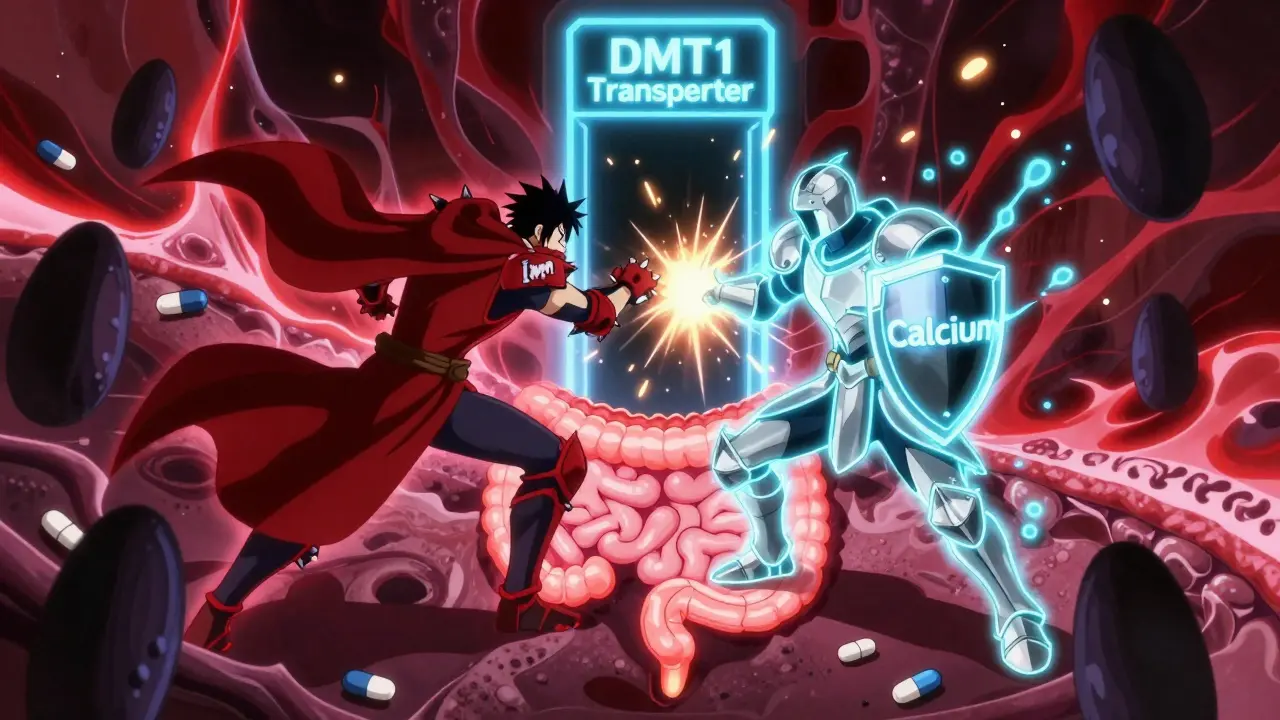
Calcium and iron don’t just sit quietly in your gut. They both need the same doorway to get into your bloodstream: the DMT1 transporter in your small intestine. When you take them together-say, a calcium pill with your iron tablet-they fight over that doorway. One wins. Usually, calcium does. A 1991 study in the American Journal of Clinical Nutrition showed that just 600 mg of calcium (about two Tums tablets) cut iron absorption by up to 62%. That’s not a small drop. It’s enough to make your daily iron supplement useless.This gets worse when calcium comes from calcium carbonate, the most common form in over-the-counter supplements. It doesn’t just compete-it raises the pH in your stomach, turning it less acidic. Iron needs acid to dissolve properly. No acid? No absorption. Even if you take iron on an empty stomach, a calcium supplement taken at the same time can still block it.
Antibiotics and Minerals: A Dangerous Mix
If you’re on antibiotics like ciprofloxacin (Cipro) or doxycycline, taking calcium or iron at the same time can turn your treatment into a waste of money. These antibiotics belong to two classes-fluoroquinolones and tetracyclines-that bind tightly to calcium, iron, aluminum, and magnesium. The result? The antibiotic gets trapped in your gut and never enters your bloodstream.That means your infection doesn’t get treated. You might feel worse. You might need a second course. Or worse, your body could start resisting antibiotics altogether. Pharmacist Alesiani says it plainly: “If you’re taking antibiotics for an infection but also taking calcium supplements, you may not get the adequate levels you need.”
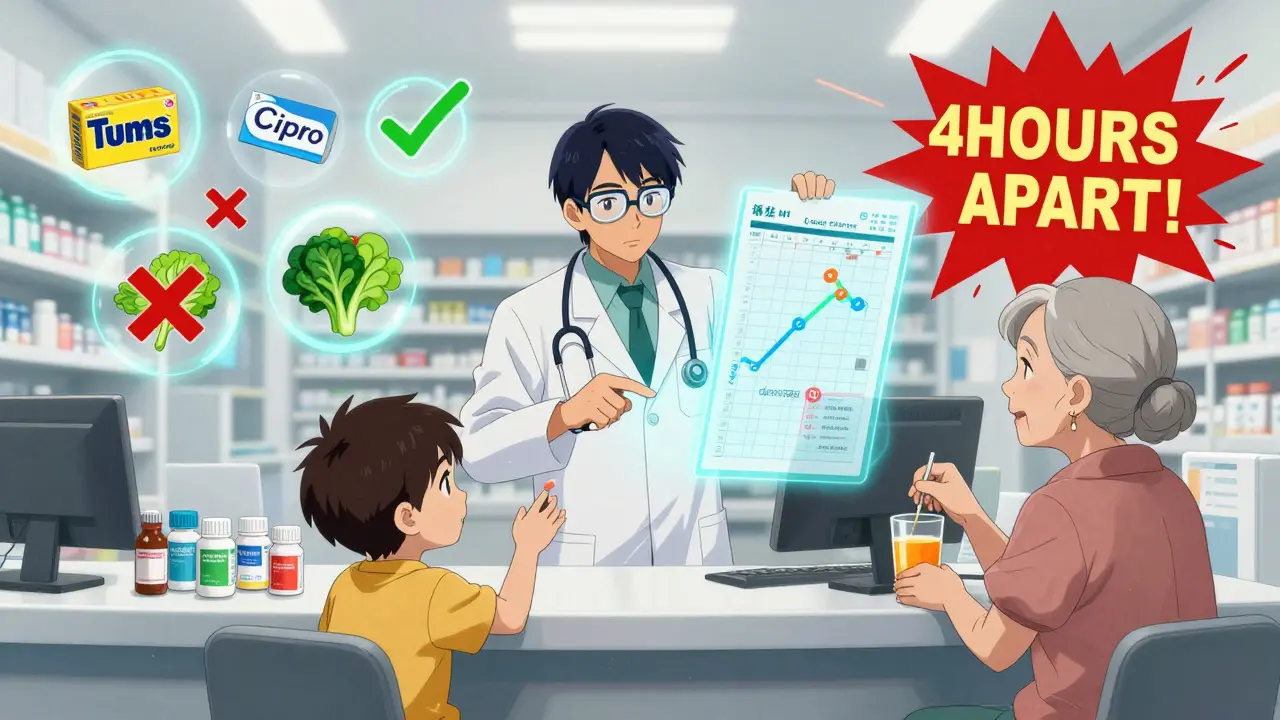
MedlinePlus and GoodRx both agree: wait at least 2 hours before or after taking your antibiotic. For tetracycline antibiotics, some sources recommend waiting up to 4 hours after your iron supplement. That’s not a suggestion-it’s a medical requirement.
Thyroid Medication and Mineral Interference
If you take levothyroxine for hypothyroidism, you’re already walking a tightrope. This medication needs a perfectly empty stomach and a quiet gut to work. Calcium, iron, and even magnesium can stick to it like glue and stop it from being absorbed.University Hospitals Cleveland Medical Center’s 2025 guidelines warn that these minerals can reduce thyroid hormone absorption by as much as 30-50%. That’s enough to throw your TSH levels out of whack, making you tired, gain weight, or feel depressed-even if you’re taking your pill every morning.
The fix? Take your thyroid pill first thing in the morning, at least 30-60 minutes before eating or drinking anything (except water). Then wait at least 4 hours before taking your calcium or iron supplement. Many people find it easier to take their minerals at dinnertime or before bed.
Stomach Acid Reducers Make Iron Worse
If you take omeprazole (Prilosec), pantoprazole (Protonix), famotidine (Pepcid), or even regular antacids like Tums, you’re making iron absorption harder. These drugs lower stomach acid. And iron? It needs acid to dissolve and become absorbable.A 2022 study in ACS Omega found that calcium reduced iron absorption from a meal from 10.2% down to 4.8%. But if you’re also on a proton pump inhibitor? That number drops even further. People on long-term acid-reducing meds are at higher risk of developing iron deficiency-even if they eat iron-rich foods.
It’s not just supplements. Even your daily bowl of fortified cereal or spinach salad won’t help if your stomach isn’t acidic enough. If you’re on these medications and feel tired, pale, or short of breath, ask your doctor to check your ferritin levels.

When to Take Iron (and When Not To)
Iron absorbs best on an empty stomach. That’s the rule. But for about 40% of people, that causes nausea, cramps, or constipation. So what do you do?Here’s what works for most people:
- Take your iron pill first thing in the morning, 30-60 minutes before breakfast.
- Drink a glass of orange juice or take a 200 mg vitamin C pill with it. Vitamin C boosts iron absorption by up to 300%.
- Wait at least 4 hours before taking calcium, antacids, thyroid meds, or antibiotics.
- If you can’t tolerate it on an empty stomach, take it with a small amount of food-avoid dairy, coffee, tea, or whole grains.
Don’t take iron with milk, soy, coffee, or tea. The calcium and tannins in those drinks block absorption. Even a cup of coffee 2 hours before or after your iron pill can cut its effect.
When to Take Calcium
Calcium absorbs better with food, especially calcium carbonate. So take it with meals. But here’s the catch: if you’re also taking iron, you can’t take them together.Best practice:
- Take calcium with lunch or dinner.
- Avoid taking it within 4 hours of your iron supplement.
- If you’re on thyroid meds, wait at least 4 hours after your levothyroxine.
- Calcium citrate is a better option if you have low stomach acid or take acid blockers-it doesn’t need acid to absorb.
Some people split their calcium dose: 500 mg in the morning with food, 500 mg at night. That’s fine-as long as neither dose overlaps with iron or thyroid meds.
Who’s at Highest Risk?
This isn’t a problem for everyone. But it hits certain groups hard:- Women of childbearing age: Need 18 mg of iron daily. Regular calcium with meals makes it nearly impossible to meet that need, increasing risk of anemia.
- Older adults: Often take multiple meds-thyroid, antibiotics, osteoporosis drugs-and supplements.
- People with gut disorders: Celiac, Crohn’s, or gastric bypass patients already absorb less iron. Adding calcium or acid blockers makes it worse.
- Children: Iron overdose is a leading cause of fatal poisoning in kids under 6. Keep bottles locked up.
What About Food?
You don’t need to avoid iron-rich foods. But timing matters. A meal high in calcium (like a cheese omelet) will block iron from your spinach salad. A meal with vitamin C (bell peppers, strawberries, broccoli) helps.The same 1991 study showed iron absorption dropped from 28% in a low-calcium, high-iron meal to 55% in a high-calcium, low-iron breakfast. Your plate matters as much as your pill schedule.
Red Flags: When to Call Your Doctor
Some side effects are normal. Black stools? That’s iron. Dental stains from liquid iron? Use a straw. But these are warning signs:- Tarry, red-streaked stools (possible bleeding)
- Severe stomach pain after taking iron
- Feeling worse after starting a new supplement or med
- Unexplained fatigue despite taking iron for months
If you’re on thyroid meds and your energy levels drop, get your TSH checked. If your infection doesn’t improve after 3 days on antibiotics, ask if your supplements are interfering.
Simple Daily Plan to Avoid Interactions
Here’s a real-world schedule that works for most people taking both iron and calcium:- 7:00 AM - Take levothyroxine with water. Wait 60 minutes.
- 8:00 AM - Eat breakfast (no dairy, coffee, or calcium-rich foods).
- 9:00 AM - Take iron pill with orange juice or vitamin C.
- 1:00 PM - Lunch (normal meal, no supplements).
- 5:00 PM - Take antibiotics (if prescribed), with water only.
- 7:00 PM - Dinner.
- 8:00 PM - Take calcium supplement with food.
- 10:00 PM - Bedtime.
That’s a 4-6 hour gap between iron and calcium. It’s simple. It’s safe. And it works.
Final Tip: Talk to Your Pharmacist
Doctors are busy. Pharmacists are the hidden experts on drug interactions. When you pick up a new prescription, ask: “Does this interact with calcium or iron supplements?” Write down the answer. Keep a list of all your meds and supplements in your phone or wallet. You’ll save yourself months of fatigue, failed treatments, and unnecessary tests.Supplements aren’t harmless. They’re powerful. And like any medicine, they need to be timed right.
Can I take calcium and iron together if I space them 2 hours apart?
No. Even 2 hours apart isn’t enough. Calcium and iron compete directly in the gut. Studies show that taking them within 4-6 hours of each other still reduces absorption. For best results, space them at least 4 hours apart, and ideally take iron in the morning and calcium at night.
Does vitamin C help with iron absorption when taking medications?
Yes. Vitamin C can boost iron absorption by up to 300%, even when other blockers are present. But it won’t override a major interaction like calcium or antibiotics. Take vitamin C with your iron pill, but still wait 4 hours before taking calcium or thyroid meds.
Why do some iron supplements cause black stools?
Black stools are normal with iron supplements because unabsorbed iron passes through the digestive tract and reacts with sulfur in the gut. It’s harmless. But if your stools are tarry, sticky, or have red streaks, it could mean bleeding. Contact your doctor immediately.
Can I take iron with my morning coffee?
No. Coffee, tea, and even some herbal teas contain tannins that block iron absorption. Wait at least 2 hours after your iron pill before drinking coffee. Same goes for milk-calcium interferes too.
Is liquid iron better than pills?
Liquid iron can be easier to swallow and absorb, but it stains teeth. Use a straw and rinse your mouth afterward. Pills are more convenient and less messy. Both work if taken correctly. The form doesn’t matter as much as the timing.
What if I forget and take calcium with my iron?
Don’t panic. One mistake won’t ruin your health. But don’t make it a habit. If you accidentally take them together, skip your next dose of one of them and reset your schedule the next day. Consistency matters more than perfection.
Are there calcium supplements that don’t block iron?
Calcium citrate is less likely to interfere than calcium carbonate because it doesn’t raise stomach pH as much. But it still competes for absorption. No form of calcium is completely safe to take with iron. Always space them out.
Can I take iron and calcium on the same day but at different meals?
Yes. That’s the recommended approach. Take iron on an empty stomach in the morning, calcium with dinner. That gives you a 6-8 hour gap. Many people find this schedule easy to follow and effective.
If you’re taking multiple supplements and medications, the key isn’t just what you take-it’s when you take it. A few hours of separation can mean the difference between healing and staying sick.



Vinayak Naik
January 6, 2026 AT 09:22Bro, I took calcium with my iron for months and wondered why I was still tired as hell. Then I read this and switched to iron at 7am and calcium at 9pm. My energy? Back. My brain? Not foggy anymore. This isn’t magic, it’s biochemistry. Why do we treat supplements like candy? 🤦♂️
Kiran Plaha
January 7, 2026 AT 05:57Thanks for this. I’ve been taking my thyroid med and calcium together because I forget. Now I know why I’m still exhausted. I’ll try the morning iron + night calcium thing. Hope it works.
Amy Le
January 7, 2026 AT 23:49Wow. So Americans are just blindly popping pills like gummy bears while their bodies scream for help. 🇺🇸💀 I mean, we have pharmacists for a reason. Why is this even a debate? Also, vitamin C? Of course it helps. It’s not rocket science. It’s biology. 🍊
Pavan Vora
January 8, 2026 AT 14:55Interesting... I never realized that coffee... blocks iron...? I drink it with breakfast... every day... and take iron... at night... wait... is that why I'm always tired? 😅
Indra Triawan
January 8, 2026 AT 22:12I feel seen. I’ve been taking iron for a year and still feel like a ghost. My doctor said ‘just keep taking it.’ But now I think… maybe it’s not the iron… it’s the calcium… or the Tums… or the damn coffee… I’m just so tired of being tired.
Tom Swinton
January 10, 2026 AT 18:00This is the kind of post that changes lives. Seriously. I used to take my iron with my multivitamin, which had calcium, and I thought I was being healthy. Turns out I was just paying for expensive pee. Now I take my iron at 7am with orange juice, wait until 1pm for anything else, and take calcium at dinner. My ferritin jumped 40 points in 3 months. Don’t underestimate timing. Your body isn’t a vending machine-you can’t just shove stuff in and expect it to work. This is science, not superstition.
Venkataramanan Viswanathan
January 12, 2026 AT 09:30As a pharmacist’s assistant in Delhi, I’ve seen this exact scenario a hundred times. Patients take levothyroxine with tea, calcium with breakfast, iron with lunch. They return with low TSH, low ferritin, and confusion. The solution is simple: morning iron on empty stomach, calcium at night. But education is lacking. Thank you for this clear guide.
Kelly Beck
January 13, 2026 AT 07:59You guys are going to change someone’s life today. 💪 Seriously, this is the kind of info that gets buried in medical journals and never reaches the people who need it. I’m sharing this with my mom who’s on levothyroxine and calcium. She’s been feeling off for years. Now she has a plan. And yes, I’m putting orange juice with her iron pill. 🍊✨
Katie Schoen
January 14, 2026 AT 03:08So… I took calcium with my iron yesterday. Today I’m just gonna… sit here… and cry quietly into my coffee. ☕️😭