
Why Foot Care Matters for People with Diabetes
Every 20 seconds, someone loses a limb due to diabetes. Over 80,000 amputations happen in the U.S. each year from diabetes complications. But here’s the truth: ulcer prevention is possible with simple daily habits. The International Working Group on the Diabetic Foot (IWGDF) guidelines, updated in 2023, are the gold standard for prevention. They emphasize five key elements: identifying at-risk feet, regular inspections, education, proper footwear, and managing risk factors.
Understanding Your Risk Level
Your foot risk level determines how often you need check-ups. The Centers for Disease Control and Prevention (CDC) uses four categories:
- Risk 0: No neuropathy or ulcers. Annual screening for nerve damage and blood flow.
- Risk 1: Nerve damage without foot deformities. Check feet every day and get screened semi-annually.
- Risk 2: Nerve damage with deformities like bunions. Quarterly screenings and special footwear.
- Risk 3: History of ulcers or amputations. Monthly check-ups and intensive care.
Your healthcare provider tests for nerve damage using a 10g monofilament. This thin wire checks if you feel pressure on your feet. Poor blood flow is measured with an ankle-brachial index test. Knowing your risk level helps tailor your prevention plan.
Step-by-Step Daily Foot Inspection Checklist
Checking your feet daily is the most important step. Follow this routine exactly:
- Wash feet daily in lukewarm water (90-95°F). Test the water with your elbow or a thermometer. Hot water can burn you if you have nerve damage.
- Dry thoroughly, especially between toes. Moisture trapped there causes fungal infections.
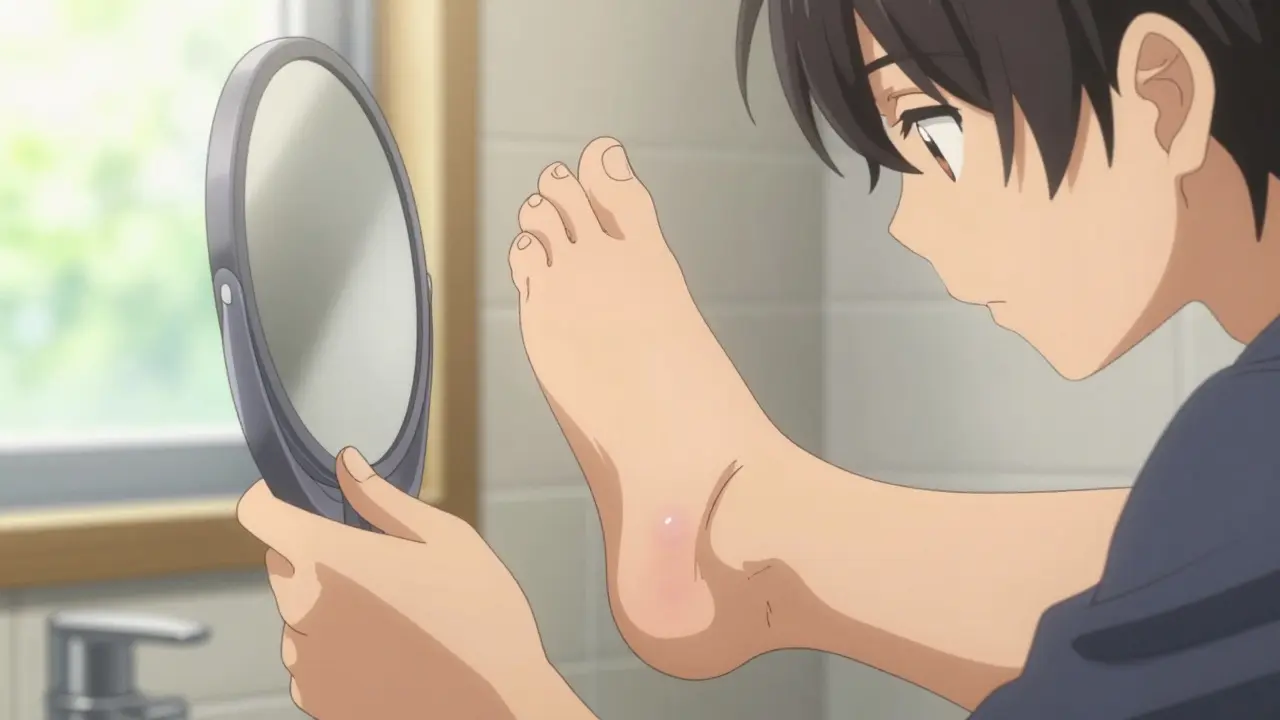
- Inspect all surfaces using a 12-inch mirror or ask someone to help. Look at soles, tops, and between toes. Check for blisters larger than 3mm, cuts deeper than 1mm, redness over 1cm, swelling, or warm spots.
- Focus on high-pressure areas. NYU Langone Health notes 92% of plantar ulcers develop under the metatarsal heads. Pay extra attention to these spots.
- Check for infection signs like redness spreading, swelling increasing by 5%, or skin feeling warmer than usual.
- Apply moisturizer to dry skin but never between toes. Dry skin cracks and leads to ulcers.
- Trim nails straight across with 1-2mm clearance from the skin fold. Never cut into corners.
Do this every day at the same time. The Centers for Disease Control and Prevention (CDC) found that 68% of ulcers start from undetected minor injuries when inspections are inconsistent. Natural light between 10 AM and 2 PM works best for accuracy.
Choosing Proper Footwear
Shoes can make or break your foot health. Here’s what to look for:
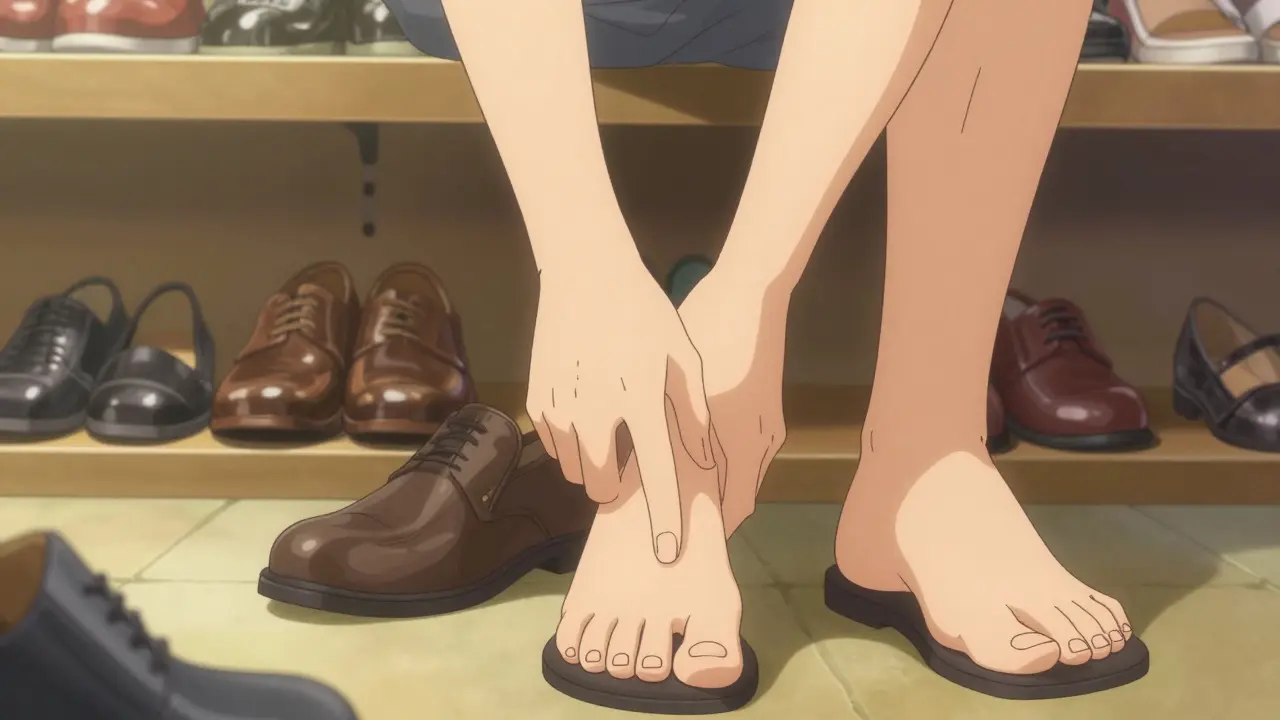
- Leave 0.5 inches (12.7mm) space between your longest toe and the shoe tip. Test this by pressing your thumb against the front of the shoe.
- Ensure your shoes accommodate 15mm of toe splay (toes spreading naturally). Your toes shouldn’t feel squeezed.
- Check the heel counter rigidity - it should be 45-60 degrees when compressed. A firm heel holds your foot in place.
- Avoid sandals or open-toed shoes. They increase ulcer risk by 4.3-fold according to pressure mapping studies.
- Never walk barefoot, even indoors. The Centers for Disease Control and Prevention (CDC) reports a 11.3x higher ulcer risk from barefoot walking for 5+ minutes daily.
For high-risk patients, therapeutic footwear with pressure-reducing features is essential. But even low-risk individuals need well-fitting shoes. Remember: 87% of forefoot ulcers come from ill-fitting shoes.
Common Mistakes That Lead to Ulcers
Even with good intentions, some habits put you at risk:
- Using hot water bottles or heating pads - nerve damage hides burns.
- Trimming calluses yourself - use a pumice stone gently or see a podiatrist.
- Wearing tight socks or shoes - restricts blood flow and causes pressure points.
- Ignoring minor cuts or blisters - they can turn into ulcers in days.
- Skipping foot checks during summer - 67% of patients switch to risky sandals in warm weather.
- Walking barefoot on hot surfaces - sidewalks can reach 140°F in summer.

When to Call Your Doctor
Don’t wait for problems to get worse. See a healthcare provider immediately if you notice:
- Any open sore or blister that doesn’t heal within 24 hours
- Redness spreading beyond 1cm
- Swelling or warmth in one foot (not the other)
- Pain, numbness, or tingling that’s new or worsening
- Any sign of infection like pus or foul odor
Early intervention is key. The CDC’s 2024 Strategic Plan aims to cut amputations by 25% by 2030 through faster treatment. Catching issues early can save your foot.
Frequently Asked Questions
How often should I inspect my feet?
Check your feet every single day, at the same time. The CDC found that inconsistent inspections cause 68% of ulcers. Do this before bedtime or after showering - pick a consistent time that works for you.
Can I use moisturizer between my toes?
No. Moisture between toes creates a perfect environment for fungal infections. Apply moisturizer only to dry areas like heels, avoiding spaces between toes. If your feet feel dry there, use a cotton ball to apply a tiny bit of powder instead.
What should I do if I find a small cut?
Clean it gently with soap and water, then cover with a sterile bandage. Contact your doctor immediately if the cut doesn’t heal within 24 hours or shows signs of infection like redness or pus. Never ignore minor cuts - they can turn into ulcers in days.
Are special shoes necessary for me?
If you have Risk 2 or 3 (neuropathy with deformity or history of ulcers), therapeutic footwear is essential. For lower risks, well-fitting shoes with proper support work. Look for shoes with 0.5 inches of space at the toe, 15mm toe splay room, and firm heel counters. Always get your feet measured professionally.
Can I walk barefoot indoors?
Never. The CDC states walking barefoot indoors for even 5 minutes daily increases ulcer risk by 11.3 times. Always wear shoes or slippers with closed toes and good support, even at home. This simple habit prevents many injuries.
Is exercise safe for my feet?
Low-impact exercises like walking are generally safe for low-risk patients, but always consult your doctor first. The IWGDF recommends supervised foot-ankle exercises for low-to-moderate risk patients. However, unsupervised ankle exercises without gait analysis can increase ulcer risk by 22%, so professional guidance is key.
What if I have trouble seeing my feet?
Ask a family member or caregiver to help with inspections. Use a handheld mirror to check soles. If vision loss is severe, your healthcare provider may recommend a foot care specialist or adaptive tools like magnifying mirrors. Never skip inspections - your safety depends on it.




Bella Cullen
February 5, 2026 AT 07:47I've had diabetes for 15 years. Daily foot checks? Nah. I just look at them when I shower. If there's a cut, I'll notice. The rest is overkill.
divya shetty
February 6, 2026 AT 01:27It is imperative that all diabetic patients adhere strictly to the daily inspection checklist. Failure to do so constitutes negligence, as even minor injuries can lead to catastrophic outcomes. I have personally witnessed multiple amputations due to such lapses. Therefore, every individual must follow these guidelines without exception.
Samantha Beye
February 7, 2026 AT 21:35Bella, I know it feels like a chore at first, but trust me, it's worth it. Every morning I take 5 minutes to check my feet-no excuses. I wash them with lukewarm water, dry thoroughly between toes, and inspect every inch. Using a mirror helps me see the soles properly. I've caught a few small cuts early because of this routine, which prevented bigger problems. My doctor says 68% of ulcers start from undetected injuries. It's scary how fast things can go wrong. I also moisturize my heels but avoid between toes. Trimming nails straight across is part of my routine too. I've even started wearing shoes indoors to avoid barefoot risks. It's become second nature now, and I feel safer knowing I'm doing everything possible. The CDC recommends daily checks for all diabetic patients, and I follow that religiously. I also keep a log of any changes so I can track my foot health. It's amazing how such a simple habit can prevent amputations. Seriously, it's a small habit that saves so much hassle later.
Matthew Morales
February 8, 2026 AT 00:18Hey everyone! This is super important. I check my feet every day and it's really easy. Just wash, dry, look, moisturize. No big deal. 😊
Andre Shaw
February 9, 2026 AT 20:46Matthew, you're way off base. It's not 'just a few mins'-you need to be meticulous. My podiatrist says 92% of ulcers start under metatarsal heads. You gotta check every single spot, not just glance. Otherwise, you're asking for trouble.
Jennifer Aronson
February 11, 2026 AT 17:48While meticulous foot care is crucial, it's important to recognize cultural differences in healthcare practices. In some communities, traditional remedies are used alongside modern protocols. However, adhering to evidence-based guidelines like the IWGDF's remains essential for safety.
lance black
February 12, 2026 AT 03:25Check your feet daily-it's that simple.
Dina Santorelli
February 13, 2026 AT 10:05Ugh, this whole thing is terrifying. I hate checking my feet. It's just a waste of time. Every time I look, I see something wrong. It's a never-ending nightmare. I've had two ulcers already, and the process is brutal. I have to go to the hospital for debridement every few weeks. The pain is unbearable, and the doctors just say 'check your feet more often.' But I do check, and it's still happening. I feel like I'm losing my legs piece by piece. My insurance won't cover proper footwear, so I'm stuck with cheap shoes. I'm tired of being told to 'just do it' when it's so hard. I'm done with this. I'm giving up.
Arjun Paul
February 13, 2026 AT 20:16Your attitude is the problem. You need to take this seriously. Ignoring foot care is irresponsible. It's not 'waste of time'-it's life-saving. Get your act together.
Nancy Maneely
February 15, 2026 AT 13:05America should lead on this! Why are we not doing more? This is a national crisis! My feet are fine but others are lazy. We need stricter laws! People need to stop being so wek. I'm sick of it. This is why America is falling behind. 😡
Phoebe Norman
February 15, 2026 AT 21:34the systemic issues in healthcare access contribute to poor outcomes but individual responsibility is paramount. lack of education exacerbates risks. need better community programs but also personal discipline. the data is clear. prevention is possible
Albert Lua
February 17, 2026 AT 14:51From my experience in India, foot care is taken seriously. Many people use herbal remedies like neem oil for infections, but the checklist here is solid. I've seen how proper footwear prevents ulcers-custom orthotics make a huge difference. It's all about adapting practices to local contexts while following guidelines. In rural areas, community health workers teach daily inspections. We also use local materials for footwear, like jute sandals, but they must be properly fitted. Education is key; many patients don't realize the risks. I've worked with NGOs to distribute free monofilaments for nerve checks. It's amazing how simple steps can prevent amputations. Regular check-ups with podiatrists are crucial, even if you feel fine. The IWGDF guidelines are gold standard, but local adaptations help. For example, in monsoon season, we focus on keeping feet dry. This holistic approach works best for communities. It's not just about medical advice, but cultural sensitivity. Every diabetic person should have access to these resources.
Katharine Meiler
February 18, 2026 AT 10:17Agreed. Integrating evidence-based protocols with culturally relevant practices enhances adherence. However, standardization of therapeutic footwear is critical. Pressure redistribution metrics must be prioritized in policy frameworks.