
More than 9 out of 10 prescriptions filled in the U.S. are for generic drugs. Yet, many people still worry: Are generic drugs really as safe and effective as the brand names? If you’ve ever been handed a different-looking pill at the pharmacy and wondered if it’s the same thing, you’re not alone. The truth is, most generic drugs work just as well - but not all. And the confusion comes from real experiences, misleading stories, and a lack of clear information.
What Exactly Is a Generic Drug?
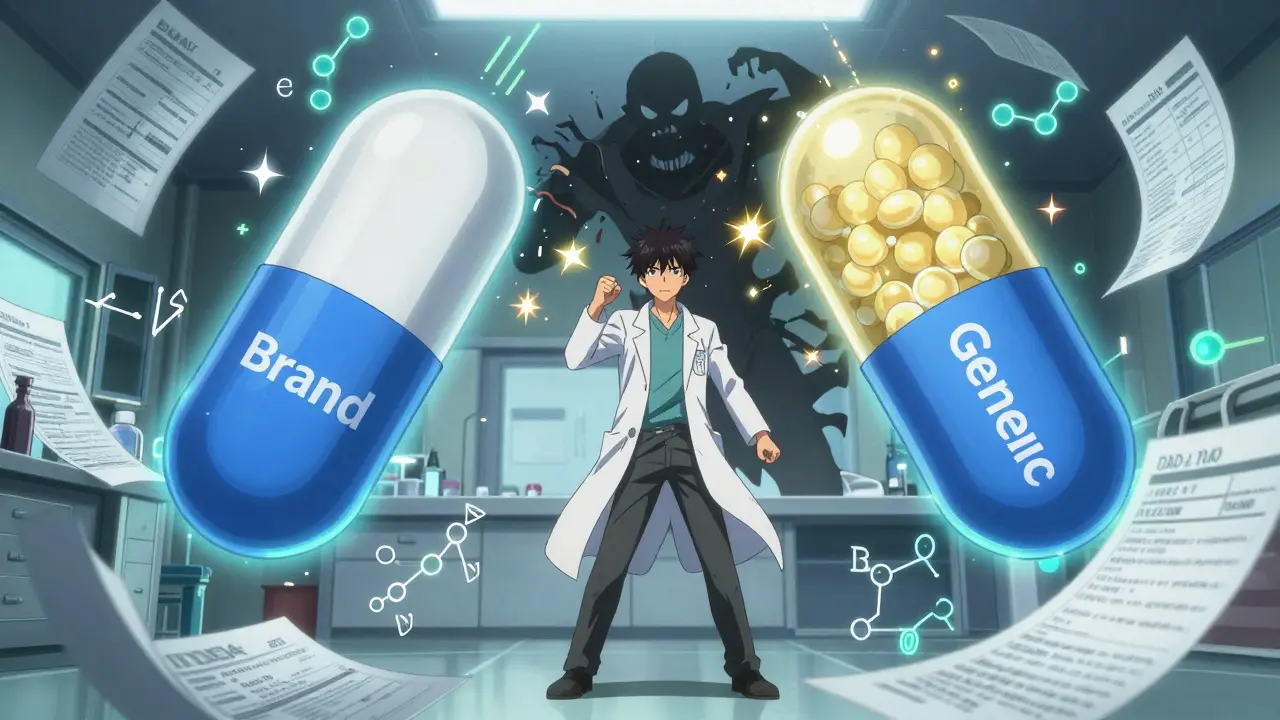
A generic drug isn’t a copy or a cheaper version - it’s the exact same medicine. By law, it must contain the same active ingredient, in the same strength, same form (pill, injection, etc.), and same way of getting into your body as the brand-name version. The FDA requires it to deliver the same amount of medicine into your bloodstream at the same rate. That’s called bioequivalence. For most drugs, that means the levels in your blood can’t be more than 20% higher or lower than the brand-name version - between 80% and 125%.So why do generics cost 80-85% less? Because they don’t have to repeat the expensive clinical trials the original drug went through. The brand-name company already proved the drug works. The generic maker just has to prove theirs behaves the same way in your body. That’s it.
Myth: Generic Drugs Are Made in Poorer Quality Factories
A lot of people assume generics come from sketchy overseas plants. That’s not true. The FDA inspects every manufacturing facility - whether it makes brand-name or generic drugs - the same way. In 2022, 98.7% of generic drug factories passed inspection. Brand-name factories? 97.3%. The difference is tiny. Many of the same factories make both brand-name and generic versions of the same drug. The only difference is the label on the box.What’s more, 78% of the active ingredients in all prescription drugs - brand and generic - come from China and India. That’s not a loophole. It’s global supply. The FDA doesn’t care where the pill is made. It cares that it meets the same standards. If a factory fails an inspection, the FDA shuts it down - no matter who owns it.
Myth: Generics Don’t Work as Well
This is where things get messy. Most studies show generics perform just as well. A 2020 study in Nature looked at 17 heart medications. It found that patients on generics had fewer heart attacks and deaths than those on brand names. Another study found generic amlodipine (for high blood pressure) was linked to lower risk of heart failure than the brand version.But then there are exceptions. Some patients report problems after switching. A Reddit user switched from brand Synthroid to generic levothyroxine and saw their TSH levels go wild. Another patient on brand Keppra for seizures had breakthrough seizures after switching to generic levetiracetam. Blood tests showed the generic version wasn’t reaching the same levels.
Why? Because not all drugs are created equal. For drugs with a narrow therapeutic index - like warfarin, levothyroxine, phenytoin, or levetiracetam - even small changes in blood levels can cause big problems. The FDA treats these differently. For these, the acceptable range is tighter: 90-112%. Still, some patients react to tiny differences in inactive ingredients, or how fast the pill dissolves. That’s why doctors sometimes recommend sticking with the same manufacturer.
Myth: All Generics Are the Same
Nope. Two different companies can make generic versions of the same drug, and they might behave slightly differently. That’s because inactive ingredients - like fillers, dyes, or preservatives - can affect how quickly the pill breaks down. One generic might dissolve faster than another. For most drugs, that doesn’t matter. For others, it does.Take ciprofloxacin. One patient’s UTI didn’t clear up on a generic version from Mylan. When they switched back to brand Ciproxin, symptoms disappeared in days. That’s rare - but it happens. The FDA tracks these reports. If enough patients report the same issue, the agency can require additional testing or even pull the product.
That’s why your pharmacist might not always substitute a generic without asking. If you’re on a critical medication, your doctor might write “Dispense as Written” on the prescription. That means the pharmacy can’t switch you without calling them first.
Myth: Generics Cause More Side Effects
There’s no evidence that generics cause more side effects overall. But if you’re allergic to a dye or preservative - say, red dye #40 or lactose - you might react to a generic version that uses a different inactive ingredient than your brand. That’s why generic labels often list fewer details about fillers than brand-name labels. The FDA requires them to list all ingredients, but not always prominently.Some patients report feeling “off” after switching - fatigue, headaches, nausea. Often, it’s psychological. But sometimes, it’s real. A 2019 study found slightly higher psychiatric hospitalization rates with generic escitalopram and sertraline compared to brand versions. Not because the active ingredient changed - but because the formulation affected how it was absorbed. That’s why mental health providers often prefer to keep patients on the same version.
Why Do Some Doctors Hesitate to Prescribe Generics?
It’s not that they don’t trust generics. Most do. But they’ve seen the exceptions. A doctor who treats epilepsy, thyroid disease, or heart rhythm disorders knows the stakes. One patient’s seizure can be triggered by a tiny drop in drug level. One person’s blood clot can form if their warfarin level slips. So they play it safe. They’ll prescribe generics for antibiotics, cholesterol meds, or blood pressure pills - but for NTIDs, they stick with what’s known.Also, insurance companies often push for generics. But if you’ve had a bad experience, your doctor can override it. You’re not stuck. You can ask for the brand. If your insurance denies it, you can appeal - or ask your doctor to help you file a prior authorization.
What Should You Do If You’re Switching?
If you’re being switched from a brand to a generic - especially for a chronic condition - here’s what to do:- Ask your pharmacist: “Is this the same manufacturer as before?” If you’ve had good results with one brand of generic, stick with it.
- Monitor your symptoms: Keep a simple log. Did your blood pressure change? Are you more tired? Any new side effects? Write it down.
- Check your labs: If you’re on thyroid, seizure, or blood thinner meds, ask your doctor for a follow-up blood test within 4-6 weeks.
- Don’t panic: Most people feel no difference. But if you do feel off, don’t ignore it. Call your doctor. Don’t assume it’s “all in your head.”
Also, don’t switch back and forth between generics. That’s a recipe for instability. Stick with one version - even if it’s not the cheapest.

Why Do Generics Save So Much Money?
Between 2010 and 2020, generic drugs saved the U.S. healthcare system $2.29 trillion. That’s more than the GDP of Australia. In 2022, generics made up 90.2% of prescriptions but only 19.3% of total drug spending. That’s the power of competition. When a patent expires, multiple companies start making the same drug. Prices drop fast. That’s why insulin, statins, and blood pressure pills are so much cheaper now than they were 15 years ago.Without generics, millions of people couldn’t afford their meds. The choice isn’t between brand and generic - it’s between taking your medicine or skipping it.
What’s Changing Now?
The FDA is getting smarter. In 2023, they launched a new database for “complex generics” - drugs that are hard to copy, like inhalers, creams, and injectables. They’re also requiring more testing for these. And in January 2024, they increased fees for generic drug applications to speed up approvals.But the big issue is supply. Most active ingredients come from just two countries. If a factory in India shuts down, or a shipment gets delayed, shortages happen. That’s why some pharmacies can’t always give you the same generic - even if you ask for it.
Bottom Line
Generic drugs are safe and effective for most people, most of the time. The science backs it. The data backs it. The savings are massive. But they’re not all identical. For critical medications - especially those with narrow therapeutic windows - small differences matter. You have the right to ask questions. You have the right to stick with what works. And you have the right to demand transparency.If you’re on a generic and feel fine - keep taking it. If you’re not - talk to your doctor. Don’t assume the problem is you. The system isn’t perfect. But it’s working - for the vast majority.
Are generic drugs as safe as brand-name drugs?
Yes, for the vast majority of drugs. The FDA requires generics to meet the same strict standards for quality, strength, purity, and potency as brand-name drugs. Manufacturing facilities are inspected using the same rules. In 2022, 98.7% of generic drug factories passed FDA inspections - slightly higher than brand-name facilities.
Why do some people say generics don’t work for them?
For most people, they do. But for drugs with a narrow therapeutic index - like levothyroxine, warfarin, or levetiracetam - tiny differences in how the drug is absorbed can matter. Some patients report changes in symptoms after switching. This doesn’t mean the generic is faulty - it means their body is sensitive to small variations. In these cases, sticking with the same manufacturer helps.
Can I switch back to the brand-name drug if I don’t like the generic?
Yes. Talk to your doctor. If you notice changes in how you feel - fatigue, new side effects, or worsening symptoms - ask for a blood test if needed. Your doctor can write “Dispense as Written” on your prescription, which prevents the pharmacy from substituting. Insurance may require prior authorization, but it’s often granted for medical reasons.
Do generic drugs have different side effects?
The active ingredient causes the same side effects. But inactive ingredients - like dyes or fillers - can cause reactions in people with allergies. For example, someone allergic to lactose might react to a generic version that uses it as a filler, while the brand version doesn’t. Always check the ingredient list if you have known allergies.
Are generic drugs made in worse factories?
No. The FDA inspects all drug factories - brand and generic - using the same rules. Many of the same factories make both types of drugs. In fact, 78% of all active drug ingredients, whether in brand or generic pills, come from China and India. The FDA doesn’t care where the pill is made - only whether it meets U.S. standards.
How do I know if my generic is from a reliable manufacturer?
You can’t always tell by the name on the bottle. But you can ask your pharmacist which manufacturer they’re dispensing. If you’ve had a good experience with one, ask to stick with it. The FDA’s Orange Book lists approved generics and their manufacturers. You can also check the American Society of Health-System Pharmacists’ Therapeutic Equivalence website for guidance on specific drugs.
Should I avoid generics if I’m on multiple medications?
Not necessarily. But if you’re on several critical medications - like blood thinners, seizure drugs, or thyroid meds - consistency matters. Switching between different generic versions can cause fluctuations in your drug levels. Ask your doctor or pharmacist to help you stick with one version of each drug. Keep a list of what you’re taking and who makes it.


Jason Shriner
January 11, 2026 AT 08:42so like... generics are just brand names with a bad haircut? 🤔 i mean, same active ingredient, sure... but what if my body just *knows* it's not the real deal? like, my thyroid doesn't care about FDA stats, it cares about feeling like a human again. i switched once. felt like a zombie with a side of existential dread. now i pay extra. worth it.
Sam Davies
January 12, 2026 AT 07:59Oh, darling, you’re telling me the FDA inspects factories like they’re judging a Michelin star chef? How quaint. Meanwhile, my pharmacist handed me a generic that looked like it was manufactured in a TikTok influencer’s bathroom. The pill had a *texture*. Not just a coating - a texture. I’m not a lab rat. I’m a person with a nervous system. And no, I don’t want to hear about bioequivalence. I want to feel like I’m not being slowly replaced by a cheaper version of myself.
Jennifer Littler
January 12, 2026 AT 17:22For NTIDs - narrow therapeutic index drugs - the variance thresholds (90–112%) are clinically meaningful. In pharmacokinetic terms, even a 10% shift in Cmax or AUC can alter receptor saturation kinetics, particularly with drugs like levothyroxine or warfarin where the therapeutic window is <5%. That’s why therapeutic drug monitoring is non-negotiable post-switch. Also, inactive ingredients matter: magnesium stearate vs. cellulose can alter dissolution profiles in enteric-coated formulations. Document your labs. Don’t assume it’s psychosomatic. The data supports patient-reported outcomes in these subpopulations.
Alfred Schmidt
January 13, 2026 AT 20:05YOU’RE TELLING ME I’M SUPPOSED TO TRUST A PILL THAT COSTS 80% LESS?!?!? I’VE BEEN ON SYNTHROID FOR 12 YEARS. I’VE HAD MY TSH STABLE AT 1.8. THEN THEY SWITCHED ME TO A GENERIC - AND MY TSH WENT TO 6.4. I WAS SO TIRED I COULDN’T GET OFF THE COUCH. I HAD TO GO TO THE ER. MY DOCTOR HAD TO WRITE A LETTER TO INSURANCE. THEY SAID ‘IT’S THE SAME DRUG.’ NO. IT’S NOT. IT’S A DIFFERENT PILL WITH A DIFFERENT NAME. I’M NOT A TEST SUBJECT. I’M A HUMAN BEING. AND I’M NOT DOING THIS AGAIN.
Priscilla Kraft
January 14, 2026 AT 16:12Hey everyone - I get it. I’ve been there 😔 I switched from brand to generic levothyroxine and felt like I’d been dipped in concrete. But I didn’t panic. I tracked my symptoms, got my TSH checked 4 weeks later, and found out it was off. I asked my pharmacist for the same manufacturer (Teva) and now I’m stable again. 🙌 It’s not about brand vs generic - it’s about consistency. If you feel off, speak up. You’re not being dramatic. You’re being smart. And if your doc pushes back, ask for the Orange Book or ASHP’s equivalence ratings. You’ve got rights. 💪❤️
Christian Basel
January 15, 2026 AT 08:26generic = cheaper. brand = more expensive. that’s it. i don’t care about bioequivalence or FDA inspections. if it works, it works. if it doesn’t, switch. end of story. why are we overcomplicating this?
Roshan Joy
January 16, 2026 AT 00:22Interesting read! In India, we have a lot of generic manufacturers - some are world-class, like Dr. Reddy’s or Cipla. But I’ve also seen pills from unknown brands that look like they were printed on a dot-matrix printer. 😅 The key is to check the manufacturer. If you’re on a critical drug, ask your pharmacist for the brand name of the generic - not just the drug name. And if you’re switching, monitor your vitals. Your body knows the difference before your brain does. Stay safe! 🙏
Adewumi Gbotemi
January 16, 2026 AT 15:40My cousin in Nigeria takes generic HIV meds. They save his life. He doesn’t care if it’s branded or not - he just cares that he wakes up every day. For him, the choice isn’t between brand and generic. It’s between medicine and death. We need to remember that. Not everyone can afford to pick and choose. Generics aren’t perfect - but they’re a lifeline for millions.