

Shingles isn’t just a rash. It’s a burning, stabbing, electric pain that can last for weeks-or even years-if not handled right. If you’ve ever felt that sharp, localized ache on one side of your body, followed by a red, blistering rash, you’re not alone. About 1 in 3 people in the U.S. will get shingles in their lifetime, and the risk jumps sharply after age 50. The good news? There’s a window-just 72 hours-to stop it from getting worse.
What Causes Shingles?
You didn’t catch shingles from someone else. You already had it. Years ago, when you were a kid, you probably had chickenpox. The virus-varicella-zoster-never left. It hid in your nerve tissue, quiet and dormant. Then, for reasons doctors still don’t fully understand, it woke up. Stress, aging, illness, or even just time can trigger it. When it does, it travels along the nerve pathways, causing pain and blisters in a stripe-like pattern, usually on one side of the torso, face, or neck.
It’s not contagious like chickenpox, but if you’ve never had chickenpox or the vaccine, you can catch the virus from someone with shingles-and then get chickenpox. That’s why it’s important to cover the rash and avoid close contact with babies, pregnant women, and people with weak immune systems.
Why Timing Matters: The 72-Hour Rule
Doctors don’t just say “start treatment early” to be pushy. It’s biology. The virus multiplies fast. Once it’s spread through your nerves and skin, the damage is done. Antivirals don’t kill the virus. They slow it down. And slowing it down in the first three days makes all the difference.
Studies show that if you start antiviral medication within 72 hours of the first sign of rash, you cut the duration of the outbreak by 2 to 3 days. Pain is reduced by about 30%. Blisters dry up faster. And the chance of long-term nerve pain-post-herpetic neuralgia (PHN)-drops, especially if you’re under 60.
But if you wait five days? The benefit shrinks. By day seven, it’s nearly gone. That’s why if you feel tingling, burning, or itching on one side of your body-even before the rash shows up-don’t wait. See a doctor. Get tested. Start treatment.
Which Antivirals Work Best?
There are three main antivirals used for shingles: acyclovir, famciclovir, and valacyclovir. All are effective. But not all are the same.
Valacyclovir (Valtrex) is the most commonly prescribed today. Why? It’s easier to take. You only need three pills a day for seven days. Acyclovir requires five doses a day-every four hours, even at night. That’s hard to stick with. Famciclovir is in the middle: three times a day, but less studied for pain relief.
Research from Healthline’s 2024 review suggests valacyclovir may reduce pain more effectively than acyclovir. Not because it’s stronger, but because people take it as directed. Better adherence means better results. Side effects are mild: headache (13%), nausea (9%), dizziness (7%). Most people tolerate it fine.
For people with weakened immune systems-those on chemotherapy, with HIV, or taking steroids-antivirals aren’t optional. They’re life-saving. These patients often get more severe rashes, longer pain, and higher risk of complications like eye or lung infections. They may need higher doses or longer treatment.
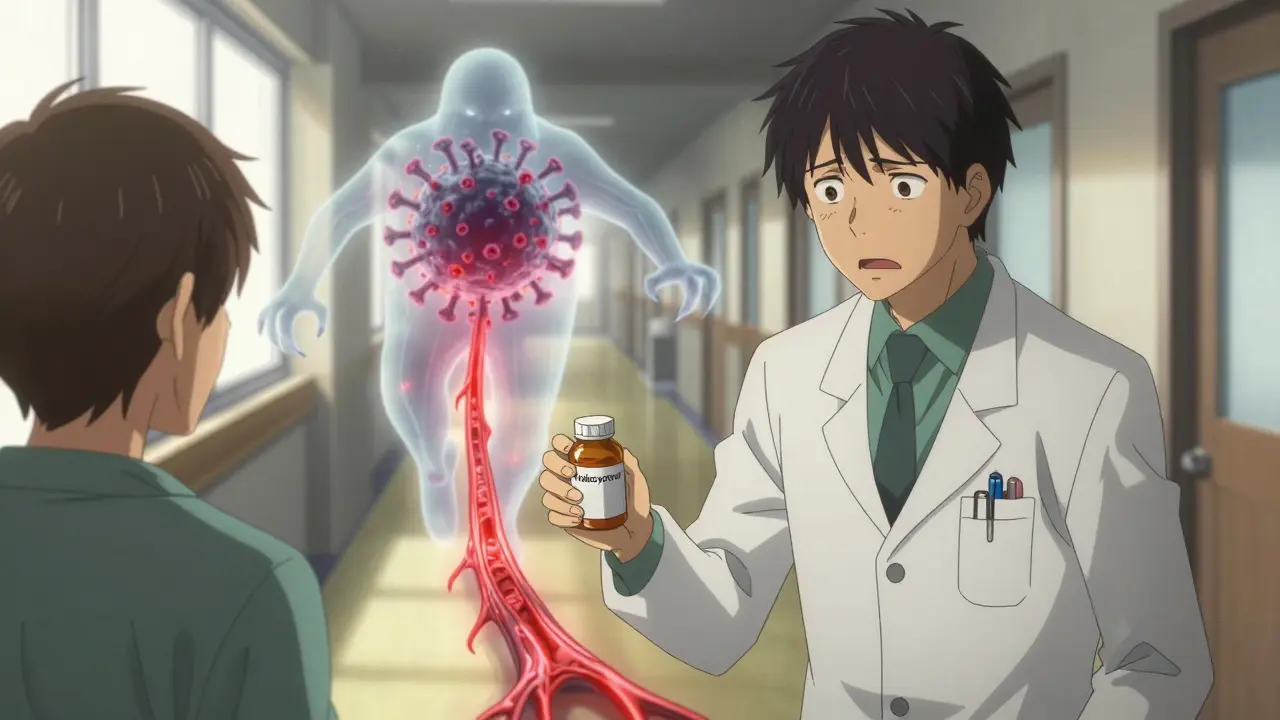
The Eye Problem: Shingles That Hits the Face
If the rash shows up near your eye, ear, or nose, treat it like an emergency. This is herpes zoster ophthalmicus (HZO). It can lead to corneal damage, glaucoma, vision loss-even blindness if ignored.
The Zoster Eye Disease Study (ZEDS), presented in late 2023, changed how doctors handle this. Researchers found that taking low-dose valacyclovir (500 mg daily) for 18 months reduced new or worsening eye disease by 26%. It also cut the need for pain meds like gabapentin by 22-25%. That’s huge. Older patients often can’t handle the dizziness or brain fog from those drugs. Reducing their use means better quality of life.
Now, experts are recommending long-term antiviral therapy for anyone with facial shingles-even after the rash heals. It’s not standard everywhere yet, but it’s becoming the new guideline.
Pain Management: Beyond the Antivirals
Antivirals help with the virus. But the pain? That’s a different battle. Shingles pain isn’t like a cut or a sprain. It’s neuropathic-nerve damage. It doesn’t respond well to regular painkillers like ibuprofen or acetaminophen.
Here’s what actually works:
- Gabapentin or pregabalin: These are seizure drugs that calm overactive nerves. Start low-300 mg a day-and slowly increase. Side effects: drowsiness, dizziness, swelling. Worth it if the pain is unbearable.
- Amitriptyline: An old-school antidepressant that helps with nerve pain. Take it at night. It makes you sleepy, but that’s part of the benefit. Doses range from 25 to 75 mg.
- Lidocaine patches: Stick these on the painful area for 12 hours, then take off for 12. They numb the skin without affecting your whole body. Great for localized pain.
- Capsaicin cream (0.075%): Made from chili peppers. It burns at first-then desensitizes the nerves. Use it 3-4 times a day. Don’t touch your eyes after applying.
Opioids? Only for a few days. They don’t fix nerve pain well, and the risk of addiction is real. Doctors avoid them unless you’re in extreme pain and have no other options.
Can Shingles Pain Last Forever?
Yes. About 10-18% of people get post-herpetic neuralgia (PHN)-pain that lasts three months or longer. For those over 60, that number jumps to 30%. PHN isn’t just annoying. It can ruin sleep, make you depressed, stop you from working or even hugging your grandkids.
Here’s the confusing part: Some studies say antivirals don’t prevent PHN. Others say they do. The Cochrane Review says acyclovir doesn’t stop it. But the 2011 PubMed review found early treatment reduces the risk. The truth? It’s not all or nothing. Early antivirals lower the chance, especially if you’re younger and healthy. But they don’t guarantee you’ll escape it.
Patients on forums like Reddit and PatientsLikeMe report mixed results. 62% say early treatment saved them from chronic pain. 38% still got PHN. That’s why prevention matters more than treatment.
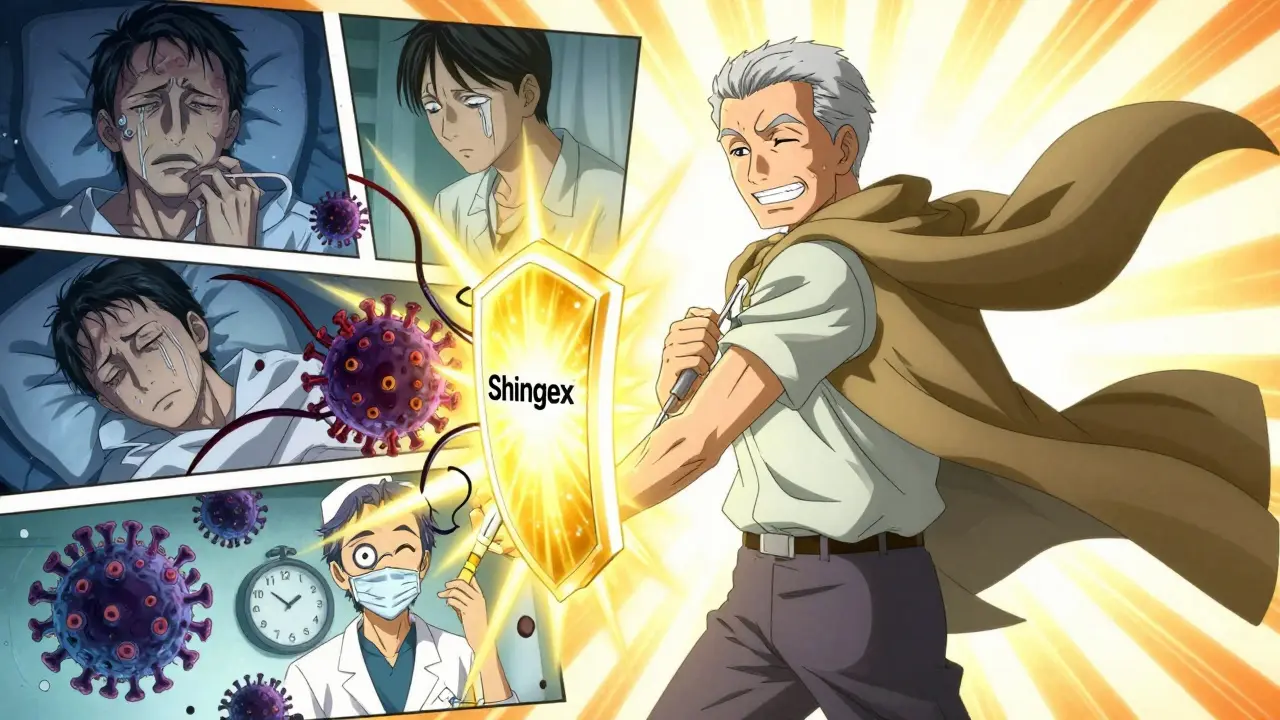
The Best Defense: The Shingrix Vaccine
The best way to avoid shingles? Don’t get it in the first place. The Shingrix vaccine is over 90% effective at preventing shingles-even in people over 70. It’s two shots, given 2 to 6 months apart. Even if you’ve had shingles before, you should still get it. It prevents recurrence.
It’s not perfect. You might get soreness, fatigue, or a fever for a day or two after the shot. But that’s nothing compared to weeks of burning pain. The CDC recommends Shingrix for everyone 50 and older, no matter if you had chickenpox, the old vaccine (Zostavax), or shingles.
And if you’re immunocompromised? Talk to your doctor. Shingrix is safe for most people with weakened immune systems. It’s the only shingles vaccine you should get now. Zostavax is outdated and less effective.
What Happens If You Ignore It?
Some people think, “It’ll go away on its own.” And yes, the rash will heal. But the nerve damage? That might not. You could end up with:
- Chronic pain (PHN)
- Scarring or skin discoloration
- Eye damage or vision loss
- Facial paralysis (if the virus hits the facial nerve)
- Brain or spinal cord inflammation (rare, but serious)
And the cost? A 7-day course of valacyclovir costs $85-$150 with insurance. But if you end up with PHN, you’re looking at $1,500-$5,000 a year in pain meds, doctor visits, and lost work. Early treatment saves money-and your life.
Bottom Line: What You Should Do Right Now
If you think you have shingles:
- Look for pain, tingling, or burning on one side of your body-before the rash.
- Call your doctor immediately. Don’t wait for the rash to appear.
- Get antivirals started within 72 hours. Valacyclovir is the easiest and most effective.
- Ask about pain management: gabapentin, lidocaine patches, or amitriptyline.
- If the rash is near your eye, go to an eye specialist right away.
- Get the Shingrix vaccine if you’re 50+ and haven’t had it.
Shingles isn’t something you can tough out. It’s a medical event. The sooner you act, the less you suffer. And if you’ve already had it? Get vaccinated. You won’t regret it.




Samantha Hobbs
December 28, 2025 AT 22:26I got shingles last year and waited too long because I thought it was just a bug. Big mistake. The pain felt like someone was stabbing me with a hot nail every time I breathed. Valacyclovir didn’t fix it overnight, but it kept it from getting worse. Still got PHN though. Don’t be like me.
Nicole Beasley
December 29, 2025 AT 01:41OMG YES 🙌 I had shingles on my neck and thought it was a heat rash. Then the burning started and I cried for 3 hours straight. Got antivirals at 68 hours and still felt like a ghost for weeks. Shingrix is now my religion. 💉✨
sonam gupta
December 29, 2025 AT 17:06Why do Americans make everything so complicated? In India we just use neem paste and turmeric. No pills. No doctors. Just nature. This post is too much medicine for a simple virus.
Julius Hader
December 30, 2025 AT 12:30I’m not saying this to sound preachy but if you’re over 50 and haven’t gotten Shingrix you’re basically gambling with your nerves. I got mine at 52 and I’m still pain-free. Your body isn’t a suggestion box. Get the shot. 😊
Vu L
January 1, 2026 AT 07:5172 hours? Nah. My cousin waited 10 days and it went away. I think this whole thing is Big Pharma pushing pills. You don’t need antivirals. You need to chill out and let your immune system do its job. Also gabapentin makes you feel like a zombie. Avoid.
James Hilton
January 1, 2026 AT 21:20Shingles: nature’s way of saying ‘you’re not a teenager anymore.’ Congrats, your body just hit you with a 2000-page manual written in pain. Now go get the vaccine before your spine starts writing Yelp reviews about your nerves.
Mimi Bos
January 2, 2026 AT 17:00i got shingles and used the lidocaine patches and they were a lifesaver but i spelled it lidoacaine in my journal and now i cant unsee it
Payton Daily
January 3, 2026 AT 19:02You know what’s really scary? That this virus has been living inside you since you were a kid. Like a silent roommate who never pays rent but shows up when you least expect it. And now it’s screaming through your nerves like it’s auditioning for a horror movie. We’re all just walking time bombs with chickenpox baggage. The vaccine isn’t prevention-it’s damage control. And honestly? We’re all just one stress-induced cortisol spike away from becoming a cautionary tale.
Kelsey Youmans
January 5, 2026 AT 11:02Thank you for this meticulously researched and clinically accurate summary. The distinction between viral replication kinetics and neuropathic pain pathways is particularly well-articulated. I would only add that psychological support should be considered an adjunctive therapy, as chronic pain often precipitates depressive symptomatology requiring multidisciplinary intervention.
Sydney Lee
January 5, 2026 AT 20:49It’s ironic that people treat this like a medical emergency when they ignore the real crisis: our collective abandonment of holistic immunity. You think a pill stops shingles? No. It’s sleep. It’s sunlight. It’s not living in a fluorescent-lit cubicle while sipping energy drinks. The virus didn’t wake up because of age-it woke up because you gave up. And now you want a prescription? Pathetic.
oluwarotimi w alaka
January 6, 2026 AT 12:39shingles is a western disease caused by vaccines and 5g towers. in africa we dont get it because we dont have the poison in our water. the real cure is traditional herbs and prayer. dont trust these american doctors they want you addicted to pills
Debra Cagwin
January 7, 2026 AT 21:53If you’re reading this and you’re over 50, please don’t wait. I know it’s scary to go to the doctor, and the vaccine can be uncomfortable-but it’s nothing compared to the pain you might avoid. You’re not too old, too busy, or too tough. You’re worth protecting. Get the shot. You’ve earned it.