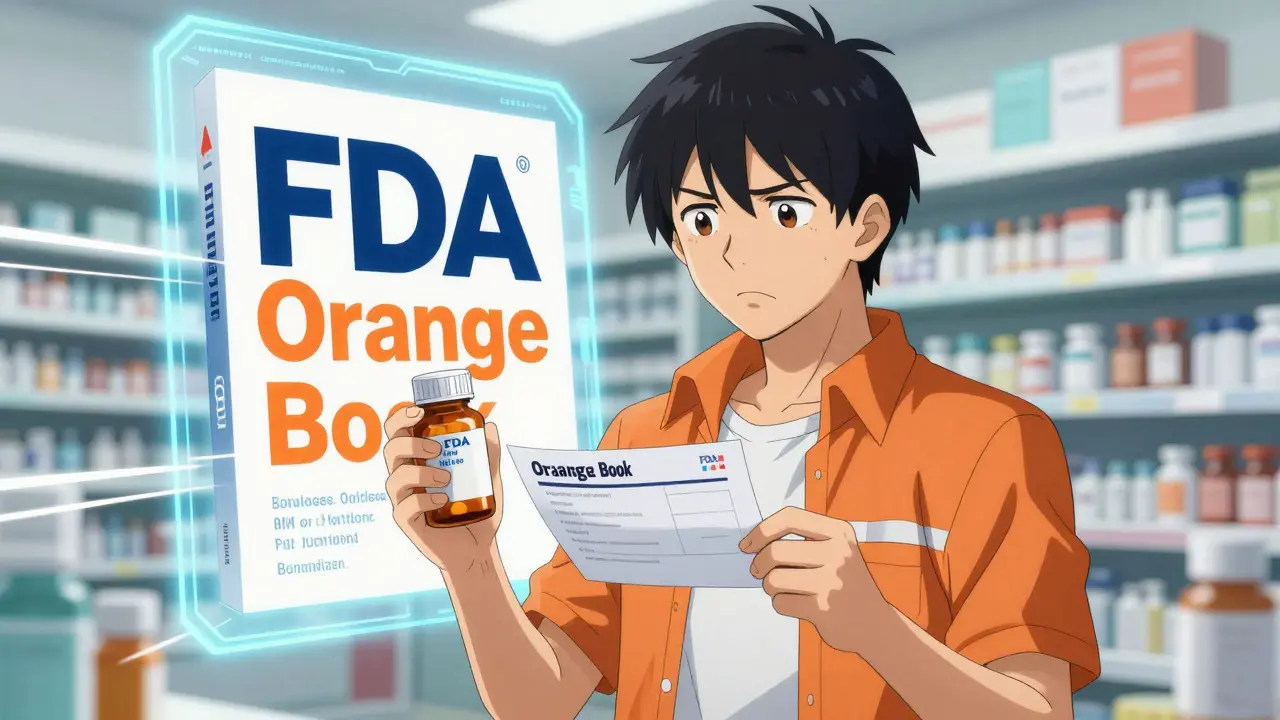
Have you ever picked up a prescription and noticed the pharmacy handed you a pill with a different name or color than what your doctor wrote? It happens more often than you think. In fact, generics make up about 90% of all prescriptions filled in the United States. But how do you know that cheaper alternative is actually just as good as the brand-name version? The answer lies in a specific government document known as the FDA Orange Book, officially titled Approved Drug Products with Therapeutic Equivalence Evaluations. This publication is the gold standard for determining if a generic drug is therapeutically equivalent to its brand-name counterpart.
Verifying this equivalence isn't just about saving money; it's about safety and efficacy. The process involves navigating a database established by the U.S. Food and Drug Administration (FDA) under the Hatch-Waxman Act of 1984. While the system seems straightforward on paper, many patients and even healthcare professionals get tripped up by the coding systems and search parameters. Let’s break down exactly how to use this tool to verify that your medication is safe, effective, and truly interchangeable.
Understanding the Core Components of the Orange Book
Before you start searching, you need to understand what you are looking at. The Orange Book is not just a list of drugs; it is a complex regulatory tool managed by the Center for Drug Evaluation and Research (CDER). Its primary job is to provide transparency regarding patent information, exclusivity periods, and most importantly for us, therapeutic equivalence ratings.
The heart of the verification process is the concept of the Reference Listed Drug (RLD). When a new drug is approved, the FDA designates one product as the RLD. This is usually the original brand-name drug. All generic versions must be compared against this RLD to prove they work the same way. If a generic meets strict criteria-such as having the same active ingredient, dosage form, route of administration, and bioequivalence-it earns a specific code. Without this code, substitution is generally not recommended or legally permitted in many states.
It is also crucial to note that the Orange Book primarily covers prescription drugs. Over-the-counter (OTC) medications are listed but do not receive therapeutic equivalence ratings. This distinction matters because you cannot use the Orange Book to verify if two different brands of ibuprofen are equivalent in the same rigorous way you would for a heart medication.
Decoding the Therapeutic Equivalence Codes
The most critical part of the Orange Book is the two-letter Therapeutic Equivalence (TE) code. This code is the FDA’s official scientific judgment on whether a generic can be substituted for the brand. Here is what you need to look for:
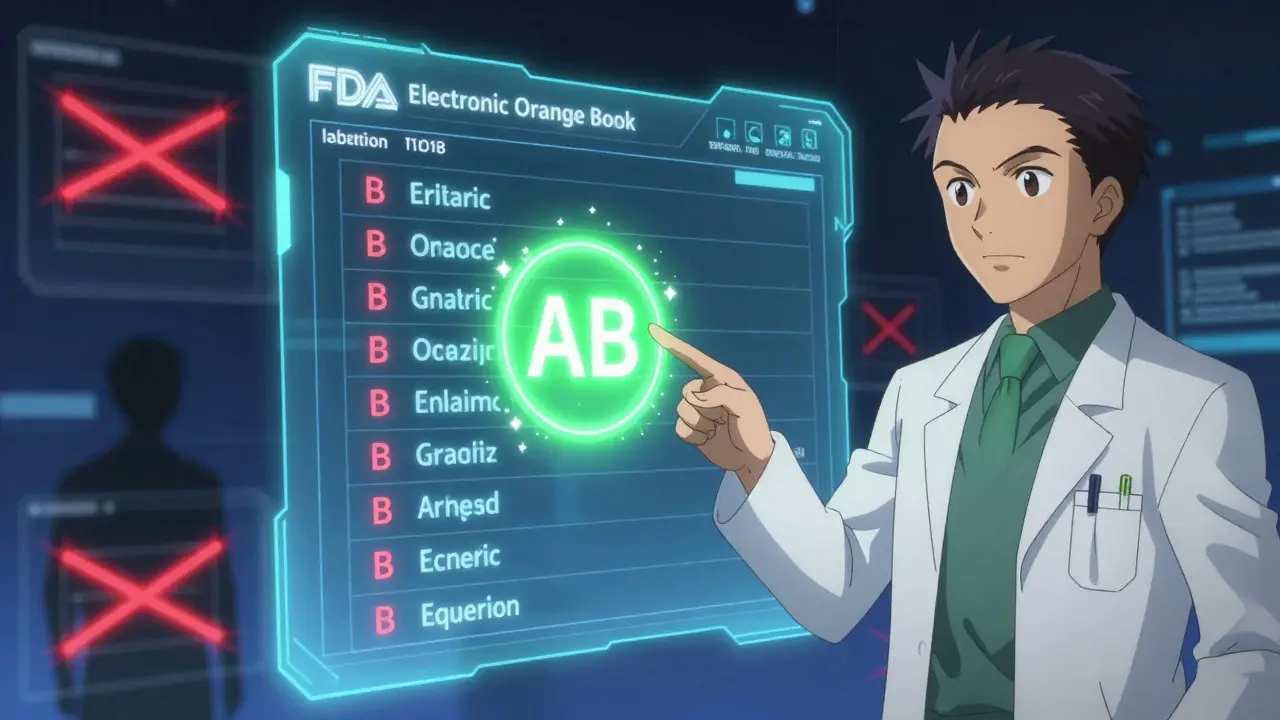
- AB Rating: This is the gold standard. An "AB" code means the generic is considered therapeutically equivalent to the reference listed drug. You can expect the same clinical effect and safety profile. This is the code you want to see for almost all standard substitutions.
- BX Rating: A "B" code indicates that the FDA has determined the products are NOT therapeutically equivalent. This might be due to potential bioequivalence issues or differences in inactive ingredients that could affect performance. Avoid these unless specifically directed by a specialist.
- AN, AX, etc.: These codes apply to narrow therapeutic index drugs or specific formulations where equivalence is harder to establish. They require careful scrutiny.
If you see numbers attached to the code, like AB1 or AB2, it means there are multiple Reference Listed Drugs for that same active ingredient. The number tells you which specific brand the generic was tested against. For example, an AB1 generic is equivalent to RLD #1, while an AB2 generic is equivalent to RLD #2. Understanding this nuance is vital when switching between different manufacturers.
Step-by-Step Guide to Verifying Equivalence
Now that you know the codes, let’s walk through the actual search process. The FDA maintains an electronic version called the Electronic Orange Book, which is updated daily. Here is how to use it effectively:
- Identify the Brand Name: Start by going to the FDA’s Electronic Orange Book website. Use the "Proprietary Name" search field to enter the brand name of your current medication. This will pull up the details for the Reference Listed Drug.
- Note the Active Ingredient: Look at the "Active Ingredient(s)" column. Copy this exact name. This is the chemical substance that makes the drug work. You will use this to find all generic alternatives.
- Perform an Ingredient Search: Go back to the search bar and select "Ingredient Search." Paste the active ingredient name here. This will generate a long list of every approved product containing that ingredient.
- Filter by Dosage Form: The results will include pills, liquids, injections, and more. Scroll to find the section that matches your prescription’s dosage form (e.g., Tablet) and route of administration (e.g., Oral). Only compare apples to apples.
- Check the TE Code Column: Look at the final column labeled "Therapeutic Equivalence Code." Find the generic manufacturers you are considering. If they have an "AB" code, they are therapeutically equivalent to the RLD identified in step one.
- Verify RLD Status: Ensure the brand-name drug has "Yes" in the RLD column. Generics will show "No." This confirms you are comparing against the correct benchmark.
This process typically takes about 5 to 10 minutes once you are familiar with the interface. The FDA recommends allocating extra time for your first few searches to ensure accuracy.
Common Pitfalls and Expert Insights
Even with a clear guide, mistakes happen. Regulatory experts and pharmacists frequently point out several common errors that can lead to confusion or unsafe substitutions.
| Error Type | Description | Impact |
|---|---|---|
| Confusing Patent Dates with Exclusivity | Mistaking when a patent expires for when a generic can legally launch. | Incorrect assumptions about market availability. |
| Ignoring State Laws | Assuming an AB-rated generic can always be substituted automatically. | Legal issues or refusal by pharmacist to substitute. |
| Overlooking Discontinued Drugs | Searching for a drug that is no longer manufactured. | No TE code appears, causing confusion. |
| Mixing OTC and Rx Data | Expecting therapeutic equivalence codes for over-the-counter meds. | False sense of security regarding OTC swaps. |
One major caveat is state law. As Dr. Rachel Sherman, former FDA Associate Commissioner, noted, the TE code is the FDA’s judgment, but state laws dictate substitution practices. Some states prohibit automatic substitution for certain high-risk drugs, such as those with a narrow therapeutic index (like levothyroxine for thyroid conditions), even if they carry an AB rating. Always check your local regulations or ask your pharmacist.
Another issue arises with complex delivery systems, such as inhalers or topical creams. Bioequivalence is harder to prove for these forms. A 2022 survey by the American Pharmacists Association found that 42% of pharmacists reported difficulties interpreting TE codes for these complex products. If you use an inhaler, do not rely solely on the Orange Book; consult your respiratory specialist before switching brands.

Navigating Patent and Exclusivity Information
While therapeutic equivalence is the main goal for most users, the Orange Book also lists patent expiration dates and exclusivity periods. Why does this matter to you? Because these dates determine when generics become available.
Under the Hatch-Waxman framework, brand-name companies list patents related to their drug in the Orange Book. Generic manufacturers must certify that they do not infringe on these patents. Sometimes, patents are listed that are irrelevant to the drug itself, leading to delays in generic competition-a practice known as "product hopping." The Federal Trade Commission has criticized this, noting that inaccurate listings can delay access to affordable generics.
When verifying equivalence, keep an eye on the "Patent Expiration Date" column. If a patent is still active, it doesn’t mean the generic isn’t equivalent; it just means legal barriers exist. However, if you are waiting for a specific generic to come to market, tracking these dates can help you anticipate when prices might drop.
Practical Tips for Patients and Caregivers
You don’t need to be a regulatory lawyer to use this information. Here are some practical ways to leverage the Orange Book in your daily life:
- Ask Your Pharmacist: Pharmacists use tools linked to the Orange Book data. Ask them, "Is this generic AB-rated?" If they hesitate, ask why.
- Monitor Side Effects: Even with an AB rating, inactive ingredients (fillers, dyes) differ. If you switch from a brand to a generic and feel different, report it. The FDA collects adverse event reports.
- Use Reliable Sources: Third-party sites like Drugs.com mirror Orange Book data, but they can lag by 24-72 hours. For critical decisions, go directly to the FDA’s Electronic Orange Book.
- Keep a Record: Save the TE code and manufacturer name of the generic that works best for you. This helps maintain consistency across different pharmacies.
Remember, the Orange Book is a powerful tool for transparency. It empowers you to make informed decisions about your health care costs and outcomes. By understanding the AB code and the role of the Reference Listed Drug, you take control of your medication management.
What does an AB rating mean in the FDA Orange Book?
An AB rating means the generic drug is therapeutically equivalent to the reference listed drug (brand name). It has been proven to be bioequivalent, meaning it delivers the same amount of active ingredient into the bloodstream in the same amount of time. You can expect the same clinical effect and safety profile.
Can I trust third-party websites for Orange Book data?
Third-party sites like Drugs.com or WebMD are convenient but may have data delays of 24 to 72 hours compared to the official FDA Electronic Orange Book. For critical medical decisions, especially regarding narrow therapeutic index drugs, always verify with the official FDA source or a licensed pharmacist.
Why are some generics not substitutable even with an AB rating?
State laws vary. Some states restrict automatic substitution for certain drug classes, such as antiepileptics or thyroid medications, due to concerns about narrow therapeutic indices. Additionally, doctors may write "Dispense as Written" on prescriptions to prevent substitution based on patient history or preference.
Does the Orange Book cover over-the-counter (OTC) drugs?
The Orange Book lists OTC drugs, but it does not assign therapeutic equivalence codes to them. Therefore, you cannot use the Orange Book to verify if one OTC brand is equivalent to another. OTC equivalency is determined by other FDA monographs and labeling standards.
What is a Reference Listed Drug (RLD)?
The RLD is the original brand-name drug approved by the FDA. All generic versions must demonstrate bioequivalence to this specific product. The Orange Book identifies the RLD with a "Yes" in the RLD column. If multiple brands exist, they are numbered (RLD 1, RLD 2) to clarify which generic was tested against which brand.