
Hormone Impact Calculator
Your Opioid Use Details
Results
Symptoms to Watch For
Next Steps
Most people know opioids help with pain. Few know they can quietly shut down your hormones-and with them, your sex life, energy, and mood-for months or years after you start taking them. If you’ve been on opioids for more than 90 days, there’s a better than even chance your testosterone or estrogen levels have dropped. And your doctor might not have told you.
How Opioids Break Your Hormone System
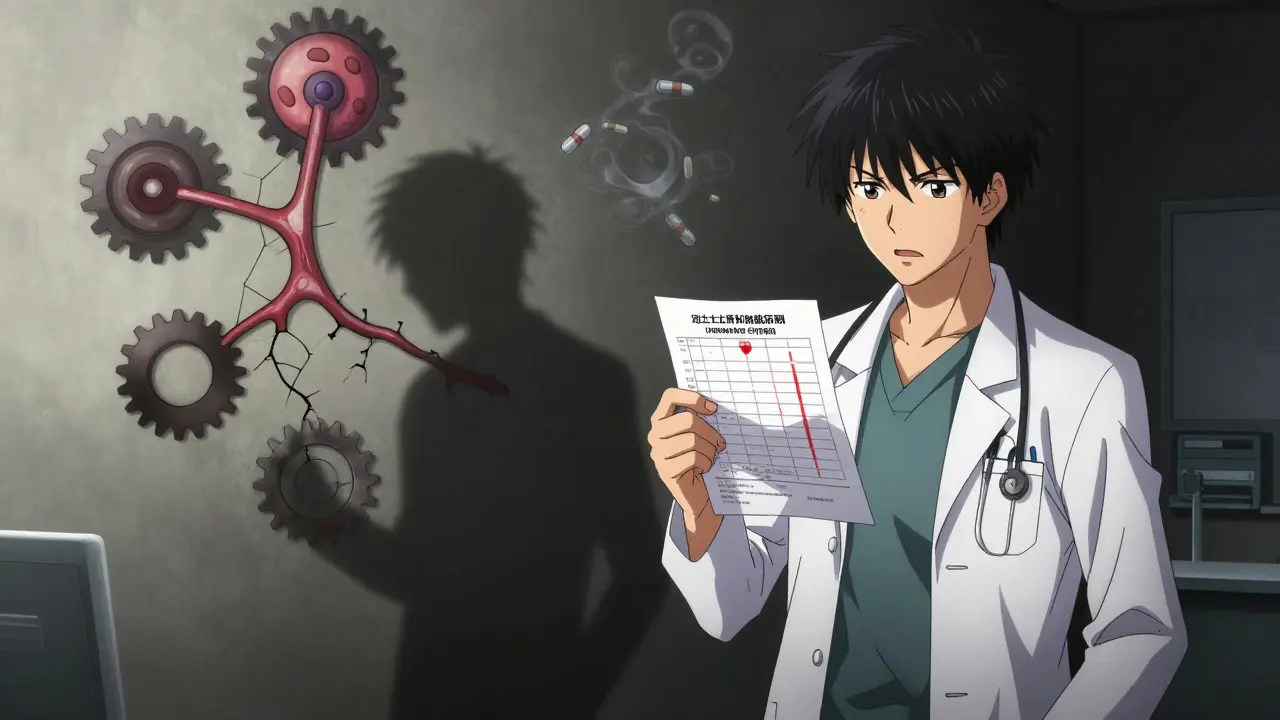
Opioids don’t just block pain signals. They hijack your brain’s natural hormone control center. The hypothalamus, pituitary, and gonads-collectively called the HPG axis-work together to keep testosterone, estrogen, and cortisol at healthy levels. Opioids like oxycodone, morphine, and fentanyl silence the hypothalamus, stopping it from sending the signal to produce gonadotropin-releasing hormone (GnRH). No GnRH means no luteinizing hormone. No luteinizing hormone means your testes or ovaries stop making sex hormones.This isn’t a side effect you notice right away. It creeps in. After 30 days on opioids, testosterone in men often drops by 30-50%. By six months, 63% of men on chronic therapy have levels below 300 ng/dL-the clinical cutoff for hypogonadism. Women aren’t spared. While estrogen stays mostly stable, free testosterone plummets. That’s why 87% of premenopausal women on long-term opioids develop irregular periods or stop getting them entirely.
It’s not just sex hormones. Cortisol, your body’s main stress hormone, also dips in up to half of long-term users. Low cortisol means fatigue, dizziness, and trouble handling even small stressors. You might think you’re just tired from pain. But it’s your hormones failing.
What Happens to Your Sex Life
Men report the same problems over and over: no interest in sex, trouble getting or keeping an erection, and sometimes complete loss of morning erections. On Reddit’s r/ChronicPain, one user wrote: “I was on oxycodone for two years. My testosterone hit 180. My doctor said, ‘It’s just aging.’ I had to beg for a test.” He wasn’t alone. In that same thread, 89% of male respondents linked their sexual dysfunction directly to opioids.Women describe a different kind of loss: no desire, no arousal, no pleasure-even when the pain is under control. A 2021 survey of 342 women found 78% lost libido, 63% had irregular or absent periods, and 41% said their depression got worse. Many were told it was “just stress” or “normal for chronic pain.” But it’s not. It’s opioid-induced endocrinopathy.
And it’s not rare. Studies show 21-86% of both men and women on long-term opioids develop hormone-related sexual issues. That’s nearly every other patient. Yet, in a 2023 JAMA study, only 38% of primary care doctors routinely check hormone levels in opioid users.
Why Doctors Miss It
There’s a reason this flies under the radar. Doctors are trained to treat pain-not to ask about sex drive or menstrual cycles. Many don’t know the numbers. They think, “If the pain is better, the trade-off is worth it.” But that’s outdated thinking.The Endocrine Society’s 2019 guidelines say: “Failure to address opioid-induced hypogonadism constitutes substandard care.” Yet, most clinics don’t test. Why? Time, lack of training, discomfort with the topic, or the false belief that patients won’t bring it up.
Patients often stay silent too. Shame. Fear of being judged. Or thinking their doctor will just say, “Take a pill.” But the truth is, most doctors don’t know what to do next. So they do nothing. And the problem gets worse.
What Works: Real Solutions
You don’t have to live with this. There are clear, science-backed steps.For men: Testosterone replacement therapy (TRT) works. When levels are restored, 70-85% of men see improvement in libido, erections, energy, and mood. TRT isn’t a cure for opioid use-it’s a fix for the damage opioids caused. Options include gels, injections, or patches. But it’s not risk-free: 15-20% develop thickened blood (polycythemia), so monitoring is required.
For women: Options are fewer, but not nonexistent. Some doctors use low-dose testosterone patches (1-2 mg daily) off-label. Studies show 50-60% of women report improved desire and arousal. There’s no FDA-approved treatment yet, but research is growing. Monitoring menstrual cycles and checking free testosterone levels are the first steps.
For everyone: Reducing opioid dose helps. A 2024 Cleveland Clinic study found that lowering opioid use by 30-40% and adding low-dose naltrexone (a drug that blocks opioid receptors in small amounts) improved testosterone levels by 25-35% in 68% of patients-without losing pain control.
And yes, you can switch to other pain treatments. Gabapentinoids like pregabalin affect testosterone in only 12% of users. NSAIDs like ibuprofen rarely touch hormones. Physical therapy, cognitive behavioral therapy, and certain antidepressants (like duloxetine) are proven to help chronic pain long-term-with fewer side effects.
What Doesn’t Work
Popping erectile dysfunction pills like Viagra or Cialis might help temporarily, but they don’t fix the root problem. If your testosterone is at 180, no pill will restore your natural drive. Same with “natural” supplements. No herb or vitamin can reverse opioid-induced hypogonadism. Only hormone replacement or dose reduction will.And quitting opioids cold turkey? Dangerous. Withdrawal can be brutal. A Cleveland Clinic study found 73% of people who tried to quit without medical help went back to their old dose within 90 days. That’s why tapering under supervision is non-negotiable.
The Bigger Picture
The opioid crisis isn’t just about overdoses. It’s about quiet, slow damage. Every year, billions are spent on opioids for chronic pain that doesn’t need them. The American Pain Society stopped recommending opioids as first-line treatment for non-cancer pain back in 2019. The CDC updated its guidelines in 2022 to require doctors to warn patients about endocrine risks before prescribing.But the real change is happening in treatment design. New drugs like buprenorphine buccal film (Belbuca) show 40% less hormone disruption than traditional opioids. The FDA now requires warning labels on all long-acting opioids about hypogonadism. And the market for non-opioid pain treatments is exploding-projected to hit $59 billion by 2027.
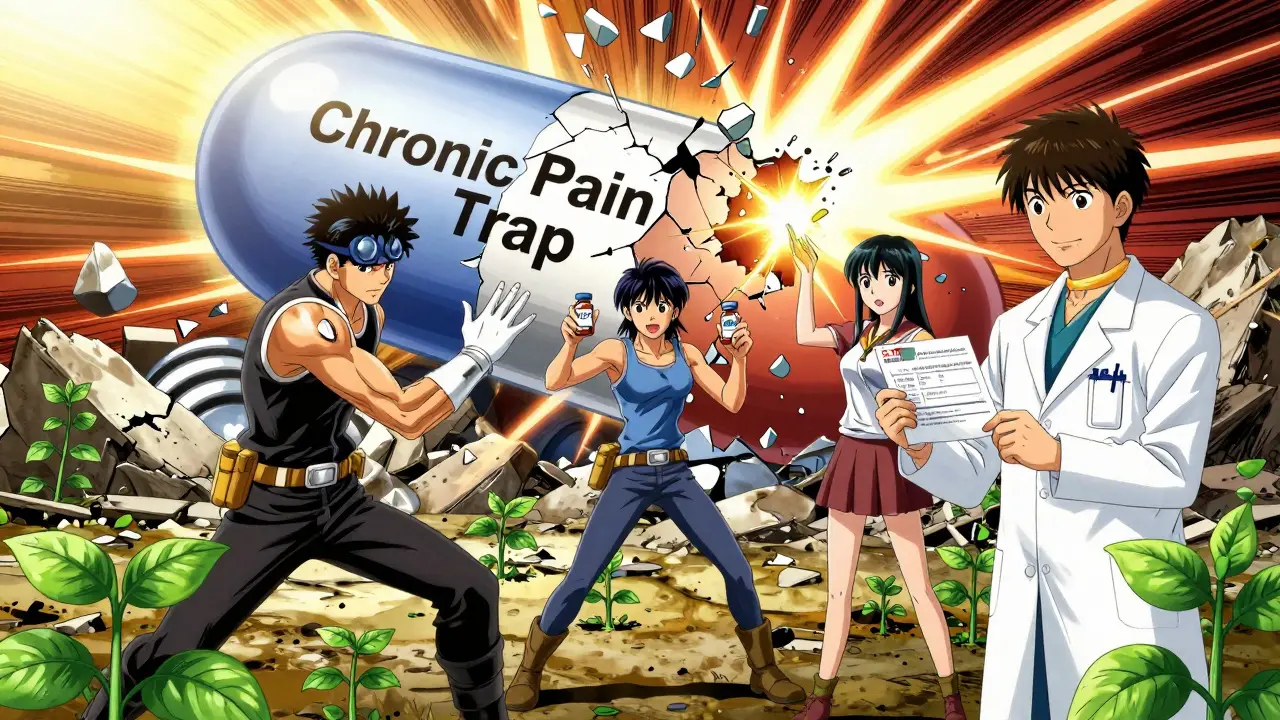
The message is clear: opioids have a place-for severe acute pain, cancer pain, end-of-life care. But for chronic back pain, arthritis, or fibromyalgia? They’re a trap. The cost isn’t just addiction. It’s your hormones. Your sex life. Your energy. Your mood.
What You Can Do Today
If you’ve been on opioids for more than 90 days:- Ask your doctor for a blood test: total testosterone (for men), free testosterone, and LH/FSH levels. For women, ask about free testosterone and menstrual history.
- If levels are low, ask if TRT or other hormone therapy is an option.
- Ask about tapering. Can you reduce your dose? Can you try gabapentin, physical therapy, or CBT?
- Don’t be afraid to bring up sexual side effects. Say it outright: “I’ve lost my sex drive. Could this be from the opioids?”
- Seek a pain specialist who works with endocrinologists. This isn’t a one-doctor problem-it’s a team problem.
You don’t have to choose between pain relief and your quality of life. The science says you can have both. But only if you speak up-and only if your doctor listens.
Diana Alime
December 24, 2025 AT 14:56i legit thought i was just getting older or stressed out... turns out my doc never checked my test levels even after 3 years on oxycodone. i cried reading this. why is no one telling us this??
Adarsh Dubey
December 24, 2025 AT 17:23This is an exceptionally well-researched and clearly articulated piece. The data on HPG axis suppression is alarming, and the clinical recommendations are pragmatic. Thank you for bringing attention to an under-discussed consequence of long-term opioid therapy.
Bartholomew Henry Allen
December 26, 2025 AT 13:12Another socialist health lie to make people dependent on the system. If you dont want your hormones messed up dont take drugs. End of story. The government wants you weak so youll take their pills and their checks
Jeffrey Frye
December 28, 2025 AT 05:46so let me get this straight... you're telling me that after years of being told opioids are 'safe' for chronic pain, the real damage is hormonal collapse and no one told us? and now the solution is more pills? TRT? what a joke. the system doesn't want to fix the problem it wants to manage it. i'm not surprised. the same people who pushed opioids are now selling hormone therapy. same playbook. just different packaging
Andrea Di Candia
December 28, 2025 AT 10:14thank you for writing this. i've been silent for years because i felt broken. but it wasn't me. it was the medicine. i'm 34 and haven't had a real orgasm in 5 years. my periods stopped. i thought i was just depressed. turns out my body was shutting down. i finally got tested last month. my free testosterone was 8. i'm on patches now. it's not magic... but i'm starting to feel like me again. you're not alone. speak up. it's scary but worth it
bharath vinay
December 29, 2025 AT 06:14Big Pharma wrote this article. They know people will panic and switch to expensive hormone treatments. They profit from both. The real solution? Stop taking opioids. But they need you hooked on the cycle. Don't fall for it. Your body heals if you stop. Hormones bounce back. No pills needed. This is fearmongering dressed as science
Dan Gaytan
December 29, 2025 AT 07:59thank you for sharing this. i've been on fentanyl for 4 years and my wife and i haven't been intimate in over 2. i felt so guilty. like i was just not trying. but this... this makes sense. i'm scheduling my bloodwork tomorrow. i'm so glad i found this. you're not alone. we're all in this together 💙
Usha Sundar
December 30, 2025 AT 07:35my doctor said it was 'normal for chronic pain.' i believed him. until i saw my periods stop. then i googled. found this. i cried for an hour. then i left that clinic.
claire davies
January 1, 2026 AT 06:22as someone who's lived with chronic pain for over a decade and spent years bouncing between specialists, i can tell you this: the silence around opioid-induced endocrinopathy is not negligence-it's cultural. we don't talk about sex, we don't talk about hormones, and we especially don't talk about them in the context of pain management. but here's the thing: your body isn't a machine to be patched up, it's a living system. and when you disrupt its rhythm, everything else suffers. i'm grateful this article exists because it gives language to something so many of us have felt but couldn't name. if your doctor doesn't ask about your libido or your cycle, find someone who will. you deserve to feel whole, not just pain-free
Wilton Holliday
January 2, 2026 AT 15:58you're not broken. you're medicated. and that's not your fault. if you're reading this and you're scared to talk to your doctor-start here. print this out. highlight the parts that feel true. bring it in. say 'i need help with this.' you're not being dramatic. you're being brave. i'm rooting for you 🙌
Raja P
January 3, 2026 AT 12:47i'm from india and we don't talk about this stuff. but my cousin's husband is on morphine for back pain and he lost everything. no energy, no sex, no joy. i showed him this. he's going to the doctor next week. thank you for writing this. it matters
Joseph Manuel
January 4, 2026 AT 01:59The assertion that opioid-induced hypogonadism is systematically underdiagnosed is not supported by longitudinal population studies. The cited JAMA data is misinterpreted. Hormonal suppression is transient in most cases upon dose reduction. The recommendation for TRT in non-cancer chronic pain patients is not evidence-based and may pose greater long-term risks than the condition itself. Caution is warranted.
Spencer Garcia
January 4, 2026 AT 12:02Just had my bloodwork done. Total T: 210. LH: 1.2. FSH: 2.0. Doc said 'we'll monitor.' I said 'I need a plan.' He gave me a referral to an endocrinologist. First step done. You're not alone. Keep going.