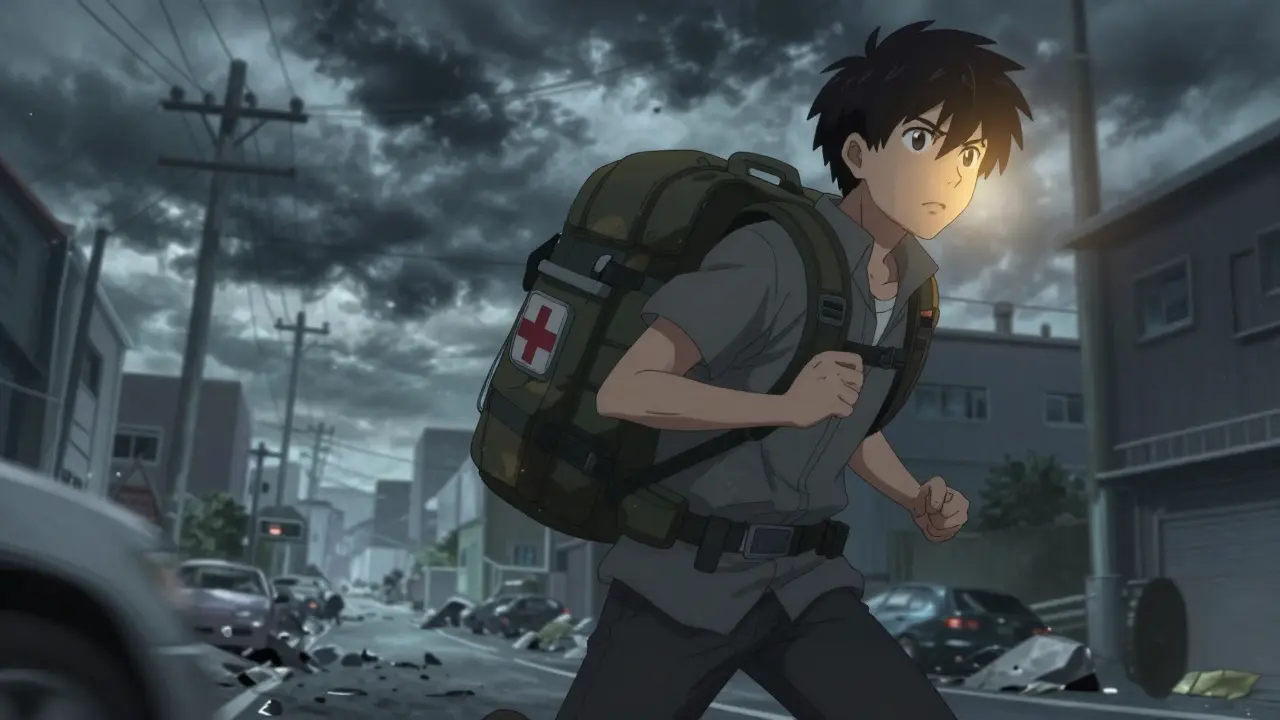
Imagine the power goes out. The roads are blocked. You have to leave your home right now. If you grab your keys and run, what happens to your heart medicine? Your insulin? Your asthma inhaler? For millions of people, missing just one dose can turn a stressful evacuation into a life-threatening crisis.
You don't need to be a survivalist to prepare for this. You just need a medication go-bag. This isn't about paranoia; it's about continuity of care. When pharmacies are closed and doctors are unreachable, your go-bag is the only thing standing between stability and a medical emergency. Let’s look at exactly what goes inside, how to store it safely, and why the standard advice might not be enough for you.
The Core Rule: How Much Medicine Do You Actually Need?
Most people think three days is enough. It’s not. The Federal Emergency Management Agency (FEMA) and the American Red Cross recommend a minimum 7-day supply of essential medications. But if you live in an area prone to earthquakes or prolonged flooding, like California or parts of Florida, experts suggest aiming for two weeks. Why the difference? Because infrastructure recovery takes time. After Hurricane Ian, many evacuees found themselves displaced for 11 days or more, far exceeding the typical 72-hour window.
If you take daily prescriptions, start by asking your doctor for 60- or 90-day refills instead of monthly ones. Fill them on the first day you’re eligible. This creates a buffer stock that you can split between your home cabinet and your go-bag. Remember, you need enough to last until you can reach a pharmacy or a hospital where they can legally dispense emergency supplies.
- Minimum Standard: 7 days of all critical prescriptions.
- High-Risk Areas: 14 days for regions with frequent natural disasters.
- Chronic Conditions: Always lean toward the longer supply if space allows.
What Goes Inside: Beyond Just Pills
Your go-bag needs to do more than hold pills. It needs to communicate your health status to strangers who might save your life. A bag full of unmarked bottles is useless to an ER nurse who doesn’t know your name or your allergies.
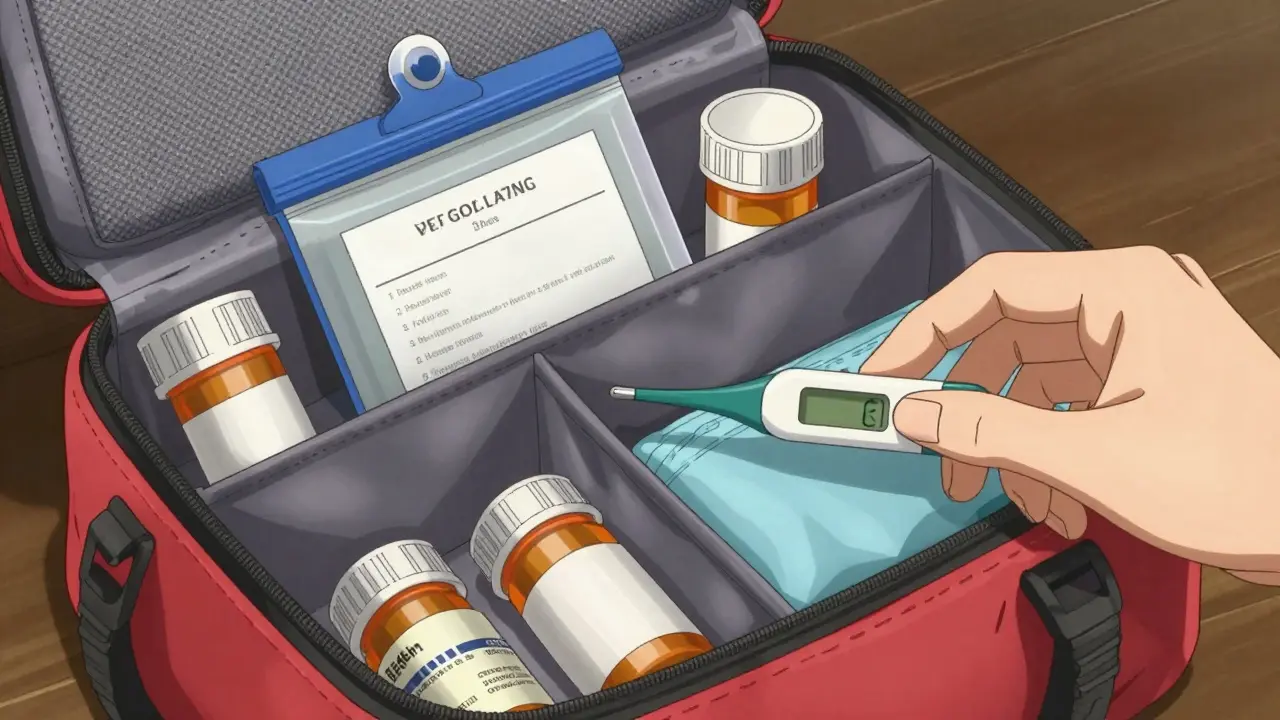
Start with the medications themselves. Keep them in their original containers with clear labels. This helps avoid confusion and proves authenticity if you need to transfer care. Include over-the-counter essentials too: pain relievers, antidiarrheals, antacids, and any specific remedies for your conditions.
But the most important item isn’t a pill. It’s paper. Or better yet, a waterproof digital backup. You need a detailed list that includes:
- Names and dosages of every medication.
- The reason you take each one (e.g., "for high blood pressure").
- Your primary care physician’s name and phone number.
- A list of drug allergies and reactions.
- Copies of insurance cards and ID.
AdventHealth Children’s Hospital emphasizes including advance directives if applicable. Store these documents in a waterproof container. If you lose your physical papers, having this info memorized or backed up to a secure cloud service can be a lifesaver.
Temperature Control: The Hidden Killer
This is where most people fail. Insulin, certain antibiotics, and some eye drops require refrigeration. If you pack them in a plastic bin and leave them in a hot car or a stuffy shelter, they degrade. Once they degrade, they stop working. And for someone with diabetes, that’s catastrophic.
You don’t need a fridge, but you do need smart tools. Products like the Frio Wallet use evaporative cooling to keep temperatures below 86°F for up to 48 hours without electricity. It’s simple physics, but it works. Test it before you rely on it. Wet the inner pouch, seal it, and check the temperature after a few hours in a warm room.
If you use injectable biologics, consider a small cooler with ice packs. Rotate the ice packs if possible. The key is monitoring. New devices like the MedAngel ONE can alert your smartphone if your meds get too hot, giving you time to act. Without temperature control, your expensive medication becomes nothing more than colored water.
| Category | Specific Items | Why It Matters |
|---|---|---|
| Prescriptions | 7-14 day supply in original bottles | Ensures continuity of critical treatments |
| Documentation | Med list, allergies, doctor contacts, insurance | Speeds up emergency care and prevents errors |
| OTC Meds | Pain relievers, antacids, anti-diarrheal | Treats common symptoms when pharmacies are closed |
| Cooling Tools | Frio Wallet, ice packs, thermometer | Prevents spoilage of temperature-sensitive drugs |
| Admin Devices | Inhalers, glucose meter, syringes | Allows you to actually use the medication |
Storage and Accessibility: Can You Grab It Fast?
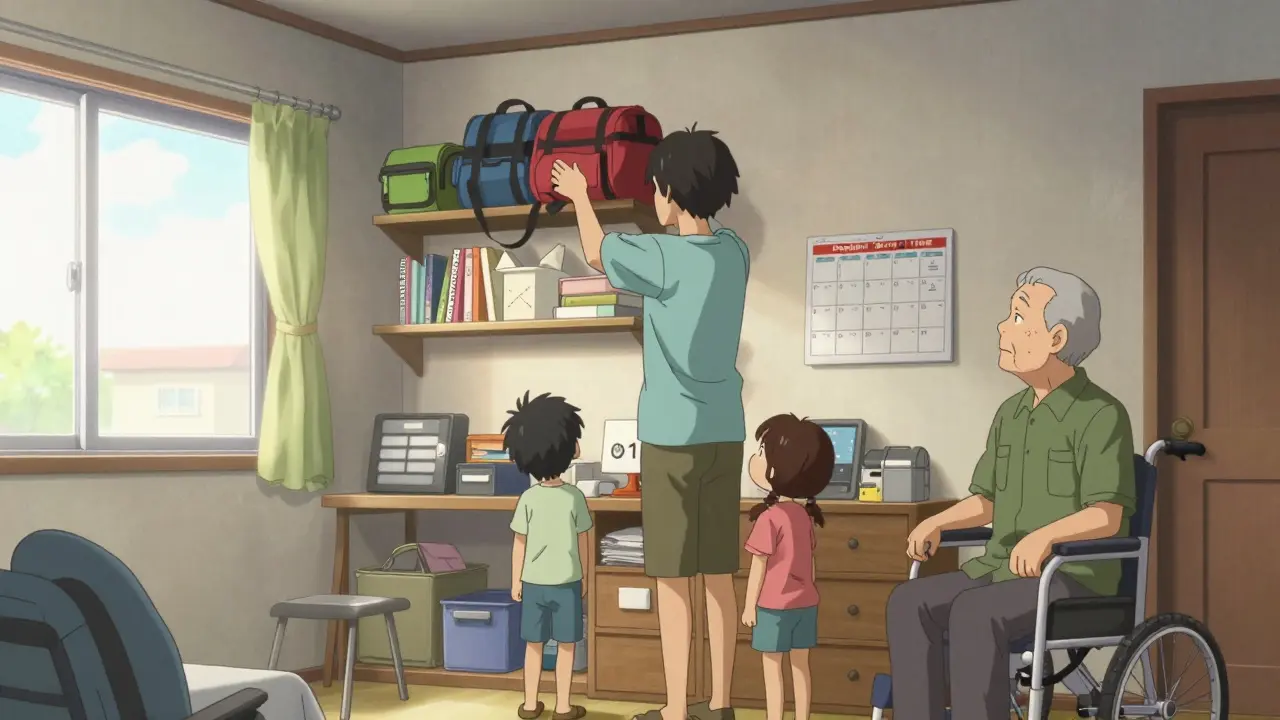
Your go-bag is useless if you can’t find it in the dark. Store it in a dry, cool place that is easy to access but safe from children. A high shelf in your bedroom closet is ideal. Avoid basements (flood risk) or attics (heat risk).
Use a water-resistant backpack or duffel. Hard-shell cases are durable but can be bulky. Soft bags are easier to carry while running. Make sure it’s labeled clearly. If you have multiple family members, color-code the bags or label them with names.
Check your bag twice a year. Set a reminder for when daylight saving time changes. Look for expired medications. Replace anything that’s past its date. Also, update your medication list. Did you start a new drug? Did your doctor change your dosage? Your go-bag must reflect your current health reality, not your health from six months ago.
Legal Realities: Can Pharmacists Help?
Here’s a piece of good news: you aren’t entirely on your own. In 42 states, pharmacists are allowed to dispense emergency supplies of maintenance medications without a new prescription during declared disasters. This is governed by state boards of pharmacy and federal guidance from the FDA. However, this depends on the pharmacy being open and having stock. Don’t count on it as your primary plan. Use your go-bag as your first line of defense, and know that emergency dispensing is a backup option if your supplies run out.
Geoffrey C. Wall, a pharmacy professor, notes that if a hurricane is predicted, you should stock up before it hits. Waiting until the storm is here means shelves will be empty. Proactive planning beats reactive scrambling every time.
Special Considerations for Families
If you have children, elderly parents, or pets, your go-bag needs expand. For kids, include pediatric versions of OTC meds and a copy of their immunization records. For seniors, who make up 89% of Americans taking at least one prescription, ensure mobility aids like crutches or walkers are accessible near the bag. For pets, include their flea/tick preventatives and any chronic condition meds. Don’t forget a carrier or leash.
Practice makes perfect. Do a drill. Pretend you have to leave in five minutes. Grab the bag. Check if everything is there. Is the flashlight working? Is the water fresh? Is the medication list up to date? These small checks build muscle memory so you don’t panic when real sirens wail.
How long should my medication go-bag supply last?
Aim for at least a 7-day supply of all critical prescriptions. If you live in a high-risk area for natural disasters, such as earthquake zones or flood plains, increase this to a 14-day supply. Infrastructure recovery often takes longer than expected, and pharmacies may remain closed for extended periods.
Do I need to keep my medications in their original bottles?
Yes, always keep medications in their original containers with clear labels. This provides crucial information to emergency responders, including dosage, expiration dates, and prescribing physician details. It also helps prevent accidental misuse or confusion between similar-looking pills.
How do I store temperature-sensitive medications like insulin?
Use non-electric cooling solutions like the Frio Wallet, which uses evaporative cooling to maintain safe temperatures for up to 48 hours. Alternatively, use a small cooler with ice packs. Monitor temperatures regularly to ensure medications do not exceed safe limits, as heat can degrade potency rapidly.
Can I get emergency prescriptions if my go-bag runs out?
In many states, pharmacists can dispense emergency supplies of maintenance medications without a new prescription during declared disasters. However, this depends on pharmacy availability and stock levels. Do not rely on this as your primary strategy; always aim to have sufficient supplies in your go-bag first.
What documents should I include besides medication lists?
Include copies of insurance cards, government-issued ID, contact information for your primary care physician, a detailed list of drug allergies, and any advance directives. Store these in a waterproof container to protect them from moisture and damage during evacuation.
How often should I update my medication go-bag?
Check and update your go-bag at least twice a year, ideally when daylight saving time begins and ends. Verify expiration dates, replace used or depleted items, and update your medication list to reflect any recent changes in your healthcare regimen.