
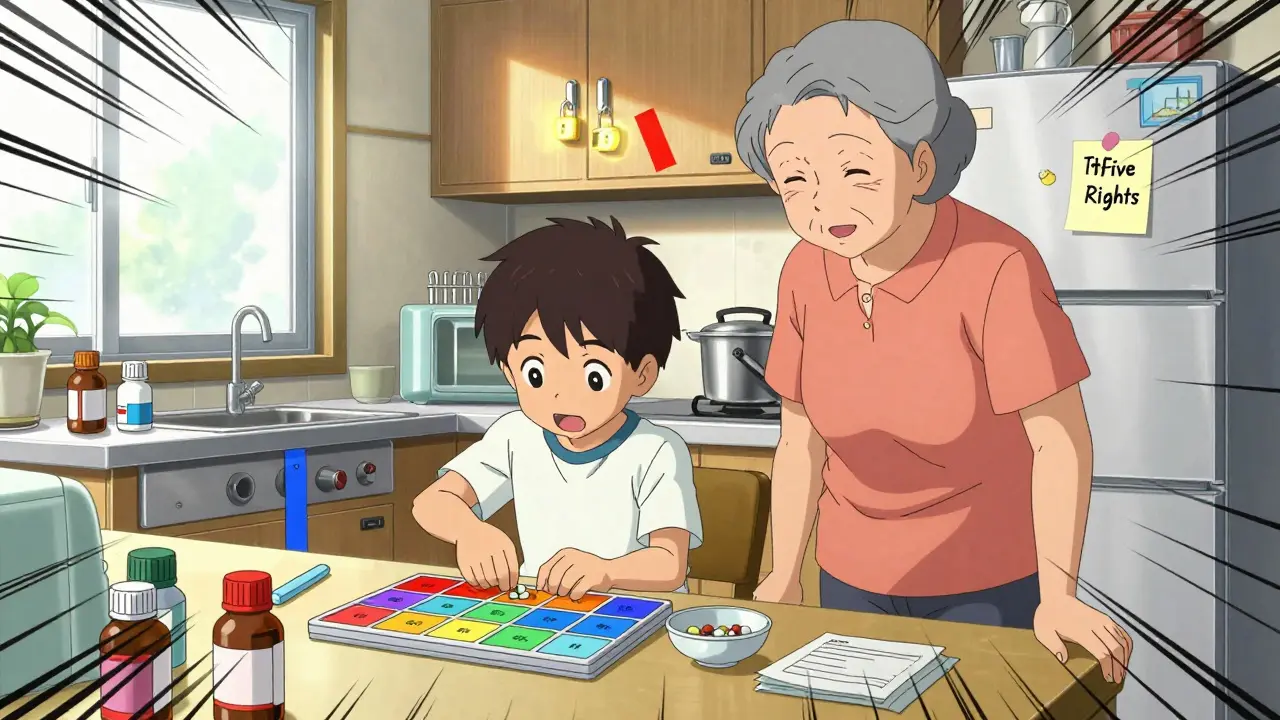
Why Your Family Needs a Medication Safety Routine
Every year, nearly 60,000 children in the U.S. end up in the emergency room after swallowing medicine they weren’t supposed to. Most of these accidents happen at home - not in a hospital, not at school, but right where you think it’s safest. A grandparent leaves pills on the counter. A toddler climbs up to reach a purse. A caregiver gets distracted and gives the wrong dose. These aren’t rare mistakes. They’re predictable ones - and they’re preventable.
Creating a safe medication routine isn’t about being paranoid. It’s about building simple, repeatable habits that protect everyone in your home, especially kids under five and older adults taking multiple drugs. The goal isn’t perfection. It’s reducing risk. One less accidental overdose. One fewer missed dose. One more night of sleep knowing your medicines are where they should be - and nowhere else.
Store Medicines Up and Away - and Locked
Putting medicine on a high shelf isn’t enough. Kids climb. They pull things down. They open drawers. According to Children’s Hospital Los Angeles, 25% of medication exposures happen because pills were left in purses, bags, or on countertops. The rule? Keep them up - and locked.
Use a locked cabinet or box that’s out of reach and out of sight. Don’t rely on child-resistant caps alone. Those are designed to slow down a curious child, not stop them. If you have opioids in the house, lock them separately. Keep naloxone (Narcan) nearby. It can reverse an overdose and save a life.
Also, avoid storing meds in the bathroom. Humidity from showers and sinks can make pills lose strength or break down. A bedroom closet, kitchen cabinet, or even a locked box in a high drawer works better. The CDC says storing medicines at eye level or higher reduces pediatric exposures by 34%. That’s not a guess - it’s data.
Know the Five Rights of Medication Administration
When you give medicine to someone in your family, ask yourself these five questions:
- Right child? Is this medicine for the person I’m giving it to? Don’t assume - check the name on the bottle.
- Right medication? Is this the one the doctor prescribed? Generic and brand names can look different.
- Right dose? Are you giving the amount written on the label? Never guess. Use an oral syringe, not a kitchen spoon.
- Right route? Is it meant to be swallowed, applied to the skin, or inhaled? Don’t mix them up.
- Right time? Are you giving it at the scheduled hour? A dose too early or too late can reduce effectiveness or cause side effects.
This isn’t just for nurses. It’s for every parent, grandparent, babysitter, or caregiver. Write these five rights on a sticky note and put it near your medicine cabinet. Repeat them out loud before each dose. It takes five seconds - and it can prevent a hospital visit.
Keep a Master Medication List
Most families don’t know exactly what everyone is taking. That’s dangerous. A 2022 JAMA study found 68% of older adults take five or more prescription drugs daily. Add in vitamins, supplements, and over-the-counter pain relievers, and you’ve got a recipe for dangerous interactions.
Create a master list. Include:
- Full name of each medicine (brand and generic)
- Dosage and frequency
- Why it was prescribed
- Start date
- Any side effects noticed
Keep this list on your fridge or in your phone. Update it every time a doctor adds, removes, or changes a drug. Bring it to every appointment - even the dentist. Pharmacists can spot dangerous combinations you might miss. The American Pharmacists Association recommends a ‘brown bag’ review every six months: gather all your meds, bring them to the pharmacy, and ask the pharmacist to check for problems.
Use Pill Organizers - But Do It Right
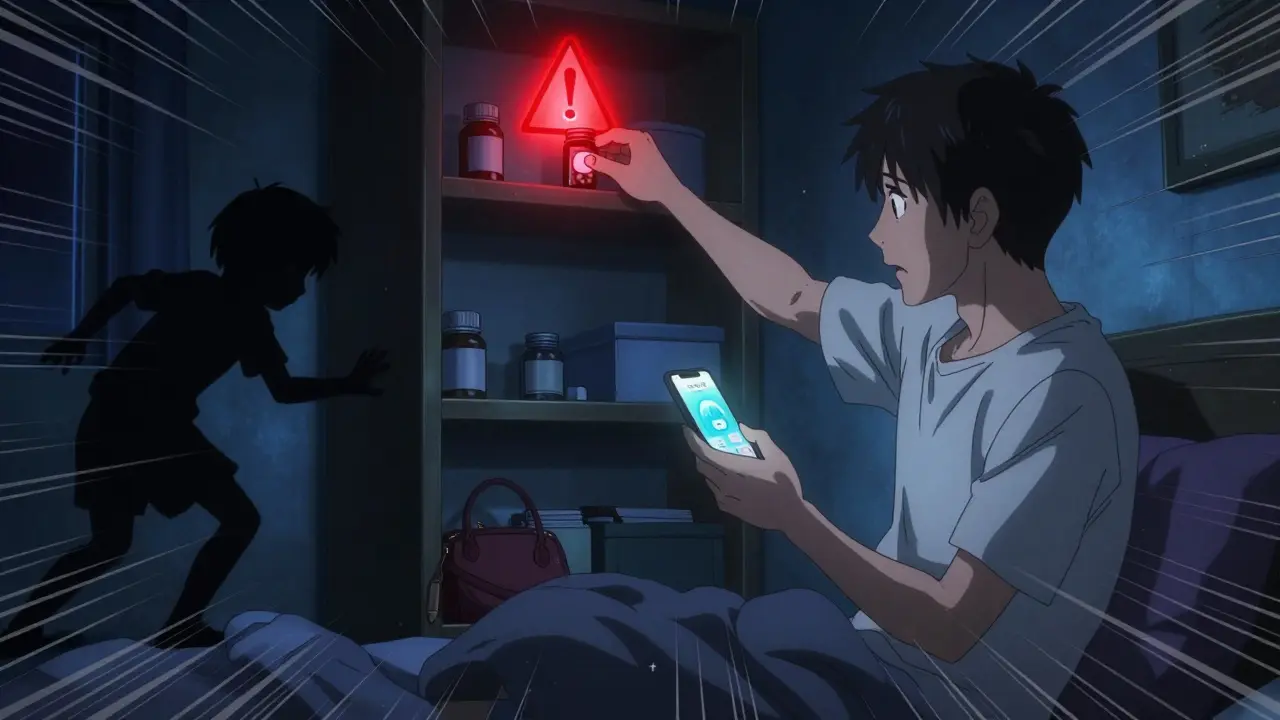
Seven-day pill organizers are one of the most effective tools for managing multiple medications. A 2023 AARP survey found 68% of caregivers who used them reported fewer errors. But they only work if used correctly.
Don’t just dump all pills into the slots. Fill them once a week, at the same time. Use a marker to label each compartment with the day and time (morning, night). If someone misses a dose, don’t double up. HealthyChildren.org says: ‘Give the missed dose as soon as you remember, then go back to the regular schedule.’ Never take two doses at once unless your doctor says so.
For families with visual impairments or memory issues, color-code containers with painter’s tape. Red for morning pills. Blue for night. One Reddit caregiver reported a 60% drop in errors after doing this. It’s low-tech, cheap, and works.
Dispose of Old or Unused Medicines Properly
Don’t flush pills down the toilet. Don’t throw them in the trash where kids or pets can get to them. Don’t leave them sitting in a drawer for years. The FDA recommends two safe options:
- Take them to a drug take-back program. Many pharmacies and police stations offer this.
- If no take-back is available, mix pills with coffee grounds or cat litter in a sealed bag, then throw them in the trash.
Check expiration dates. Antibiotics, insulin, and epinephrine auto-injectors (like EpiPens) lose potency quickly. Expired medicines can be useless - or harmful. If you’re unsure, ask your pharmacist. Better safe than sorry.
Use Technology Wisely - But Don’t Rely on It Alone
Apps like Medisafe, MyTherapy, or even calendar alerts can help remind you when to give a dose. About 41% of caregivers use them. But 27% of older adults struggle with tech. If someone in your home doesn’t use smartphones well, don’t force it.
Use a combination: a digital reminder for the tech-savvy, and a printed schedule taped to the fridge for everyone else. Some families use a whiteboard with magnets - one for each person, one for each time of day. Simple. Visible. Reliable.
And don’t forget: QR codes on medicine bottles are now common. Scan them with your phone to get clear, audio instructions in plain language. The FDA’s 2023 Safe Use Initiative found this cuts administration errors by 41%.
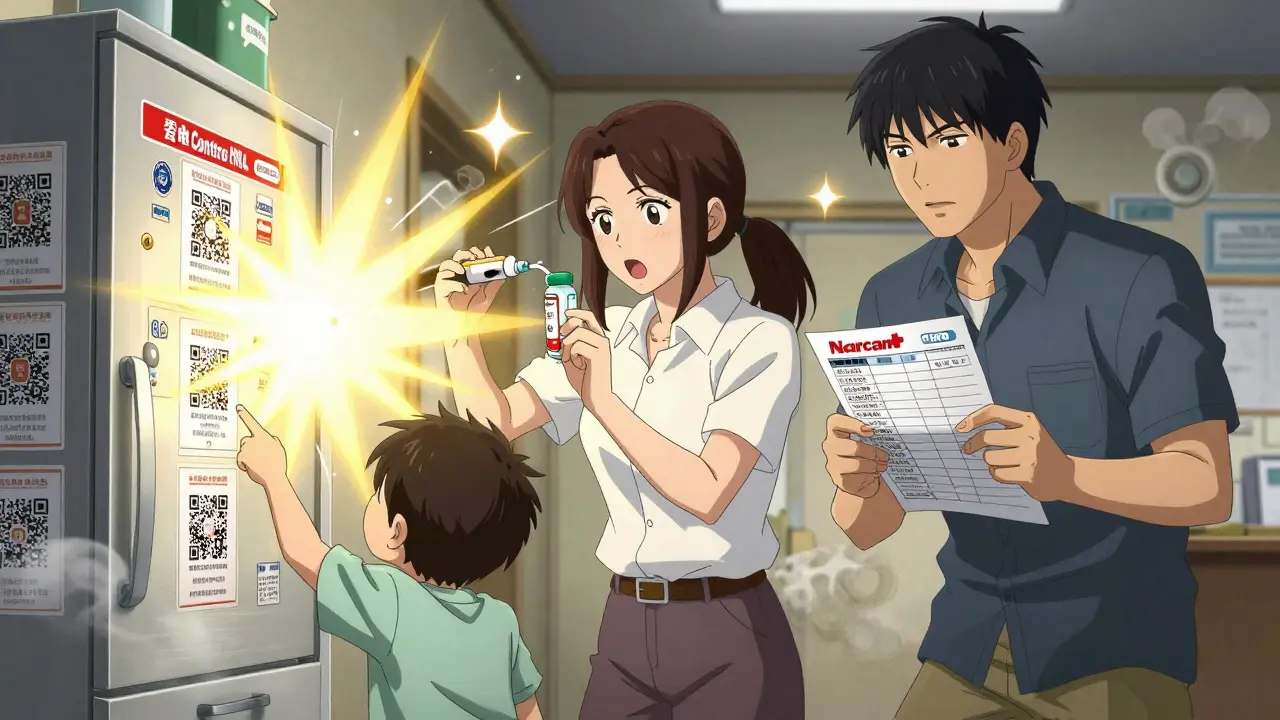
Plan for Mistakes - Because They Happen
Even the best routines fail sometimes. Someone forgets. Someone misreads. Someone gives the wrong pill. That’s why you need an emergency plan.
- Post the Poison Control number - 1-800-222-1222 - on your fridge, near the phone, and on your phone’s speed dial.
- Keep naloxone (Narcan) in your home if opioids are present. Learn how to use it. The CDC says 1 in 4 opioid overdoses happen at home.
- Have a printed list of all medications ready to hand to paramedics. Include allergies and chronic conditions.
Don’t wait for an emergency to look up this info. Make it part of your routine. Practice it like a fire drill.
Review Medications Regularly - Especially for Seniors
Older adults are at higher risk. The American Geriatrics Society says 15% of hospital visits for seniors are caused by unnecessary or dangerous meds. Anticholinergic drugs - often found in sleep aids, allergy pills, and bladder meds - can cause confusion, dizziness, and falls. One study showed they increase fall risk by 50%.
Ask your doctor or pharmacist every six months: ‘Is this medicine still needed?’ This is called ‘deprescribing.’ It’s not about stopping meds - it’s about stopping the ones that do more harm than good. The American Medical Association’s 2023 guidelines say this should be standard care for anyone over 65 taking five or more drugs.
Make It a Family Habit
Medication safety isn’t a one-time task. It’s a daily practice. Set a time each week - Sunday morning, maybe - to check the pill organizer, update the list, and talk about any changes. Involve everyone. Kids can help by reminding their grandparents to lock the cabinet. Teens can set phone alerts. Grandparents can share stories about past mistakes.
It’s not about control. It’s about care. The goal isn’t to turn your home into a clinic. It’s to make sure your family stays healthy - and safe - without fear, stress, or surprise trips to the ER.



Shane McGriff
January 20, 2026 AT 01:10Also, we keep a printed list taped to the fridge. Every Sunday, my wife and I go over it with my dad. He hates it, but he doesn’t argue anymore. Small habits save lives.
Paul Barnes
January 21, 2026 AT 10:35pragya mishra
January 23, 2026 AT 07:02Manoj Kumar Billigunta
January 24, 2026 AT 02:36Also, we use color-coded tape on pill boxes. Red for morning, blue for night. Simple. No tech needed. And we take all our bottles to the pharmacy every six months. They catch things doctors miss.
Andy Thompson
January 24, 2026 AT 14:28sagar sanadi
January 24, 2026 AT 21:08Thomas Varner
January 26, 2026 AT 20:33Art Gar
January 28, 2026 AT 14:47clifford hoang
January 29, 2026 AT 14:09They tell you to use Narcan… but never ask why you needed it in the first place. The system is rigged. Wake up.
Carolyn Rose Meszaros
January 30, 2026 AT 09:28Greg Robertson
January 31, 2026 AT 21:00Crystal August
February 1, 2026 AT 02:15Nadia Watson
February 1, 2026 AT 14:07