
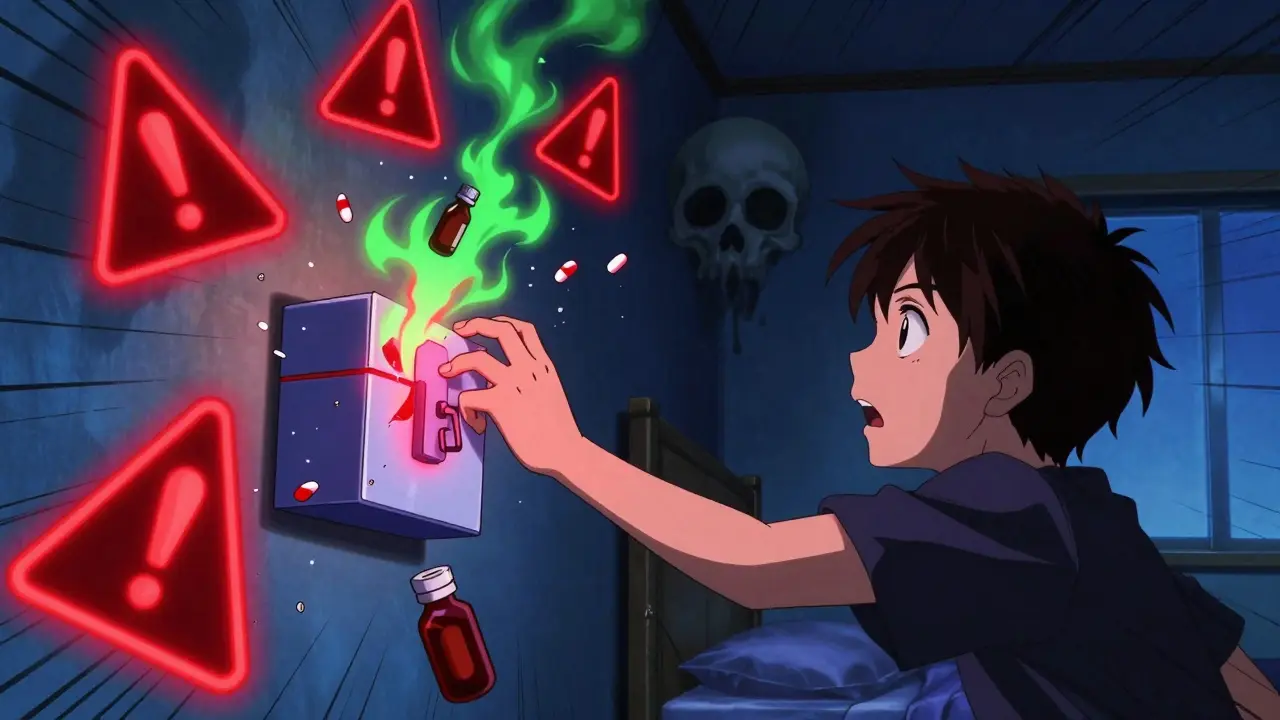
Every household in Australia keeps medicines - painkillers, antibiotics, insulin, heart pills. But how many of us actually know if those pills are still safe to take? Or if they’re even real?
Counterfeit drugs are not just a problem in developing countries. They’re here. In Melbourne, in Sydney, in rural towns. Fake pills made to look like oxycodone, Viagra, or even insulin are showing up in online orders, discount pharmacies, and even in bags bought from unverified street vendors. The FDA and TGA have both issued warnings: if you didn’t buy it from a licensed Australian pharmacy, it could be deadly.
And it’s not just about fakes. Even real medications can turn dangerous if stored wrong. Heat, moisture, light - they don’t just reduce effectiveness. They create toxins. Aspirin turns into vinegar and salicylic acid. Insulin loses potency in minutes if left out. Tetracycline degrades 40% faster in sunlight. Your medicine cabinet isn’t a safe spot. It’s a hazard zone.
Why Your Medicine Cabinet Is the Worst Place to Store Pills
The bathroom is the most common storage spot - but it’s also the most dangerous. Every time you shower, humidity spikes above 80%. That’s worse than a tropical rainforest for your pills. Medications like ampicillin lose 30% of their strength in just seven days at that level. Acetaminophen tablets degrade 53% faster in bathroom humidity. And that’s not even counting the heat from the dryer or the steam from the shower.
Studies from the Journal of Pharmaceutical Sciences show that medicines stored in bathrooms degrade 65% faster than those kept in a bedroom drawer. That means your painkiller might not work when you need it most. Your antibiotic might not kill the infection. Your asthma inhaler might sputter out mid-crisis.
And then there’s the light. Tetracycline, doxycycline, nitroglycerin - all break down fast under direct sunlight. A window sill? A shelf near the kitchen sink? That’s not storage. That’s sabotage.
Locked Storage Isn’t Just for Kids - It’s for Everyone
Most people think locked storage is only for homes with toddlers. It’s not. In Australia, 1 in 5 teens who misuse prescription drugs get them from their own home. The Substance Abuse and Mental Health Services Administration (SAMHSA) found that 70% of adolescent misuse starts with pills taken from a parent’s cabinet - often within 15 minutes of deciding to try them.
Locking your meds isn’t about distrust. It’s about time. If your teenager can’t grab a pill within seconds, they’re far less likely to take it on impulse. Same goes for house guests, relatives, or even visitors who might be tempted.
Experts from the American Academy of Pediatrics and the TGA agree: the single most effective way to prevent accidental poisoning and misuse is a locked container. Not a high shelf. Not a hidden drawer. A lock. A real one. Child-resistant caps alone reduce access by only 45%. Add a lock, and that jumps to 92%.
What kind of lock? Doesn’t matter - as long as it’s secure. A gun safe. A fireproof document box. A small medicine lockbox from a hardware store. Even a locked cabinet bolted to the wall works. The National Association for Children of Alcoholics (NACoA) says it needs to resist tampering for at least 10 minutes by a 4-year-old. Most cheap lockboxes on the market already meet that standard.
How to Store Medications Right - The Simple 4-Step Plan
You don’t need a fancy system. Just four steps.
- Find everything. Go through every drawer, purse, car glovebox, and bedside table. Collect every pill, patch, liquid, and inhaler. Even the half-used bottles from last year’s flu. Put them all in one place.
- Sort by storage needs. Some meds need refrigeration (insulin, some antibiotics, eye drops). Others need to stay dry and cool (most tablets and capsules). Keep refrigerated items in a separate, lockable container inside the fridge - not on the door, where temperatures swing. Keep the rest in a cool, dry place - a bedroom drawer, a closet shelf, a locked box.
- Lock it down. Put all non-refrigerated meds in a locked container. Use a combination lock if you have elderly family members with arthritis - large dials are easier to turn. Install it at waist to shoulder height. Out of reach for kids. Easy for adults.
- Check every 3 months. Toss expired pills. Look for discoloration, strange smells, or crumbling tablets. If it looks off, don’t risk it. Take it to a pharmacy for safe disposal.
It takes about 3 weeks to make this routine automatic. After that, you won’t even think about it. But you’ll sleep better knowing your kids, your partner, or your elderly parent won’t accidentally swallow something dangerous.
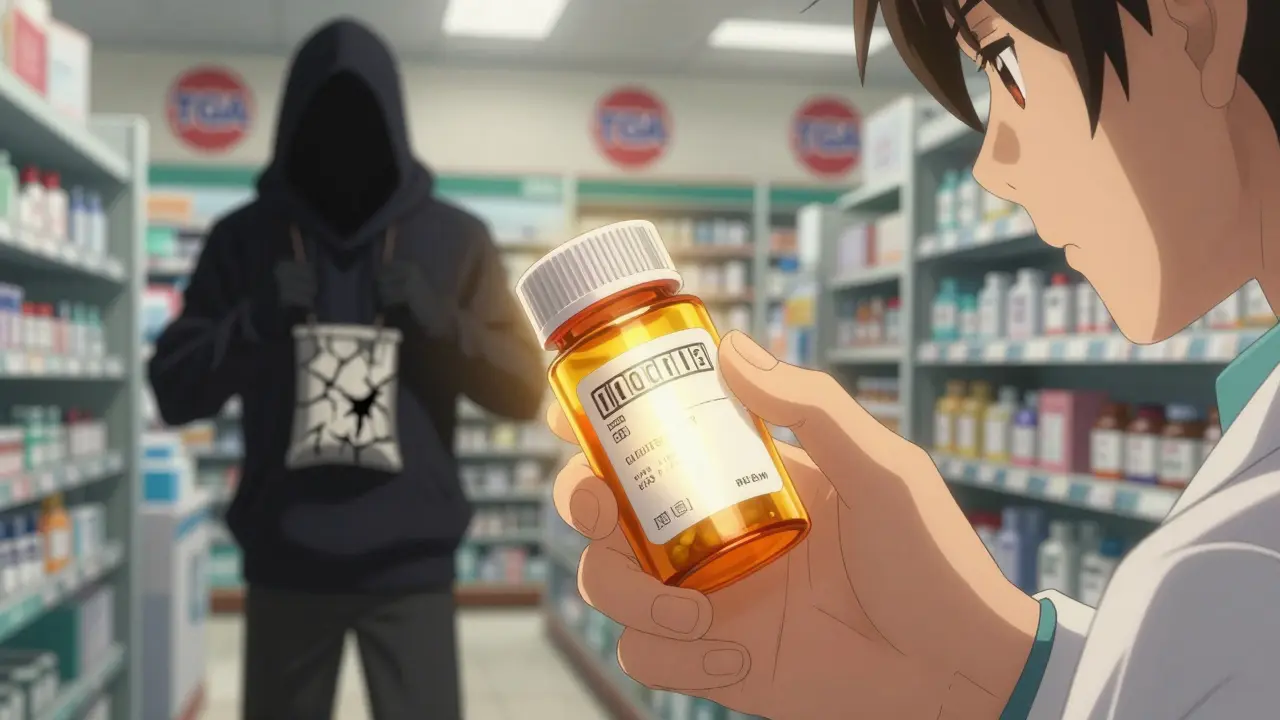
Spotting Fake Medications - Red Flags You Can’t Ignore
Counterfeit drugs look real. But they’re not. Here’s how to tell the difference:
- Wrong packaging. Misspellings, blurry logos, mismatched colors. Even small errors matter. The TGA has documented fake Viagra bottles with incorrect font sizes on the label.
- Unusual taste or texture. If your painkiller tastes metallic, or your antibiotic has a gritty feel, stop taking it. Real pills are consistent. Fake ones are made with chalk, sugar, or worse.
- Too cheap. If a website offers 90% off brand-name drugs, it’s a trap. Legitimate pharmacies don’t work that way. Even Australian online pharmacies follow strict pricing rules.
- No pharmacy details. If the website doesn’t list a physical address, a pharmacist’s name, or an ABN number - walk away. Legit pharmacies are registered with the TGA and display their license clearly.
- Unsolicited offers. If you get a text or email saying, “Your prescription is ready - click here,” don’t click. That’s phishing. Real pharmacies call you or send a letter.
And never buy from social media. Instagram, Facebook, TikTok - no legitimate pharmacy sells meds there. The TGA has shut down over 200 fake online sellers in the last two years. Most were run from overseas, shipping pills through the mail. Some contained rat poison. Others had no active ingredient at all.
What to Do With Old or Unused Meds
Don’t flush them. Don’t throw them in the trash. Don’t dump them down the sink.
Medications that end up in water systems harm fish, wildlife, and eventually, our drinking water. The EPA and TGA both warn about pharmaceutical pollution. The solution? Take-back programs.
Australia has over 1,200 permanent medication take-back drop-off points - mostly at pharmacies. You can find the nearest one at TGA.gov.au. Just bring your old pills in the original bottle. No need to remove labels. Pharmacists handle the rest.
If you can’t get to a drop-off, mix pills with coffee grounds or cat litter in a sealed bag before tossing them. That makes them unappealing and hard to reuse. But take-back is always better.
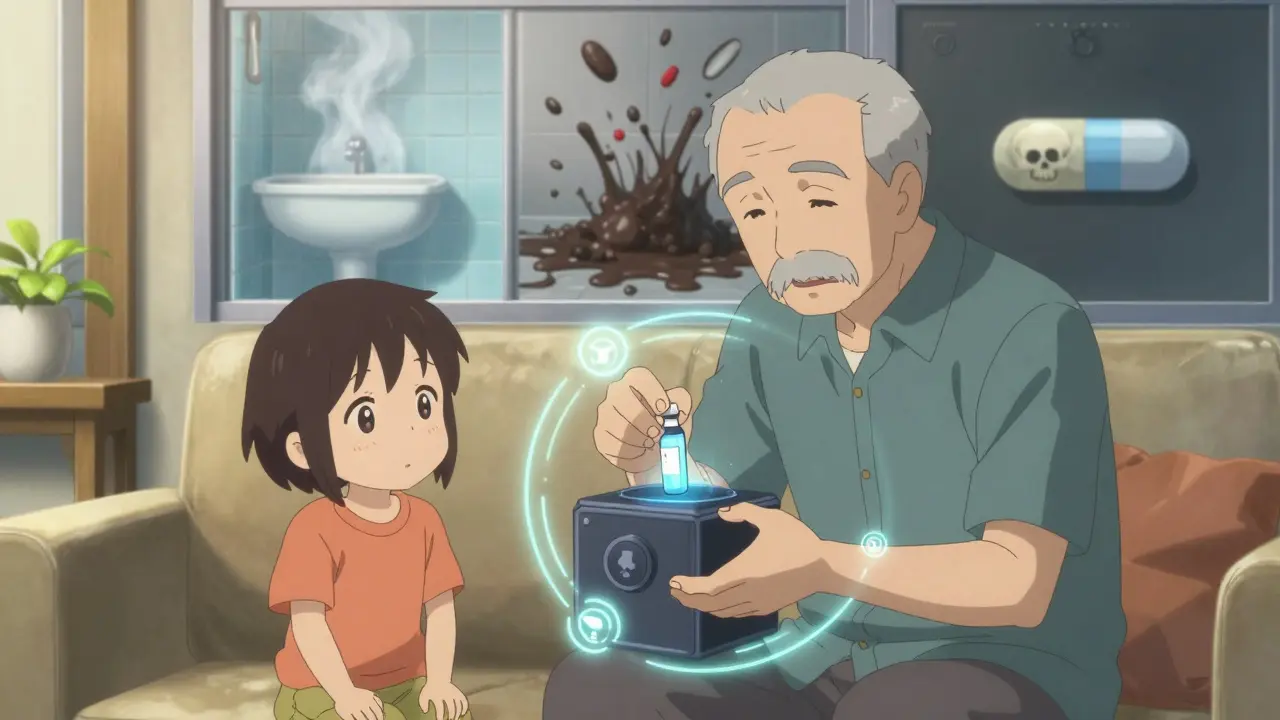
Special Cases: Insulin, Narcan, and Elderly Access
Insulin must be kept cold - between 2°C and 8°C. Once opened, it’s good for 28 days at room temperature, but never leave it in a hot car or on a sunny windowsill. Use a small, lockable container inside the fridge. Keep it near the front, not the back, so you can grab it fast.
Naloxone (Narcan) - used to reverse opioid overdoses - must be instantly accessible. Store it in a locked box, but make sure you can open it in under 10 seconds. A combination lock with a quick code works. Or keep one in your wallet and one in your locked cabinet.
For elderly users with arthritis, locking meds shouldn’t mean locking them out. Use large-dial combination locks. Or smart locks that open with voice commands or a simple tap. The Arthritis Foundation recommends these solutions - security without sacrifice.
Real People, Real Stories
One Melbourne mum, Sarah, told her story on a local health forum: “I used to keep my husband’s heart meds on the kitchen counter. He’d forget to take them, so I’d leave them out. Then my 2-year-old got into them. He didn’t swallow anything, but the panic? I’ve never felt worse. Now we have a lockbox on the wall. I can reach it in two seconds. He can’t. And I sleep.”
A retired teacher in Geelong, John, said: “I have three chronic conditions. I need my meds within 30 seconds. I tried a high cabinet. I couldn’t reach it. Then I got a wall-mounted safe at shoulder height with a big dial. Now I’m safe, and I’m not struggling.”
These aren’t rare cases. They’re everyday realities. And they’re preventable.
What’s Changing in 2025 - And What You Need to Know
The TGA is rolling out new rules in 2025. All prescription meds will come with a unique digital code you can scan to verify authenticity. Pharmacies will be required to scan it at sale. It’s still early, but by 2026, this will be standard.
Also, from Q2 2026, visiting nurses will start checking medication storage during home visits for seniors and chronic illness patients. If your meds aren’t locked, they’ll help you fix it. This isn’t punishment - it’s prevention.
And the cost? Not locking your meds costs the Australian health system millions each year in emergency visits, poisonings, and ineffective treatments. The federal government estimates that universal safe storage could prevent over 15,000 hospital visits annually by 2030.
That’s not just numbers. That’s your child. Your parent. Your partner. You.
Can I store my medications in the fridge?
Only if the label says to. Most pills don’t need refrigeration - and cold can actually damage them. Insulin, some antibiotics, and certain eye drops do. Store those in a separate, lockable container inside the fridge, away from food. Never put them in the door - temperature changes too much.
Are child-resistant caps enough?
No. Child-resistant caps reduce access by only 45%. When combined with a locked container, that jumps to 92%. Caps are a backup - not a solution. Kids can figure out caps. They can’t open a locked box.
How do I know if my medicine is fake?
Check the packaging for misspellings, blurry logos, or odd colors. If the pill tastes strange, looks different, or crumbles easily, stop taking it. Buy only from licensed Australian pharmacies - never from social media, unverified websites, or street vendors. You can verify a pharmacy’s license at TGA.gov.au.
What if I need my meds quickly in an emergency?
Use a combination lock with a simple code, or a smart lock that opens with a voice command or tap. Keep one dose in a small, locked pouch you can carry - like in your wallet or bag. For naloxone, keep one in your lockbox and one in your pocket. Speed matters - but safety still does.
Where can I safely dispose of old pills in Australia?
Take them to any pharmacy that offers a medication take-back program. There are over 1,200 locations nationwide. Find the nearest one at TGA.gov.au. Never flush, burn, or throw them in the trash. Pharmacies handle safe disposal for free.
Storing your meds right isn’t about being paranoid. It’s about being prepared. Whether you’re protecting a child, an aging parent, or yourself - the right storage saves lives. And in a world where fake pills are easier to get than real ones, knowing what’s real - and where it’s kept - is the first step to staying safe.



Sahil jassy
December 18, 2025 AT 15:46Kathryn Featherstone
December 19, 2025 AT 21:58Kevin Motta Top
December 21, 2025 AT 06:17anthony funes gomez
December 21, 2025 AT 16:24Marsha Jentzsch
December 22, 2025 AT 01:15Henry Marcus
December 23, 2025 AT 00:11Nina Stacey
December 23, 2025 AT 08:09Carolyn Benson
December 24, 2025 AT 09:15Chris porto
December 25, 2025 AT 19:45Alisa Silvia Bila
December 26, 2025 AT 10:31