
Medication Palpitation Risk Checker
Identify if your medications and health factors could be increasing your risk of palpitations or dangerous heart rhythms.
Many people assume that if a medication is prescribed or sold over the counter, it’s automatically safe for their heart. But that’s not true. Medication-induced palpitations are more common than most people realize - and they can be dangerous. If you’ve ever felt your heart skip, flutter, or race for no clear reason, it might not be stress, caffeine, or anxiety. It could be something in your medicine cabinet.
What Exactly Are Medication-Induced Palpitations?
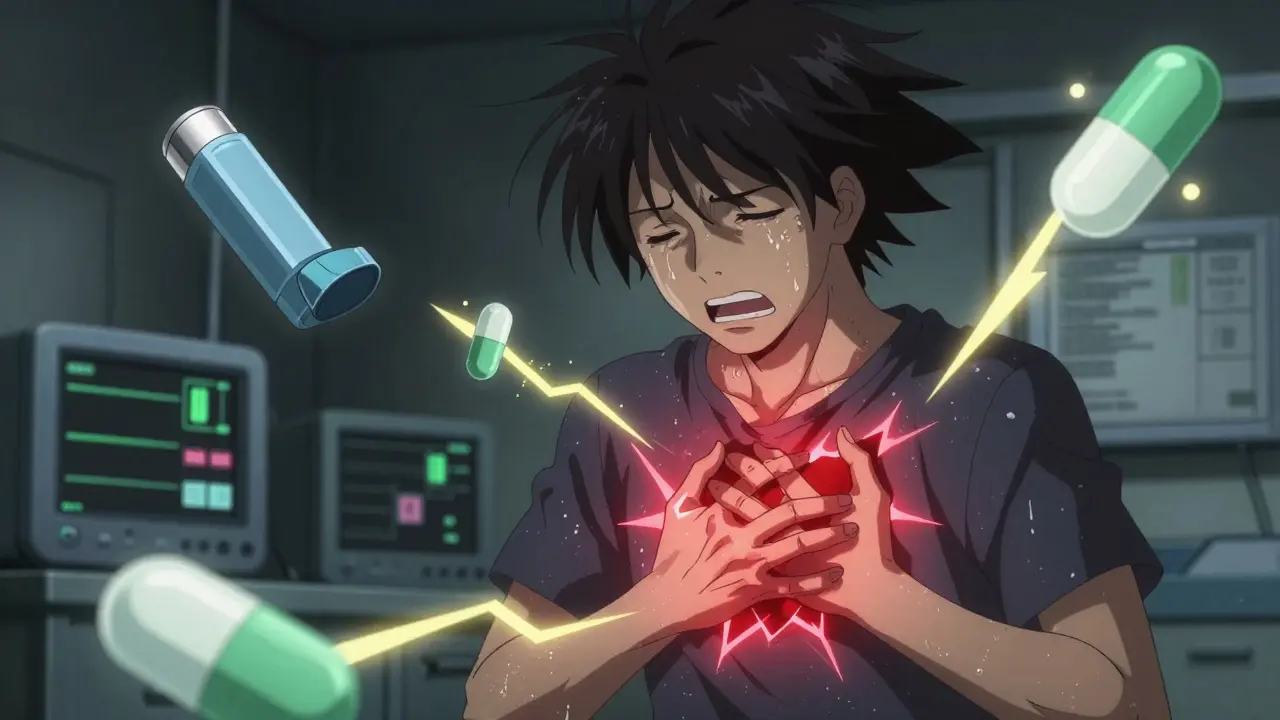
Palpitations are that uncomfortable sensation of your heart beating too hard, too fast, or irregularly. It’s not just a quick thump. People describe it as a fluttering in the chest, a pounding that wakes them up at night, or a feeling like their heart is trying to jump out of their chest. When these symptoms start after taking a new medication or changing a dose, it’s often not a coincidence. The heart’s rhythm is controlled by tiny electrical signals. Some medications interfere with those signals. They can slow down or speed up the heart’s natural pacing, stretch the heart muscle, or throw off electrolyte levels - all of which can trigger abnormal beats. In some cases, these changes are harmless. In others, they can lead to life-threatening arrhythmias like torsades de pointes, a type of rapid, chaotic heartbeat that can cause sudden cardiac arrest. According to the American Heart Association, about 1 in 5 arrhythmia cases seen in clinics are linked to medications. That’s not rare. It’s a major clinical concern.Common Medications That Trigger Rapid Heartbeat
You might be surprised by what’s on this list. It’s not just illegal drugs or experimental treatments. Many everyday prescriptions and OTC products can cause trouble.- Asthma inhalers like albuterol (Ventolin, ProAir) are meant to open your airways - but they also stimulate your heart. Up to half of users experience a heart rate increase of 15 to 25 beats per minute within minutes of using them. If you’re already on heart medication, this can be risky.
- Antibiotics like azithromycin (Zithromax) and levofloxacin (Levaquin) are linked to QT prolongation - a delay in the heart’s electrical recovery phase. Azithromycin increases the risk of rapid heartbeat by over 2 times, especially in people with existing heart conditions. A 2021 study of 1.2 million patients found that for every 1,000 people taking azithromycin, about 29 extra cases of dangerous arrhythmias occurred.
- Decongestants like pseudoephedrine (Sudafed) and phenylephrine are in cold and allergy meds. At standard doses, they can raise your heart rate by 10 to 20 beats per minute. If you’re over 60 or have high blood pressure, even one pill can trigger palpitations.
- Thyroid pills like levothyroxine (Synthroid) are essential for many, but too much can overstimulate your heart. When your TSH level drops below 0.1 mIU/L, palpitations become common - affecting 8 to 12% of users. Many don’t realize their heart is racing because their dose is too high.
- Antidepressants like amitriptyline (a tricyclic) and citalopram (Celexa) can prolong the QT interval. Citalopram doses above 40 mg/day are especially risky in older adults. Even SSRIs like sertraline are safer alternatives for people with heart concerns.
- Newer weight-loss drugs like semaglutide (Ozempic, Wegovy) were not originally thought to affect the heart. But clinical trials show they raise resting heart rate by 3 to 5 beats per minute on average. For some, that’s enough to feel palpitations.
How Doctors Evaluate the Problem
If you report palpitations, your doctor shouldn’t just shrug it off. A proper evaluation follows a clear path. First, they’ll ask for a full list of everything you’re taking - prescriptions, supplements, herbal remedies, even cough syrups. Over 150 medications can cause this issue, and many patients forget to mention the OTC stuff. Then comes the ECG. A 12-lead electrocardiogram checks your heart’s electrical rhythm. The key number is the QTc interval - the corrected time it takes for your heart to reset between beats. Normal is under 450 ms for men, under 460 ms for women. If it’s over 500 ms, or has increased more than 60 ms from your baseline, you’re at high risk. If the resting ECG looks normal but symptoms persist, a 24- to 48-hour Holter monitor is often ordered. It catches intermittent rhythms that a single ECG misses. In about 40% of cases, the problem only shows up during daily activity. Blood tests are also critical. Low potassium (below 3.5 mmol/L) or low magnesium (below 1.7 mg/dL) make your heart far more sensitive to drug effects. Thyroid function (TSH) must be checked, especially if you’re on levothyroxine. And if you’re on theophylline or digoxin, they’ll check drug levels - these have narrow safety windows. A risk score tool developed by Brigham and Women’s Hospital helps doctors weigh your risk. Points are added for age over 65, being female, having heart disease, or taking multiple QT-prolonging drugs. A score above 5 means you’re in the high-risk group and need immediate action.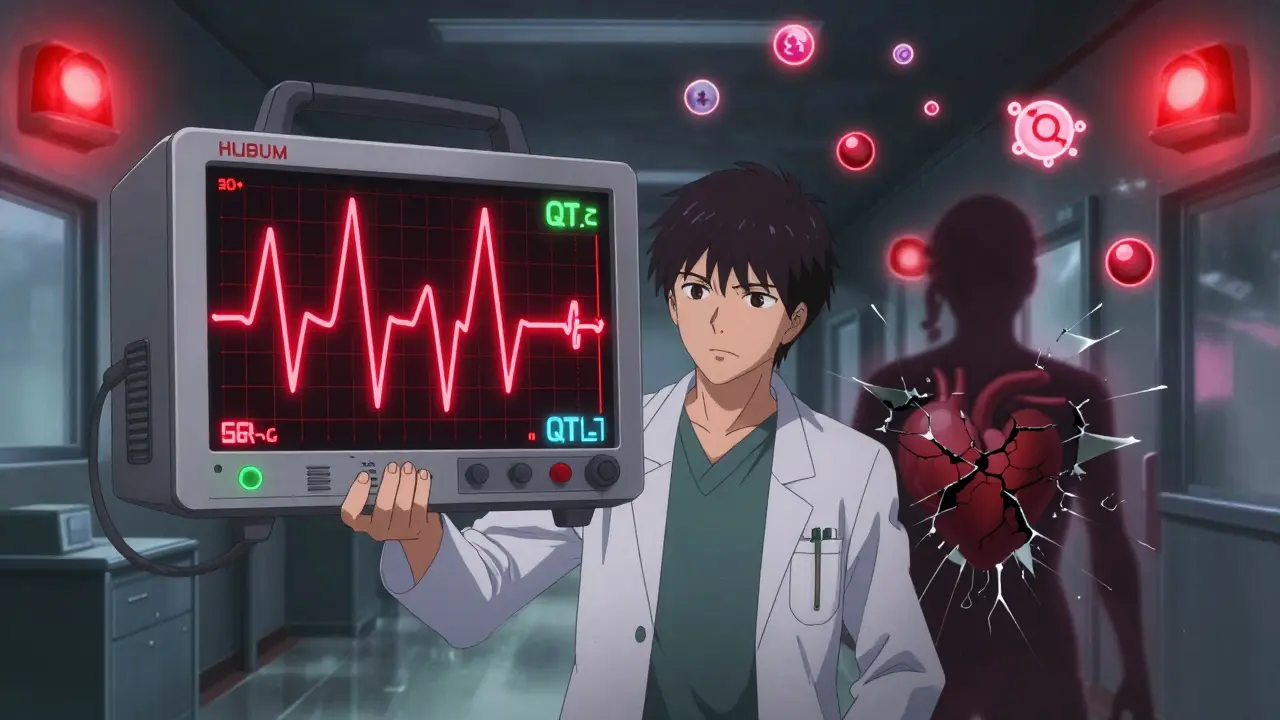
What to Do If Your Medication Is Causing Problems
The good news: most cases can be fixed without stopping treatment entirely. For mild cases - where palpitations are occasional, the QTc is under 500 ms, and you have no heart disease - your doctor may just ask you to monitor your heart rate and check electrolytes. Weekly ECGs might be recommended. For moderate cases - noticeable symptoms or QTc between 480 and 500 ms - the first step is lowering the dose. Studies show that 60 to 70% of patients feel better within 72 hours of reducing the medication. Sometimes, switching to a different brand or formulation helps. For high-risk cases - QTc over 500 ms, fainting, or signs of torsades - the drug must be stopped immediately. No exceptions. Hospitals follow strict protocols to remove these drugs as soon as they’re identified as the cause. Finding alternatives matters. For antibiotics, amoxicillin is a much safer choice than azithromycin for people with heart risks. For depression, switching from citalopram to sertraline often resolves palpitations without losing antidepressant benefits. One patient case from MyHeartCommunity.org showed palpitations disappearing in 10 days after the switch. For thyroid patients, keeping TSH between 0.5 and 2.0 mIU/L cuts palpitation risk from 12% to just 4.3%. That’s a huge difference - and it’s easily managed with regular blood tests. In some cases, like cancer treatments that cause arrhythmias, doctors may add a beta-blocker like metoprolol. This doesn’t interfere with the cancer drug - it just protects the heart. Clinical trials show it reduces arrhythmia risk by nearly half.How to Prevent Medication-Induced Palpitations
Prevention beats treatment every time. Start with a baseline ECG before starting any new medication known to affect heart rhythm. That includes antibiotics, antidepressants, thyroid meds, and even some weight-loss drugs. Many doctors still skip this - but it’s now standard in 92% of U.S. academic hospitals. Keep a simple symptom journal. Write down when you take your meds and when you feel your heart race. Note the time, what you were doing, and how long it lasted. Many patients on Reddit and patient forums report that tracking this helped them spot patterns - like “palpitations always start 2 hours after my Sudafed.” Avoid combining QT-prolonging drugs. Taking two of them together increases your risk by nearly six times. That’s why guidelines call it a “never event.” If you’re over 75, be extra cautious. Older adults are over three times more likely to develop torsades from the same dose as a younger person. Talk to your pharmacist. They’re trained to spot dangerous interactions. Many pharmacies now flag high-risk combinations before you even pick up your prescription.
What You Should Never Ignore
These are red flags that need immediate attention:- Palpitations that come with dizziness, fainting, or chest pain
- Heart rate over 120 bpm at rest
- Feeling your heartbeat in your neck or throat
- Sudden shortness of breath with no obvious cause
- Palpitations that start within 72 hours of a new medication or dose change
Final Thoughts: You’re Not Overreacting
If you feel your heart acting strangely after starting a new drug, trust your body. You’re not imagining it. You’re not being dramatic. Medication-induced palpitations are real, measurable, and preventable. The system is getting better. Electronic health records now warn doctors before prescribing risky combos. Pharmacies flag dangerous interactions. Guidelines are clearer than ever. But you’re still the most important part of the safety net. Know what you’re taking. Track your symptoms. Ask questions. And never let anyone dismiss your heart symptoms as “just anxiety.” Your heart is working for you - make sure your meds aren’t working against it.Can over-the-counter cold medicine cause a rapid heartbeat?
Yes. Decongestants like pseudoephedrine (in Sudafed) and phenylephrine can raise your heart rate by 10 to 20 beats per minute. This is especially risky if you’re over 60, have high blood pressure, or are on heart medication. Even one dose can trigger palpitations. Look for “non-drowsy” or “sinus” formulas - they often contain these stimulants. Choose saline sprays or antihistamines like loratadine instead if you’re prone to heart rhythm issues.
Is it safe to take azithromycin if I have a history of heart problems?
It’s not recommended. Azithromycin increases the risk of dangerous arrhythmias by over 2 times in people with existing heart disease. The FDA now requires a boxed warning on its label for this reason. If you need an antibiotic and have heart issues, amoxicillin or cephalexin are safer choices. Always tell your doctor your full cardiac history before taking any new antibiotic.
Can thyroid medication cause palpitations even if my TSH is normal?
Yes. Even if your TSH is in the “normal” range, palpitations can still happen if your dose is too high for your body. The ideal TSH for someone on levothyroxine is between 0.5 and 2.0 mIU/L. If your TSH drops below 0.1, palpitations become very common - even if your doctor says your level is “fine.” Many patients feel better only after their dose is lowered, even if TSH is still technically in range.
How long do medication-induced palpitations last after stopping the drug?
It depends on the medication. For drugs like albuterol or pseudoephedrine, palpitations usually stop within hours after the last dose. For QT-prolonging drugs like azithromycin or citalopram, it can take days to weeks for the heart’s electrical system to fully recover. Most patients see improvement within 72 hours of stopping the drug, but full normalization can take up to 2 weeks. Follow-up ECGs are often recommended to confirm recovery.
Should I get an ECG before starting a new medication?
If the medication is known to affect heart rhythm - like antibiotics, antidepressants, thyroid meds, or weight-loss drugs - then yes. A baseline ECG helps doctors compare future changes and catch early signs of QT prolongation. Many hospitals now require it before prescribing high-risk drugs. Even if your doctor doesn’t mention it, ask. A simple 10-minute test can prevent serious complications.
Can supplements cause palpitations too?
Absolutely. Some herbal supplements like bitter orange, ephedra (now banned but still found in some products), and high-dose green tea extract can stimulate the heart. Even large doses of caffeine from supplements or energy powders can trigger palpitations. Some weight-loss supplements contain hidden stimulants. Always tell your doctor about every supplement you take - they’re not always harmless.



steve ker
January 11, 2026 AT 19:14Medications cause palpitations? Shocking. Next you'll tell me water can drown people.
George Bridges
January 12, 2026 AT 03:19I appreciate how thorough this is. I’ve had patients come in thinking it’s just anxiety, but it’s often a drug interaction they didn’t even know to mention. Really glad someone’s putting this out there.
Faith Wright
January 12, 2026 AT 23:22Oh wow, so Sudafed is basically a caffeine shot for your heart? No wonder my grandma passed out after her ‘just one pill’ cold remedy. Thanks for the reminder that OTC doesn’t mean ‘harmless’.
Audu ikhlas
January 13, 2026 AT 08:02USA healthcare is so broken you gotta read a novel just to know if your aspirin will kill you. In Nigeria we just take what the chemist says and pray. At least here you got time to read 1000 pages before you die.
Sonal Guha
January 14, 2026 AT 17:47They listed semaglutide? Funny. People blame the drug but ignore the 400% weight gain that came before it. This isn't pharmacology, it's virtue signaling disguised as medical advice.
TiM Vince
January 14, 2026 AT 19:23Had a friend on azithromycin for pneumonia. Started feeling like her heart was in a drum solo. She didn’t say anything until she passed out. ECG showed QT prolongation. She’s fine now, but it scared the hell out of us. Always ask about heart risks.
gary ysturiz
January 15, 2026 AT 20:56This is super helpful. If you feel your heart acting weird after starting something new, don’t brush it off. Talk to your doctor. It could save your life. Simple as that.
Jessica Bnouzalim
January 16, 2026 AT 20:02Okay, but can we talk about how no one ever tells you that your ‘harmless’ thyroid med might make your heart feel like it’s trying to escape your chest?? I thought I was having a panic attack for SIX MONTHS until my pharmacist asked if I’d changed my dose…
Bryan Wolfe
January 18, 2026 AT 01:23Big thanks for writing this. I’ve been telling my patients for years: if your heart’s acting up after a new med, it’s not ‘just anxiety’ - it’s a signal. And you deserve to be heard. Keep pushing for better awareness - you’re making a difference.
Alice Elanora Shepherd
January 19, 2026 AT 19:55Baseline ECG before starting QT-prolonging drugs? Absolutely. I’ve seen too many older patients admitted for torsades after a simple course of azithromycin - all preventable. This is standard in the UK NHS now. Why isn’t it everywhere?