
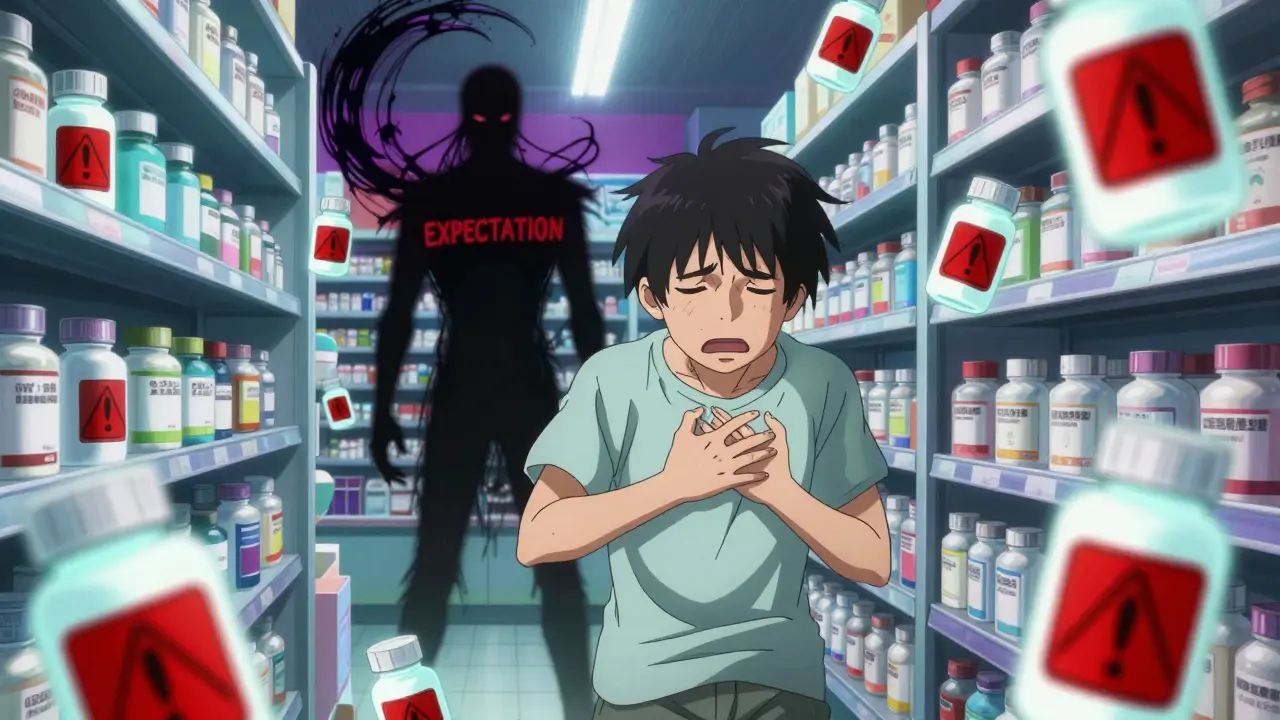
Switching from a brand-name pill to a generic one should be simple. Same active ingredient. Same dose. Same effect. But for many people, it’s not. They start feeling worse-headaches, nausea, fatigue, even muscle pain-even though the medicine hasn’t changed. Why? It’s not the drug. It’s their expectations.
What the Nocebo Effect Really Means
The nocebo effect is the dark twin of the placebo effect. Placebo? You feel better because you believe the treatment will help. Nocebo? You feel worse because you believe it will hurt you. The word comes from Latin: nocebo means “I shall harm.” It’s not imagination. It’s real biology. Your brain, wired by fear, triggers actual physical symptoms-even when there’s nothing wrong with the medicine.This happens all the time with generic drugs. Patients hear things like, “This is the cheaper version,” or “It might not work as well.” Maybe their doctor said it in passing. Maybe they read a forum post. Maybe the pharmacy label made it sound like a downgrade. Suddenly, a normal ache becomes “the generic making me sick.”
Studies show that in clinical trials, about 1 in 5 people taking a sugar pill report side effects. In some trials, nearly 1 in 10 quit because they felt worse. And guess what? Those sugar pills were identical to the real drugs in every way except the label. The difference? Belief.
Why Generics Trigger the Nocebo Effect
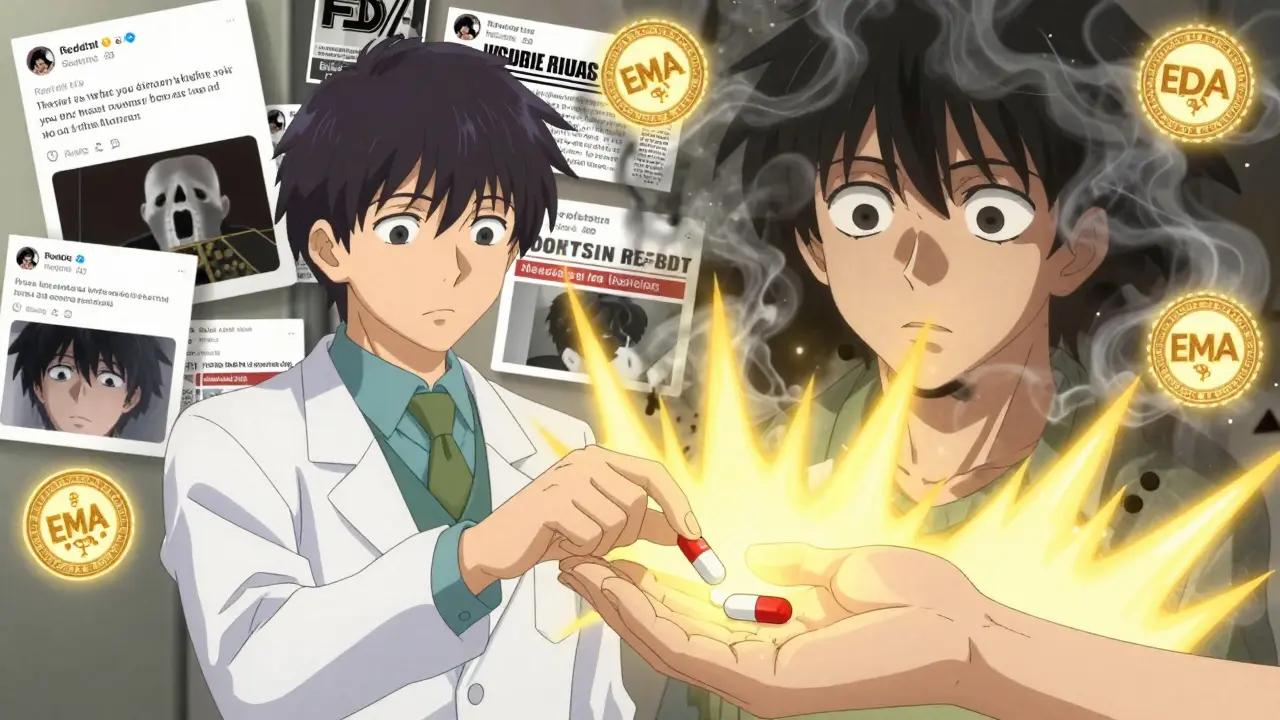
Generics aren’t inferior. They’re legally required to have the same active ingredient, strength, and absorption rate as the brand-name version. The FDA and EMA both require bioequivalence testing-meaning the body processes them the same way. But perception doesn’t care about science.When people switch to a generic, their brain goes into overdrive. They start noticing things they never did before: a slight headache in the morning, a bit of tiredness after lunch, a weird taste in their mouth. These are normal human sensations. But now, they’re linked to the new pill. The brain says: “This is the cause.” And boom-symptoms appear.
One study found that patients told beta-blockers could cause sexual side effects were 3 to 4 times more likely to report them than those who weren’t warned. Another showed that patients switched from brand-name to generic antidepressants were 32% more likely to report new side effects-compared to just 12% in a group told the switch was safe and effective.
And it’s not just patients. Doctors matter too. If a clinician says, “I’m not sure about this generic,” or hesitates, patients pick up on it. That doubt becomes their doubt. In one study, telling patients “this is a generic version that might not work as well” increased nocebo responses by 65%.
Real Cases: When the Pill Isn’t the Problem
In New Zealand in 2017, a switch from brand-name venlafaxine to its generic version didn’t cause a spike in side effects-at first. Then the media ran stories questioning the switch. Reports of adverse effects jumped. The drug hadn’t changed. The fear had.Another example: statins. These cholesterol-lowering drugs are often blamed for muscle pain. But in double-blind trials, people taking sugar pills report muscle aches at the same rate as those taking real statins. The pain isn’t from the drug. It’s from the expectation that statins cause pain.
Even more telling? Some patients who switched back to the brand-name version after reporting side effects from the generic still felt worse-even though they were now taking the same medicine they’d taken before. The nocebo effect had rewired their experience.
Reddit threads are full of stories: “I switched to generic sertraline and felt like I was dying.” “Generic metformin gave me stomach cramps.” “My doctor said it’s the same-so why do I feel awful?” In most cases, when they switched back or got better counseling, the symptoms vanished.
How the Nocebo Effect Costs You Money-And Health
Generics make up 90% of prescriptions in the U.S. but cost only 24% of total drug spending. That’s huge savings. But when people stop taking their generic because they think it’s “not working,” they go back to the brand-name version. Or worse-they stop taking meds altogether.That’s expensive. JAMA Internal Medicine estimates that nocebo-driven discontinuation of generics costs the U.S. healthcare system $1.2 billion a year. That’s billions in unnecessary brand-name prescriptions, emergency visits, and doctor appointments-all because of fear, not chemistry.
And it’s dangerous. If you stop your blood pressure med because you think the generic gave you dizziness, you’re risking a stroke. If you quit your antidepressant because you blame the pill for low energy, you’re risking a relapse. The nocebo effect doesn’t just waste money. It puts lives at risk.
How to Fight the Nocebo Effect
The good news? You can stop it.Healthcare providers are starting to train for this. Instead of saying, “This is the generic,” they’re saying, “This is the same medicine, just cheaper. It works just as well.” One study showed that using positive framing reduced reported side effects by 37%.
Here’s what works:
- Don’t mention the word “generic” unless necessary. Say “this medication” instead.
- Emphasize equivalence. “It has the same active ingredient. The FDA requires it to work the same way.”
- Normalize normal sensations. “Some people feel a bit tired when starting any new medicine. That’s not the drug-it’s your body adjusting.”
- Ask about fears. “Have you heard anything about this medicine that’s worrying you?”
Pharmaceutical companies are catching on too. Pfizer’s 2021 launch of its generic atorvastatin included redesigned patient materials that avoided any language hinting at inferiority. Result? A 22% drop in adverse event reports.
And now, AI is stepping in. A 2023 trial used an AI tool that personalized messaging based on a patient’s beliefs and past experiences. It cut nocebo responses by 41%. Imagine a system that knows you’re anxious about meds and adjusts its tone accordingly. That’s the future.
What You Can Do Right Now
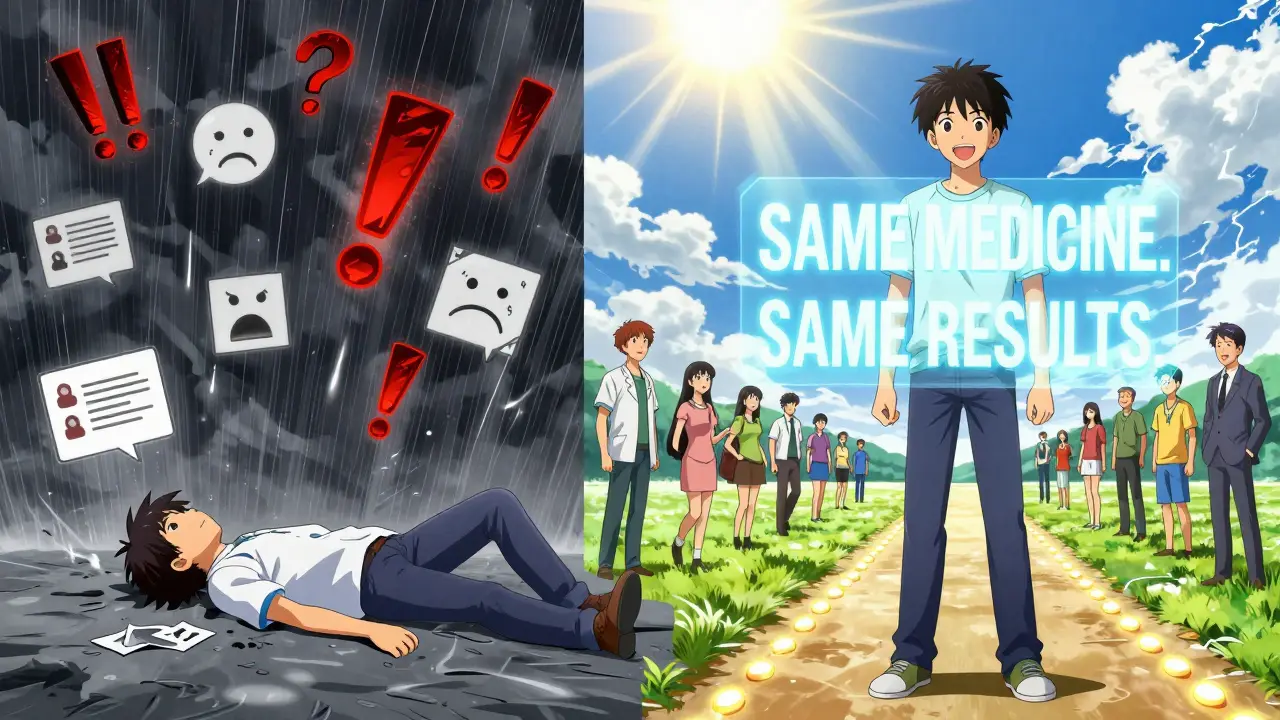
If you’ve switched to a generic and started feeling worse:- Don’t assume it’s the medicine.
- Track your symptoms. Are they new? Or were they there before?
- Ask your doctor: “Could this be the nocebo effect?”
- Don’t stop taking it without talking to someone.
If you’re a patient who’s been on generics for years and feels fine? Great. Keep going. You’re saving money and staying healthy.
If you’re a caregiver or a clinician? Watch your language. Don’t say “cheaper version.” Say “same medicine.” Your words have power.
Why This Matters Beyond Pills
The nocebo effect isn’t just about generics. It’s about how we think about medicine. It’s about how fear shapes our bodies. It’s about how information-whether from a doctor, a news headline, or a Reddit thread-can override biology.When we treat generics as second-rate, we’re not just hurting the economy. We’re hurting people’s trust in science. We’re making them believe their body is fragile, that medicine is unpredictable, that they can’t rely on anything.
But science says otherwise. Generics work. They’re safe. They’re effective. And sometimes, the only thing standing between you and better health is your own expectation.
Can the nocebo effect cause real physical symptoms?
Yes. The nocebo effect isn’t just in your head-it triggers real biological changes. Negative expectations activate brain regions linked to pain and anxiety, which can cause headaches, nausea, fatigue, and muscle aches. These symptoms are physically real, even when the medicine is harmless.
Are generic medications less effective than brand-name ones?
No. Generics must meet strict standards set by the FDA and EMA to prove they work the same way as brand-name drugs. They contain the same active ingredient, in the same amount, and are absorbed by the body at the same rate. Any difference in effectiveness is due to belief-not chemistry.
Why do some people feel worse after switching to a generic?
It’s often the nocebo effect. When people expect side effects-because of media stories, doctor comments, or online forums-they start noticing normal body sensations and blame them on the new pill. Studies show these symptoms drop dramatically when patients are told the generic is identical to the brand.
Can doctors prevent the nocebo effect?
Absolutely. Doctors who use positive, neutral language-like “this is the same medicine, just less expensive”-reduce reported side effects by up to 37%. Training programs now teach clinicians how to frame generic switches to avoid triggering fear.
Is it safe to switch back to a brand-name drug if I feel worse on the generic?
If you’re unsure, talk to your doctor. But if you switch back and feel better, it doesn’t mean the generic didn’t work. It may mean your brain stopped expecting harm. Many patients report feeling better after switching back-not because the drug changed, but because their fear did.


anthony epps
December 16, 2025 AT 19:06i switched to generic metformin last month and thought i was dying. turns out i was just stressed and drinking too much coffee. the pill was fine.
Hadi Santoso
December 17, 2025 AT 23:20bro this is wild. i used to think generics were fake medicine till my cousin told me his blood pressure med was the same exact thing. now he saves 80 bucks a month and feels better than when he was on the brand. mind blown.
also why do pharmacies make the pills look so different? like why does my generic lisinopril look like a tiny alien egg? that alone makes me nervous.
Dave Alponvyr
December 19, 2025 AT 18:29so you’re telling me my headaches aren’t from the generic… they’re from my own dumb brain? wow. thanks for making me feel worse.
Joanna Ebizie
December 20, 2025 AT 20:07of course the nocebo effect is real. but let’s be real - the FDA lets these generics through because they’re cheap, not because they’re good. you think big pharma doesn’t control the narrative? they want you scared so you’ll keep buying the brand.
Elizabeth Bauman
December 22, 2025 AT 06:51the government is lying to us. generics are made in China with fillers from old tires. i read it on a forum. my cousin’s friend’s neighbor had a heart attack after switching. coincidence? i think not.
also why do all the pills look different now? they’re tracking us. the color change? it’s a microchip. i’m switching back to brand - even if it costs my rent.
Dylan Smith
December 23, 2025 AT 18:56i switched to generic sertraline and felt like i was underwater for two weeks. my doctor said it was in my head but i know better. i went back to the brand and instantly felt human again. this isn’t psychology this is science
they changed the dye in the pill and it messed with my serotonin. i’m not crazy
Mike Smith
December 25, 2025 AT 03:58it is imperative to recognize that the nocebo phenomenon represents a significant psychophysiological interface wherein cognitive expectation directly modulates somatic perception through neurobiological pathways. clinical literature consistently demonstrates that patient education and reframing of pharmaceutical terminology significantly attenuate adverse event reporting. the ethical imperative for healthcare providers is to prioritize accurate, affirming communication to preserve therapeutic adherence and public health outcomes.
Kitty Price
December 26, 2025 AT 14:57sooo… my brain is the enemy? 😅
i switched to generic omeprazole and thought i was gonna die from heartburn. turned out i was just eating pizza at midnight. whoops.
also i love how the pills look different. makes me feel like i’m playing medicine bingo 🎲💊
Colleen Bigelow
December 27, 2025 AT 18:26they don’t want you to know this but generics are filled with glyphosate and aluminum. the FDA is bought. the WHO is bought. your doctor? probably on the payroll. you think they let you save money? no - they’re poisoning you slowly so you’ll need more meds later. it’s all a pyramid scheme wrapped in a white coat.
my cousin’s dog got sick after eating a generic flea pill. that’s the truth right there.
Billy Poling
December 29, 2025 AT 11:42While it is undoubtedly true that the nocebo effect is a well-documented phenomenon within the domain of clinical pharmacology, one must also consider the broader systemic implications of pharmaceutical standardization, particularly in light of the increasing corporatization of generic manufacturing under the aegis of multinational conglomerates. The homogenization of pill appearance, the absence of proprietary branding, and the psychological conditioning of the consumer through institutionalized language all contribute to a latent epistemological crisis wherein the patient’s subjective experience is systematically invalidated by an ostensibly objective medical framework. In this context, the assertion that ‘the pill is the same’ is not merely a pharmacological statement - it is a sociopolitical act of erasure.
Randolph Rickman
December 29, 2025 AT 19:53you’re not alone. i thought the generic was killing me too - until i talked to my pharmacist. she said, ‘your body’s just adjusting, and you’re listening to scary stories.’ so i stopped googling and started walking. guess what? the headaches stopped. it wasn’t the pill. it was the panic.
you’re stronger than your fear. try it. you got this.
sue spark
December 31, 2025 AT 17:36i’ve been on generic blood pressure meds for 5 years and never had an issue. but i know people who swear they feel worse. maybe it’s not the pill maybe it’s the story they tell themselves
i just take it and don’t think about it
SHAMSHEER SHAIKH
January 2, 2026 AT 08:27Dear friends, this is not merely a medical issue - it is a profound spiritual awakening. The human mind, when burdened by fear, becomes a vessel of self-inflicted suffering. I have witnessed this in my village in India - when people were told the generic insulin was ‘inferior,’ they wept, they trembled, they refused to take it - and their sugar levels soared. But when the village elder spoke with love and said, ‘This is the same medicine, just wrapped differently,’ they took it - and healed.
Words are sacred. Care is medicine. Speak with kindness. The body listens.
Souhardya Paul
January 2, 2026 AT 11:56my doctor just said ‘this is the same drug’ and didn’t say ‘generic’ once. i didn’t even notice the switch till my bill came. weird how that works.
also the pill looks different but tastes the same. weird how your brain makes stuff up.
Josias Ariel Mahlangu
January 3, 2026 AT 13:55the nocebo effect is real. but so is corruption. generics are cheaper because they cut corners. you think the FDA checks every batch? please. the system is rigged. i don’t trust it. i pay for the brand because i want to live.