
When your eyelid droops so much you can’t see clearly, or when your eyelashes rub against your eye like sandpaper, it’s not just annoying-it’s a medical issue. Two of the most common eyelid disorders are ptosis and entropion. Both affect vision, comfort, and even eye health long-term. And if left untreated, they can lead to serious damage like corneal ulcers or permanent vision loss. The good news? Surgery can fix them-often with excellent results.
What Is Ptosis?
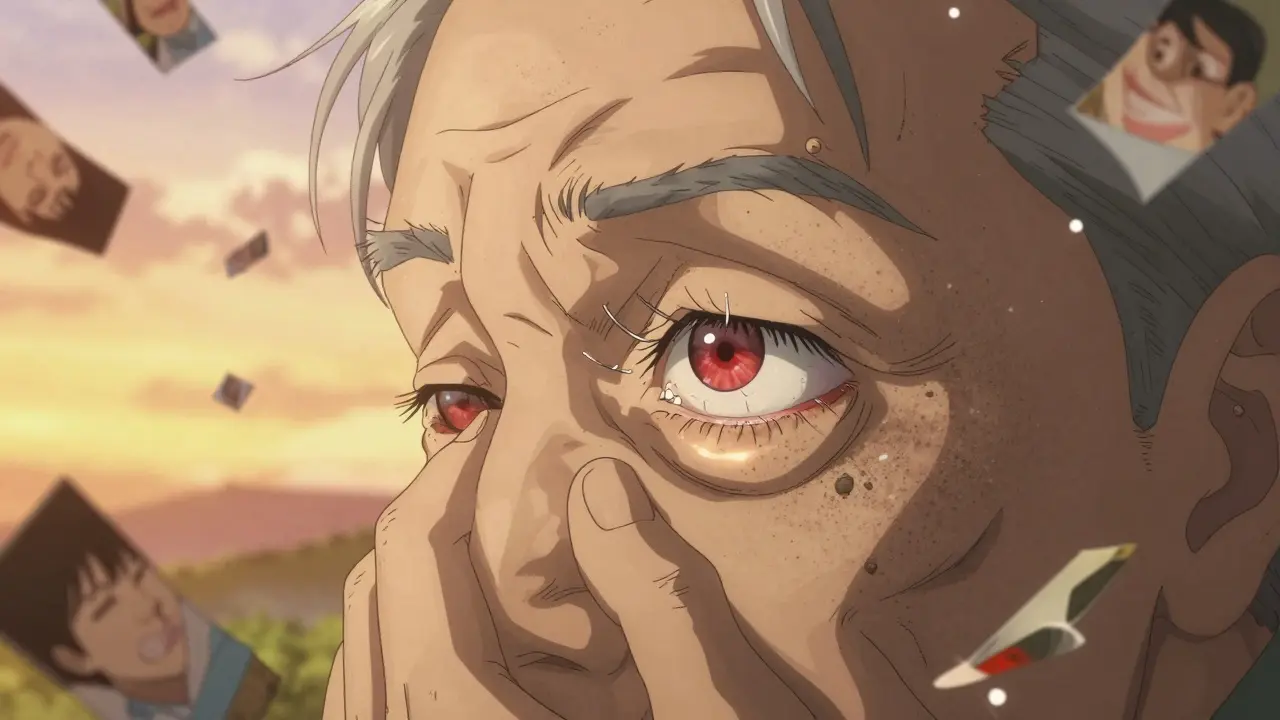
Ptosis is when the upper eyelid droops over the eye. It can happen in one or both eyes. In mild cases, it might just make you look tired. In severe cases, it blocks your vision completely. People often lift their eyebrows or tilt their head back just to see clearly. That’s not normal-it’s your body compensating for a problem that needs fixing.The eyelid lifts because of a muscle called the levator. When that muscle weakens-usually from aging-the lid drops. Nerve damage, trauma, or even being born with a weak muscle (congenital ptosis) can cause it too. Around 5% of adults over 70 have some degree of ptosis. It’s more common in people who wear contact lenses long-term or rub their eyes often.
Doctors measure ptosis using something called the margin reflex distance (MRD). Normal is 4-5 mm. Mild ptosis is 1-2 mm droop, moderate is 2-3 mm, and severe is more than 3 mm. If the lid covers more than a third of your pupil, surgery is usually recommended.
What Is Entropion?
Entropion is the opposite problem: the eyelid turns inward. Most often, it’s the lower lid. When this happens, your eyelashes rub against the cornea-the clear front part of your eye. Imagine a tiny brush constantly scratching your eyeball. That’s what it feels like.Symptoms include constant irritation, redness, watery eyes, mucus buildup, and a gritty feeling like there’s sand in your eye. Left alone, this can cause corneal abrasions, infections, and even scarring that permanently blurs vision. In extreme cases, it leads to vision loss.
The most common cause? Aging. About 80% of entropion cases in Western countries are involutional-that means they happen because the eyelid tissues stretch and weaken over time. Other causes include scarring from burns, surgery, or infections like trachoma (a bacterial infection common in areas with poor sanitation). About 97% of entropion cases affect the lower eyelid. Rarely, it can be present at birth.
Related Problems: Blepharitis and Trichiasis
You rarely see ptosis or entropion alone. Often, they come with blepharitis-a chronic inflammation of the eyelid margins. Oil glands at the base of eyelashes get clogged, leading to crusty, red, itchy lids. It’s one of the most common eyelid problems. People with blepharitis are more likely to develop entropion because the eyelid structure changes over time.Another related issue is trichiasis. This isn’t a full eyelid turn, but individual lashes grow inward due to damaged follicles. It’s common in people with long-term blepharitis or scarring. The lashes scratch the eye, causing pain and ulcers. Treatments include plucking, electrolysis, or laser removal-but if the root cause (like entropion) isn’t fixed, the lashes will keep growing wrong.
Surgical Repair for Ptosis
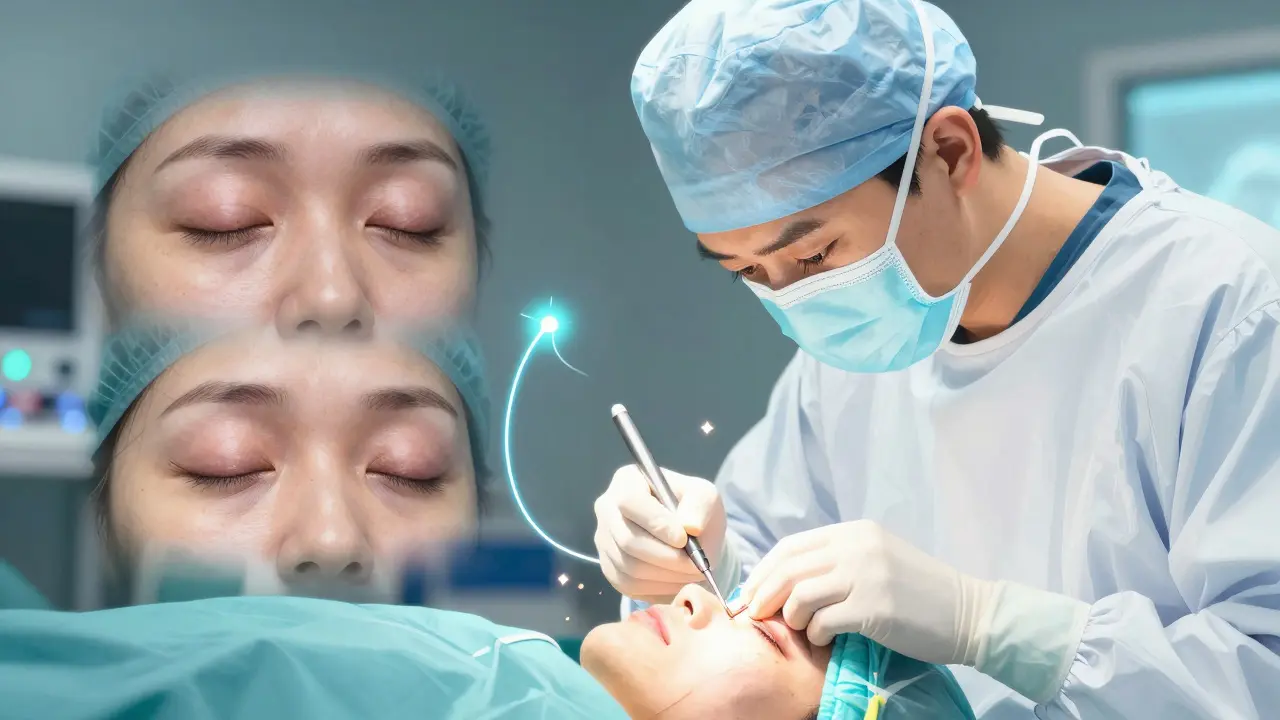
Surgery is the only permanent fix for ptosis. The goal is to lift the lid to a natural position without overdoing it. There are three main techniques:- Levator resection: Used for moderate to severe ptosis when the levator muscle still has some strength (more than 4 mm of movement). The surgeon shortens the muscle to make it tighter. Success rate: 85-95%.
- Frontalis sling: For severe ptosis where the levator is too weak. A sling (often made of silicone or fascia) connects the eyelid to the forehead muscle. You lift your eyelid by raising your eyebrows. This is common in children with congenital ptosis.
- Müller’s muscle-conjunctival resection: For mild ptosis. It works best if the eyelid responds to a phenylephrine eye drop test. This method tightens a small muscle under the lid. Less invasive, shorter recovery.
Recent advances include adjustable sutures, introduced in 2018. These let the surgeon fine-tune the lid height right after surgery while the patient is awake. This cuts down on revision surgeries by about 25%.
Complications? Overcorrection (lid too high), undercorrection (lid still droopy), asymmetry, or dry eyes. About 10-20% of patients get dry eyes after surgery. Most improve with time and artificial tears.
Surgical Repair for Entropion
Entropion surgery aims to reposition the eyelid so lashes point outward again. The technique depends on the cause:- Tarsal fracture procedure: The most common for involutional entropion. The surgeon tightens the eyelid by folding and suturing the tarsal plate. Success rate: 90-95%.
- Quickert suture: A temporary fix. Sutures pull the lid outward. Used for elderly patients who aren’t good surgical candidates. Lasts a few months. Success rate: 60-70%.
- Tarsal wedge resection: For cicatricial entropion (caused by scarring). A small wedge of tissue is removed and stitched back to reposition the lid.
New minimally invasive techniques using absorbable sutures have cut recovery time from 4-6 weeks down to 1-2 weeks. Patients can return to normal activities faster, with less swelling.
Complications include recurrence (5-15%), scarring (2-5%), and infection (1-3%). The risk of recurrence is higher if the underlying cause-like chronic inflammation or scarring-isn’t fully addressed.
When to Seek Help
You don’t need to wait until you’re struggling to see. If you notice any of these, see an eye specialist:- Rapid drooping of the eyelid (could signal nerve damage or a tumor)
- Constant eye pain or foreign body sensation
- Red, swollen eyelids with discharge
- Blurred vision that doesn’t improve with blinking
- Corneal abrasions or ulcers diagnosed by your doctor
Conservative treatments help temporarily: lubricating eye drops, taping the eyelid at night, warm compresses for blepharitis. But if symptoms persist beyond a few weeks, surgery is the only long-term solution.
Who’s at Risk?
Risk factors aren’t random:- Age: Over 60, risk rises sharply. Over 80? 2.5% have entropion.
- Contact lens wear: Increases ptosis risk by about 30%.
- Eyelid surgery history: Previous surgery raises entropion risk by 40-60%.
- Chronic eye inflammation: Blepharitis, ocular rosacea, or trachoma.
- Family history: Congenital ptosis often runs in families.
The global market for oculoplastic surgery is growing fast-projected to hit $2.7 billion by 2028. Why? Aging populations. More people living longer means more cases of age-related eyelid problems.
What Happens After Surgery?
Recovery is usually quick. Swelling and bruising peak around day 2-3 and fade in 1-2 weeks. Most people return to work within a week. Avoid heavy lifting and rubbing the eyes for at least 2 weeks.Follow-up is critical. Your surgeon will check eyelid position, symmetry, and healing. If you have dry eyes, you’ll need ongoing lubrication. Some patients need minor adjustments, especially if they had adjustable sutures.
Long-term, most patients report dramatic improvements: better vision, less eye strain, no more irritation. Many say they feel like they can see clearly again for the first time in years.
Can ptosis or entropion go away on its own?
No. Neither condition resolves without treatment. Ptosis may worsen over time as muscles weaken further. Entropion will continue to irritate the cornea, increasing risk of infection and scarring. Temporary relief can come from eye drops or taping, but surgery is the only permanent fix.
Is eyelid surgery risky?
Like any surgery, there are risks-but for ptosis and entropion repair, they’re low. Common issues include dry eyes, temporary swelling, or minor asymmetry. Serious complications like vision loss are extremely rare. Success rates are high: 85-95% for ptosis and 90-95% for involutional entropion. Choosing an experienced oculoplastic surgeon reduces risk significantly.
Can I have surgery if I have dry eyes?
Yes, but your surgeon will need to manage your dry eye first. Surgery can make dryness worse temporarily. Before surgery, you’ll likely be on lubricating drops, punctal plugs, or anti-inflammatory drops. After surgery, you’ll continue treatment. Many patients find their eyes feel better after correction because the eyelid can now protect the eye properly.
What’s the difference between entropion and ectropion?
Entropion is when the eyelid turns inward, causing lashes to rub the eye. Ectropion is the opposite-the eyelid turns outward, exposing the eye. Ectropion leads to dryness and irritation from air exposure. Both need surgery, but the techniques differ. Ectropion often requires skin grafts or tightening the outer eyelid, while entropion focuses on repositioning the lid margin.
How do I know if I need surgery or just eye drops?
Eye drops help with symptoms like dryness or inflammation, but they don’t fix the eyelid’s position. If you’re constantly squinting, lifting your brow, or feeling like something’s scratching your eye, and it’s lasted more than 2-3 weeks, see a specialist. A simple exam with a slit lamp can show if the lid is misaligned. If it is, surgery is the next step.
If you’re over 60 and noticing changes in how your eyelids look or feel, don’t ignore it. These aren’t just cosmetic issues-they’re vision and eye health problems. Early diagnosis and timely surgery mean better outcomes, faster recovery, and protection for your sight.




Scott Smith
March 16, 2026 AT 17:38It's wild how many people dismiss eyelid issues as just "getting old." But if your vision is compromised, it's not aging-it's a functional impairment. I've seen patients who couldn't drive at night because their lids drooped so low. Surgery isn't cosmetic; it's restoring basic safety.
And the stats are clear: 5% of adults over 70 have ptosis. That's millions. We need better public awareness, not just niche specialist forums.
Sally Lloyd
March 18, 2026 AT 01:19They say surgery fixes it-but what if it's just a cover-up for something bigger? I read a study last year linking eyelid surgeries to unreported neurological events. Not saying it's true, but why do they rush into cutting when they could test for autoimmune markers first? I'm not anti-surgery-I'm pro-verification.
Adam M
March 18, 2026 AT 09:17Entropion isn't "just aging." It's tissue failure. Fix it or live with a scratched cornea.
Leah Dobbin
March 19, 2026 AT 10:59It's fascinating how modern medicine reduces complex biomechanical degradation to a simple surgical fix. The real issue isn't the eyelid-it's the systemic collapse of connective tissue integrity in aging populations. We're patching symptoms while ignoring the epigenetic cascade triggered by decades of oxidative stress and poor microcirculation.
And don't get me started on the commercialization of oculoplastic surgery. $2.7 billion? That's not healthcare-it's a market bubble dressed in scrubs.
Alex MC
March 20, 2026 AT 11:50Appreciate the breakdown. I’ve had ptosis repair and it was life-changing-not just for vision, but for confidence. I didn’t realize how much I was straining just to stay alert.
Worth noting: dry eyes post-op are common, but they usually improve. Stick with the drops. Your eyes will thank you.
And yes-seeing a specialist early makes all the difference. No need to suffer silently.
rakesh sabharwal
March 21, 2026 AT 02:58It's rather pedestrian to reduce this to surgical intervention without addressing the underlying pathophysiological degradation of the orbicularis oculi and tarsal plate extracellular matrix. The literature is replete with evidence that collagen cross-linking dysfunction-particularly in the context of advanced glycation end-products-is the primary driver, not merely "aging."
Furthermore, the reliance on levator resection ignores the neurotrophic component. Why not prioritize neuromodulation protocols before excision? The current paradigm is reductionist and economically incentivized. A truly holistic approach would integrate proteomic profiling and bioregulatory peptide therapy. But of course, that's not profitable.
Aaron Leib
March 23, 2026 AT 00:46Good info. I’ve had both ptosis and entropion fixed years ago. Recovery was faster than I expected. Just follow the aftercare. No need to panic. Most people bounce back fine.
Don’t wait until it’s unbearable. Get checked if it’s been bothering you for more than a few weeks.
Dylan Patrick
March 23, 2026 AT 07:47My grandma had entropion surgery last year. She cried because she could finally see her grandkids’ faces without squinting.
That’s the real win. Not the stats. Not the market size. The look on her face when she blinked and didn’t feel sand in her eye for the first time in 15 years.
Don’t let anyone tell you this isn’t worth it. It’s not just vision. It’s connection.