Phenytoin-Warfarin Interaction Simulator
Days 0–2: Baseline
StablePre-phenytoin state. Standard monitoring applies.
Days 3–5: The Spike (Displacement)
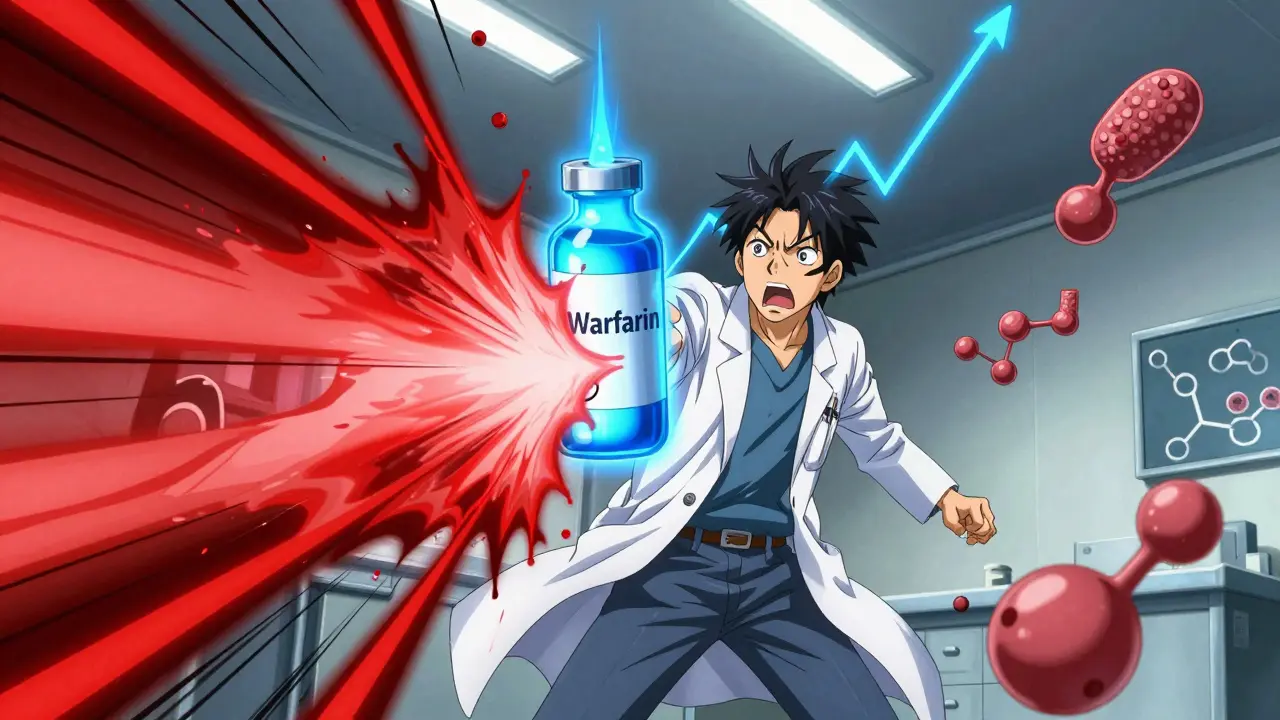
High RiskPhenytoin displaces Warfarin from albumin. Free Warfarin rises.
Days 7–14: The Crash (Induction)
Metabolic ShiftCYP450 enzymes induced. Warfarin metabolism accelerates rapidly.
Day 14+: New Steady State
MaintenanceHigher Warfarin dose required to maintain therapeutic INR.
Starting phenytoin in a patient who is already taking warfarin doesn't just create a simple drug interaction. It triggers a chaotic, two-phase rollercoaster that can leave clinicians guessing whether to increase or decrease the dose. You might see an immediate spike in bleeding risk, followed days later by a dangerous drop in anticoagulation protection. This isn't a minor side effect; it's one of the most complex pharmacokinetic battles in modern medicine.
If you are managing this combination, you aren't just treating seizures and preventing clots. You are fighting against protein binding displacement on day one and powerful enzyme induction by day ten. Getting this wrong leads to strokes or hemorrhages. Let's break down exactly what happens in the body, why it happens, and how to survive the first three weeks without incident.
The Two-Phase Trap: Displacement vs. Induction
The reason this interaction is so treacherous is that phenytoin attacks warfarin from two different angles at two different times. Most drug interactions follow a predictable curve. This one flips the script halfway through.
Phase 1: The Immediate Spike (Days 1-5)
When you first introduce phenytoin, it acts like a bully in a crowded room. Both phenytoin and warfarin love to attach themselves to albumin, a protein in your blood. Under normal conditions, about 99% of warfarin is bound to albumin, rendering it inactive. Only the free 1% does the actual work of thinning the blood. Phenytoin has a higher affinity for these binding sites. It kicks warfarin off the albumin, flooding the plasma with active, unbound warfarin.
This causes a transient but sharp rise in the International Normalized Ratio (INR). Within 24 to 72 hours, patients may show signs of over-anticoagulation. If you react to this spike by cutting the warfarin dose, you are setting yourself up for failure in Phase 2.
Phase 2: The Delayed Crash (Days 7-14)
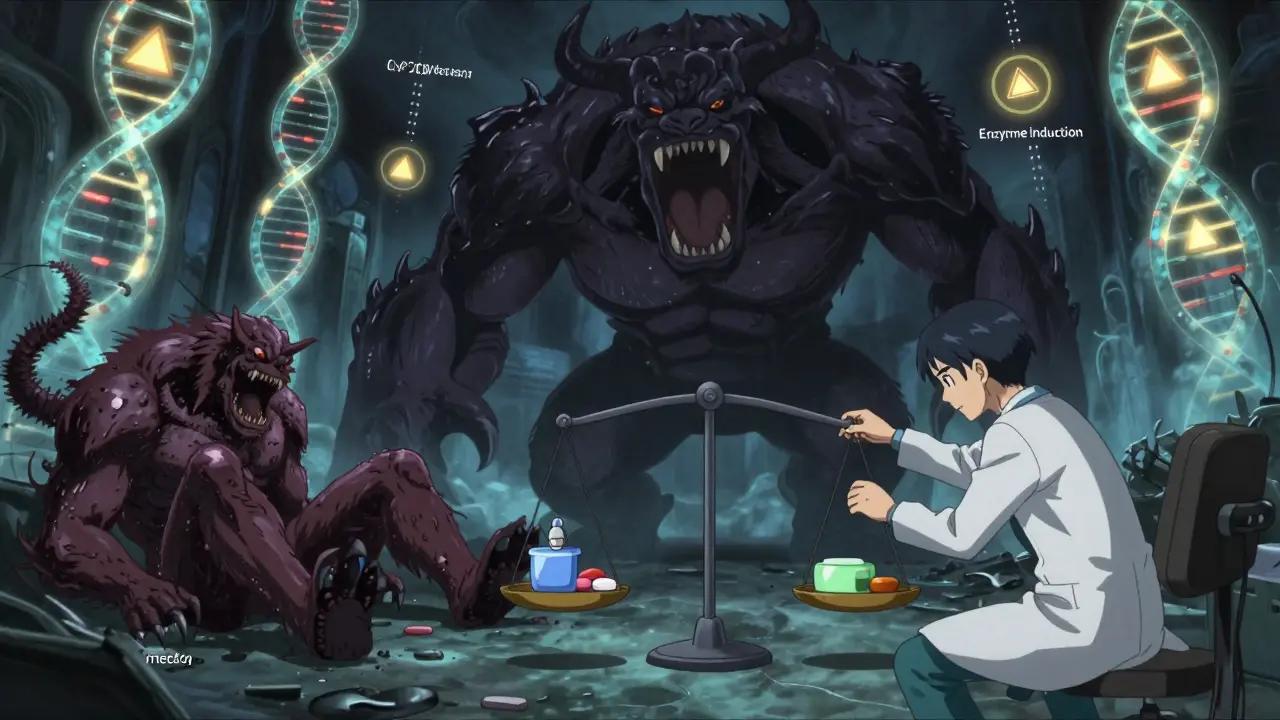
While the displacement effect is fading, phenytoin is busy doing something else entirely. It is inducing the liver’s cytochrome P450 enzymes, specifically CYP2C9 and CYP3A4. These enzymes are responsible for breaking down warfarin. Phenytoin ramps up their production by up to 400%. Suddenly, the liver is metabolizing warfarin at twice or even five times the normal rate. The INR plummets. If you didn't anticipate this, your patient is now at high risk for thrombosis because their warfarin dose is suddenly ineffective.
| Timeframe | Mechanism | Effect on INR | Clinical Action |
|---|---|---|---|
| Days 1-5 | Protein Binding Displacement | Increases (Risk of Bleeding) | Monitor closely; do NOT reduce warfarin yet |
| Days 7-14 | CYP450 Enzyme Induction | Decreases (Risk of Clotting) | Increase warfarin dose based on trend |
| Day 14+ | Steady State | Stabilized (Higher Dose Needed) | Maintain new higher warfarin dose |
Why Genetics Complicate the Picture
You cannot treat every patient the same way with this combination. The severity of the interaction depends heavily on the patient’s genetic makeup, specifically variants in the CYP2C9 and VKORC1 genes.
Warfarin exists as two mirror-image molecules: S-warfarin and R-warfarin. S-warfarin is about five times more potent than R-warfarin. Crucially, S-warfarin is broken down almost exclusively by CYP2C9. When phenytoin induces this enzyme, it disproportionately accelerates the clearance of the potent S-enantiomer. Patients with common CYP2C9 variant alleles (like *2 or *3) are "poor metabolizers." They normally require lower doses of warfarin. However, when exposed to phenytoin’s enzyme induction, their response can be erratic. Some studies suggest these individuals experience more pronounced fluctuations in INR during the transition period, making standard dosing algorithms unreliable.
Furthermore, consider the patient’s albumin levels. If a patient has hypoalbuminemia (low serum albumin), there are fewer binding sites available. This amplifies the initial displacement effect in Phase 1, leading to a sharper, more dangerous spike in free warfarin early on. Always check baseline albumin before starting this combo.

Monitoring Protocols: The First Three Weeks
The only way to navigate this interaction is aggressive monitoring. Guessing is not an option. Here is the practical workflow recommended by anticoagulation specialists:
- Baseline Check: Ensure the patient’s INR is stable before starting phenytoin. Document the current warfarin dose.
- Days 1-3: Check INR every 2-3 days. Expect it to rise slightly due to displacement. Watch for signs of bleeding (bruising, gum bleeding).
- Days 4-6: Continue monitoring. The displacement effect should be waning. Do not make major dose changes yet unless the INR is dangerously high (>5.0).
- Days 7-14: This is the danger zone for under-anticoagulation. Check INR frequently (every 2-3 days). As enzyme induction peaks, the INR will likely drop below therapeutic range. Begin increasing the warfarin dose incrementally.
- Week 3+: Once the INR stabilizes in the target range, switch to weekly monitoring. Note that the final warfarin dose required may be 2 to 5 times higher than the pre-phenytoin baseline.
A critical rule: Do not adjust the warfarin dose empirically based on the initial INR spike. Wait for the trend. If you cut the dose too early, you will crash into the induction phase with insufficient coverage.
What Happens When You Stop Phenytoin?
The interaction works both ways. If a patient has been stable on both drugs for months and you decide to stop phenytoin, the reverse chaos occurs. The liver enzymes induced by phenytoin take 10 to 14 days to return to baseline activity. During this time, warfarin metabolism slows down drastically.
The INR will gradually rise, potentially reaching toxic levels. You must proactively reduce the warfarin dose by 25% to 50% when discontinuing phenytoin, then monitor INR closely for two weeks. Failure to do so puts the patient at severe risk of hemorrhagic stroke or gastrointestinal bleeding.
Are There Better Alternatives?
In many cases, yes. If a patient needs long-term anticoagulation, direct oral anticoagulants (DOACs) like apixaban, rivaroxaban, or dabigatran are generally preferred over warfarin due to fewer interactions. However, DOACs are also substrates for CYP3A4 and P-glycoprotein. Strong enzyme inducers like phenytoin can significantly reduce DOAC levels, making them less effective. Therefore, DOACs are often contraindicated in patients taking enzyme-inducing antiepileptics.
This leaves warfarin as the primary oral option, but it forces us to look at alternative antiepileptic drugs (AEDs) if possible. Newer AEDs such as levetiracetam, gabapentin, and pregabalin have minimal effects on CYP450 enzymes. If a patient’s seizure disorder allows for switching from phenytoin to one of these agents, it eliminates the complex warfarin interaction entirely. This is often the safest clinical path.
Bidirectional Effects: Does Warfarin Affect Phenytoin?
While phenytoin dominates the conversation, warfarin can subtly alter phenytoin levels. Warfarin may displace phenytoin from protein binding sites as well, though this effect is less clinically significant than the impact on warfarin. More importantly, any change in liver function or competition for metabolic pathways can lead to unpredictable phenytoin concentrations. Since phenytoin has a narrow therapeutic index (10-20 mcg/mL), small changes can lead to toxicity (nystagmus, ataxia, confusion) or subtherapeutic control of seizures. Monitoring phenytoin levels alongside INR is prudent, especially during the initiation and discontinuation phases.
How long does it take for the phenytoin-warfarin interaction to stabilize?
It typically takes 14 to 21 days for the interaction to reach a steady state. The initial protein displacement effect resolves within 3-5 days, while the full enzyme induction effect peaks around 10-14 days. Consistent INR monitoring throughout this three-week window is essential.
Should I reduce the warfarin dose immediately after starting phenytoin?
No. Reducing the dose immediately is dangerous because it ignores the upcoming enzyme induction phase. The initial INR spike is temporary. If you lower the dose now, you will likely end up with subtherapeutic anticoagulation once phenytoin begins accelerating warfarin metabolism.
Can I use DOACs instead of warfarin with phenytoin?
Generally, no. Phenytoin is a strong enzyme inducer that significantly lowers the plasma concentration of DOACs like apixaban and rivaroxaban, rendering them ineffective. Warfarin remains the safer oral anticoagulant choice in this specific scenario, despite its complexity.
What are the symptoms of phenytoin toxicity in a patient on warfarin?
Signs include nystagmus (involuntary eye movement), slurred speech, drowsiness, confusion, and ataxia (loss of coordination). Because warfarin can slightly affect phenytoin levels, monitor for these neurological signs, especially if the patient’s INR is fluctuating wildly.
Is genetic testing helpful before starting this combination?
Yes. Testing for CYP2C9 and VKORC1 variants can help predict baseline warfarin sensitivity. While it doesn't eliminate the need for monitoring, knowing a patient is a poor metabolizer alerts clinicians to expect more dramatic shifts in INR during the interaction phases.