
Medication Risk-Benefit Calculator
Select Your Condition
Risk-Benefit Analysis
Select a condition and risk level to see analysis
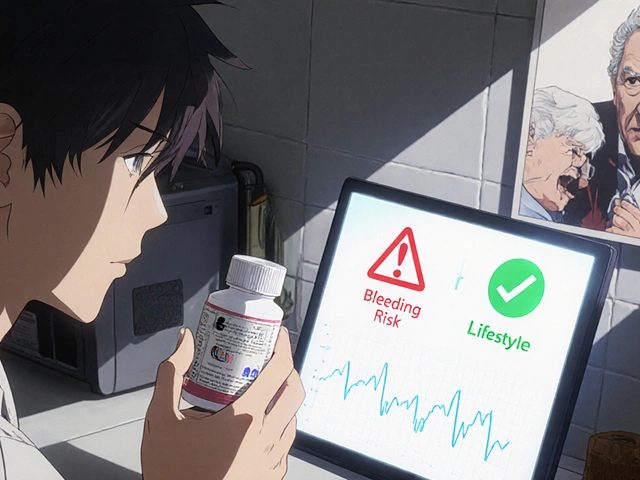
When you pick up a prescription, you might notice a bold, black border around a paragraph on the medication label or insert. It stands out like a stop sign. This is a black box warning-the strongest safety alert the FDA can require for a drug. It doesn’t mean the medicine is unsafe. It means the risks are serious enough that doctors and patients need to know before taking it.
What Exactly Is a Black Box Warning?
A black box warning, officially called a boxed warning by the U.S. Food and Drug Administration (FDA), is a legal requirement placed on prescription drugs when there’s clear evidence of life-threatening or permanently disabling side effects. These aren’t minor complaints like nausea or dizziness. They’re events like liver failure, suicidal thoughts, heart attacks, or severe allergic reactions that can lead to death.
Unlike regular warnings that appear in small print, a black box warning is printed in bold, black-bordered text and placed at the top of the drug’s prescribing information. It’s designed to be impossible to miss. The FDA doesn’t slap these on lightly. A drug must go through years of testing before approval, but sometimes the most dangerous side effects only show up after thousands of people have taken it. That’s why many black box warnings appear years after a drug hits the market.
As of 2023, more than 400 prescription drugs in the U.S. carry a black box warning. That’s about 15% of all prescription medications. Some of the most common ones include antidepressants like fluoxetine, diabetes drugs like rosiglitazone, cancer treatments like daratumumab, and painkillers like opioids.
Why Do These Warnings Exist?
The FDA doesn’t issue black box warnings based on lab tests or animal studies alone. They require real-world data-reports from doctors, patients, and hospitals showing a pattern of serious harm. The agency uses its MedWatch program, which collects over 1.2 million adverse event reports each year, to spot these patterns.
There are four main reasons the FDA adds a black box warning:
- The drug has been linked to serious side effects that could be fatal or cause permanent damage.
- The side effects can be avoided if the drug is used in a specific way-like not giving it to children or avoiding it with certain other medications.
- The drug is only approved for use in very limited situations, like treating a rare cancer or when other treatments have failed.
- The drug poses a higher risk to certain groups, such as pregnant women, older adults, or people with pre-existing heart conditions.
Once the FDA decides a warning is needed, they contact the drug manufacturer. The company then drafts the exact wording, which the FDA reviews and approves. The warning then appears on the drug’s packaging, patient information leaflets, and online prescribing databases.
Does a Black Box Warning Mean I Shouldn’t Take the Drug?
No. This is the biggest misunderstanding. A black box warning doesn’t mean the drug is banned or unsafe for everyone. It means the risks are real-and they need to be weighed against the benefits.
Take antidepressants, for example. Many carry a black box warning for increased suicidal thoughts in young adults under 25. But for someone struggling with severe depression, the risk of not taking the medication-suicide, self-harm, inability to function-can be far greater. Doctors don’t avoid prescribing these drugs. They just make sure patients and families know the signs to watch for.
Same with biologics used to treat rheumatoid arthritis or Crohn’s disease. Some carry warnings for serious infections or lymphoma. But for many patients, these drugs are the only thing that stops joint destruction or bowel damage. The choice isn’t between safe and dangerous. It’s between manageable risk and no relief at all.
As pharmacist Meghan Lehmann from the Cleveland Clinic says, “If a medication you’re taking carries a risk that warrants a black box warning, that doesn’t necessarily mean you shouldn’t take it.”
How Do These Warnings Affect Prescribing and Usage?
Black box warnings change how doctors think-and how patients respond.
After the FDA added a black box warning to the diabetes drug rosiglitazone in 2007, prescriptions dropped by 70%. But even then, over 3.8 million people were still taking it. Why? Because for many, the alternative-uncontrolled blood sugar, amputations, kidney failure-was worse.
Drug manufacturers feel the impact too. On average, sales of a drug drop 25-30% in the year after a black box warning is added. But if the drug treats a life-threatening condition with few alternatives, the drop is smaller. That’s why cancer drugs often keep high usage despite strong warnings.
Doctors now have to document that they’ve discussed the warning with patients before prescribing. Many use checklists or electronic prompts to make sure the conversation happens. It’s not just about signing a form-it’s about making sure patients understand what they’re signing up for.
Why Don’t Patients Always Know About These Warnings?
Here’s the problem: patients often find out about black box warnings from Google, not their doctor.
Surveys show that 78% of patients say they want to know about these warnings before starting a new medication. But only 42% recall their doctor ever discussing it. That’s a huge gap.
Why? Time. Doctors are rushed. Patients are overwhelmed. The warning might be mentioned in passing, buried in a 10-minute visit. Or worse-it’s assumed the patient will read the insert. But most people don’t. Or they don’t understand the medical jargon.
Pharmacists are often the last line of defense. When a patient asks, “Why is there a black box on this?” the pharmacist is the one who explains: “This means there’s a risk of liver damage, but your doctor believes the benefit of controlling your condition outweighs that risk. Here’s what to watch for.”
Reddit threads like r/pharmacy are full of patients asking, “Should I stop this?” after reading the warning online. The top answer? “Don’t stop. Talk to your doctor.”
What Should You Do If Your Medication Has a Black Box Warning?
If you’re prescribed a drug with a black box warning, here’s what to do:
- Don’t panic. This is not a death sentence. It’s a heads-up.
- Ask your doctor: “What’s the specific risk? How likely is it? What signs should I watch for?”
- Ask about alternatives: “Is there another drug without this warning that could work for me?”
- Know the red flags: If the warning mentions liver damage, know the symptoms-yellow skin, dark urine, belly pain. If it mentions heart issues, know chest pain or shortness of breath.
- Report anything unusual: Use the FDA’s MedWatch system or tell your doctor right away. Your report could help protect others.
Many people who take these drugs live normal, healthy lives. The warning doesn’t change their outcome-it just helps them stay safe.
Are Black Box Warnings Getting More Common?
Yes. Since 1999, the number of new black box warnings has tripled. The biggest jumps came in cancer drugs, heart medications, and psychiatric treatments.
Why? Better data. The FDA’s Sentinel Initiative, launched in 2008, now tracks over 200 million patient records in real time. That means dangerous side effects are caught faster. In 2022 alone, the FDA issued 37 new or updated black box warnings.
And things are changing even faster. In 2025, the FDA is rolling out an AI system that can scan millions of medical records and pharmacy claims to spot safety signals 40% faster than before. That means warnings may come sooner-but also that more drugs will get them.
Some experts worry this could scare patients away from useful drugs. Others say it’s long overdue. The truth? The system isn’t perfect, but it’s getting better.
Can a Black Box Warning Ever Be Removed?
Yes-but it’s rare. Since 2000, only 12 black box warnings have been fully removed from drug labels.
It takes overwhelming new evidence that the risk was overstated or no longer applies. For example, the warning on birth control pills and blood clots was updated-not removed-after studies showed the risk was much lower in healthy, non-smoking women under 35.
Removing a warning is harder than adding one. The FDA requires multiple large studies, peer-reviewed data, and consensus from independent experts. Most companies don’t even try. They’d rather keep the warning and focus on educating patients.
What’s Next for Black Box Warnings?
The future of these warnings might not be on paper anymore.
The FDA is testing “dynamic labeling”-digital versions of drug information that update in real time as new safety data comes in. Imagine scanning a QR code on your pill bottle and seeing the latest warning, not from 2018, but from last week.
Some pharmacies are already using apps that flag black box warnings when a prescription is filled. Others are training AI chatbots to explain them in plain language.
But the core idea won’t change: these warnings exist to protect you-not to scare you. They’re not a reason to avoid treatment. They’re a reason to be informed.
Do all prescription drugs have black box warnings?
No. Only about 15% of prescription medications in the U.S. carry a black box warning. These are reserved for drugs with serious, life-threatening risks that have been confirmed through real-world use-not just lab studies. Most common medications like antibiotics, blood pressure pills, or allergy meds don’t need them.
Can I stop taking my medication if it has a black box warning?
Never stop a prescription medication without talking to your doctor first. Stopping suddenly can be dangerous-even more dangerous than the side effect the warning mentions. For example, stopping an antidepressant abruptly can cause severe withdrawal symptoms. If you’re worried, ask your doctor about the risks, benefits, and alternatives. Don’t make decisions based on internet searches alone.
Are black box warnings only for prescription drugs?
Technically, the FDA can apply boxed warnings to over-the-counter drugs too, but it’s extremely rare. Almost all black box warnings are for prescription medications because they’re used under medical supervision and carry higher risks. OTC drugs are generally considered safer for self-use.
Why do some drugs with black box warnings still sell well?
Because for many patients, the benefits outweigh the risks. Cancer drugs, psychiatric medications, and treatments for autoimmune diseases often have black box warnings-but they’re the only options that work. Doctors and patients make a shared decision: the risk of side effects is real, but the risk of not treating the disease is worse.
How long does it take for a black box warning to be added after a drug is approved?
It can take years. Most black box warnings appear after a drug has been on the market for 5 to 15 years. That’s because serious side effects often only show up after thousands of people have used the drug. The FDA relies on real-world data, not just clinical trials, which involve only a few thousand patients. Newer drugs rarely have these warnings right away.
Can I report a side effect if I think it’s related to a black box warning?
Yes. The FDA’s MedWatch program lets patients and doctors report any serious side effect, even if it’s not listed on the label. Your report helps the FDA decide if a warning needs to be updated or added. You can file a report online at fda.gov/medwatch or by calling 1-800-FDA-1088.


Josh McEvoy
January 23, 2026 AT 13:02Sawyer Vitela
January 24, 2026 AT 10:07Shanta Blank
January 24, 2026 AT 12:21Tommy Sandri
January 25, 2026 AT 20:11Sushrita Chakraborty
January 27, 2026 AT 15:21Tiffany Wagner
January 28, 2026 AT 02:21Amelia Williams
January 28, 2026 AT 22:32Himanshu Singh
January 30, 2026 AT 03:09Jamie Hooper
January 31, 2026 AT 08:17Izzy Hadala
February 1, 2026 AT 08:10Phil Maxwell
February 3, 2026 AT 03:33