
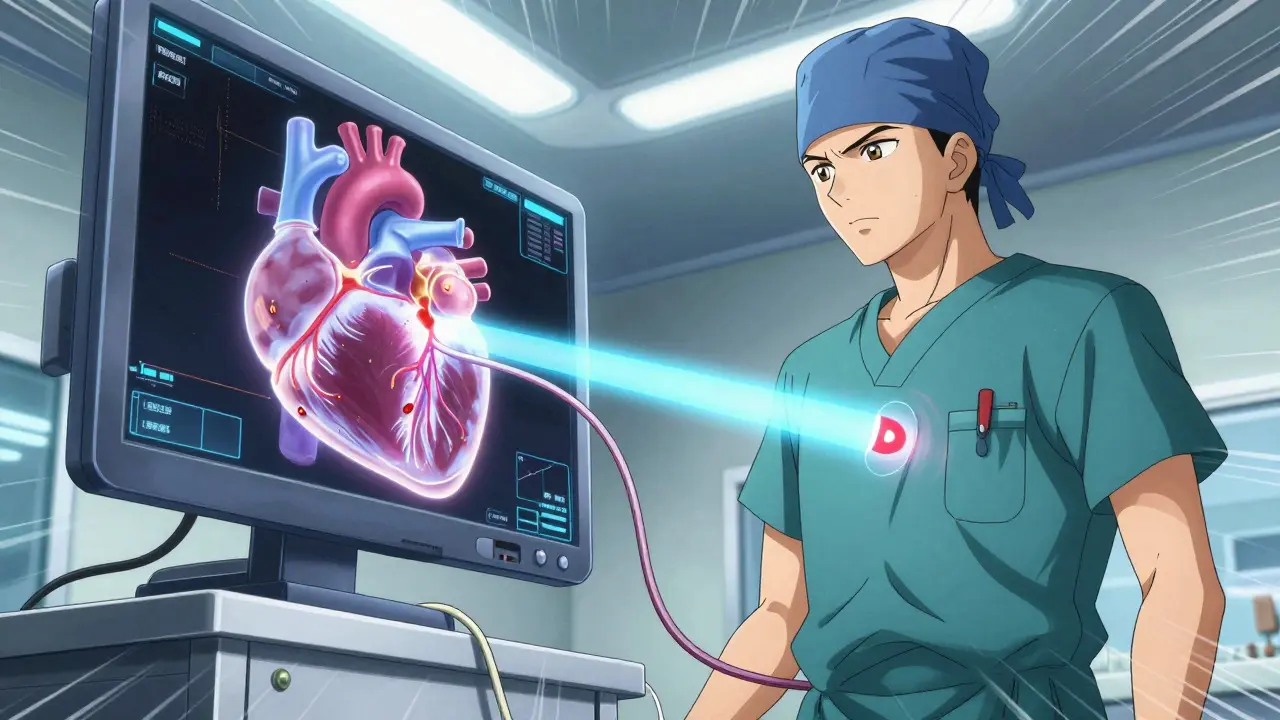
Living with an irregular heartbeat can feel like your body is working against you. You might experience sudden palpitations, shortness of breath, or a constant sense of fatigue that makes daily life exhausting. For years, the standard approach was to manage symptoms with medication. But medical science has moved beyond just masking the problem. Today, we have powerful tools to actually fix the electrical glitches in your heart. The two main pillars of this modern treatment are catheter ablation and device therapy.
If you’ve been diagnosed with an arrhythmia like atrial fibrillation (AFib), you’re likely wondering which path is right for you. Is it time to go under the knife? Do you need a pacemaker? Or is there a new technology that offers a better chance at a normal life? This guide breaks down these complex procedures into plain English, helping you understand what happens during each treatment, the risks involved, and why doctors are increasingly recommending these interventions earlier than before.
What Is Catheter Ablation?
Catheter ablation is a minimally invasive procedure used to treat cardiac arrhythmias by delivering energy to create controlled lesions in heart tissue to disrupt abnormal electrical pathways. Also known as radiofrequency ablation, it was first pioneered in the late 1980s and has since become a cornerstone of heart rhythm care. Think of it as rewiring your heart’s electrical system. Instead of open-heart surgery, doctors thread thin, flexible tubes called catheters through your veins-usually in your groin-and up into your heart.
Once inside, these catheters deliver energy to specific spots on the heart muscle. This energy creates tiny scars, or lesions, which block the erratic electrical signals causing your arrhythmia. The most common target is the pulmonary veins, where many AFib signals originate. By isolating these veins from the rest of the heart-a process called pulmonary vein isolation (PVI)-doctors can stop the chaotic firing of cells.
The technology behind this has evolved dramatically. Early versions relied on guesswork and visual cues. Today, we use advanced tools like contact force sensing. This technology tells the doctor exactly how hard the catheter is pressing against the heart wall in real-time. Studies show that using contact force-sensing catheters improves success rates by 12-15% and reduces complications significantly. It’s the difference between trying to paint a fence blindfolded versus having a steady hand guided by a laser level.
Types of Energy Used in Ablation
Not all ablation procedures are created equal. The type of energy used depends on the specific arrhythmia and the patient’s anatomy. Here are the three main technologies currently in use:
- Radiofrequency (RF) Ablation: This uses heat generated by high-frequency electrical currents. It’s the most common method. Modern RF catheters, such as the THERMOCOOL SMARTTOUCH, use an "Ablation Index" to ensure each lesion is deep enough to be effective but not so hot that it causes unnecessary damage. This precision has made RF the gold standard for complex cases.
- Cryoablation: Instead of heat, this method uses extreme cold. A balloon-tipped catheter inflates near the pulmonary veins and freezes the tissue, typically reaching temperatures between -55°C and -65°C. The Arctic Front Advance system by Medtronic is a popular example. Cryoablation is often faster, with procedure times averaging 90-120 minutes compared to 150-180 minutes for RF. It’s particularly useful for patients who need a quicker recovery or have anatomical challenges.
- Pulsed Field Ablation (PFA): This is the newest player in the field. PFA uses short bursts of electrical energy to selectively stun heart cells without damaging surrounding tissues like nerves or esophagus. The Farapulse PFA system received FDA approval in September 2023. Early trials show impressive results, with 85.9% freedom from AFib at 12 months and much shorter procedure times (around 76 minutes). Because it doesn’t rely on heat or cold, it may offer a safer profile with fewer side effects.
Device Therapy: When Wiring Isn't Enough
Sometimes, scarring the heart isn’t the right solution. If your heart beats too slowly (bradycardia) or if your heart muscle is weak and needs help pumping, device therapy becomes the primary option. These are small electronic implants that regulate your heart’s rhythm.
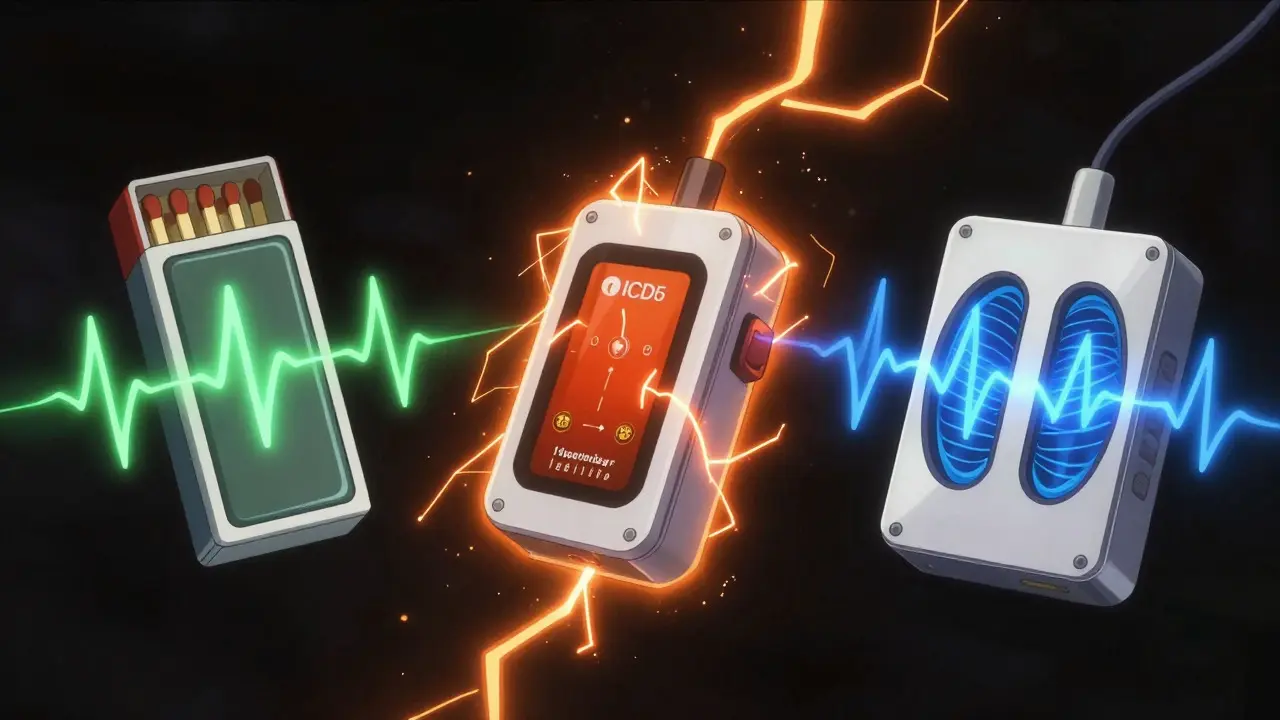
Pacemakers are the most well-known devices. They monitor your heart rate and send tiny electrical pulses to keep your heart beating at a healthy pace. Modern pacemakers are about the size of a matchbox and last 5-15 years before needing a battery replacement. They are essential for patients with sick sinus syndrome or heart block.
Implantable Cardioverter Defibrillators (ICDs) are more powerful. While a pacemaker speeds up a slow heart, an ICD slows down a dangerously fast one. If it detects a life-threatening arrhythmia like ventricular tachycardia, it delivers a shock to reset the heart’s rhythm. This can be a lifesaver for people with weakened heart muscles or a history of cardiac arrest.
Cardiac Resynchronization Therapy (CRT) devices are a specialized type of pacemaker for people with heart failure. They coordinate the beating of the heart’s lower chambers (ventricles) to improve pumping efficiency. This isn’t just about rhythm; it’s about restoring the heart’s mechanical function.
Ablation vs. Medication: What Does the Data Say?
For decades, doctors prescribed antiarrhythmic drugs (AADs) as the first line of defense. However, recent large-scale studies have shifted this perspective. A 2020 meta-analysis published in *Circulation: Arrhythmia and Electrophysiology* reviewed data from nearly 1,800 patients and found that catheter ablation reduced the recurrence of atrial arrhythmias by 58% compared to medical therapy alone.
More importantly, ablation isn’t just about stopping the palpitations. It saves lives. For patients with heart failure and reduced ejection fraction (HFrEF), ablation was associated with a 48% relative risk reduction in mortality. That’s a massive number. It means that fixing the rhythm actually helps the heart pump better and live longer. Dr. Jonathan P. Piccini, lead author of the study, noted that the benefit is driven largely by those with both AFib and heart failure.
Cost is another factor. While ablation has a higher upfront cost ($16,278-$21,294 in the US) compared to monthly medications, it becomes cost-saving after 3.2 to 8.4 years. Why? Because patients spend less time in the hospital, need fewer emergency room visits, and eventually stop taking expensive daily drugs. In Australia, Medicare covers a significant portion of these costs, making it accessible for many public and private patients.
| Feature | Catheter Ablation | Antiarrhythmic Drugs | Device Therapy |
|---|---|---|---|
| Invasiveness | Minimally invasive (catheters via veins) | Non-invasive (oral pills) | Surgical implant (small incision) |
| Primary Goal | Cure or significantly reduce arrhythmia burden | Manage symptoms and prevent episodes | Regulate heart rate or prevent sudden death |
| Success Rate (AFib) | 70-85% (varies by type and technology) | ~50% control rate over long term | N/A (used for bradycardia/heart failure) |
| Risks | Bleeding, infection, rare perforation (1-2%) | Side effects (fatigue, thyroid issues) | Infection, lead displacement, battery depletion |
| Long-term Outlook | Potential cure; may require repeat procedures | Lifelong medication required | Lifelong device monitoring and battery changes |
Who Is a Good Candidate?
You don’t need to suffer through years of failed medications before considering ablation. Guidelines have changed. The 2020 European Society of Cardiology guidelines give a Class I recommendation (the highest level) for ablation in symptomatic paroxysmal AFib patients who have failed at least one drug. But increasingly, doctors are offering it as a first-line treatment for younger patients or those with severe symptoms.
Consider ablation if:
- Your quality of life is severely impacted by palpitations or fatigue.
- You cannot tolerate the side effects of antiarrhythmic drugs.
- You have heart failure with reduced ejection fraction (HFrEF).
- You prefer a procedural solution over lifelong daily medication.
Consider device therapy if:
- Your heart rate is consistently too slow.
- You have a history of fainting due to heart block.
- Your heart muscle is weak, putting you at risk for sudden cardiac arrest.

Risks and Recovery
No medical procedure is without risk. For catheter ablation, major complications occur in about 8% of patients. The most serious is cardiac tamponade, where blood leaks into the sac around the heart, occurring in about 1.2% of cases. This requires immediate drainage but is rarely fatal if caught early. Other risks include stroke (very rare, <0.5%), bleeding at the puncture site, and injury to nearby structures like the esophagus or phrenic nerve.
Recovery is surprisingly quick. Most patients go home the next day. You’ll need to avoid heavy lifting for a few days to let the groin puncture site heal. Many people return to work within a week. However, your heart needs time to heal internally. Doctors often prescribe blood thinners for three months post-procedure to prevent clots while the scar tissue forms. During this "blanking period," some arrhythmias may still occur, which is normal and doesn’t mean the procedure failed.
For device therapy, recovery involves keeping the arm on the implant side still for a few weeks to prevent the leads from moving. Infection risk is low (<1%) but serious if it occurs. Regular check-ups are required to monitor battery life and device function.
The Future of Heart Rhythm Care
We are standing on the brink of a revolution in arrhythmia treatment. Pulsed Field Ablation (PFA) is gaining rapid traction because it is faster and potentially safer than heat or cold methods. Artificial intelligence is also entering the lab. New software can map the heart’s electrical activity in 3D, helping doctors identify the exact source of the problem with unprecedented accuracy.
The goal for the next decade is clear: make ablation the first-line treatment for all symptomatic AFib patients. As technology improves and outcomes get better, the idea of living with a broken electrical system will become obsolete. If you are struggling with an arrhythmia, don’t accept "just take this pill" as the only answer. Ask your cardiologist about whether ablation or a device could give you back your life.
Is catheter ablation painful?
During the procedure, you are usually sedated or under general anesthesia, so you feel no pain. Afterward, you may experience soreness at the catheter insertion site (groin) and some chest discomfort as the heart heals. This is typically manageable with over-the-counter pain relievers and subsides within a few days.
How long does a catheter ablation procedure take?
It varies by technique. Radiofrequency ablation typically takes 2 to 3 hours. Cryoballoon ablation is faster, often completing in 90 to 120 minutes. Newer pulsed field ablation (PFA) systems can complete the procedure in under 90 minutes, including mapping time.
Can I drive after a pacemaker or ICD implant?
You should not drive for at least 1 to 2 weeks after a pacemaker implant to allow the incision to heal and the leads to settle. For an ICD, driving restrictions are stricter if you receive a shock, as it may cause temporary loss of consciousness. Check local laws and consult your doctor, but generally, you can resume driving once cleared medically.
Does insurance cover catheter ablation?
In most countries, including Australia and the US, ablation is covered by Medicare or private insurance if deemed medically necessary. In the US, CMS covers it at an average reimbursement of $18,500. Coverage usually requires documentation of failed medication trials or significant symptom burden.
What is the success rate of ablation for atrial fibrillation?
Success rates depend on the type of AFib. For paroxysmal (intermittent) AFib, single-procedure success rates range from 70% to 85%. For persistent (continuous) AFib, rates are lower, around 50-60%, and may require a second procedure. Newer technologies like contact force sensing and PFA are improving these numbers.
Do I need to stay in the hospital overnight?
Yes, most patients stay overnight for observation. This allows doctors to monitor your heart rhythm and check for any bleeding or complications at the catheter insertion site. Some centers with advanced protocols may discharge stable patients the same day, but overnight stays remain the standard of care.