

When you’re flying across time zones, your body doesn’t just get jet lag-it can also mess up your medication schedule. For travelers taking antimalarials or antiretrovirals, getting the timing wrong isn’t just inconvenient. It can lead to treatment failure, drug resistance, or even life-threatening illness. While the title mentions antibiotics, most real-world guidance focuses on antimalarials and HIV medications. That’s because these drugs have narrow therapeutic windows. Miss a dose by a few hours, and the consequences can be serious.
Why Timing Matters More Than You Think
Most people think of medication as something you take at the same time every day-morning, night, with food. But when you jump from London to Bangkok (7 time zones ahead), your body’s internal clock gets thrown off. Your liver doesn’t know it’s 8 a.m. in London anymore. It’s 3 p.m. in Bangkok. And if you’re still taking your pill at London time, you might be dosing at 3 a.m. local time. That’s not just confusing-it’s dangerous. For antimalarials like Malarone (atovaquone-proguanil), the goal is to keep a steady level of the drug in your blood to kill any malaria parasites before they multiply. If you miss a dose or take it too late, that level drops. And if you’re in a malaria zone with low drug levels? You’re vulnerable. A 2023 CDC report showed that travelers who missed doses or took antimalarials without food had up to a 40% higher risk of infection. For people on HIV treatment, the stakes are even higher. Antiretrovirals like dolutegravir or protease inhibitors need to stay within a very tight range. If levels drop too low, the virus can rebound. And if it rebounds? It can mutate. That means the drugs you’ve been taking for years might stop working. One traveler in a 2023 Reddit thread described missing a dose during a 16-hour flight from London to Sydney. Within six weeks, his viral load jumped from undetectable to 1,200 copies/mL. That’s not a fluke-it’s a known risk.Antimalarials: The Three Main Types and Their Rules
Not all antimalarials are created equal. Your choice of drug determines how flexible you can be with timing. Here’s what you need to know:- Atovaquone-proguanil (Malarone): This is the most commonly prescribed prophylactic. You start it 1-2 days before entering a malaria zone, take it daily during your trip, and continue for 7 days after you leave. Crucially, you must take it with food or milk. A 2008 pharmacology study showed that taking it on an empty stomach cuts absorption by 75%. If you vomit within an hour of taking it, you need to repeat the dose. If you miss a dose, take it as soon as you remember-but if it’s close to your next dose, skip it. Never double up. And if you miss a dose while in a malaria zone? You must continue taking it for 4 more weeks after you resume.
- Chloroquine: Used in areas where malaria isn’t resistant. Dosing is weight-based: 10 mg per kg on day 1 and 2, then 5 mg per kg on day 3. It’s taken weekly for prevention. This one’s more forgiving-up to 12 hours off is usually okay. But if you’re in a high-risk area and you miss a dose, you’re at risk.
- Artemether-lumefantrine: Used for treatment, not prevention. It’s a 3-day regimen: 4 tablets right away, 4 more 8 hours later, then 4 tablets twice daily for the next two days. You need fat with every dose. No fat? The drug doesn’t absorb. That’s why many travelers on this regimen end up sick-not from malaria, but from vomiting because they took it without food.
- Mefloquine: Taken weekly. This one’s the most time-zone-friendly because you only dose once a week. You can stick to your home time zone for up to 10 days before adjusting. But here’s the catch: 12.3% of users report severe side effects like anxiety, hallucinations, or depression. It’s not for everyone.
Antiretrovirals: Forgiveness Windows and the 2-Hour Rule
HIV medications vary wildly in how much leeway they give you. This is called the “forgiveness window”-the maximum time you can be late before the drug stops working effectively.- Dolutegravir: One of the most forgiving. You can be up to 12 hours late without increasing risk. This makes it ideal for travelers.
- Raltegravir: 8-hour window. Still pretty flexible.
- Tenofovir/emtricitabine: 6-hour window. You need to be more careful.
- Protease inhibitors (like darunavir or atazanavir): Only 4-6 hours. These are the hardest to manage across time zones.

Practical Tips That Actually Work
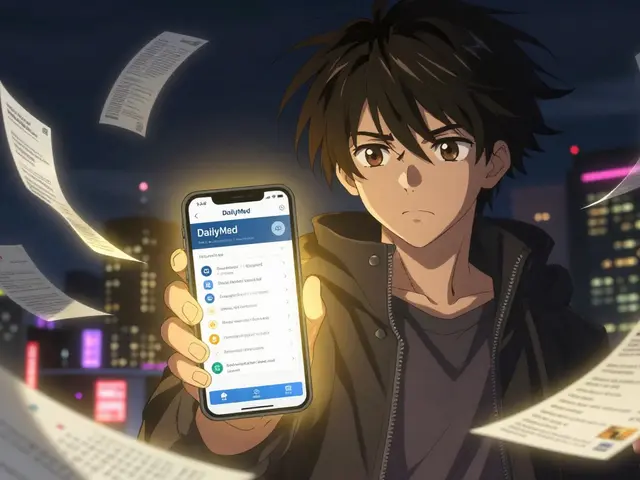
Here’s what works in real life-not just theory:- Use Medisafe or similar apps: These apps let you set multiple alarms, sync with your flight schedule, and even remind you to take meds with food. One user on the Lonely Planet forum said, “I set four alarms and still missed one. Then I used Medisafe. I haven’t missed one since.”
- Print your dosing schedule: Get it from your doctor. Include the drug name, dose, time, food requirement, and what to do if you miss a dose. Show it to a pharmacist at your destination if you need to refill.
- Carry extra pills: Always bring 10-15% more than you think you’ll need. Delays happen. Lost luggage happens. Don’t risk running out.
- Time your meals with your meds: If your drug needs food, plan your meals around it. On long flights, ask for meals early or late if needed. Don’t wait for the airline’s schedule.
- Know your destination’s malaria risk: Not every country in Southeast Asia has the same risk. Some areas have drug-resistant strains. Check the CDC Yellow Book 2024 before you go.
What the Experts Say (And What They Don’t)
Dr. Jonathan Smith, who led the 2015 review on antiretroviral timing, says: “The risk is lowest when your viral load is suppressed. If it’s not, you need a personalized plan.” That’s key. If you’re newly diagnosed or your treatment isn’t working, flying across time zones isn’t just risky-it’s potentially dangerous. The CDC’s Dr. Paul Arguin adds: “After a missed dose during exposure, atovaquone-proguanil must be continued for a minimum of 4 more weeks.” That’s not common knowledge. Most travelers think, “I missed one dose, I’ll just keep going.” They don’t realize they need to extend their course. And here’s the blind spot: no current guidelines fully address travelers crossing more than three time zones in under 48 hours. That’s common now. A flight from Los Angeles to Dubai (11 hours) with a 2-hour layover in Frankfurt? You’ve crossed 9 time zones in 13 hours. That’s a perfect storm for medication errors.
What’s New in 2025
The CDC launched its Malaria Prophylaxis Timing Calculator in February 2024. You plug in your flight, your drug, and your home time zone-and it spits out a custom dosing schedule. A pilot study at Johns Hopkins found it cut timing errors by 63%. There’s also a new injectable HIV treatment-cabotegravir/rilpivirine-that you get every two months. No daily pills. No time zone headaches. But it’s only available in 17 countries as of mid-2024. If you’re eligible and have access, it’s a game-changer. Researchers at the London School of Hygiene & Tropical Medicine are building an AI app that predicts jet lag and adjusts dosing recommendations in real time. It’s expected to launch in late 2025. Until then, stick with the basics: plan ahead, use alarms, and never take antimalarials on an empty stomach.Frequently Asked Questions
Can I take antimalarials without food if I’m on a flight?
No. Drugs like Malarone and artemether-lumefantrine need fat to absorb properly. Taking them on an empty stomach can reduce effectiveness by up to 75%. If you’re on a flight and food isn’t available, ask for a snack-nuts, cheese, or even peanut butter packets. If you absolutely can’t eat, take the pill anyway, but plan to take your next dose with food. If you vomit within an hour, you need to repeat the dose.
What if I miss a dose of my HIV medication while traveling?
If you’re on dolutegravir or raltegravir, take the missed dose as soon as you remember-even if it’s 8-10 hours late. If you’re on a protease inhibitor and you’re more than 6 hours late, skip it. Don’t double up. Resume your regular schedule at the next dose. But if you miss two doses in a row, contact your doctor immediately. Virological rebound can happen quickly.
Do I need to adjust my antimalarial schedule if I’m only traveling for 3 days?
Yes. Even short trips require full protection. Start Malarone 1-2 days before you enter the malaria zone, not when you leave home. If you’re flying out of New York at 8 a.m. and landing in Accra at 10 p.m. local time, your first dose should be at 10 p.m. Accra time-not New York time. Many travelers get this wrong and end up unprotected during the first night, when mosquito bites are most likely.
Can I use my home time zone to schedule my meds on a long flight?
Only if you’re on a forgiving drug like dolutegravir and you’re crossing fewer than 8 time zones. For most people, especially those on protease inhibitors or antimalarials, it’s safer to switch to local time as soon as you land. Setting alarms for your home time zone during a 16-hour flight means you might dose at 3 a.m. local time-and that’s when you’re most likely to sleep through it.
Are there any apps that help with timing meds across time zones?
Yes. Medisafe (iOS/Android) is the most popular, with a 4.7/5 rating and over 12,000 reviews. It syncs with flight schedules and lets you set food reminders. The CDC’s Malaria Prophylaxis Timing Calculator (available at cdc.gov/malaria) is free and lets you input your flight details to generate a custom dosing plan. Avoid generic pill reminder apps-they don’t account for food requirements or time zone adjustments.
Next Steps for Travelers
If you’re planning a trip and take antimalarials or antiretrovirals, do this now:- Check the CDC Yellow Book 2024 for your destination’s malaria risk and recommended drugs.
- Call your doctor or travel clinic at least 4 weeks before departure. Bring your full medication list.
- Ask for a printed dosing schedule with clear instructions: when to start, when to stop, what to do if you miss a dose.
- Download Medisafe or use the CDC’s calculator to generate a personalized plan.
- Set three alarms for each dose. Test them before you leave.
- Carry extra pills, snacks with fat (nuts, cheese, peanut butter), and a small cooler if needed.



shiv singh
January 16, 2026 AT 03:28This is why people shouldn't travel at all if they can't follow basic instructions. Miss a pill? You're not just risking your life-you're risking everyone else's by spreading drug-resistant strains. Stop being lazy and get your act together.
Andrew Freeman
January 16, 2026 AT 05:46antimalarials dont even work anymore anyway why are we even talking about this
Alvin Bregman
January 16, 2026 AT 15:03I've been taking my meds on plane time for years and never had an issue. Maybe your body just needs to adapt instead of relying on apps and alarms. People these days are too dependent on technology.
Vicky Zhang
January 17, 2026 AT 03:57OMG I just realized I’ve been doing this wrong the whole time 😭 I took my Malarone on an empty flight snack and thought I was fine. Now I’m terrified I’ve been inviting malaria into my blood. Thank you for this post-this is the wake-up call I didn’t know I needed. I’m printing out the CDC calculator right now and setting 5 alarms. I’m not dying because I was too lazy to eat a peanut butter packet.
Sarah -Jane Vincent
January 17, 2026 AT 15:23They’re not telling you the real reason this matters. The CDC’s calculator? It’s owned by Big Pharma. They want you dependent on apps and extra pills so you keep buying their overpriced drugs. The real solution? Don’t go to malaria zones. Or better yet-take chloroquine, it’s 60 years old and still works if you’re not in Southeast Asia. But no, we need a fancy AI app to tell us when to take a pill. This is surveillance capitalism disguised as public health.
Susie Deer
January 19, 2026 AT 02:56Why are we even giving advice to foreigners? If you can't handle your own meds, stay home. America has enough problems without helping tourists who think they can fly to Africa and survive on snacks and luck.
TooAfraid ToSay
January 20, 2026 AT 05:10So let me get this straight-you’re telling me I need to take a pill with fat in a country where I don’t speak the language, and the airline won’t give me cheese? And if I miss it, I’m a walking biohazard? This isn’t travel advice, this is a horror story. I’m canceling my trip to Ghana.
Henry Sy
January 21, 2026 AT 19:13Bro I took dolutegravir on a 20-hour flight from LA to Nairobi and didn’t even set an alarm. I woke up at 3am local time, took it with a bag of trail mix I found in my backpack, and my viral load stayed at zero. I didn’t need no app. Just listen to your body. Also, the CDC is full of bureaucrats who’ve never left a conference room. Real people adapt. You don’t need a spreadsheet to survive.
Robert Way
January 23, 2026 AT 07:03you forgot to mention that if you miss a dose you should call your doctor but what if you dont have internet or your phone dies or you're in a village with no signal? this whole thing is so overengineered its ridiculous
Sarah Triphahn
January 24, 2026 AT 00:00Let’s be honest-this isn’t about health. It’s about control. The medical-industrial complex needs you to feel anxious about your pills so you keep coming back. The real solution? Stop treating medicine like a religion. Your body is smarter than a dosing schedule. Let go. Trust yourself. The virus doesn’t care about your time zone.
Jesse Cogollo
January 25, 2026 AT 01:57Thank you for the detailed breakdown. As someone on dolutegravir who just returned from a 12-hour flight to Singapore, I followed the 72-hour adjustment plan and it worked perfectly. I started shifting my dose 2 hours earlier each day, used Medisafe with flight sync, and even brought peanut butter packets on the plane. No missed doses. No panic. Just peace of mind. This is the kind of practical, non-dramatic advice we need more of.
Allison Deming
January 26, 2026 AT 20:08It’s not just about timing-it’s about responsibility. People treat their medication like an afterthought, as if it’s optional. But HIV and malaria aren’t suggestions. They’re biological realities. If you can’t commit to a 5-minute daily routine while traveling, you shouldn’t be leaving your own country. This isn’t a luxury. It’s a survival protocol. And yes, you need the app. You need the printed schedule. You need the extra pills. And if you think that’s too much? Then stay home. Your life isn’t a vacation.
Dylan Livingston
January 28, 2026 AT 05:24Oh wow, a 2025 AI app that tells you when to take your pill? How revolutionary. Next they’ll invent a toaster that reminds you to eat toast. Meanwhile, people in Lagos are taking antimalarials with palm oil and rice water and still surviving. We’ve turned medical compliance into a performance art. The real problem? We’ve forgotten how to trust human resilience. Not apps. Not algorithms. People.