
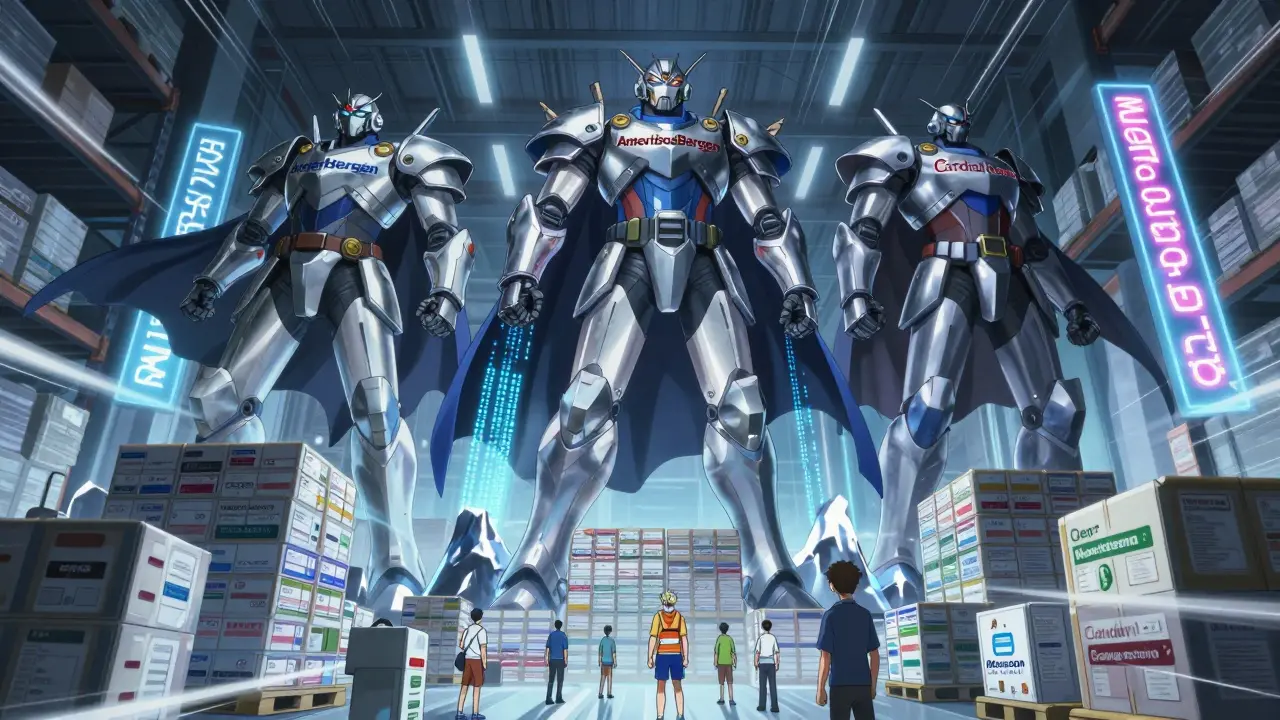
When you pick up a prescription for a generic drug at your local pharmacy, you probably don’t think about how it got there. But behind that $5 bottle of lisinopril or $3 pack of metformin is a complex, high-stakes economic machine-one where profits don’t go where you’d expect. The real money isn’t in the manufacturer’s lab or the pharmacist’s counter. It’s in the middle. In the warehouses, trucks, and balance sheets of the big three pharmaceutical wholesalers: AmerisourceBergen, Cardinal Health, and McKesson. Together, they control 85% of the U.S. generic drug distribution market. And here’s the twist: they make eleven times more profit on a generic drug than they do on a brand-name one.
How Generic Drugs Turned Into Wholesaler Goldmines
Generic drugs are cheap to make. That’s the whole point. Once a brand-name drug’s patent expires, dozens of companies can start producing the same chemical. Prices drop fast. Manufacturers fight for shelf space by undercutting each other. That’s why a 30-day supply of generic atorvastatin might cost a manufacturer just $0.15 to produce. But here’s what happens next: the manufacturer sells it to a wholesaler for $0.50. The wholesaler then sells it to a pharmacy for $1.20. The pharmacy sells it to you for $3-$5. Who pockets the biggest slice? Not the manufacturer. Not the pharmacy. The wholesaler. In 2009, generics made up only 9% of the total revenue for the Big Three wholesalers. But they generated 56% of their gross profits. That’s because wholesalers make about $32 in gross profit per unit on a generic drug, compared to just $3 on a brand-name drug. Why? Because manufacturers of generics have no leverage. They’re competing with 15 other companies making the exact same pill. To get into the system, they accept rock-bottom prices. Wholesalers, meanwhile, have a monopoly on distribution. Pharmacies can’t just skip them and buy directly from manufacturers. The system requires them. So wholesalers set the price.The Three-Tier System No One Talks About
The pharmaceutical supply chain isn’t a straight line. It’s a three-tier pyramid:- Manufacturers - make the drug
- Wholesalers - buy in bulk, store it, ship it to pharmacies
- Pharmacies - sell it to patients
How Pricing Actually Works Behind the Scenes
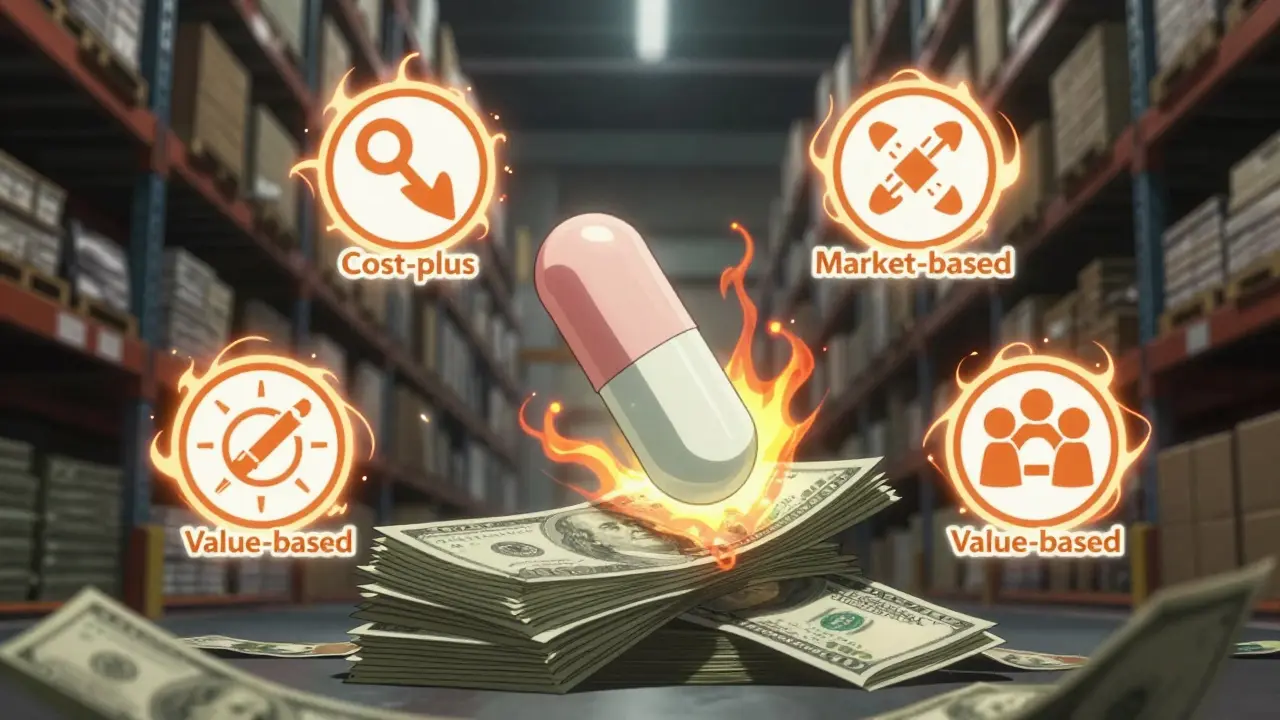
Wholesalers don’t just slap on a markup. They use four pricing strategies-often at the same time.- Cost-plus pricing: Add a fixed percentage to the cost of the drug and shipping. Simple. Predictable. But risky if competitors undercut you.
- Market-based pricing: Look at what other wholesalers charge and match it. This keeps you competitive but kills margins. Common in saturated markets.
- Value-based pricing: Charge more if the drug is critical-like insulin or antibiotics. But generics rarely qualify. This is mostly for specialty drugs.
- Tiered pricing: This is the real engine. Buy 100 units? Get 10% off. Buy 500? Get 20% off. This pushes pharmacies to order more than they need. Warehouses get full pallets. Pharmacies get lower per-unit prices. Wholesalers get bulk discounts from manufacturers. Everyone wins-except the system.
Why Generic Drug Prices Go Up When They Should Go Down
You’d think more competition = lower prices. But that’s not how it works here. In 2021 and 2022, generic drug prices fell. That’s because manufacturers flooded the market. Wholesalers had too much inventory. They lowered prices to move stock. But in 2023, things flipped. Shortages hit. A single factory in India shut down. A regulator flagged a production line in China. Suddenly, a drug that cost $2 suddenly cost $15. Why? Because wholesalers had no backup suppliers. And with only three major players in the system, there’s no real competition to drive prices down. The Commonwealth Fund found that wholesalers don’t just distribute drugs-they control them. They decide which manufacturers get shelf space. They delay shipments to create artificial scarcity. They raise list prices on drugs that are hard to replace. And because pharmacies depend on them, they pay.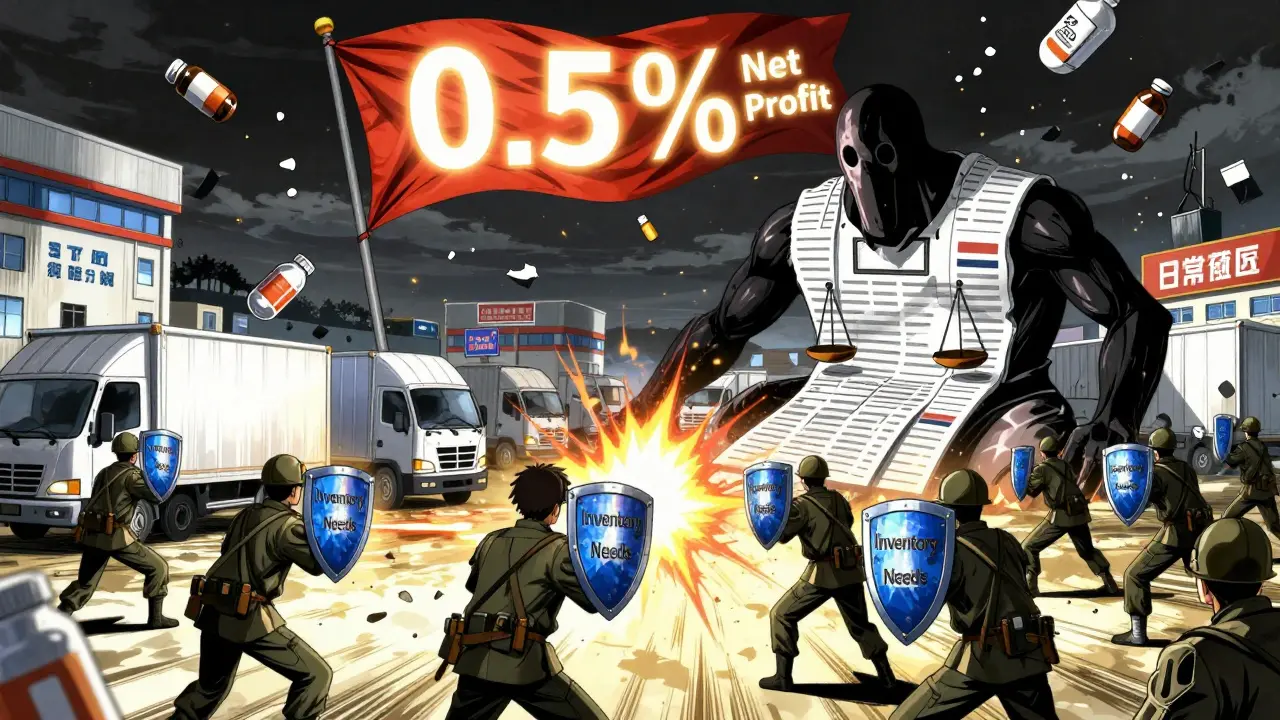
Why Wholesalers Win Even When They Make Almost Nothing
Here’s the brutal truth: wholesalers have net profit margins of just 0.5%. That sounds terrible. But they move $200 billion worth of drugs a year. A half-percent of that is $1 billion. And they do it with almost no overhead compared to manufacturers. No R&D. No clinical trials. No FDA approvals. Just warehouses, trucks, and software. Their real advantage? Inventory turnover. A brand-name drug might sit on a warehouse shelf for six months. A generic? It turns over in two weeks. That means the same $10 million in inventory can generate $100 million in sales per year. Return on assets? Sky-high. That’s why Adam J. Fein of the Drug Channels Institute says: "Wholesaler profitability computations increase following a generic launch." They don’t need to make a lot per unit. They just need to move a lot.What’s Changing in 2026
The system is under pressure. Regulators are watching. Pharmacies are starting to bypass wholesalers in some states. Online distributors are emerging. And manufacturers are starting to sell directly to large hospital chains. But the Big Three aren’t going anywhere. They’ve spent decades building infrastructure no one else can match. And they’ve got something even more valuable: data. They know exactly which drugs are selling where, when, and to whom. That’s power. The real question isn’t whether the system will change. It’s whether it will change before patients pay the price-again.If you’re a pharmacy owner, you’re stuck in the middle. You need the drugs. You need the discounts. You have no choice but to play by their rules. If you’re a patient, you’re paying for a system designed to profit from scarcity-not to deliver affordability.
Generic drugs were supposed to save us money. Instead, they became the engine of a distribution machine that profits from the illusion of low cost. The pill is cheap. The system? Not so much.


Timothy Davis
January 28, 2026 AT 00:59Let me break this down for you like you're five: wholesalers don't make money per pill-they make it by controlling the entire flow. It's not about markup, it's about leverage. Manufacturers are desperate to offload product, pharmacies are locked into contracts, and patients? They're just the end of the line. The system isn't broken-it's working exactly as designed. And yeah, 85% market share? That's not coincidence. That's cartel-level consolidation. And no, the FTC isn't doing a damn thing about it.
Lexi Karuzis
January 28, 2026 AT 08:52Wait-wait-WAIT. So you're telling me the same people who sold OxyContin are now the ones hoarding generic antibiotics?? This isn't capitalism-it's a medical mafia. They're not just profiting-they're weaponizing scarcity. I bet they're even stockpiling drugs just to trigger shortages. And don't even get me started on the Indian factories. You think that shutdown was an accident? Please. It's all coordinated. Someone's got a spreadsheet with 'Drug X: Trigger shortage on 3/15' written in red. This isn't economics-it's psychological warfare on sick people.
Brittany Fiddes
January 28, 2026 AT 23:32Oh, please. You Americans think you invented capitalism? In the UK, we had this exact same problem in the 90s-until the NHS stepped in and nationalized distribution. Now we pay £0.80 for a month's supply of metformin. No wholesalers. No middlemen. No drama. You let private equity firms run your healthcare like it's a Wall Street casino, and then you're shocked when the house always wins? Pathetic. Your system isn't just broken-it's morally bankrupt. We don't need 'innovation'-we need a public system that puts patients before profit. And no, your 'free market' isn't freedom. It's exploitation dressed in a suit.
Colin Pierce
January 29, 2026 AT 22:01Really appreciate this breakdown. I’ve worked in pharmacy operations for 12 years, and this is spot on. The tiered pricing thing? That’s the silent killer. Pharmacies order way more than they need just to get the bulk discount-then they sit on expired stock or donate it. And the wholesalers? They know exactly how much each pharmacy can handle. They don’t just move drugs-they manipulate demand. It’s like a game of chicken where the patient loses every time. The worst part? Most pharmacists know this but have zero power to change it. We’re just the last guys holding the bag.
Amber Daugs
January 31, 2026 AT 07:33So let me get this straight-generic drugs were supposed to be the people’s victory against Big Pharma, and now they’re the ultimate tool for corporate greed? That’s not ironic. That’s treason. You think your $3 lisinopril is saving you money? It’s not. It’s just a distraction. The real cost is hidden in your insurance premiums, your tax dollars, and your mental health from worrying if you can afford your meds next month. This isn’t capitalism-it’s a slow-motion robbery with a pharmacy receipt as the cover-up. Shame on every politician who lets this continue.
Ambrose Curtis
January 31, 2026 AT 13:52bro the wholesaler profit thing is wild but honestly i think the real villain is the PBM system. they’re the ones negotiating with the wholesalers behind closed doors and jacking up list prices so insurance companies pay more. the pharmacy gets paid less, the patient pays more, and the wholesaler just sits there like ‘yep, i got my cut’. also-why do we still use fax machines to order drugs in 2024? this whole system is held together by duct tape and wishful thinking.
Linda O'neil
February 1, 2026 AT 07:20Change is coming. I’ve seen it firsthand. Community pharmacies in rural areas are starting to band together and buy direct from manufacturers. It’s messy, it’s slow, but it’s working. And patients are starting to ask questions-‘why is this $12 here and $5 at the clinic?’ That awareness is the first step. We’re not powerless. We just need to stop acting like we are. Support independent pharmacies. Demand transparency. Talk to your reps. This system thrives on silence. Let’s stop being quiet.
jonathan soba
February 1, 2026 AT 12:12Interesting analysis, though I'd argue the 0.5% net margin is misleading. When you factor in the tax advantages, off-balance-sheet entities, and the fact that these firms own their own logistics subsidiaries, the real return on equity is far higher than reported. Also, their data collection on prescribing patterns is worth more than their entire distribution network. This isn't about drugs-it's about surveillance capitalism with a stethoscope.
Chris Urdilas
February 1, 2026 AT 13:26So let me get this straight: we’ve turned the most basic human need-medicine-into a multiplayer economic game where the players are three corporations and the NPCs are the sick and the poor? And we’re supposed to be impressed by ‘inventory turnover’? Congrats, guys. You turned healthcare into Monopoly, and you didn’t even need to roll the dice. Just press ‘print money’ and call it ‘supply chain efficiency.’ I’m not mad. I’m just disappointed.
Rhiannon Bosse
February 3, 2026 AT 11:26Okay but have you heard about the 2021 insulin shortage? That wasn’t an accident. That was a test run. The wholesalers knew exactly how much panic they could create before the FDA would panic and give them more control. They didn’t just raise prices-they raised fear. And now? They’re doing it with every antibiotic, every thyroid med, every blood pressure pill. It’s not economics. It’s psychological manipulation with a warehouse. And the worst part? We keep buying it. We keep paying. We keep whispering ‘at least it’s generic’ like it’s a prayer. Wake up. They’re not selling pills. They’re selling survival.
James Dwyer
February 4, 2026 AT 19:25This is why we need a public distribution network. Not for profit. Not for politics. Just to make sure no one dies because a corporation decided to wait for a better quarter. The system isn’t broken-it was built this way. Time to build something better.