
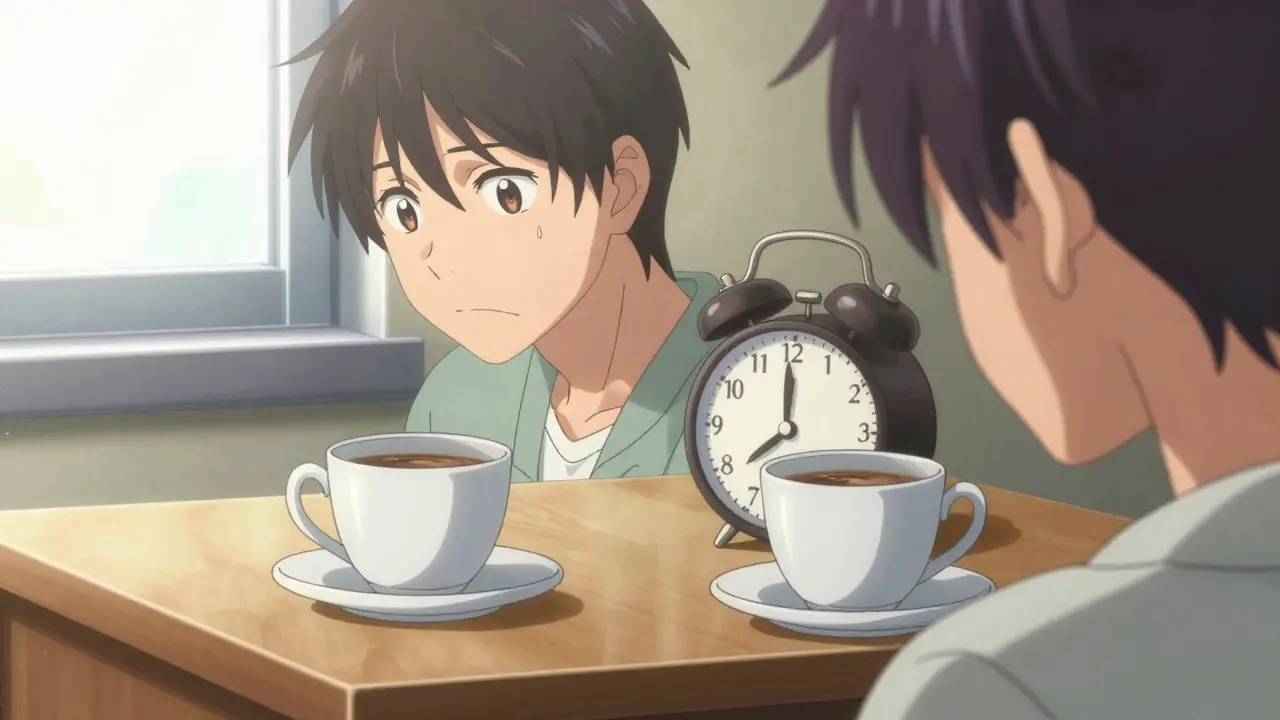
Imagine waking up and seeing two of everything-your alarm clock, your coffee cup, or the person talking to you. For people with Strabismus is a visual condition where the eyes fail to maintain proper alignment, causing one eye to point in a different direction than the other, this isn't a bad dream; it's daily life. Whether it's a lifelong struggle since childhood or a sudden change after a stroke, eye misalignment affects more than just how a person looks. It messes with depth perception, causes crushing eye strain, and can even lead to a "lazy eye." But here is the good news: we have highly effective ways to fix it, ranging from simple glasses to precise surgical adjustments.
What exactly is happening with the eyes?
At its core, strabismus is a coordination problem. Your brain and the six muscles that control each eye need to work in perfect harmony to lock onto a single target. When that communication breaks down, the eyes drift. This isn't just one single condition; it manifests in four primary directions. Esotropia is the most common, where the eye turns inward toward the nose. Then there is Exotropia, where the eye drifts outward, Hypertropia (upward), and Hypotropia (downward).
Why does this happen? In kids, it's often a neuromuscular glitch or a family trait-about 30% of pediatric cases have a genetic link. In adults, the cause is usually more abrupt. A stroke or a physical head injury can damage the cranial nerves (specifically the fourth or sixth nerves), leading to what doctors call paralytic strabismus. This version often hits fast and comes with dizziness or nausea, making it a medical priority.
Spotting the signs: More than just a "squint"
It's easy to notice a visible drift, but the internal symptoms are often more disruptive. Double vision, or diplopia, is the hallmark of the condition. But for many, the real struggle is the invisible effort. About 78% of adults report significant eye strain and pain just from trying to keep their vision straight. Children often cope in ways that might go unnoticed: they might tilt their head to a weird angle to see better or struggle deeply with reading and concentration in school.
One of the biggest risks for children is Amblyopia, often called lazy eye. This happens when the brain starts ignoring the signal from the misaligned eye to avoid double vision. If the brain "shuts off" that eye during the critical development years, the vision loss can become permanent, which is why early detection is so vital.
| Type | Direction of Drift | Approx. Prevalence | Common Trigger |
|---|---|---|---|
| Esotropia | Inward (toward nose) | 50% | Congenital / Neuromuscular |
| Exotropia | Outward (away from nose) | 30% | Intermittent drift / Genetics |
| Hypertropia | Upward | 15% | Nerve damage / Trauma |
| Hypotropia | Downward | 5% | Nerve damage / Trauma |
When is surgery the right call?
Not everyone who has a squint needs a scalpel. Many people find success with corrective glasses, patching the stronger eye to force the weaker one to work, or specialized vision exercises. However, strabismus surgery becomes the primary option when these conservative methods hit a wall. Surgeons typically recommend an operation if the misalignment is constant and exceeds 15 prism diopters-a unit of measurement for the degree of eye drift-or if the patient can't function due to persistent double vision.
Timing is everything. Some experts argue for surgery as early as age 2 for congenital esotropia. The logic is simple: the earlier you align the eyes, the better the chance the child develops stereoacuity, which is the ability to see in 3D. If you wait, that window of brain plasticity closes, and the success rate for achieving true 3D vision drops significantly.
Inside the operating room: How it works
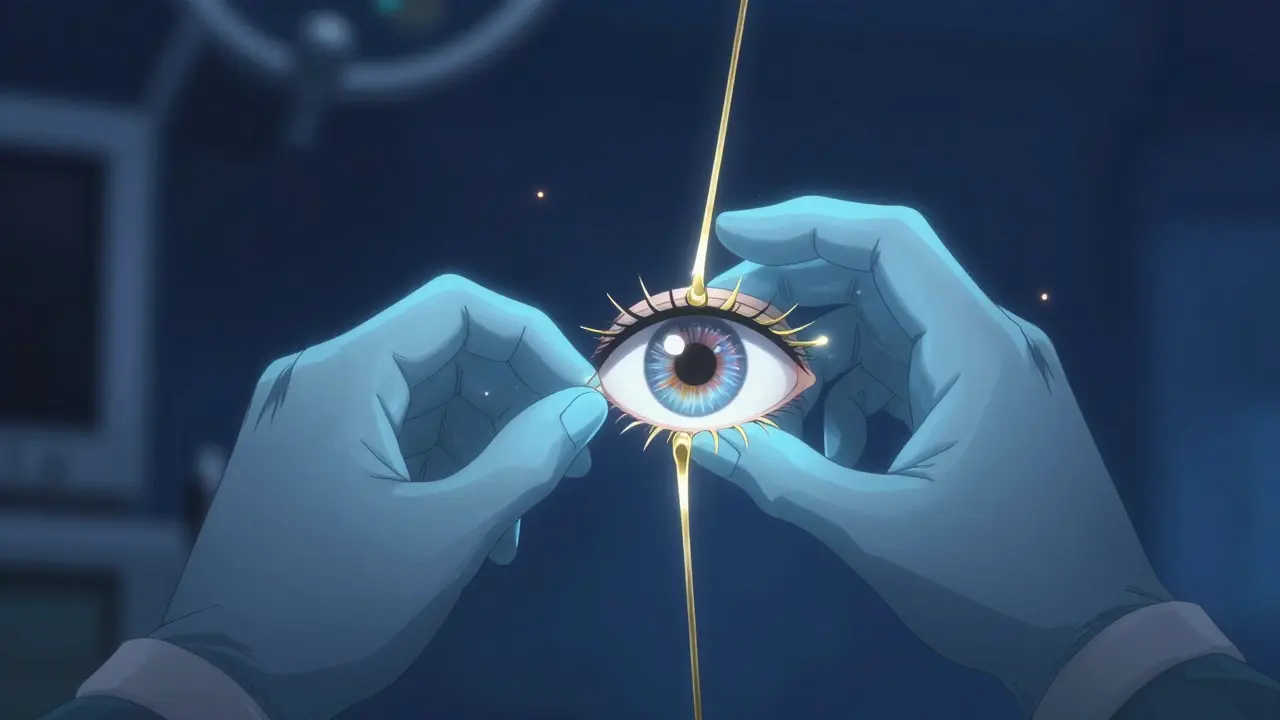
The goal of surgery isn't to "fix the eye" itself, but to adjust the tension of the Extraocular Muscles. Think of it like adjusting the strings on a guitar to get the right note. Surgeons use two main techniques: recession and resection.
- Recession: This is like loosening a string. The surgeon detaches the muscle and reattaches it further back on the eye, which weakens the muscle's pull.
- Resection: This is like tightening a string. A piece of the muscle is removed, and the remaining part is sewn back, strengthening the pull.
In modern adult procedures, about 68% of surgeons use adjustable sutures. These allow the doctor to make tiny tweaks to the muscle tension within 24 hours of the surgery, ensuring the eyes are perfectly aligned before the healing sets in. The whole process usually takes between 45 and 90 minutes. For kids, it's done under general anesthesia; for adults, local anesthesia with sedation is common.
Recovery and the road to "straight" vision
The immediate aftermath of surgery can be a bit surreal. About 80% of patients experience temporary double vision right after the operation. This is normal-your brain is essentially relearning how to process images from two eyes that are now pointing in a new direction. Most of the time, this clears up as the brain adapts.
Success rates are generally high, with 60-80% of patients achieving satisfactory alignment. Children under 2 often have the best outcomes, reaching success rates up to 85%. However, it's not without risks. Undercorrection happens in about 20-30% of cases, meaning a second "touch-up" surgery might be needed. More serious risks, like retinal detachment, are extremely rare, occurring in only about 0.1% of cases.
Recovery involves a strict regimen: daily eye drops for two weeks to manage inflammation and a series of follow-up visits at one day, one week, three weeks, and six weeks. Many patients also start vision therapy a month after surgery to help the brain and eyes work together as a team.
Life after correction: Is it worth it?
For most, the answer is a resounding yes. Beyond the cosmetic boost, the functional changes are life-altering. People report a massive increase in confidence, finally feeling comfortable making eye contact in professional settings. Those who suffered from chronic double vision often describe the relief as a weight being lifted, allowing them to drive or read without a splitting headache.
That said, the mental game is important. Patients who go into surgery with realistic expectations-knowing that they might need a second procedure or a few weeks of blurry vision-report much higher satisfaction. The goal is a balance between functional vision and a natural look. Some patients find that while their eyes look straight, they still struggle with depth perception, highlighting the need for ongoing therapy even after a "successful" surgery.
Will surgery permanently cure my strabismus?
Surgery is highly effective at aligning the eyes, but it is not always a permanent "cure." In some cases, the eyes can drift back over time, especially if there is an underlying neurological issue. This is why follow-up care and sometimes additional "touch-up" procedures are necessary to maintain alignment.
How long is the recovery time after eye muscle surgery?
Most patients return to light activities within a few days. However, full healing and the brain's adaptation to the new alignment usually take about 6 weeks. During this time, you'll use medicated eye drops and attend several follow-up appointments to ensure the eyes are healing correctly.
Can strabismus be fixed without surgery?
Yes, many cases can be managed with non-surgical options. These include specialized prescription glasses (including prisms), patching therapy for children to treat amblyopia, and vision therapy exercises to strengthen the eye muscles and improve coordination.
Is strabismus surgery safe for young children?
Yes, it is generally very safe. In fact, early intervention (sometimes as young as 3-4 months for severe cases) is often recommended to help the brain develop binocular vision and depth perception. The procedure is performed under general anesthesia by specialized pediatric ophthalmologists.
What happens if the surgery overcorrects the eye?
Overcorrection occurs in about 10-15% of cases, where the eye drifts too far in the opposite direction. Because of this, many surgeons use adjustable sutures that can be fine-tuned shortly after the operation to correct the alignment without needing a whole new surgery.
Next Steps and Troubleshooting
If you suspect you or your child has an alignment issue, start with a comprehensive exam by an optometrist. If they detect a significant drift, you'll want to seek out a specialist in pediatric ophthalmology or neuro-ophthalmology. Not all general eye doctors perform these surgeries, so finding a surgeon with a high volume of strabismus cases is key.
If you've already had surgery and are still experiencing double vision after six weeks, don't panic, but do speak with your doctor. You might be a candidate for postoperative vision therapy, which helps the brain "wire" itself to the new eye position. If you're struggling with the cost of care, organizations like the Neuro-Ophthalmology and Strabismus Foundation (NORA) often provide resources and financial aid for those in need.




Cheryl C
April 16, 2026 AT 03:06USA has the best doctors for this stuff!! 🇺🇸🇺🇸 best healthcare in the world no matter what they say 🦅🦅 dont let those other countries fool u!!
Nikki Grote
April 17, 2026 AT 08:17The mention of stereoacuity is spot on. For those unfamiliar, we're talking about the brain's ability to merge two slightly different images into one 3D representation, which is essentially the pinnacle of binocular vision. If the ocular motility is off, the cortical processing just can't keep up, leading to the amblyopia mentioned here. It's a complex interplay of neurology and anatomy.
Nell O'Leary
April 18, 2026 AT 08:34Totally agree with the points on recession and resection techniques! :) It really is all about the vector forces on the globe. The use of adjustable sutures is a total game changer for minimizing the need for secondary revisions. :)
Maggie Graziano
April 19, 2026 AT 12:18they want you in the operating room for a reason maybe it aint just muscles
Randall Barker
April 21, 2026 AT 05:33It is a tragedy that we prioritize "cosmetic boosts" in an era of moral decay. People are so obsessed with looking "normal" for professional settings that they forget the inner alignment of the soul is what actually matters. We live in a shallow society where a straight gaze is valued more than an honest heart, and frankly, this obsession with surgical perfection is just another symptom of our collective narcissism.
Rob Schlautman
April 22, 2026 AT 09:22i mean the whole thing sounds just so typical of modern medicine where you just cut things and hope for the best while the patients are left to deal with double vision and a bunch of drops for weeks on end and honestly who has the time for a six week recovery process in this economy when you can barely afford the co pay for the initial consultation let alone the surgery itself which probably costs a fortune anyway
Sophia Rice
April 22, 2026 AT 15:26Thanks for sharing this info! I think it's really importnat to catch this early in kids so they dont struggle in school. My neice went thru this and it really helpd her confidence a lot!!
Colleen Tankard
April 24, 2026 AT 12:38So glad there are options for this! 🌟 Hope everyone finds a doctor they trust. ✨
Nathan Berlin
April 25, 2026 AT 19:39Typical western obsession with surgery while India is leading in medical tourism and precision anyway 🇮🇳🇮🇳 our specialists are far superior and’d make these US doctors look like amateurs 💅
william wang
April 26, 2026 AT 23:18I've actually read that some people find great success with prisms in their glasses as a permanent alternative to surgery. It's a great way to shift the image to where the eye is actually looking, which can totally eliminate that crushing double vision without the risks of a procedure. Definitely worth discussing with an optometrist if you're hesitant about the operating room!
Theresa Griffin MEP
April 28, 2026 AT 18:21Corrective surgery is highly effective. Results are excellent. Pursue this treatment.