
Every year, thousands of patients in hospitals and pharmacies across the world get the wrong medicine-not because of a mistake in diagnosis, but because two drugs look or sound too much alike. Look-alike, sound-alike (LASA) medication names are one of the most dangerous, yet overlooked, causes of preventable harm in healthcare. These aren’t rare accidents. They happen daily. And they don’t just cause side effects-they kill.
Why Do These Mistakes Keep Happening?
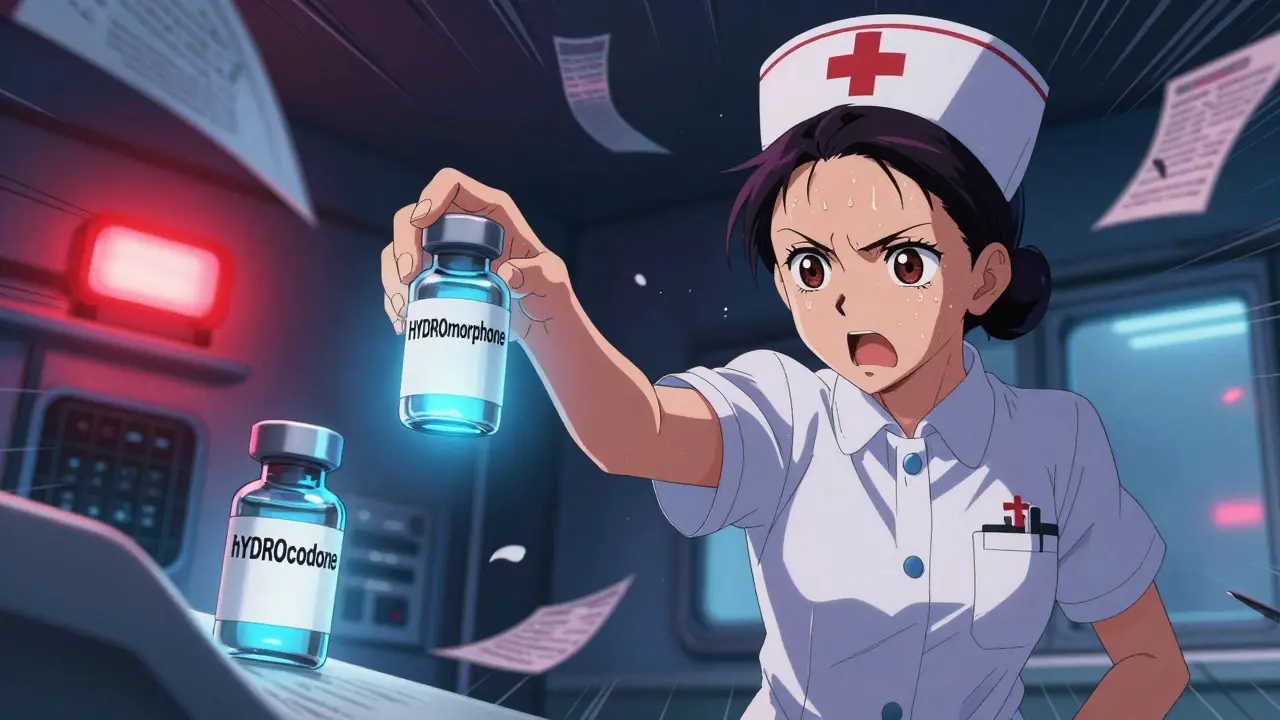
It’s easy to think, "I’d never mix up insulin and heparin," but when you’re tired, rushed, or working the night shift, your brain doesn’t process details the same way. Two drugs with nearly identical names can trigger a cognitive glitch. Hydromorphone and hydrocodone? Both start with "hydro," both are opioids, both come in tablets and liquids. Written quickly, they look the same. Spoken aloud over a crackling radio in an ER? They sound identical. That’s not a fluke-it’s a design flaw. The World Health Organization says LASA errors are a top-priority safety issue. In the U.S., one in four medication errors comes from name confusion. That’s not a small number. That’s a systemic failure. And it’s not just about spelling. Packaging, pill color, bottle shape, even the font on the label-all of it adds up. A pharmacist once told me about a case where two injectables looked identical: one was for a heart attack, the other for cardiac arrest. One saved a life. The other ended one.The Most Dangerous Pairs You’ve Probably Never Heard Of
Some LASA pairs are infamous. But many are still flying under the radar. Here are a few that have caused real harm:- Simvastatin 10 mg and simvastatin 20 mg - Same drug, different strength. Easy to miss the "20" when you’re scanning quickly. Patients got double their dose-and ended up with muscle damage.
- Doxorubicin and daunorubicin - Both chemotherapy drugs. One is for leukemia, the other for breast cancer. Mix them up, and you’re giving a patient a lethal dose.
- Levothyroxine and Synthroid - Same thing, right? Technically yes, but Synthroid is a brand name. In busy clinics, nurses grab the first thyroid med they see. Patients end up with too much or too little hormone.
- Vecuronium and versed - One paralyzes muscles. The other calms anxiety. Give the wrong one during surgery, and a patient wakes up paralyzed but fully aware.
- Naltrexone and naloxone - One treats opioid addiction. The other reverses overdoses. Confuse them, and you might give someone an overdose-reversal drug when they need long-term treatment-or vice versa.
How Tall Man Lettering Fails (And Why It’s Not Enough)
You’ve probably seen it: HYDROmorphone and hYDROcodone. The capital letters are meant to highlight differences. It’s called Tall Man Lettering. The FDA started using it in 2001. Over 200 drug pairs now have it. Sounds smart, right? But here’s the truth: it doesn’t work as well as people think. A 2022 review found that Tall Man Lettering only helps if staff are trained to notice it. If you’re not looking for it, your brain ignores it. It’s like a warning sticker on a power tool-you stop seeing it after a while. In high-pressure environments, it becomes background noise. And it doesn’t fix the root problem: the names were never supposed to be this similar in the first place. The Institute for Safe Medication Practices says the real solution is stopping confusing names from being approved. In 2022, the FDA rejected 34 new drug names because they were too close to existing ones. That’s progress. But only 34 out of hundreds submitted. Most still slip through.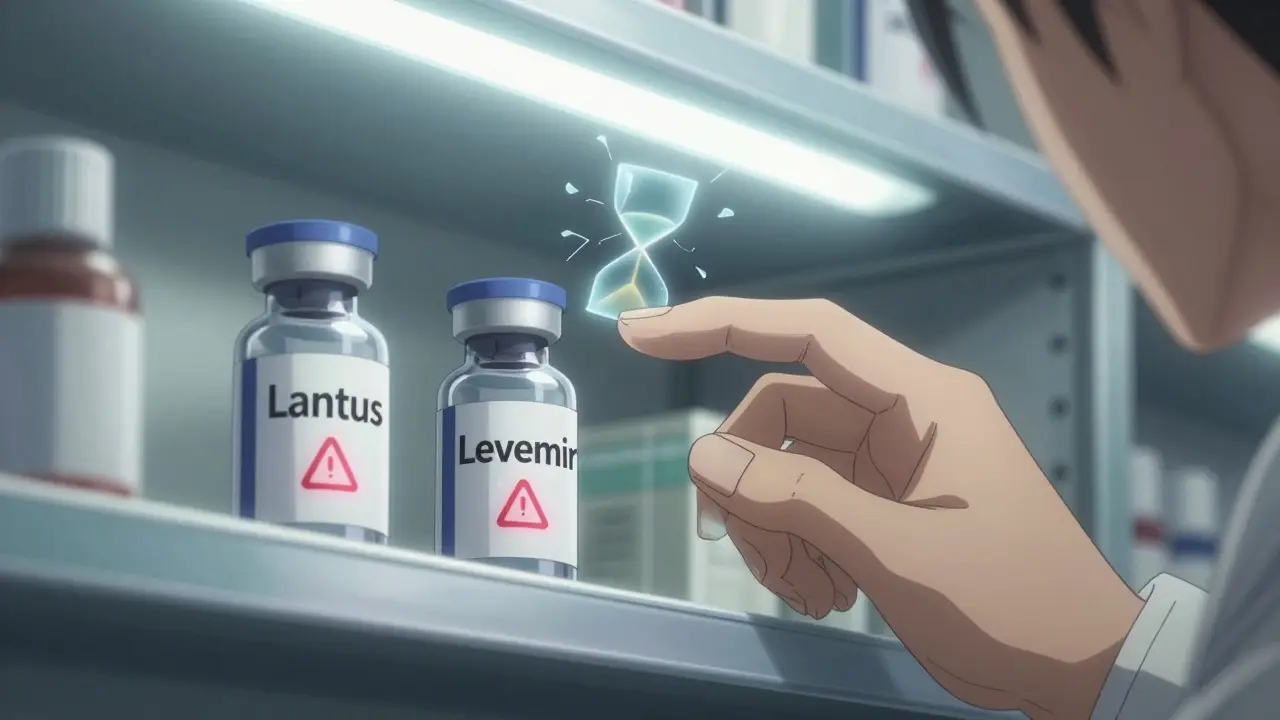
Who’s Most at Risk-and Where It Happens
LASA errors don’t happen randomly. They cluster in places where speed overrides caution:- Emergency rooms - Verbal orders fly fast. A doctor says, "Give me 5 mg of morphine." The nurse hears "Morphine?" and grabs the vial. But was it morphine or hydromorphone? The difference is five times more potent.
- ICUs - Nurses juggle ten drugs at once. Neuromuscular blockers like vecuronium and sedatives like versed sit side by side on the cart. One wrong grab, and you’re paralyzing someone who needs to be calm.
- Oncology units - Chemotherapy drugs are the worst offenders. Doxorubicin, daunorubicin, docetaxel, paclitaxel-they all sound like sci-fi weapons. One study found 92% of oncologists had a near-miss with a LASA drug in the past year.
- Pharmacies during shift changes - The busiest time. Fatigue hits. Someone hands off a prescription for "Lantus"-but the vial says "Lantus" and "Levemir" are next to each other. Both are long-acting insulins. One lasts 24 hours. The other lasts 42. Mix them up, and you’re setting someone up for a diabetic coma.
What’s Being Done-and What’s Not
Hospitals are trying. Most have a LASA list. The Joint Commission requires it. But here’s the catch: most lists are generic. They copy-paste from national databases. They don’t reflect what’s actually on your shelves. A hospital in Melbourne might stock different drugs than one in Chicago. A small clinic might not even have an electronic system that flags risks. The best-performing hospitals personalize their lists. They update them quarterly. They train staff every six months. They use clinical decision support tools that pop up warnings when a doctor prescribes a drug that matches a known LASA pair. Epic and Cerner-the big EHR systems-now have built-in LASA alerts. One study showed Epic’s "SafeMed" module cut errors by nearly 30%. But only 72% of large U.S. hospitals use these tools. In smaller clinics? It’s under 40%. Cost. Training. Outdated tech. The gap is real. Meanwhile, the FDA is testing AI voice recognition to catch errors during verbal orders. Early results? 89% accurate. That’s promising. But it’s still in testing. It won’t be everywhere for years.
What You Can Do-Even If You’re Not a Doctor
You don’t need a medical degree to help prevent these errors. If you or someone you care for is on medication, here’s what works:- Ask: "Is this the right drug?" Don’t assume. If you hear "insulin," ask: "Is it Lantus, Levemir, or Humalog?"
- Check the label. Look at the name, strength, and color. Compare it to the last bottle you got.
- Speak up during handoffs. If you’re in a hospital and a nurse says, "I’m giving the thyroid med," say: "Which one? Levothyroxine or Synthroid?"
- Know your high-risk drugs. Insulin, opioids, anticoagulants, chemotherapy, neuromuscular blockers-these are the ones that kill when mixed up.
- Use pill organizers with labels. If you take multiple meds, write the full name on each compartment-not just "heart pill" or "sleep pill."
The Future: Can We Fix This?
Experts agree: we can reduce LASA errors by 80% in the next decade-if we change how drugs are named, packaged, and approved. The WHO’s Global Patient Safety Plan calls for universal design standards by 2030. That means drug names would be tested for similarity before they’re even approved. No more "melphalan" and "meloxicam"-two names that sound the same but treat completely different things. The Institute for Safe Medication Practices just added 12 new LASA pairs to its 2024 list, including melphalan and meloxicam. One is a chemotherapy drug. The other is an arthritis pill. Mix them up, and you’re giving cancer treatment to someone with knee pain. That’s not a mistake. That’s a failure of the system. Technology helps. Training helps. But the real fix is regulation. Drug companies shouldn’t be allowed to name a new drug "Naloxone" if "Naltrexone" already exists. That’s not innovation. That’s negligence. Until then, the burden falls on the people who use these drugs-and the people who give them. Don’t wait for a system to fix itself. Be the person who asks the question. Be the one who checks the label. Be the one who says, "Wait. Let me make sure this is right." Because in healthcare, the difference between a life saved and a life lost is often just two letters.What are look-alike, sound-alike (LASA) medications?
Look-alike, sound-alike (LASA) medications are drugs that have names, packaging, or physical appearances that are so similar they can be easily confused. This includes orthographic (visual) similarities like "hydromorphone" and "hydrocodone," phonetic (sound) similarities like "Lantus" and "Levemir," or packaging that looks nearly identical. These similarities can lead to dangerous medication errors, even among trained professionals.
How common are LASA medication errors?
LASA errors account for about 25% of all medication errors in the U.S., according to the Anesthesia Patient Safety Foundation and Medscape. One study found that drug name confusion alone caused 64.62% of LASA-related incidents. These errors happen in hospitals, pharmacies, and even at home, and they’re responsible for at least 128 deaths between 2018 and 2022, based on FDA reports.
What’s tall man lettering, and does it work?
Tall man lettering uses capital letters to highlight differences in similar drug names-for example, HYDROmorphone vs. hYDROcodone. It’s been used since 2001 and applied to over 200 drug pairs. But studies show it’s only marginally effective. It works best when staff are trained to notice it. In fast-paced environments, people often overlook it, making it more of a visual cue than a true safety barrier.
Which drugs are most often confused?
The most dangerous pairs include: hydromorphone and hydrocodone, doxorubicin and daunorubicin, levothyroxine and Synthroid, vecuronium and versed, naltrexone and naloxone, and simvastatin 10 mg vs. 20 mg. High-alert medications like insulin, opioids, anticoagulants, and chemotherapy drugs are especially risky because small mistakes can lead to death.
Can patients prevent LASA errors?
Yes. Patients can ask for the full drug name and strength every time they receive a medication. Check the label against the prescription. Don’t assume the nurse or pharmacist knows the difference. If you’re taking multiple drugs, use labeled pill organizers. Speak up if something looks or sounds off-even if it feels uncomfortable. Your questions can prevent a deadly mistake.



Mussin Machhour
December 24, 2025 AT 18:59Man, I work ER nights and this hits home. Just last week I almost grabbed hydromorphone instead of hydrocodone-caught myself at the last second because the vial felt too light. We don’t get training on this stuff until someone dies. Why is this still on the table?
Justin James
December 25, 2025 AT 08:23Let me tell you what’s really going on here-Big Pharma doesn’t want this fixed. They *want* these names to be confusing because it keeps people dependent on their brands. Look at Synthroid vs levothyroxine-same chemical, different price tag. They’ve been doing this since the 90s. Tall man lettering? A distraction. The real solution is banning brand names from prescriptions entirely. But the FDA’s got lobbyists in their back pocket. You think they’re gonna change? Nah. They’ll keep giving us 34 rejections out of hundreds because it looks like they’re trying. Meanwhile, people are dying in silence. This isn’t a medical error-it’s corporate negligence dressed up as bureaucracy.
Carlos Narvaez
December 25, 2025 AT 14:13Insufficient systemic intervention. The FDA’s reactive approach to naming is archaic. Proactive nomenclature vetting should be mandatory-ideally with linguistic AI audits. Tall man lettering is performative safety theater.
Harbans Singh
December 26, 2025 AT 22:10I’m from India and we have the same problem here-especially with insulin and antibiotics. But what’s interesting is how some clinics use color-coded caps or even audio alerts on their dispensing systems. Not fancy tech, just smart design. Maybe we need to stop expecting humans to be perfect and start designing systems that don’t rely on perfection. Also, patients asking questions? That’s not being difficult. That’s being human.
Zabihullah Saleh
December 28, 2025 AT 11:39It’s weird how we treat medicine like it’s a language we all speak the same way. But names are cultural, emotional, loaded. You think "naloxone" and "naltrexone" sound similar? Try saying them out loud in a language that doesn’t have those exact phonemes. It’s not just about spelling-it’s about how our brains map sound to meaning. And when you’re tired, stressed, or in a hurry? The brain shortcuts everything. Maybe we need to stop naming drugs like they’re sci-fi characters and start naming them like they’re tools. Simple. Clear. No poetry.
Rick Kimberly
December 28, 2025 AT 16:52It is imperative that healthcare institutions implement standardized, evidence-based protocols for the identification and mitigation of look-alike, sound-alike medication risks. The current reliance on human vigilance is statistically untenable and ethically indefensible. A mandatory, institution-specific LASA inventory, updated quarterly and integrated into electronic prescribing systems, is the bare minimum.
Terry Free
December 28, 2025 AT 23:22Oh wow, a whole article about doctors being dumb? Groundbreaking. Newsflash: if you can’t tell the difference between a muscle relaxant and a sedative, maybe you shouldn’t be holding a syringe. I’ve seen nurses grab the wrong vial and then say "oh, they’re both blue." No, dumbass, one’s for waking people up and the other’s for keeping them from breathing. You want to fix this? Fire the ones who can’t read. Simple.
Lindsay Hensel
December 30, 2025 AT 04:13I’ve been a nurse for 22 years. I’ve held a patient’s hand while they woke up paralyzed because someone grabbed vecuronium instead of versed. I still have nightmares. We need more than lists. We need culture change. We need to stop treating safety as a checklist and start treating it as sacred. And yes-it’s okay to ask. Always ask.
Ben Harris
December 31, 2025 AT 13:09Y’all are overthinking this. It’s not the names it’s the nurses. I’ve seen the same thing happen at my cousin’s hospital-she’s always mixing up Lantus and Levemir. She even said once "they both make your sugar go down right" like it’s a smoothie. The problem isn’t the system it’s the people who can’t remember two letters. Why don’t we just make them take a test every month? Or better yet-make them wear a badge that says "I almost killed someone today"
Jason Jasper
January 1, 2026 AT 09:20My dad almost died from a LASA error. Took him two years to recover. I never said anything to the hospital. Didn’t want to make waves. But now I wish I had. Sometimes the quietest people are the ones who’ve paid the heaviest price.